How to Clear Up Cloudy Pool Water: Effective Solutions
To clear up cloudy pool water, start by testing and balancing your pool’s chemistry, ensuring proper filtration, and using appropriate clarifying agents. Cloudy water can be a nuisance, indicating underlying issues that require immediate attention to maintain a safe and enjoyable swimming environment. In this article, you’ll learn step-by-step methods to restore your pool’s clarity and keep it sparkling clean through best practices and professional insights.
Test Your Water Chemistry
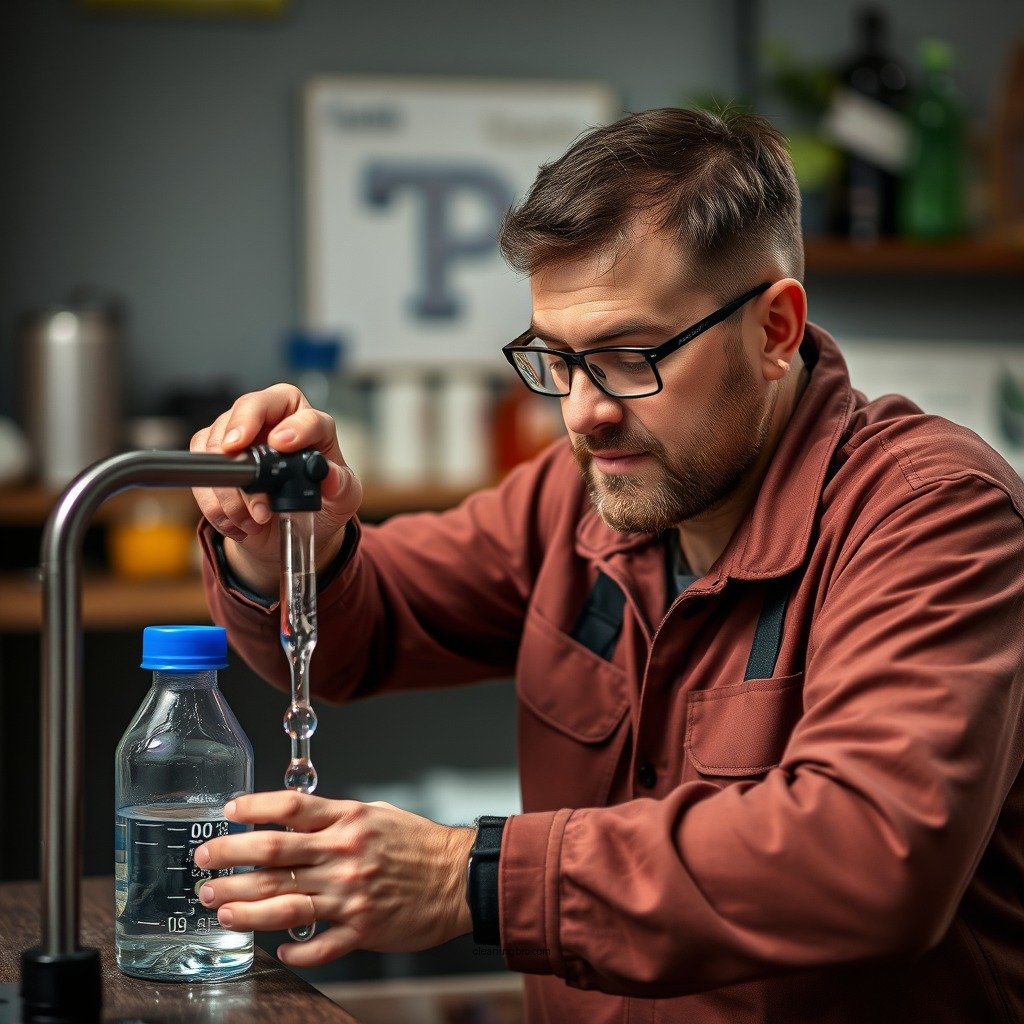
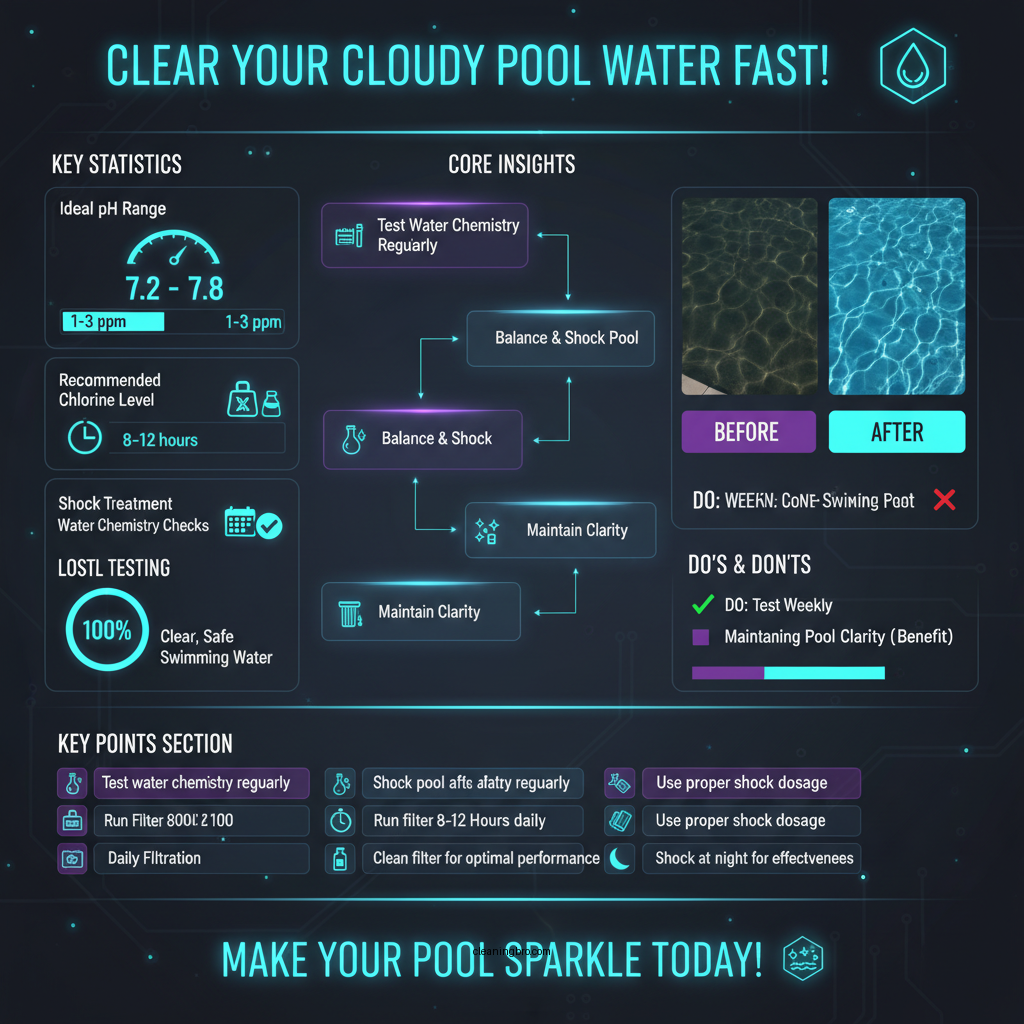
The first step in solving the cloudy pool water dilemma is to assess the water chemistry. A reliable pool testing kit is essential for checking key parameters such as pH, alkalinity, and chlorine levels. Aim for a pH level between 7.2 and 7.8 to ensure optimal water balance; this range supports both swimmer comfort and effective sanitization.
Chlorine levels should ideally be maintained between 1-3 parts per million (ppm). If chlorine levels are too low, bacteria and algae can proliferate, contributing to cloudiness. Conversely, overly high chlorine levels can cause skin and eye irritation. By regularly testing your water chemistry at least once a week and making adjustments as needed, you can significantly reduce the chances of experiencing cloudy water.
Shock the Pool
Once you’ve established your water’s chemistry, the next step is to shock the pool. Shocking involves adding a concentrated dose of chlorine or a non-chlorine shock product to the water, effectively killing off contaminants, bacteria, and algae that contribute to cloudiness.
When applying pool shock, it’s crucial to follow the manufacturer’s instructions regarding dosage, which typically depends on your pool size. For most residential pools, a general guideline is to use 1 pound of shock for every 10,000 gallons of water. Shocking your pool in the evening, when sunlight is minimal, can enhance the effectiveness of the treatment, allowing the chlorine to work without being neutralized by sunlight.
Improve Filtration
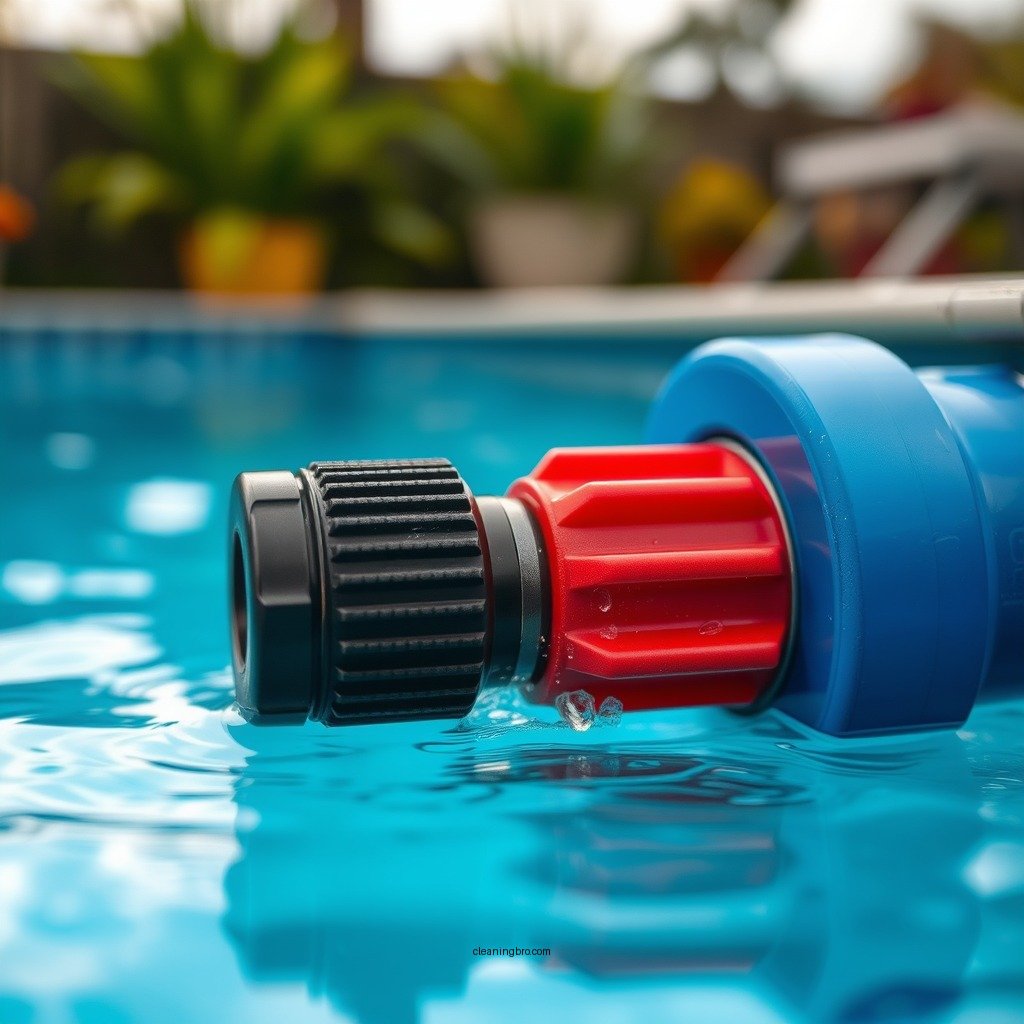
Proper filtration is vital to maintaining clear pool water, as it removes debris and contaminants that can cloud the water. Begin by ensuring your pool filter is clean and functioning optimally. Regularly check the filter and clean or replace it as necessary, especially during peak swimming seasons when usage is high.
Running your pool filter for at least 8-12 hours a day is recommended until the water clears. If the water remains cloudy after this period, consider running the filter continuously for a day or two, and ensure that the filter’s media (sand, cartridge, or DE) is appropriate for your pool type. Inadequate filtration can lead to persistent cloudiness, so keeping your system in top condition is essential.
Common Pool Filter Types and Their Effectiveness
| # | Filter Type | Efficiency on Particles | Maintenance Level | Cost |
|---|---|---|---|---|
| 1 | Sand Filter | Moderate | Low | $300-$600 |
| 2 | Cartridge Filter | High | Moderate | $300-$800 |
| 3 | DE Filter | Very High | High | $600-$1,200 |
Use a Pool Clarifier
In cases where tiny particles remain suspended in the water, using a pool clarifier can be an effective solution. Pool clarifiers work by coagulating these minute particles, allowing them to clump together so that your filter can easily capture and remove them.
When selecting a clarifier, it is crucial to follow the recommended dosage based on your pool size. Generally, adding clarifier after shocking the pool can yield the best results, as the shock treatment opens the way for the clarifier to work effectively. Be patient, as it may take several hours or even days for the water to clear completely after adding a clarifier.
Regular Maintenance Practices
Preventing cloudy water is often a matter of consistent pool maintenance. Regularly skimming debris off the pool surface and vacuuming the pool floor will help prevent organic buildup that can contribute to cloudiness.
Cleaning the pool walls and tiles is also essential; algae and other growths can thrive in these areas, leading to unsightly and unsafe conditions. A weekly brushing of the walls and tiles, combined with routine chemical testing and balancing, will not only keep your pool looking great but also help in maintaining a healthy swimming environment.
Monitor Your Water Levels
Maintaining proper water levels in your pool is crucial for effective filtration and circulation. Water levels can fluctuate due to evaporation, rain, or splash-out, and it’s important to keep them in check.
Regularly check your pool’s water level and add water as needed, particularly after heavy rains or during hot weather when evaporation rates are high. An adequately filled pool ensures that skimmers and filters operate efficiently, which is essential for keeping the water clear.
Address Algae Growth
If algae growth is identified as the cause of cloudy water, it’s imperative to address it promptly. Use an appropriate algaecide to treat the issue and follow up with brushing the walls and vacuuming the pool to remove dead algae.
Maintaining proper sanitizer levels, along with regular brushing and vacuuming, will help prevent future algae blooms. Using algaecides as a preventive measure and ensuring that your pool’s chemical balance is consistently monitored will contribute significantly to keeping your pool water clear and inviting.
Top Algaecides for Pool Maintenance
| Product | ⭐ Algaway 60 | PoolRx | Hth Super Algae Guard |
|---|---|---|---|
| Type | Liquid | Mineral | Liquid |
| Recommended Use | Weekly | Monthly | Weekly |
| Effective Against | All Algae Types | Green Algae | Green & Yellow |
| Application Method | Dilute in Water | Place in Skimmer | Dilute in Water |
| Compatibility | All Pools | All Pools | Chlorine Pools |
| Price | $15-$20 | $25-$30 | $10-$15 |
| Size | 1 Liter | 8 oz | 1 Quart |
| Effectiveness Time | 24 hours | 72 hours | 24 hours |
| Ideal for | General Use | Preventive Care | Algae Treatment |
| 🏆 Best For | Versatile use | Preventing Algae | Quick Algae Removal |
Summarizing the steps to clear up cloudy pool water, it’s crucial to maintain balanced chemistry, use effective shock treatments and clarifiers, and keep up with regular maintenance. By following these tips, you’ll enjoy clear and inviting pool water all season long. Don’t hesitate to implement these solutions and take your first step towards a sparkling clean pool today!
Frequently Asked Questions
What causes cloudy pool water?
Cloudy pool water can be caused by several factors, including poor filtration, high levels of organic debris, imbalanced water chemistry, and the presence of algae or bacteria. When the water’s pH, alkalinity, or chlorine levels are not properly maintained, it can lead to cloudiness. Regularly testing your water and maintaining proper chemical balance is essential for clear pool water.
How do I clear up my cloudy pool water quickly?
To quickly clear up cloudy pool water, start by checking and adjusting the water’s pH and chlorine levels to the recommended ranges. Next, run your pool filter continuously and consider using a flocculant or clarifier to help clump together particles for easier filtration. Regular brushing and vacuuming can also help eliminate debris that contributes to cloudiness.
Why is my pool water still cloudy after shocking it?
If your pool water remains cloudy after shocking, it may be due to insufficient filtration, high levels of contaminants, or unbalanced water chemistry. Additionally, if there are high levels of phosphates or nitrates, they can contribute to persistent cloudiness. Ensure that your filter is clean and functioning properly, and consider performing a thorough water test to identify any underlying issues.
What is the best pool clarifier to use for cloudy water?
The best pool clarifier for cloudy water typically contains polymers that help bind small particles together for easier filtration. Look for products that are compatible with your pool type (chlorine, saltwater, etc.) and read reviews to find one that effectively addresses cloudiness. Brands like HTH and In The Swim are popular choices among pool owners.
Which chemical treatments are effective for clearing cloudy pool water?
Effective chemical treatments for clearing cloudy pool water include chlorine shock, flocculants, and algaecides. Chlorine shock raises the chlorine levels to kill bacteria and algae, while flocculants help to gather small particles into larger clumps that can be filtered out. Always follow the manufacturer’s instructions for dosage and application to achieve the best results.
References
- How to Diagnose and Clear Cloudy Swimming Pool Water
https://www.wikiHow.com/Clear-Cloudy-Pool-Water - https://www.poolandspa.com/pool-maintenance/clear-cloudy-water
https://www.poolandspa.com/pool-maintenance/clear-cloudy-water - https://www.cdc.gov/healthywater/swimming/pools/cloudy-water.html
https://www.cdc.gov/healthywater/swimming/pools/cloudy-water.html - https://www.epa.gov/pools
https://www.epa.gov/pools - https://pubmed.ncbi.nlm.nih.gov/18607876/
https://pubmed.ncbi.nlm.nih.gov/18607876/ - https://www.sciencedirect.com/science/article/pii/S0013935110001044
https://www.sciencedirect.com/science/article/pii/S0013935110001044 - https://www.mayoclinic.org/healthy-lifestyle/healthy-home/expert-answers/pool-water-safety/faq-20058344
https://www.mayoclinic.org/healthy-lifestyle/healthy-home/expert-answers/pool-water-safety/faq-20058344 - https://www.nytimes.com/2020/07/13/well/family/pool-maintenance.html
https://www.nytimes.com/2020/07/13/well/family/pool-maintenance.html - Google Scholar Google Scholar
https://scholar.google.com/scholar?q=cloudy+pool+water+management - Google Scholar Google Scholar
https://scholar.google.com/scholar?q=how+to+clear+cloudy+swimming+pool+water