Cleaning Techniques for Toys Owners
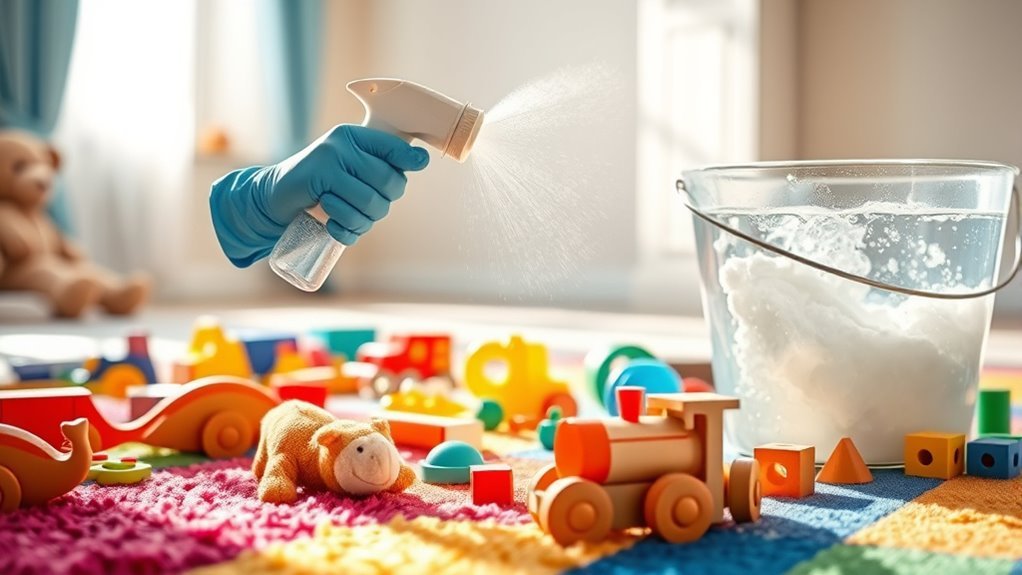
You should first identify your toy’s material since wood, plastic, fabric, and electronics need different care. For plush toys, spot clean with mild detergent and air dry fully. Wash plastic toys with warm soapy water, rinsing well to avoid residue. Sanitize electronic toys carefully using lightly dampened cloths, avoiding openings. Natural cleaners like vinegar and baking soda work great. Proper drying and breathable storage prevent mold. Keeping a regular cleaning routine helps maintain safety and longevity. There’s more to learn about preserving every type of toy effectively.
Identifying Different Toy Materials
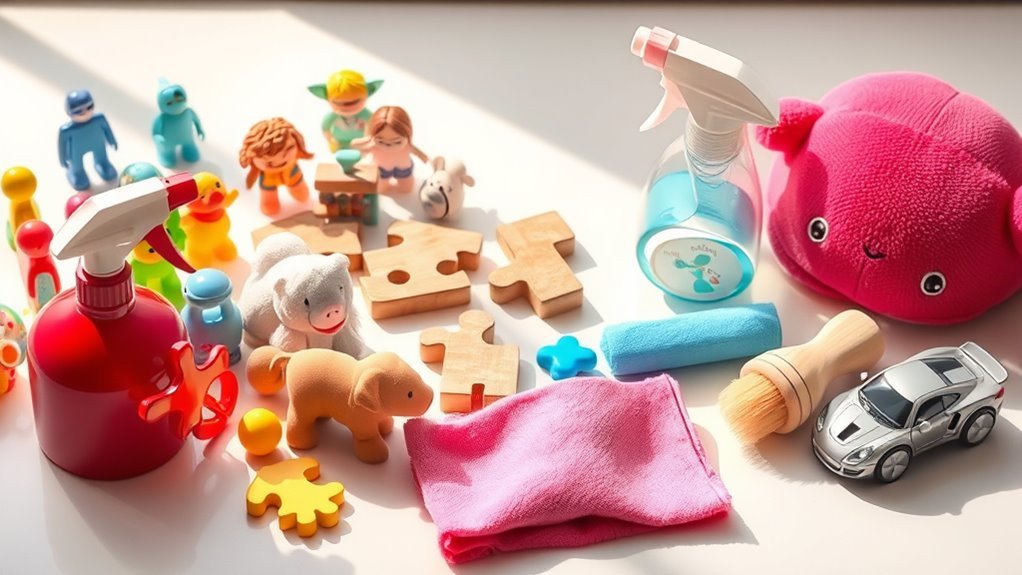
Understanding the material your toy is made from is key to cleaning it effectively. When you know whether your toy is wooden, metal, or crafted from plush materials, you can choose the right method without causing damage. Wooden toys and vintage toys often require gentle wiping to preserve their finish. Metal toys might need a bit more care to prevent rust, while biodegradable toys and eco friendly toys deserve cleaning approaches that respect their natural components. Sensory toys and educational toys come in various materials, so identifying them helps avoid harsh chemicals that could degrade their function. By recognizing these distinctions, you maintain your toys’ integrity and enjoy the freedom of keeping them clean without worry.
Cleaning Plush and Fabric Toys
When you’re cleaning plush and fabric toys, gentle care is essential to keep them soft and intact. To maintain your toy’s charm and durability, focus on these plush care tips:
- Spot clean with mild detergent and cold water to avoid fabric damage.
- Air dry completely; avoid direct heat to preserve fabric texture.
- Use a soft brush to remove dust and restore fluffiness without rough handling.
Fabric maintenance isn’t just about cleaning; it’s about preserving the toy’s feel and appearance so you can enjoy it freely without worry. Avoid harsh chemicals or vigorous washing that can wear down fibers. Taking these simple steps helps your plush and fabric toys stay fresh, soft, and ready for countless adventures. Freedom means caring smartly without hassle.
Washing Plastic and Rubber Toys
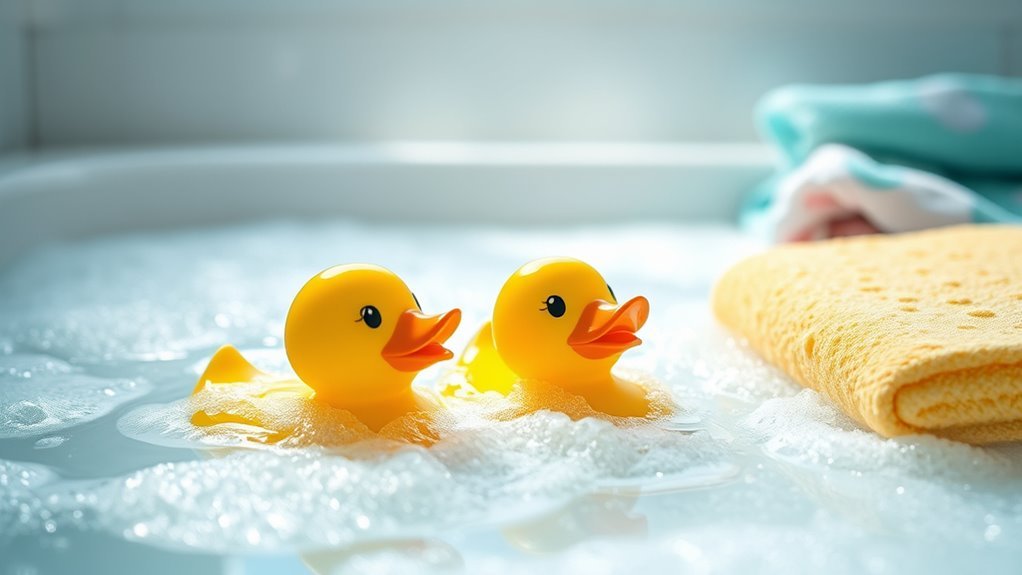
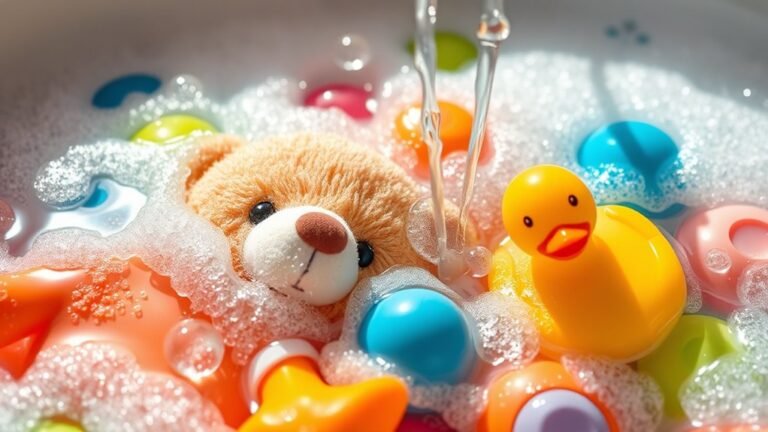
Although plastic and rubber toys are generally more durable than fabric ones, they still need regular cleaning to stay safe and hygienic for play. You can enjoy freedom from worry by using simple, safe washing methods. Start by wiping toys with warm, soapy water and a soft cloth or sponge—this removes dirt without damaging the material. For tougher grime, soak toys briefly in a mild detergent solution, then rinse thoroughly. Avoid harsh chemicals that might harm the toy or your health. Regular toy maintenance like this keeps your plastic and rubber toys in great shape and ready for fun. Remember to dry them completely before storage to prevent mold. With these straightforward steps, you maintain cleanliness without sacrificing your time or peace of mind.
Sanitizing Electronic Toys Safely
When cleaning electronic toys, you’ll want to pick products that won’t harm their delicate components. It’s important to keep moisture away from openings to avoid damage. You can disinfect effectively without relying on harsh chemicals that might cause wear.
Choosing Safe Cleaning Products
Since electronic toys contain sensitive components, you’ll need to be careful about which cleaning products you use. Choosing safe cleaning products guarantees you protect both the toy and your freedom to enjoy worry-free playtime. Here’s what to keep in mind:
- Opt for eco friendly options like gentle plant-based sprays or wipes that won’t harm electronics or the environment.
- Prioritize chemical safety by avoiding harsh solvents or bleach, which can damage circuits or leave harmful residues.
- Select products labeled as safe for electronics or specifically designed for delicate surfaces to maintain toy integrity.
This approach lets you clean effectively while respecting your values and the toy’s delicate nature. By choosing wisely, you keep your toys safe and your cleaning routine simple.
Avoiding Moisture Damage
How can you sanitize electronic toys without risking moisture damage? The key is moisture control. Avoid soaking the toys or using sprays directly on their surfaces. Instead, lightly dampen a cloth with a gentle cleaner and carefully wipe the toy, steering clear of openings where moisture can seep in. Keeping humidity levels low in the room also helps prevent internal damage. Use silica gel packets or dehumidifiers to maintain ideal conditions, especially if you store toys for long periods. After cleaning, let the toy air dry completely before use or storage. By controlling moisture and humidity levels, you protect electronic components from corrosion and malfunction, giving you the freedom to keep your toys clean and functional without worry.
Disinfecting Without Harsh Chemicals
Although harsh chemicals can quickly disinfect toys, they often pose risks to delicate electronic parts and your health. You don’t have to sacrifice safety for cleanliness. Using eco friendly disinfectants and gentle methods lets you sanitize electronic toys without damage. Consider these options:
- Use alcohol-based wipes sparingly to avoid moisture buildup.
- Try steam cleaning methods with caution; steam kills germs without chemicals but keep it brief to protect electronics.
- Apply eco friendly disinfectants designed for sensitive surfaces, ensuring no residue harms circuits.
Using Natural Cleaning Solutions
When you want to keep your toys clean without exposing them to harsh chemicals, natural cleaning solutions offer a safe and effective alternative. You can easily create homemade cleaners using simple ingredients like vinegar, baking soda, and lemon juice—eco friendly solutions that protect both your toys and the environment. These natural options let you maintain freedom from synthetic chemicals while still ensuring your toys stay fresh and hygienic. Just mix equal parts water and white vinegar in a spray bottle for an all-purpose cleaner, or use a paste of baking soda and water for gentle scrubbing. By choosing these homemade cleaners, you take control of what touches your toys, embracing a cleaner, greener lifestyle without sacrificing safety or cleanliness.
Removing Stains and Odors From Toys
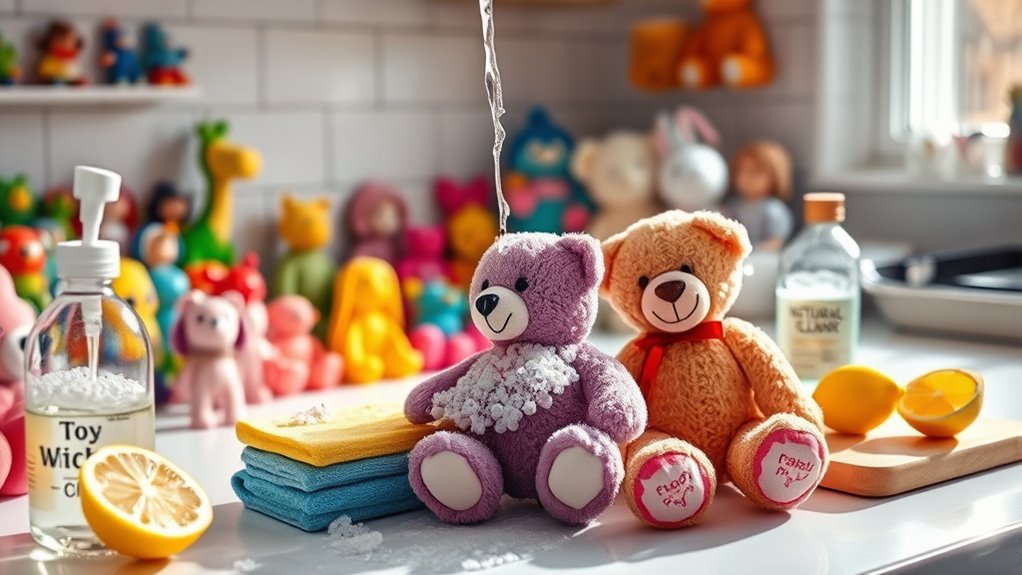
When stains and odors stick to your toys, quick action is key to keeping them fresh and clean. You’ll want to use effective methods that target both visible marks and lingering smells without damaging the toy. Let’s explore simple techniques to tackle these common issues efficiently.
Effective Stain Removal
Anyone who owns toys knows that stains and odors can be tough to remove, but with the right approach, you can restore your toys to their original condition. Understanding different stain types helps you choose the most effective cleaning methods. For example, food stains might require gentle soap and water, while ink stains could need rubbing alcohol or specialized cleaners. Here’s how you can tackle stains efficiently:
- Identify the stain type quickly to prevent setting.
- Use non-toxic, kid-safe cleaners for peace of mind.
- Test any cleaning method on a small area first to avoid damage.
Eliminating Toy Odors
Three simple steps can help you eliminate stubborn odors from your toys effectively. First, start by airing them out in a well-ventilated space; fresh air promotes natural scent absorption, reducing trapped smells. Next, use odor neutralizers specifically designed for toys to target and eliminate lingering smells without harsh chemicals. These neutralizers work by breaking down odor-causing molecules, freeing your toys from unwanted scents. Finally, consider a gentle wash with mild soap and water, ensuring you rinse thoroughly to avoid residue that might attract new odors. By following these steps, you reclaim your toys’ freshness and freedom from persistent smells, making playtime enjoyable and worry-free. Don’t let odors hold you back—embrace these techniques and breathe new life into every toy.
Drying and Storing Toys Properly
Although cleaning your toys is essential, how you dry and store them afterward plays an important role in keeping them safe and in good condition. Mastering effective drying techniques and choosing the right storage solutions will help your toys stay fresh and ready for use whenever you want.
To guarantee your toys last longer:
- Air-dry them completely in a well-ventilated area to prevent moisture buildup.
- Use breathable storage containers or fabric pouches to allow airflow.
- Keep toys in a cool, dry place away from direct sunlight to avoid material damage.
Preventing Mold and Mildew on Toys
Since toys often come into contact with moisture during cleaning or play, it’s important to take steps to prevent mold and mildew growth. Mold prevention keeps your toys safe and fresh, allowing you to enjoy them without worry. Focus on thorough drying and storing toys in a dry, ventilated area. If mildew does appear, prompt mildew treatment with gentle cleaners is key to stopping it from spreading.
| Action | Benefit |
|---|---|
| Dry toys completely | Stops moisture buildup |
| Use airtight storage | Limits mold exposure |
| Clean mildew quickly | Prevents damage and odor |
Establishing a Regular Toy Cleaning Routine
While keeping toys clean might seem like a hassle, establishing a regular cleaning routine makes the task easier and more effective. Setting up a toy cleaning schedule helps you stay on top of maintenance without feeling overwhelmed. By sticking to a plan, you free up time and keep your toys in great shape for longer.
Creating a regular toy cleaning routine simplifies maintenance and keeps your toys in great condition longer.
Here are some toy maintenance tips to get you started:
- Pick specific days each week or month for cleaning to build consistency.
- Use gentle, quick cleaning methods to save time and protect your toys.
- Keep cleaning supplies handy so you’re always ready to act.
With a routine in place, you’ll enjoy your toys without stress, knowing they’re clean, safe, and well cared for.
Frequently Asked Questions
Can Toy Cleaning Methods Damage Toy Paint or Decals?
Oh sure, if you love the thrill of turning your toy’s paint into a modern art masterpiece, go ahead and scrub away! But if you’re aiming for paint preservation and decal protection, you’ve got to be gentle. Harsh chemicals or rough cleaning can strip colors and peel decals, ruining their freedom to shine. So, treat your toys like the rebels they are—carefully, with respect, and they’ll keep looking awesome for years.
How Often Should Toys Be Deep Cleaned Versus Surface Cleaned?
You should consider deep cleaning frequency based on how often toys are used and exposed to dirt. If they’re played with daily, a deep clean every few months works well. For everyday maintenance, surface cleaning tips like wiping down with a damp cloth can keep things fresh without hassle. This balance lets you enjoy your toys freely while keeping them in great shape without overdoing it.
Are There Specific Cleaning Tips for Vintage or Collectible Toys?
Did you know that 80% of vintage toys contain materials that can degrade if cleaned improperly? When handling vintage materials, you’ll want to avoid harsh chemicals that could harm their delicate surfaces. Instead, use gentle preservation techniques like soft brushes and mild soaps. Keep your freedom to enjoy these collectibles by cleaning carefully—this way, you’ll protect their value and charm without risking damage or loss of authenticity.
What Are the Best Practices for Cleaning Toys Shared by Multiple Children?
When toys are shared by multiple children, you’ll want to prioritize toy sanitization methods that keep germs at bay without slowing down the fun. Regularly wipe toys with disinfectant wipes or a mild soap solution, especially high-touch parts. Let toys air dry completely before use. For plush toys, use machine washing when possible. Staying consistent with shared toy hygiene helps everyone enjoy playtime freely and safely, without worrying about unwanted germs.
How to Safely Clean Toys With Small Parts or Batteries?
When cleaning toys with small parts or batteries, you’ll want to prioritize battery safety by removing batteries first to prevent damage or leaks. Use a damp cloth instead of submerging these toys in water, which could ruin electronics or loosen tiny pieces. For small parts, clean gently with a soft brush to avoid losing them. This way, you keep the toys safe and intact, giving you the freedom to enjoy them without worry.