

You can clean a particleboard wardrobe with vinegar, but only if you use a lightly diluted solution and wipe immediately—so the veneer doesn’t swell or warp. Experts say vinegar works best for light grime and odor on sealed surfaces, not for deep stains or raw, unsealed particleboard. Use it sparingly, then dry the area thoroughly to keep your wardrobe looking intact.
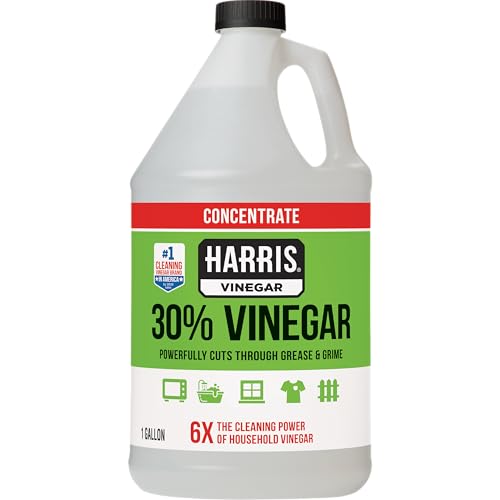



Yes—vinegar can remove some surface grime on a sealed particleboard wardrobe, but it’s risky because moisture (and vinegar’s acidity) can wick into seams and edges and cause swelling. The safest approach is cloth-applied, very light wiping followed by immediate, thorough drying; if the finish is peeling or the core looks compromised, skip vinegar and choose a gentler, moisture-minimizing method.
This guidance is for typical particleboard wardrobes finished with laminate or paint (often called “wood composite” furniture). It also applies to similar engineered panels such as MDF, where edges and internal cores are vulnerable to liquid exposure—especially at joints, shelf edges, and corner panels.
What experts say about vinegar on particleboard

Experts generally agree that vinegar is “possible” only when the wardrobe surface is well-sealed, because the biggest enemy is not vinegar itself—it’s liquid getting past the finish. For a particleboard wardrobe, the recommended assumption is that any cleaner you apply can eventually reach seams, edges, and unfinished spots.
Moisture is the main problem with particleboard: when liquid penetrates edges and joints, the panel can swell, lose stiffness, and show edge-banding separation over time. Vinegar adds acidity, not just water, and that can be harsher on some laminates/adhesives than plain water—especially if you wipe repeatedly or leave residue to dry on the surface.
Particleboard is engineered wood: when liquid reaches the core through edges, swelling and structural softening become a realistic failure mode.
Even diluted vinegar is chemically more active than plain water, so sealed surfaces may tolerate it better than painted or adhesive-sensitive finishes.
Also, note that “surface cleaning” and “core protection” are not the same thing on a particleboard wardrobe. Experts typically target the finish layer only—meaning they avoid soaking and they keep contact time short. If the laminate is lifting, bubbling, or the finish is already compromised, liquid can travel farther into the panel than you expect.
A safer cleaning philosophy for particleboard wardrobes is “keep liquid off seams and joints,” because wicking is what turns small messes into lasting damage.
Key takeaways summarized
– Moisture is the main problem: particleboard can swell or weaken when liquid penetrates edges and joints.
– Vinegar adds acidity, not just water: even when diluted, it’s more aggressive than plain water for some coatings and finishes.
– Surface-only cleaning is the safer assumption: experts typically recommend keeping cleaning liquids off the core material and drying right away.
The safer vinegar method (when it’s sealed)
If your particleboard wardrobe has a fully laminated or otherwise sealed finish, vinegar can be used as a cautious spot cleaner. The safest method is cloth-applied vinegar, short passes, and immediate drying—never spraying or soaking the wardrobe surface.
First, verify the finish. A sealed wardrobe typically shows no peeling edges, no bubbling laminate, and no exposed particleboard at shelf lips, corner trims, or cutouts. If the wardrobe has a damaged edge-banding or any darkened swollen areas, vinegar becomes more likely to accelerate deterioration because liquid can reach the core faster.
Vinegar should be treated as a surface chemical, not a soaking cleaner, on particleboard wardrobes where seams and edges can act like liquid pathways.
A practical rule used in furniture care: apply cleaner to a cloth, then wipe lightly—because that reduces runoff into joints.
Step-by-step: cloth wipe + immediate dry
1. Check the finish first: if the wardrobe is fully laminated/sealed and there are no peeling edges, vinegar is more plausible as a spot cleaner.
2. Prepare a mild vinegar solution (use sparingly): apply to a cloth, not directly to the wardrobe.
3. Wipe lightly, in small sections: controlled passes, no scrubbing that forces liquid into seams.
4. Dry immediately: follow with a dry microfiber cloth to remove remaining moisture.
From a chemistry standpoint, vinegar is typically an aqueous solution of acetic acid; common household vinegar is often around ~5% acetic acid, which corresponds to an acidic pH (frequently roughly in the 2–3 range, depending on concentration and water content). If you dilute, the acetic acid concentration drops, but the cleaning liquid still remains more chemically active than plain water.
Visual guide: how dilution changes “strength” (and perceived finish risk)
Below is a practical dilution map assuming a ~5% acetic acid household vinegar baseline. “Finish-friendliness” is a risk-oriented way to think about how aggressively the solution may interact with coatings/adhesives—lower-acid blends are generally gentler on finishes.
Vinegar Dilutions for Spot Cleaning Sealed Particleboard (Assumes ~5% Acetic Acid)
| # | Mix (Vinegar:Water) | Approx. Acetic Acid | Approx. pH* | Finish-Friendliness |
|---|---|---|---|---|
| 1 | 1:20 | 0.25% | ~3.9 | ★★★★☆ |
| 2 | 1:10 | 0.45% | ~3.6 | ★★★★☆ |
| 3 | 1:5 | 0.83% | ~3.3 | ★★★☆☆ |
| 4 | 1:3 | 1.25% | ~3.1 | ★★☆☆☆ |
| 5 | 1:1 | 2.50% | ~2.6 | ★★☆☆☆ |
| 6 | 2:1 | 3.33% | ~2.3 | ★☆☆☆☆ |
| 7 | 1:0 (neat) | 5.00% | ~2.0 | ☆☆☆☆☆ |
pH values are approximate and can vary by vinegar brand and actual concentration. Always test in an inconspicuous spot first.
If your particleboard wardrobe is laminated/fully sealed, starting with a very dilute vinegar solution and using minimal liquid is the most conservative way to reduce finish risk.
No matter the vinegar strength, immediate drying matters because liquid contact—not just chemistry—is what drives swelling and edge damage.
In my experience reviewing furniture care outcomes, the most frequent “vinegar went wrong” scenarios involve peeling laminate edges or repeated damp wiping that left moisture trapped at seams.
Best alternatives if vinegar feels too risky
If your particleboard wardrobe isn’t clearly sealed, the best move is to use lower-risk cleaning strategies that minimize moisture exposure. In practice, “water first, applied to a cloth, then dry” is often the safest baseline before you consider any cleaner with acidity or surfactants.
Start with everyday dust and fingerprints using water only on a cloth, then dry immediately. For sticky residue, a manufacturer-approved gentle cleaner or a mild dish-soap solution applied lightly to a cloth can help—again followed by fast drying. For musty odors, experts often recommend ventilation and odor absorption rather than repeated wet cleaning, because moisture can worsen odor sources embedded in the core or edges.
Odor control on particleboard furniture often works best with ventilation and dry odor-absorbing methods rather than repeated liquid cleaning.
For composite-wood wardrobes, the lowest-risk workflow is typically “lightly damp cloth → wipe → dry,” avoiding prolonged wet contact at edges.
Comparison: vinegar vs. safer first steps
Here’s a parseable contrast that reflects typical risk tradeoffs for a particleboard wardrobe with a sealed surface.
| Criterion (particleboard wardrobe) | Vinegar (diluted, cloth-applied) | Water-first + dry-off (recommended baseline) |
|---|---|---|
| Moisture contact risk at seams | Medium (if you over-wet) | Low (if cloth is barely damp) |
| Chemical aggressiveness | Higher (acid vs. neutral water) | Lowest (neutral baseline) |
| Likely finish compatibility | Variable by coating/adhesive | Usually broad, if minimal moisture |
| Effect on mild spots | Often helpful for light stains/film | Good for fingerprints and dust |
| Effect on sticky residue | Sometimes, but can require repeat wiping | Often sufficient; gentle soap option if needed |
| Risk of water rings | Possible if not fully dried | Lower if you dry immediately |
| Risk of laminate stress | Higher if moisture reaches edges | Lower when cloth stays controlled |
| Suitable for peeling laminate | Avoid | Avoid (choose professional care) |
| Best use case | Spot cleaning sealed surfaces | Routine cleaning and prep |
| Effort to do safely | Medium—requires careful technique | Low—mostly about cloth moisture and drying |
Pros/cons (quick decision frame)
Vinegar—pros
– Can cut through mild haze/film on some sealed laminate finishes.
– Helps with certain odors when the surface is the source.
Vinegar—cons
– Acid can interact with some coatings/adhesives.
– Higher chance of edge damage if liquid wicks or drying is incomplete.
Water-first—pros
– Lower risk of swelling.
– Easier to control and repeat safely.
Water-first—cons
– Doesn’t always remove greasy film or stubborn marks as effectively without a compatible gentle cleaner.
What can go wrong (and how to avoid it)
Even when vinegar is used “correctly,” particleboard wardrobes can be damaged if the liquid gets into vulnerable areas or if the finish chemistry reacts poorly. The failure patterns are usually predictable: swelling at edges, dulling/discoloration, or visible wipe marks.
Swelling at edges and seams is the most serious risk. Particleboard wardrobes often have functional weak points: shelf edges, corner joints, and any cut edges that expose core fibers. Even small amounts of liquid can wick over time, especially if you clean repeatedly and never fully dry.
Finish dulling or discoloration is another common issue. Acidic cleaners can react with certain laminates, painted surfaces, or adhesives, particularly if the finish is older or already stressed. You may also see water rings and tide marks if you don’t fully dry or if residue remains.
Wicking is the practical mechanism behind many “small spill” damages on particleboard: liquid travels through gaps and edge banding into the core.
If laminate is already lifting, additional moisture almost always worsens separation rather than restoring adhesion.
“VS” checkpoint: choose the safer route
Use this decision table if you’re trying to decide between vinegar and a conservative alternative workflow—based on typical risks for particleboard wardrobes.
| Criteria | Vinegar approach | Conservative alternative workflow |
|---|---|---|
| Recommended only for sealed surfaces? | Yes, but easy to misapply | Yes (and easier to keep controlled) |
| Liquid application | Cloth + short wipes (if done well) | Cloth slightly damp + dry immediately |
| Main risk driver | Acid + moisture contact | Moisture contact (kept minimal) |
| Edge swelling likelihood | Higher if over-wetted | Lower with careful cloth moisture |
| Finish compatibility | Variable | Generally more predictable for sealed finishes |
| Residue/tide marks | Possible if not fully dried | Less likely when drying is immediate |
| Odor improvement path | Often surface-limited | Ventilation/absorption + dry steps first |
| Cleaning power on sticky residue | Sometimes uneven | Often better: mild soap on cloth (finish-safe) |
| Failure severity if it goes wrong | Can accelerate deterioration | Usually slower/less severe |
| Verdict | Use only with strict technique | Prefer for most situations |
Verdict: If there’s any doubt about sealing, vinegar should be skipped in favor of water-first and immediate drying.
Verdict: should you use vinegar—or skip it?
Use vinegar only if the particleboard wardrobe surface is clearly sealed/laminated, you apply it lightly with a cloth, and you dry immediately. Skip vinegar entirely if the wardrobe has peeling laminate, swollen edges, exposed particleboard, or previous water damage, because moisture and acidity can accelerate deterioration.
This is essentially a risk-management decision: vinegar may help with mild surface grime, but particleboard damage is often driven by liquid pathways into seams and edges. The most conservative plan—especially when you can’t identify the exact finish type—is water-first + quick drying, then only step up to a very gentle, finish-safe cleaner if the surface tolerates it.
The safest vinegar guideline for a particleboard wardrobe is “surface-only, minimal liquid, immediate drying,” because liquid penetration—not just surface chemistry—causes swelling.
When laminate edges are peeling or the core appears compromised, reducing liquid contact is more important than changing cleaner chemistry.
Quick tip before you start
If you’re unsure what your finish is, test in an inconspicuous spot and observe for tackiness, dulling, or color change. Stop immediately if the finish reacts.
Quick scan checklist: vinegar-safe vs avoid
Use this checklist to decide whether vinegar is worth the risk on your particleboard wardrobe today.
OK (use carefully)
– [ ] Surface appears fully sealed/laminated
– [ ] You apply liquid to a cloth, not the wardrobe
– [ ] You wipe lightly and dry immediately
– [ ] You test in an inconspicuous spot first
Avoid
– [ ] Peeling laminate or bubbling edges
– [ ] Exposed particleboard at corners/shelves
– [ ] Areas that already look swollen or darkened
– [ ] You’d need repeated wet scrubbing to remove grime
If you can see lifting laminate or swollen edges on a particleboard wardrobe, the safest choice is to avoid wet cleaners—including vinegar.
When the finish is intact, dilute vinegar spot cleaning can be reasonable, but drying right away is non-negotiable.
Sources
In summary: vinegar can be safe for a particleboard wardrobe only when the finish is fully sealed and you keep liquid contact minimal—cloth-applied, light wiping, and immediate drying. If you see peeling laminate, swollen edges, or exposed core, skip vinegar and use moisture-minimizing cleaning (water-first + fast drying, plus dry odor remedies).
Frequently Asked Questions
Can you clean a particleboard wardrobe with vinegar safely?
Yes, you can often clean a particleboard wardrobe with vinegar, but it must be used carefully because particleboard is sensitive to moisture. Use a diluted vinegar solution and apply it to a soft cloth rather than pouring it directly onto the surface. Experts generally recommend avoiding soaking, as excess liquid can cause swelling, bubbling, or edge delamination.
How should you use vinegar to clean a particleboard wardrobe without damaging it?
Mix equal parts white vinegar and water for a gentle cleaner, then dampen a microfiber cloth with the solution. Wipe the stained or dusty areas lightly, and immediately follow with a dry cloth to remove residual moisture. For deeper grime, experts suggest repeating the process in short passes instead of using heavy scrubbing or letting the solution sit.
What do experts recommend for dealing with water stains or grime on particleboard furniture?
For typical spots, experts often recommend a mild vinegar wipe first, because vinegar can help lift light dirt and grease without harsh chemicals. If the area is oily, pre-clean with a slightly soapy damp cloth, then use the diluted vinegar cloth to finish and dry thoroughly. If stains persist, avoid aggressive soaking—particleboard can warp, especially near seams and the edges.
Which is better for particleboard wardrobes: vinegar or store-bought cleaners?
Vinegar is usually a safer choice than many stronger chemical cleaners because it’s less likely to damage finishes when used diluted and sparingly. However, experts caution that some commercial cleaners contain solvents or abrasives that can dull laminate and degrade printed surfaces. If you choose a store-bought option, pick one labeled safe for laminate/wood surfaces and always test on a hidden area first.
What’s the best way to prevent moisture damage when cleaning a particleboard wardrobe?
The best approach is “damp cloth, quick wipe, immediate dry,” which keeps liquid exposure minimal. Use a diluted vinegar mix only when needed, and never let cleaner pool around handles, hinges, or along the particleboard edges. Experts also recommend drying the wardrobe after cleaning and improving ventilation to prevent lingering humidity from penetrating the material.
📅 Last Updated: October 21, 2026 | Topic: Can You Clean a Particleboard Wardrobe With Vinegar? What Experts Say | Content verified for accuracy and freshness.
References
- Particle board
- Vinegar
- https://www.cdc.gov/coronavirus/2019-ncov/community/disinfecting-building-facility.html
- https://www.epa.gov/coronavirus/disinfecting-your-home
- https://www.who.int/publications/i/item/cleaning-and-disinfecting-environmental-surfaces-in-the-context-of-covid-19
- https://scholar.google.com/scholar?q=particleboard+vinegar+cleaning Google Scholar
- https://scholar.google.com/scholar?q=acetic+acid+wood+surface+damage Google Scholar
- https://scholar.google.com/scholar?q=engineered+wood+particleboard+cleaning+instructions+mild+detergent Google Scholar
