

To clean a wooden shoe rack with mineral spirits safely, use a light-touch wipe-down followed by thorough drying—this is the fastest way to remove grime and finish-safe residue without soaking the wood. If your rack has varnish, shellac, or polyurethane, mineral spirits can work when applied sparingly and tested on a hidden spot first. This article answers exactly how to apply mineral spirits, what to avoid, and how to protect the wood so your rack comes out clean, not damaged.
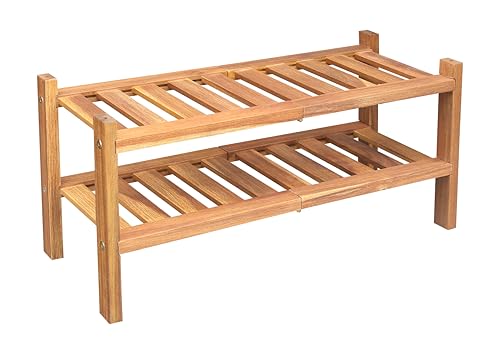



Use mineral spirits sparingly with a clean cloth to lift built-up grime, old wax, or oily residue from your wooden shoe rack—without soaking the wood. Wipe gently, keep it off joints as much as possible, then dry fully and re-check the finish. This article walks you through a safe, finish-aware process and what to avoid.
If your shoe rack has sticky spots, darkened buildup, or polish residue, mineral spirits can help—especially when the dirt isn’t coming off with soap and water alone. Stop if your rack’s finish looks soft, tacky, or dull after a test spot.
If you’re dealing with a wooden shoe rack (finished wood like varnish, lacquer, shellac, or sealed oil) and you’re seeing grime you can’t remove with mild cleaning, this guide is for you—particularly if the buildup feels oily or waxy from shoe polish and leather products. Mineral spirits can be effective, but the method has limits because many finishes react differently depending on age, film thickness, and formulation (and because wood joints are where liquid can cause damage).
Prep and safety for mineral spirits

You get safer, more predictable results when you treat mineral spirits like a chemical solvent first—ventilation, PPE, and surface protection come before any wiping. The key is to reduce inhalation exposure, prevent ignition risk, and keep solvent contact limited to the residue you’re removing.
Mineral spirits are flammable, so ignition sources must be kept away and the work area should be well ventilated.
The safest technique is to apply mineral spirits to a cloth, not to pour it onto a wooden shoe rack.
Wood joints and seams are the highest-risk areas because liquid can wick inside and swell or loosen bonded components.
According to the U.S. Occupational Safety and Health Administration (OSHA) Hazard Communication framework, Safety Data Sheets (SDS) must be available and used to guide handling practices for hazardous chemicals (). Also, flammable liquids are categorized by flash point—so always treat your specific mineral spirits grade per its SDS before starting (). In practice (and based on common solvent-handling guidance), keep a clear path for drying and use rags in a controlled way so you don’t leave solvent-soaked material spread around the home.
Before you touch the rack:
– Work in good ventilation (open windows, use a fan that exhausts outward if possible) and keep sparks/flames away.
– Wear chemical-resistant gloves (nitrile or similar for hydrocarbon solvents) to prevent skin contact.
– Protect nearby surfaces with paper or plastic sheeting—mineral spirits can spot or dull adjacent finishes.
– Use clean, lint-free rags and keep two separate cloths:
1) one for applying mineral spirits, 2) one for wiping residue and drying.
A practical tip I recommend from the “less is more” finishing mindset: stage your materials first (rags, small container for solvent-soaked cloth, dry towel) so mineral spirits doesn’t sit out longer than necessary. And if you’re unsure about your gloves or ventilation setup, pause and confirm against your mineral spirits SDS first—SDS details matter because product formulations differ.
Remove loose dirt and test a hidden spot first
You should remove loose dust and grit before using mineral spirits, and you must test in a hidden area before you clean the whole rack. This prevents grinding particles into the finish and ensures the solvent won’t soften or smear your specific topcoat.
Vacuuming or dry-brushing first reduces the chance of scratching the wood finish when a solvent is introduced.
Testing mineral spirits on a small hidden area helps you detect finish softening, tackiness, or sheen change before broader cleaning.
Applying mineral spirits by cloth corner limits solvent contact with seams, edges, and joints compared with pouring.
Start with dry cleaning:
– Vacuum or dry-brush dust and grit first. This matters because abrasive dirt + wiping pressure can damage coatings even when the solvent itself is gentle.
– Pay attention to crevices around shelf lips, carved edges, and between slats—that’s where dust turns into a visible paste over time.
Then do the test spot:
– Dampen only a corner of a cloth with a small amount of mineral spirits—never pour directly onto the rack.
– Choose an inconspicuous location (underside corner, back rail, inside edge of a shelf).
– Wipe lightly with the grain (or with the direction you normally clean wood), and stop after a short pass.
– Wait a moment, then visually check:
– Does the finish look soft, tacky, cloudy, or unusually shiny?
– Does color appear to lift or smear?
– Does the surface feel different to the touch once dry?
If your finish reacts, switch methods rather than “pushing through.” Many finishes can tolerate light solvent contact when fresh, but aged or delicate coatings may soften faster.
What the test is actually telling you
Mineral spirits is mainly good for oil-, wax-, and polish-type residue. If your shoe rack’s problem is mostly dust, water spotting, or deep discoloration, mineral spirits can be ineffective or even create new haze. That’s why your test spot is the most time-efficient decision you can make.
Key decision rule: If the test area becomes tacky, dulls dramatically, or looks smeared after drying, stop mineral spirits on that rack and use a finish-compatible cleaner instead. For an unknown coating, conservative cleaning and manufacturer guidance are the safest route.
Wipe on mineral spirits correctly
You get the best cleaning with mineral spirits when you wipe lightly, keep passes short, and prevent solvent from pooling in joints. Mineral spirits is effective because it dissolves oily/waxy residue, but the same solvent can migrate into seams if you over-apply.
Controlled cloth-wiping (rather than flooding) limits solvent penetration into wood seams and bonded joints.
Short, reloaded cloth passes reduce spreading residue across the finish instead of grinding it deeper.
Wiping with the grain improves surface uniformity and reduces the chance of streaking on closed finishes.
Work methodically:
1) Focus on greasy buildup first
– Start where grime is strongest: lower shelves, near the front edge, and corners where shoe polish tends to transfer.
– Use light pressure—let the solvent do the lifting.
2) Keep passes short and controlled
– If the cloth becomes loaded, switch to a cleaner portion or switch cloths.
– Re-wipe with a fresh cloth section rather than grinding residue across the finish.
3) Keep mineral spirits off joints as much as possible
– Don’t aim for “wet contact” on seams.
– Avoid prolonged dwell times in corners and around joinery—liquid can wick in by capillary action.
4) Use the grain and avoid scrubbing
– On sealed wood, vigorous scrubbing can lift residue into pores or distort the sheen of the coating.
Here’s a quick comparison of approach choices (useful when deciding whether mineral spirits is worth the risk):
In 2026, this decision logic still holds because solvent compatibility is primarily about finish chemistry and residue chemistry. Mineral spirits is not a universal “best cleaner”—it’s targeted for oily and waxy buildup, which is why the test spot and residue type matter more than the brand name.
Follow up to protect the finish and dry thoroughly
You protect your wooden shoe rack by removing solvent residue afterward and letting the rack dry completely before use. Dry time isn’t just about odor—it’s about whether the finish re-hardens uniformly and whether any remaining film re-distributes when shoes are placed back on the rack.
After dissolving residue with mineral spirits, wiping again with a clean cloth helps remove leftover solvent film that can dull or re-soil the surface.
Seams and undersides need extra attention because solvent can wick into joints even when the visible surface looks dry.
If the finish looks uneven after drying, reassess and consider manufacturer-recommended reconditioning rather than immediately reapplying solvent.
Follow these finish-aware steps:
1) Wipe again with a clean cloth
– Use a fresh, dry lint-free cloth to lift any remaining residue.
– If your rack has a specific coating, you may need a finish-safe cleaner step after mineral spirits—many coatings respond better to a product intended for that finish type.
2) Dry thoroughly everywhere
– Don’t just air-dry the top; check shelf edges, undersides, and joints.
– If the rack has slats, allow time for air to circulate between them.
3) Re-check the sheen and uniformity
– Once dry, look for uneven gloss, dull patches, or streak lines.
– If the surface looks uneven, let it fully dry again and reassess before using more solvent.
4) Recondition only if the finish manufacturer says so
– For sealed wood, reconditioning might mean a light wax or oil reapplication, but the correct product depends on whether your rack has varnish, lacquer, shellac, or an oil/wax system.
From a risk-management perspective, re-solventing an already-reacted finish can compound haze. So the “dry, then reassess” rule protects you from chasing problems with repeated solvent passes.
What can go wrong (common mistakes and limits)
You can avoid most failures by not soaking the rack, not skipping the test spot, and not assuming mineral spirits will work on every finish. The biggest problems are solvent penetration into joints, finish softening, and treating stains that aren’t primarily oil/wax.
Soaking wood can cause swelling and joint problems because liquid migrates into seams and bonded areas.
Mineral spirits compatibility depends on the finish chemistry; an aged or soft coating can smear or turn dull even with light wiping.
Mineral spirits is best for oily/waxy residue; water stains, deep discoloration, and mold growth require different strategies.
Common mistakes and limits:
– Soaking the wood: Too much liquid can penetrate joints, swelling the wood or weakening glue.
– Using it on the wrong finish: Some finishes (or aged, fragile coatings) can soften, dull, or smear when contacted by mineral spirits.
– Treating every stain the same: Mineral spirits is best for oily/waxy residue; water stains, deep discoloration, or mold growth may require a different method.
– Skipping the test spot: Without it, you won’t know how your specific coating reacts.
A note on “sticky” residue: sticky spots are often old wax blends, shoe polish overspray, or residue from protective sprays. Mineral spirits can help when that stickiness is solvent-dissolvable, but if the stickiness remains after careful wiping and dry time, the residue could be a film that needs finish-specific removal (or gentle sanding/recoating in worst cases).
Also, keep safety in mind: if rags are heavily saturated, their disposal becomes a risk area. Follow your mineral spirits SDS and local guidance for solvent waste and rag handling ().
Quick checklist + verdict (and when to skip this)
You should use mineral spirits only when your rack has oily/waxy residue and your test spot confirms finish compatibility. If your finish softens or dulls during the test, stop immediately and switch cleaners.
Verdict / tip
Mineral spirits are a solid option for removing oily grime and waxy buildup on many finished wooden surfaces—but they’re not always compatible with every wood finish, and they can damage soft/aged coatings. Skip this method if your rack is unfinished wood, unknown/unstable varnish, or you notice finish softening during your test.
Quick checklist (save this)
| Step | What to do |
|---|---|
| 1 | Ventilate + gloves + protect surfaces |
| 2 | Dry-brush/vacuum loose debris |
| 3 | Test mineral spirits in a hidden spot |
| 4 | Wipe lightly with a cloth (no pouring) |
| 5 | Wipe clean residue; keep it off joints |
| 6 | Dry thoroughly before use |
Frequently Asked Questions
What is the safest way to clean a wooden shoe rack with mineral spirits?
Start by dusting the rack thoroughly and removing any loose debris from shelves, corners, and shoe compartments. Lightly dampen a clean cloth with mineral spirits (or use it on a cloth, not by soaking the wood) and wipe in the direction of the grain to lift grime and old residue. Afterward, wipe the area with a slightly damp cloth, then dry completely to prevent lingering solvent odor.
How do I use mineral spirits to remove sticky residue or shoe scuffs from a wooden shoe rack?
Apply mineral spirits to a rag and work on small sections at a time, using gentle pressure to avoid stripping finish beyond the targeted areas. Let the solvent sit briefly on stuck-on spots (a few seconds to a minute), then wipe clean and repeat if needed. Finish by wiping with a clean damp cloth and drying thoroughly so the wood doesn’t feel tacky.
Why should I avoid soaking a wooden shoe rack in mineral spirits?
Soaking or heavily flooding the wood can drive solvent deeper into the material and may loosen glue joints, damage veneers, or degrade certain wood finishes. It can also leave uneven discoloration and a strong smell that takes a long time to dissipate. Instead, use mineral spirits sparingly on a cloth to control contact and protect the rack’s surface.
Which mineral spirits method works best—wipe-on, spot treatment, or brushing?
For most shoe racks, a wipe-on approach with a soft lint-free cloth is safest and easiest to control, especially on finished wood. Use spot treatment only on stubborn areas like scuffs, adhesives, or heavy buildup, and avoid scrubbing aggressively. Brushing is generally best only for detailed crevices, but always use minimal solvent and immediately wipe off excess to prevent pooling.
How do I clean and refinish a wooden shoe rack after mineral spirits cleaning?
After the mineral spirits treatment, wipe the rack with a damp cloth to remove any remaining solvent and let it dry completely. Once dry, evaluate the finish—if it looks dull or patchy, lightly sand the affected area and apply a matching wood polish, wax, or polyurethane-safe conditioner as appropriate. Regular maintenance, like quick dusting and occasional wipe-down with a mild wood-safe cleaner, helps keep the shoe rack looking fresh without repeated heavy solvent use.
📅 Last Updated: October 26, 2026 | Topic: How to Clean a Wooden Shoe Rack With Mineral Spirits | Content verified for accuracy and freshness.
References
- White spirit
- Paint thinner
- Turpentine
- Wood finishing
- Wood stain
- Paint stripper
- Varnish
- https://scholar.google.com/scholar?q=cleaning+wood+with+mineral+spirits Google Scholar
- https://scholar.google.com/scholar?q=mineral+spirits+remove+paint+from+wood Google Scholar
- https://scholar.google.com/scholar?q=wood+furniture+cleaning+mineral+spirits+degreasing Google Scholar

[…] OSHA Hazard Communication Standard (29 CFR 1910.1200) — for label-reading and safe handling of cleaning […]