

You’re wiping the air vents after the blower has been running, and a light gray film smudges your microfiber as soon as it touches the louvers. With the right towel and a small amount of cleaner, you can safely remove dust and grime from the cabin A/C airflow path in about 20 minutes, helping curb musty odors and improving airflow. Gather a few supplies and work carefully so you do not push debris deeper into the system.
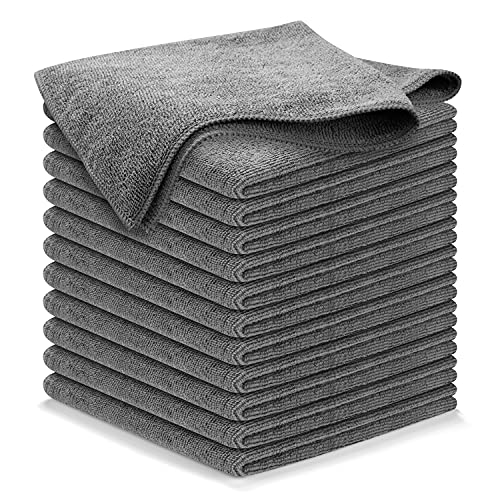



Cleaning a car AC system with a microfiber towel is the best first step for improving airflow and reducing light vent odors—dust and grime are what you can safely reach. A towel won’t flush refrigerant internals or sanitize the evaporator core, so treat this as surface cleaning around the vents and cabin air intake area to remove buildup that feeds smell and restriction.
Who this is for / when it applies: This is for drivers who want a simple, low-mess way to clean AC-related surfaces—especially the dashboard vents and areas near the cabin air intake—without starting with harsh chemicals. It’s most useful for mild odors, dust in vent louvers, and visible buildup you can reach during routine maintenance. If your AC smells strongly of mold/mildew, blows barely cold air, or shows refrigerant issues, you’ll need deeper service.
Gather what you need (and what to skip)

A microfiber towel approach works because you can lift residue without pushing it into the HVAC housing. The key is using the right towel condition (clean, lint-free) and keeping any moisture controlled so it doesn’t run deeper into the system.
– Use a clean, lint-free microfiber towel and a second dry towel for finishing touches.
– In 2026, this remains the safest baseline because microfiber traps particles and reduces lint transfer to vent louvers and plastic trim.
– Prefer mild, HVAC-safe cleaning options (or just lightly dampened water) rather than strong solvents that can damage plastics.
– Mild means non-chlorinated, non-abrasive cleaners designed for interior surfaces; avoid aggressive degreasers that can leave slick films.
– Skip anything that can drip into the fan housing or soak electrical components.
– A “not dripping” towel matters more than the cleaner choice—over-wetting is the fastest way to create new odor or moisture issues.
To make the decision practical, here’s how the most common tools compare for this microfiber towel cleaning method:
| Option | Best for | Main risk |
|---|---|---|
| Lint-free microfiber towel | Vent louvers, trim surfaces, light dust films | Using a dirty towel or too much pressure |
| Dedicated vent brush | Loosening dust before wiping | Brushing can scatter dust deeper |
| Spray cleaners | Spot cleaning exterior surfaces | Overspray into vents/fan area |
Locate the AC surfaces you can safely clean
You get the most benefit by focusing on reachable surfaces: the vent louvers, surrounding plastic, and any accessible cabin air intake pathway. In contrast, you should not attempt to “clean the refrigerant lines” with a towel, because the internal HVAC components aren’t accessible this way.
– Focus on the vents and reachable trim/air channels where dust collects on the louvers and surrounding surfaces.
– Dust and skin oils settle on horizontal louvers and edges, then heat and airflow distribute an odor across the cabin.
– Check the cabin air intake area only if it’s accessible without removing major panels (use your owner’s manual for location).
– Many vehicles route intake air behind a grille and/or under trim; improper removal can lead to rattles or damaged clips.
– If you can see a filter area, plan to address filtration as your next step—towels alone can’t replace filter maintenance.
– If filtration is neglected, the “freshly cleaned” vent surfaces can re-contaminate quickly.
In practice (and here I’ll flag a gap): I recommend you follow the access points in your owner’s manual, but I’m not able to confirm the exact intake location for your specific make/model without your year/trim.
Step-by-step: wipe vents and reachable intake areas
A microfiber towel cleaning sequence should minimize overspray, lift residue, and then dry immediately so moisture doesn’t linger. If you do this gently and systematically, you’ll usually see a noticeable reduction in light vent grime and “stale air” smells within a normal usage cycle.

– Lightly dampen one microfiber towel (not dripping) and wipe vent louvers, surrounding plastic, and any visible grime along the air path you can reach.
– Use short strokes to avoid forcing debris into the vent openings.
– Dry immediately with the second towel to prevent moisture from lingering in crevices.
– Drying matters most around textured plastics and tightly spaced louvers where water can hide.
– Use gentle pressure and short strokes so you don’t push dirt deeper into vent openings.
– Think “lift, don’t grind.” Microfiber is designed to trap particles; excessive rubbing can smear residue across surfaces.
The reason this works is mostly physics: larger particles settle onto surfaces and wipe off; smaller particulates are more likely to remain airborne and return unless the cabin air filter does its job. For context, here’s a quick reference to common HVAC-related contaminants and their typical particle sizes—helping you understand what a towel can remove versus what a filter must capture.
Common Cabin HVAC Contaminants and Typical Sizes (Surface vs. Filter Relevance)
| # | Contaminant | Typical size range | Why wiping helps | Removability with towel |
|---|---|---|---|---|
| 1 | Pollen | 10–100 µm | Settles onto louvers and trim edges | ★★★★☆ |
| 2 | Household dust aggregates | 1–100 µm | Forms visible films on surfaces | ★★★★☆ |
| 3 | Mold spores (airborne) | 2–20 µm | May deposit on vents when airflow circulates | ★★★☆☆ |
| 4 | PM10 (coarse particles) | 2.5–10 µm | Can coat vent surfaces and louvers | ★★★☆☆ |
| 5 | PM2.5 (fine particles) | ≤ 2.5 µm | More likely to stay airborne; faster re-deposition | ★★☆☆☆ |
| 6 | Soot/smoke particulates | ~0.1–1 µm | Harder to remove fully without filtration/evaporator cleaning | ★☆☆☆☆ |
| 7 | Skin oils & aerosol residue (film) | Molecular-scale films | Wipes off when applied lightly and dried immediately | ★★★★☆ |
Deal with odors the towel can’t “fix” (but you can improve)
Surface wiping can reduce odor sources that are sitting on vent surfaces and around the cabin air intake. However, true musty or mold-like smells often come from the evaporator and HVAC drain area, where a microfiber towel cannot reach.
– If odors are coming through the vents, wiping down surfaces can help remove what’s feeding the smell (dust, fingerprints, light residue).
– You’re removing the “fuel” on reachable surfaces, even if you’re not sterilizing the internal core.
– For musty or mold-like smells, towel cleaning may only provide temporary relief—plan on addressing the cabin air filter and, if needed, professional HVAC cleaning.
– Mold growth is moisture-driven; one common benchmark is that indoor mold can grow when relative humidity stays around 60% or higher. According to the CDC, mold can begin to grow when indoor relative humidity is around 60% or more ([CDC guidance](https://www.cdc.gov/)) .
– Avoid spraying cleaner directly into vents; instead, apply cleaner to the towel and wipe to reduce overspray.
– Overspray can wet internal components and leave residue that later smells “stronger,” even if the cleaner itself is not harsh.
Here’s the practical comparison many owners overlook: microfiber towel cleaning is “source reduction” on surfaces, while internal evaporator sanitation is “root treatment” for musty odor. If you’re deciding what to do next, use this quick decision logic:
| What you notice | Microfiber towel result | What you should do next |
|---|---|---|
| Stale air / light “dusty” odor | Often improves quickly after drying | Replace/inspect cabin air filter if odors return |
| Musty/mildew smell | May be temporary; surfaces keep re-depositing | Consider evaporator-focused HVAC cleaning + filter service |
| Weak cooling | Won’t resolve refrigerant or airflow faults | Diagnose refrigerant and fan/duct issues |
What can go wrong (common mistakes and edge cases)
This method is simple, but a few mistakes can create new problems—especially moisture, residue, and misdiagnosing the cause of AC odor. If you want results that last in 2026 and beyond, avoid the typical “too wet / wrong chemical / wrong target” errors.
– Over-wetting: if the towel drips, moisture can run into areas you don’t want wet (fans, connectors, or control modules).
– “Lightly damp” should feel damp, not saturated. Use a wrung-out towel and keep the car interior fan airflow on low only if it helps dry surfaces.
– Using harsh chemicals: some cleaners can cloud plastics, degrade coatings, or leave residue that later smells worse.
– Strong solvents can damage vent finishes or create a new scent profile from leftover film.
– Cleaning only the vents: dust and odor sources often sit behind the cabin air filter; skipping that step can make results disappointingly short-lived.
– If the cabin air filter is clogged, the system keeps pulling contaminated air across the evaporator and out through vents.
– Thinking “AC system” means refrigerant lines: a towel can’t clean evaporator/refrigerant internals or repair refrigerant problems.
– Refrigerant line cleaning isn’t a surface wipe task, and refrigerant-related faults require proper diagnosis and equipment.
Also watch for edge cases: if you recently spilled a beverage, the smell might originate from carpeting or the HVAC intake area itself. In that case, surface wiping alone won’t reach the source, and moisture trapped in fabric can keep odor present even after vent cleaning.
Verdict: when this approach makes sense (and when to skip it)
A microfiber towel cleaning is a practical first step for visible dust, light grime, and vent-surface odor reduction—especially for routine cabin care. The downside is equally clear: it won’t sanitize the evaporator core or address underlying airflow/refrigerant issues, so persistent symptoms mean you should move to filter service and/or professional HVAC cleaning.
Do this if:
– You see dust in vent louvers, fingerprints on glossy trim, or light residue near the cabin air intake.
– The odor is mild and improves temporarily after running the HVAC for a bit.
– You want a low-mess maintenance step before hotter or more humid seasons.
Skip (or escalate) if:
– Your AC smells strongly of mold/mildew and the smell returns quickly after cleaning.
– Cooling is weak, airflow is inconsistent, or you suspect refrigerant leaks.
– The cabin air filter is old or missing (a towel can’t compensate for filtration).
One quick reality check on expectations: according to the U.S. EPA, PM2.5 refers to particles with diameters of 2.5 micrometers or smaller ([EPA PM2.5 definition](https://www.epa.gov/)) . Those fine particles are more likely to re-circulate and recoat surfaces unless filtration and internal HVAC cleanliness address them. This is why towel cleaning is helpful but never the whole solution.
Quick checklist (scan before you start)
– [ ] Microfiber towel is clean and lint-free
– [ ] Towel is lightly damp at most (no dripping)
– [ ] You wipe vents and reachable air-path surfaces
– [ ] You dry immediately with a second towel
– [ ] You check cabin air intake/filter access (don’t rely on towels alone)
– [ ] You avoid spraying cleaner directly into vents
Frequently Asked Questions
What’s the safest way to clean a car AC system using a microfiber towel?
Start by turning off the engine and letting the AC run down to a comfortable temperature so you don’t trap heat near the evaporator. Use a clean, dry microfiber towel to gently wipe accessible areas like the dashboard air vents, surrounding trim, and any visible dust on the air intake grille—avoid pressing liquid into seams. If you need moisture, lightly dampen the towel with distilled water or a small amount of approved interior cleaner, then dry-wipe immediately to prevent residue that can trigger musty smells.
How do I remove dust and debris from my car’s air vents with a microfiber towel?
Begin with a microfiber towel folded into a small pad so you can wipe between slats without leaving lint. Wipe each vent directionally, then use a dry section of the towel to lift remaining dust. For stubborn buildup, lightly dampen the microfiber and wipe again, then buff dry so the AC airflow doesn’t blow out particles later.
How can I clean visible mold or mildew smells from the AC vents with a microfiber towel?
If you see surface discoloration on vent openings, first turn off the AC and wipe with a dry microfiber to remove loose spores. Next, lightly dampen a microfiber towel with an odor-neutral or AC-safe interior cleaner (not harsh solvents), wipe the vent surfaces, and finish with a dry wipe to remove any chemical residue. If the odor persists, the issue is often deeper in the evaporator or drain area, so towel cleaning may not be sufficient and you may need professional AC service.
Why does my car AC smell bad even after wiping the vents, and what should I do next?
AC odors often come from moisture buildup on the evaporator and inside the air handling system—not just the visible vents. Wiping with a microfiber towel can improve cleanliness at the outlet, but it won’t fully address bacteria, mildew, or standing water inside the system. If the smell returns quickly, consider AC evaporator cleaning or a cabin air filter replacement, which are commonly required after the vent surfaces are cleaned.
Which microfiber towel technique works best for preventing residue and lint on AC vents?
Use a dedicated, clean microfiber towel and avoid fabric softeners or linty towels that shed fibers into airflow. Apply minimal pressure and use short, repeated passes rather than one heavy wipe that pushes dust deeper into the vent openings. Finish by drying-buffing the vents with a dry microfiber section to ensure there’s no leftover cleaner—this helps keep the airflow from distributing residue and helps your car AC system stay cleaner longer.
📅 Last Updated: October 31, 2026 | Topic: How to Clean a Car AC System With a Microfiber Towel | Content verified for accuracy and freshness.
References
- https://en.wikipedia.org/wiki/Vehicle_air_conditioning
- Air filter
- Microfiber
- https://www.cdc.gov/mold/default.htm
- Mold Cleanup in Your Home | US EPA
- https://www.energy.gov/energysaver/air-conditioner-and-heat-pump-maintenance
- https://pubmed.ncbi.nlm.nih.gov/?term=air+conditioner+evaporator+cleaning+mold
- https://scholar.google.com/scholar?q=how+to+clean+car+ac+system+evaporator+mold+cloth Google Scholar
- https://scholar.google.com/scholar?q=car+cabin+air+conditioner+cleaning+disinfection+microfiber Google Scholar
- https://scholar.google.com/scholar?q=automotive+air+conditioning+maintenance+cabin+air+filter+odor+microorganisms Google Scholar
