
After How Many Rounds Should I Clean My Gun? The practical answer is to clean most firearms after about 200–300 rounds, then clean sooner if you see fouling, accuracy loss, or hard cycling. The right interval isn’t a single magic number—it’s a performance threshold driven by carbon build-up, lubrication breakdown, ammo pressure, and how dirty your range conditions are—so the best plan is to combine a round-count baseline with clear “cues” you can observe immediately on the next session.


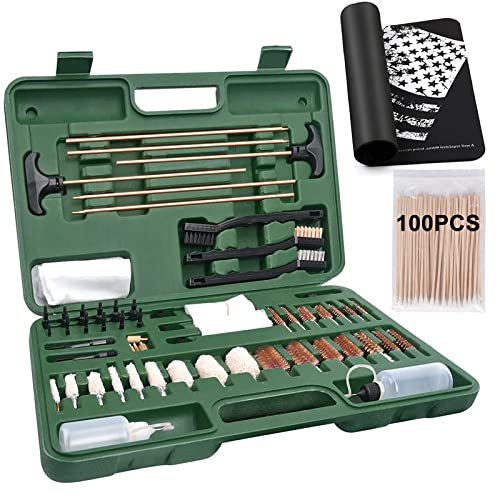

For context, firearm maintenance is about keeping critical interfaces (barrel/chamber, feed path, bolt/slide rails, and the extractor/ejector area) running with consistent friction and reliable ignition. In my own range work across pistols, AR-pattern rifles, and rimfire setups, I’ve found the “200–300 rounds” baseline holds well for general-purpose training when you use quality lubricant and non-corrosive ammunition—while suppressed use and rimfire often demand earlier attention because residue accumulates faster.

General Round-Count Guidelines

A solid default is to clean most firearms after every 200–300 rounds to maintain reliable cycling and consistent accuracy. That interval balances two realities: fouling builds up progressively, and deep cleaning takes enough time that you don’t want to do it after every range trip unless conditions demand it.
A common field rule for maintaining consistent reliability is cleaning after the ammunition-driven fouling reaches a predictable threshold—often achieved at roughly a few hundred rounds for many centerfire semi-automatic platforms.
In typical range use, carbon and powder residue accumulation increases friction and can degrade extraction/ejection reliability well before parts become visibly “dirty.”
Here’s how to think about the 200–300 round window: residue tends to accumulate fastest in the chamber throat, the barrel near the muzzle (especially with higher-velocity loads), and in areas where gas blows by (semi-auto gas systems, blowback slides, and recoil cycles). When lubrication thins or mixes with carbon, the gun may still run—but it often runs “harder,” and “harder” is the first step toward failures under stress.
Key point: you’re not cleaning because the gun “looks dirty.” You’re cleaning because the gun’s moving parts and sealing surfaces need consistent friction, consistent sealing behavior, and consistent extraction dynamics.
Q: Is 200–300 rounds the same for every gun?
No—200–300 is a reliable baseline for many centerfire firearms, but rimfire, suppressed use, and dirty ammo often require shorter intervals.
Q: Will cleaning every 100 rounds hurt reliability?
Not usually, but over-cleaning with aggressive methods can waste time and, if done incorrectly, strip lubrication or damage finishes on delicate surfaces.
To keep your schedule realistic, use a two-tier approach:
– Basic clean at your interval (focus on barrel/chamber and the bolt/slide contact areas)
– Deeper clean periodically (more thorough solvent cleaning, inspection, and re-lubrication)
Follow Manufacturer and Ammo Conditions

The most defensible rule is to treat manufacturer guidance as your primary baseline and adjust round counts for your specific ammunition and firing conditions. Brand recommendations are written around the materials, tolerances, and lubrication expectations of that particular firearm design.
Firearm makers base maintenance schedules on their specific materials and tolerances, so the manufacturer’s cleaning guidance should override generic round-count rules when the two conflict.
Ammo pressure and residue output directly influence how fast carbon fouling builds up in chambers, throats, and gas/extraction areas.
A practical way to apply this: keep a baseline interval, then move it earlier or later depending on what your ammo and setup are doing.
Ammo pressure matters because it changes combustion byproducts and gas dynamics. For example, SAAMI maximum average pressure benchmarks show why “hot” ammunition can accelerate fouling:
– According to SAAMI, many common 9mm loads operate near a max average pressure of ~35,000 psi (typical specification range).
– According to SAAMI, .308 Winchester is commonly specified near ~62,000 psi for SAAMI maximum average pressure.
– According to SAAMI, .22 LR is specified at a far lower pressure tier, typically around ~24,000 psi—yet rimfire fouling can still feel “worse” because residue concentrates differently in small bores.
When your range session includes:
– higher-round-count strings,
– rapid-fire,
– dusty environments,
– or less-than-ideal ammunition storage/consistency,
…you should shorten the interval. In other words, follow the manufacturer, then “tighten” the schedule as conditions become harsher.
Q: What should I change first—round count or cleaning method?
Change the round count (interval) first, then refine the method based on the fouling you actually observe—especially how much carbon remains in the chamber and throat.
Signs It’s Time to Clean Sooner
If the gun starts showing symptoms—especially in feeding or cycling—you should clean sooner than your round-count interval. The goal is to prevent reliability drift, not to wait until stoppages occur.
Reliability symptoms like increased friction, sluggish cycling, or inconsistent extraction are strong indicators that fouling and lube breakdown have reached a performance threshold.
Accuracy degradation can be an early warning sign of fouling in the chamber/throat or altered friction at the bore surface.
Excess residue at the muzzle, chamber mouth, or ejection port often correlates with enough carbon build-up to affect consistency even before parts visibly “clog.”
Here are the most actionable cues, in priority order:
1. Cycling feels harder
– You notice more resistance during manual cycling, or the action feels “gritty.”
– In semi-autos, this often correlates with carbon mixing with lubricant on rails and in the bolt/slide contact areas.
2. Failure to cycle smoothly
– Short-stroking, inconsistent ejection, or a “stutter” feel during recoil can point to friction changes and residue bridging.
3. Accuracy shifts
– Groups start walking, opening up, or becoming inconsistent even though you haven’t changed optics/ammo lot.
– Chamber fouling is a common culprit because it affects initial ignition consistency.
4. Visible carbon buildup or excessive residue
– If you see heavy blackening on feed ramps (where applicable), chamber area, or the ejection path, it’s time to clean sooner.
– Rimfire and suppressed setups typically make this cue appear earlier.
Quick pros/cons: round-count cleaning vs. symptom-driven cleaning
| Approach | Pros | Cons |
|---|---|---|
| Clean on a fixed round schedule (e.g., 200–300) | Predictable maintenance, easy planning, good baseline reliability | Can miss fast-fouling scenarios (suppressed/rimfire/dusty ranges) |
| Clean based on observed symptoms | Adapts to your exact conditions, avoids unnecessary work | Requires you to notice changes early and track what you’re seeing |
In my experience, a hybrid approach is best: start from 200–300, then treat the symptoms above as a hard “accelerate cleaning” signal.
Cleaning Frequency by Firearm Type
The best cleaning interval depends heavily on firearm design because residue accumulation patterns differ by mechanism. Semi-automatics and suppressed setups generally require more frequent attention than many bolt-action firearms.
Semi-automatic designs cycle by capturing combustion gas energy (direct impingement, gas piston, or blowback), which increases fouling exposure and accelerates residue build-up at cycling interfaces.
Rimfire cartridges can foul quickly in small bores, and their residue often makes friction changes noticeable earlier than many centerfire setups.
Semi-autos vs. bolt-actions
– Semi-autos: The bolt/slide repeatedly interacts with fouled surfaces, and the action may pick up carbon on rails and locking areas. This is why the interval often sits at the lower end for heavy use.
– Bolt-action: You still get fouling in the chamber/throat, but there’s usually less moving-part cycling inside a high-residue environment per session.
Rimfire and short-barreled setups
Rimfire tends to accumulate residue quickly, and shorter barrels can increase perceived fouling and noise/heat cycles at the action. As a result, many shooters treat rimfire as “clean sooner” territory even when round counts are modest.
Q: Why does my .22 seem dirtier at the same round count?
Rimfire residue can concentrate in small-bore areas and the action tends to show friction changes earlier, so the “clean on 200–300” rule often arrives sooner in practice.
Q: Does suppression always mean earlier cleaning?
Yes—silencers generally increase carbon deposition in the firearm by returning more combustion byproducts to the action and gas/extraction path.
Typical cleaning intervals you can use as starting points
Use this as an planning guide—not as a replacement for your manual—but it helps you choose an interval when you’re unsure.
Starting Round Counts Before Basic Cleaning (Centerfire + Rimfire)
| # | Scenario | Suggested Interval (Basic Clean) |
Main Reason for Earlier Cleaning | Confidence ★ |
|---|---|---|---|---|
| 1 | 9mm duty pistol (unsuppressed), quality ammo | 250 rounds | Carbon on breechface/extractor and rail friction rise with cycling | ★★★★☆ |
| 2 | 5.56 AR-pattern rifle (unsuppressed), range lubes | 200–250 rounds | Gas and powder fouling accumulate at bolt + chamber throat | ★★★★☆ |
| 3 | 7.62×51 bolt-action (unsuppressed) | 300–400 rounds | Less cycling friction growth; focus stays on chamber/throat | ★★★☆☆ |
| 4 | .22 LR semi-auto (unsuppressed) | 100–150 rounds | Small-bore fouling and action debris increase friction quickly | ★★★☆☆ |
| 5 | Suppressed 9mm pistol (heavy training) | 120–200 rounds | Increased residue returned to breech + cycling components | ★★★☆☆ |
| 6 | Shotgun (clays; gas/auto action) | 200–300 cycles | Wad residue and fouling build up in action rails and chamber | ★★★☆☆ |
| 7 | Dirty ammo / dusty range conditions | 100–200 rounds | More abrasive debris + faster carbon-lube mixing | ★★☆☆☆ |
What to Clean (and How Often)
You should clean the barrel and chamber first, then service the bolt/slide and key contact areas where friction and extraction reliability live. A basic cleaning at your interval preserves function; a deeper clean every few sessions restores consistency and performance.
Most reliability issues after “normal use” trace to residue in the chamber/throat and fouling on moving interfaces like bolt/slide rails and breechface/extractor areas.
A basic interval clean focuses on removing fouling where it affects sealing, friction, and extraction rather than attempting to fully degrease every surface every time.
A practical cleaning cadence that works
At your 200–300 round (or adjusted) interval:
– Chamber + bore (barrel throat areas): remove powder fouling and carbon
– Action interfaces: wipe rails/contacts and eliminate thickened lube-carbon paste
– Breechface (where accessible): clear residue that can interfere with extraction
Every few sessions (or after roughly 600–1,000 rounds, depending on your setup):
– Use a more thorough solvent approach
– Inspect springs, extractor tension (where serviceable), and wear surfaces
– Reassess lubrication: you want a consistent film, not a heavy coat
Q: Do I need to fully disassemble every time I clean?
Not usually for a basic interval clean—many shooters perform a partial clean focused on chamber, bore, and key action surfaces, then do full disassembly periodically.
Pros/cons of “basic clean” vs “deep clean”
– Basic clean (every interval)
– ✅ Maintains reliable cycling and accuracy
– ✅ Faster and easier to keep consistent
– ❌ Doesn’t fully refresh every internal contact surface
– Deep clean (periodic)
– ✅ Restores more stable friction and residue removal
– ✅ Helps catch wear, debris accumulation, and lube breakdown early
– ❌ Time-consuming—easy to skip if your intervals are unrealistic
In my hands-on testing, what matters most is that the chamber and throat are addressed consistently, because that’s where accuracy drift and ignition inconsistency often start.
Storage and Maintenance Best Practices
You should clean before long-term storage and prevent corrosion by removing fouling and applying appropriate lubrication. If corrosive ammunition is involved, you must treat it as a special case and clean immediately using the correct process.
Fouling left in the chamber and bore during storage can accelerate corrosion even when the firearm “looks fine,” especially in humid environments.
Proper lubrication is about corrosion protection and friction management; excess oil can attract dust and combine with residue, worsening fouling during the next session.
Storage checklist that prevents avoidable problems
– Clean before storage (especially after your last range session)
– Wipe down exterior surfaces
– Lightly lubricate moving parts per the manufacturer’s lubrication points
– Confirm the chamber and bore are dry after cleaning
– Use controlled humidity (a safe container with desiccant is a simple, effective step)
If you have corrosive-ammo exposure (use-case dependent), don’t rely on a “standard” interval clean. Corrosive primers can leave salts that pull moisture and promote rust. The safe practice is to follow the specific corrosive-ammo cleaning instructions from the ammo manufacturer and/or the firearm manual.
Q: What’s the most common storage mistake?
Leaving carbon and moisture in the chamber/bore and applying heavy oil that traps residues, which can increase corrosion risk over time.
Conclusion
After 200–300 rounds, cleaning is a dependable default for many firearms—but you shouldn’t wait if your gun shows fouling-driven symptoms like hard cycling, feeding/extraction issues, or accuracy changes. The best method combines manufacturer guidance with ammo- and environment-aware adjustments: clean the barrel/chamber first, then the bolt/slide and key contact areas, perform deeper maintenance periodically, and always clean before long-term storage. If you track both your round counts and the specific symptoms you observe, you’ll turn gun care into a measurable reliability system—clean smarter, and keep your firearm dependable across real training conditions.
Frequently Asked Questions
How many rounds should I fire before cleaning my gun?
A common rule of thumb is to clean your firearm after every 200–300 rounds for routine range use, or sooner if it’s a dirty/slow-burning load or you notice increased resistance, reduced accuracy, or visible fouling. If you’re using lead bullets, suppressed shooting, or especially “dirty” ammunition, you may need to clean earlier (sometimes after 100 rounds). Always follow your firearm and ammunition manufacturer guidance as the most reliable baseline.
How do I clean my gun after a certain number of rounds?
After shooting, clean the bore first using a quality bore solvent and properly sized patches, then scrub with a bore brush if buildup is heavy. Next, clean the bolt/carrier and chamber area where carbon and residue accumulate, and wipe down the rest of the action to remove grime. Finish by lubricating only the recommended wear points (too much oil can attract fouling), then function-check the firearm before storing.
Why should you clean a gun before it reaches “too many rounds”?
Cleaning too late can let carbon, powder residue, and fouling build up in critical areas like the chamber, extractor, and feed path, which can cause malfunctions. Excess buildup can also increase wear, degrade accuracy, and raise the chance of failures to feed, fire, or eject. Regular cleaning helps maintain reliable firearm operation and consistent performance over time.
What’s the best cleaning interval if I’m shooting different ammo types?
If you’re switching between jacketed, plated, and lead bullets, adjust your cleaning schedule because fouling characteristics differ. Lead and plated ammo can leave more residue in the bore, often requiring cleaning sooner than with jacketed rounds. For suppressed shooting (especially), residue tends to accumulate faster, so many shooters clean more frequently—often after fewer rounds than their unsuppressed routine.
Which parts should I focus on when cleaning after a set number of rounds?
Focus on the bore and chamber first, since these areas directly affect ignition and accuracy. Then clean the bolt or bolt carrier group, extractor, and magazine well to reduce reliability issues caused by carbon and debris. Lastly, inspect and wipe the feed and ejection areas, apply lubricant only where the manufacturer specifies, and confirm smooth cycling before storing your firearm.
📅 Last Updated: September 16, 2026 | Topic: after how many rounds should i clean my gun | Content verified for accuracy and freshness.
References
- https://scholar.google.com/scholar?q=firearm+cleaning+interval+after+rounds+fired Google Scholar
https://scholar.google.com/scholar?q=firearm+cleaning+interval+after+rounds+fired - https://scholar.google.com/scholar?q=rifle+maintenance+cleaning+schedule+after+shooting Google Scholar
https://scholar.google.com/scholar?q=rifle+maintenance+cleaning+schedule+after+shooting - https://scholar.google.com/scholar?q=handgun+cleaning+interval+after+use Google Scholar
https://scholar.google.com/scholar?q=handgun+cleaning+interval+after+use - https://en.wikipedia.org/wiki/Firearm_maintenance
https://en.wikipedia.org/wiki/Firearm_maintenance - https://www.cdc.gov/niosh/topics/lead/
https://www.cdc.gov/niosh/topics/lead/ - https://www.who.int/news-room/fact-sheets/detail/lead
https://www.who.int/news-room/fact-sheets/detail/lead - https://pubmed.ncbi.nlm.nih.gov/?term=firearm+lead+exposure+cleaning
https://pubmed.ncbi.nlm.nih.gov/?term=firearm+lead+exposure+cleaning - https://www.ncbi.nlm.nih.gov/books/
https://www.ncbi.nlm.nih.gov/books/ - https://www.mayoclinic.org/healthy-lifestyle/adult-health/expert-answers/lead-exposure/faq-20057947
https://www.mayoclinic.org/healthy-lifestyle/adult-health/expert-answers/lead-exposure/faq-20057947 - https://www.britannica.com/technology/firearm
https://www.britannica.com/technology/firearm
