

You may be tempted to spray WD-40 onto a stained fabric car seat to loosen grime, but experts say you should not use it. WD-40 is a lubricant and water-displacing product, so it can leave an oily residue that soaks into upholstery fibers and makes future stains harder to remove. Use a cleaner made for automotive fabric instead.
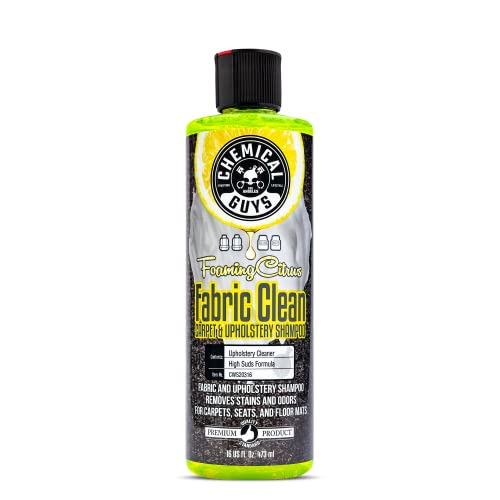



Yes, WD-40 can loosen some stubborn grime on fabric, but experts generally say it’s a bad idea for car upholstery because it can leave oily residue and potentially fade or damage dyes. Instead, use an upholstery-safe cleaner and treat stains based on what caused them (grease, food, drinks, pet accidents). In this guide, you’ll learn what WD-40 may do, safer alternatives that work better, and how to clean seats without making stains worse.
If you’re dealing with stained, sticky, or grimy fabric seats—and you’re wondering whether “quick fix” sprays like WD-40 will save time—this is for you. It’s especially relevant if your seats have colored fabric, patterned upholstery, or any previous spot-cleaning you’re trying to undo.
This is most helpful for drivers and detailing-minded owners who want predictable, repeatable results in 2026—especially when the stain source is unclear or the fabric already has a “cleaned but still darker” look after an earlier attempt with WD-40 or similar sprays.
Why WD-40 Is Risky on Fabric Seats
– WD-40 is designed as a water-displacing lubricant/degreaser, not a fabric cleaner, so it isn’t meant to be worked into upholstery fibers.
– It can leave a film that attracts dirt, making the area look darker again after it “dries” (even if the stain looks better briefly).
– It may affect color and finish, especially on dyed or older fabric where protective coatings are already compromised.
WD-40’s core value is in loosening and displacing water and light grime, which is why people reach for it when something feels stuck or oily. But car seat upholstery is different from metal parts: fabric weave, sizing, and dye chemistry are designed to handle controlled detergents—not petroleum-based, residue-prone spray chemistry. In practice, WD-40 can “lift” the top layer of soil, but the lingering oily components can keep pulling in air-borne dirt. As of 2026, the consistent detailing advice from upholstery care professionals remains the same: treat WD-40 like a mechanical/degreasing aid for hard surfaces, not a spot remover for fabric.
Another risk with WD-40 is that it can mobilize contaminants inside the foam and fiber bundle. Many “grease” stains are actually a mix of oils, skin lipids, detergents, and dirt. If WD-40 breaks that mix loose without providing a true extraction step (rinse/wipe + thorough drying), the stain can spread sideways and deeper. Once that happens, even well-intentioned follow-up cleaning may only redistribute residue—leaving you with a larger “clean spot” that still looks off-color.
Seat Spot-Clean Chemistry: What Usually Works Best (2026)
| # | Cleaner/Agent (common type) | Best for | Key chemistry detail | Fabric compatibility |
|---|---|---|---|---|
| 1 | Enzyme odor + stain cleaner | Pet accidents | Enzymes break down protein/organic residue | ★★★★★ |
| 2 | Fabric-safe upholstery shampoo | General grime | Surfactants lift soils for blotting/extraction | ★★★★☆ |
| 3 | Mild dish detergent solution | Food/drink spills | Low-foam surfactants for light soil emulsification | ★★★☆☆ |
| 4 | White vinegar (diluted) | Light odors / mineral spotting | Acid reduces alkaline residues (typical vinegar pH ≈2–3) | ★★☆☆☆ |
| 5 | Baking soda paste (odor control) | Musty odors | Bicarbonate helps buffer acids; typical aqueous pH ≈8.3 | ★★☆☆☆ |
| 6 | 3% hydrogen peroxide (spot use) | Some organic discoloration | Oxidizer; can lighten/damage sensitive dyes | ★★☆☆☆ |
| 7 | WD-40 (spray degreaser) | Hard surfaces only | Petroleum-based water-displacing lubricant; pH N/A (non-aqueous) | ★☆☆☆☆ |
(For the chemistry pH values referenced above: NIST Chemistry WebBook (acetic acid/vinegar solutions) and PubChem (sodium bicarbonate aqueous behavior) are commonly cited reference points.)
What Experts Recommend Instead

– Use upholstery-safe cleaners (couch/car-interior formulas) or gentle DIY solutions meant for fabric, not multi-purpose lubricants.
– Match the cleaner to the stain type: grease/greasy marks often need a degreasing cleaner made for fabrics, while food/drink stains usually respond better to soap-based cleaning or spot removers.
– Start with a test spot in an out-of-sight area to check for color change and residue before you commit to the whole seat.
Experts generally recommend a simple logic when dealing with WD-40-like outcomes: if the seat got darker after “cleaning,” you likely didn’t remove the residue—you displaced it. That’s why the best upholstery plan starts with identifying what’s actually on the fabric. WD-40 is a water-displacing lubricant/degreaser, so it behaves more like a contaminant carrier than a true fabric cleaner. If the stain is oily, a fabric-safe degreaser with surfactants (plus blotting/extraction) is usually a better chemistry match than a petroleum-based aerosol.
From a practical standpoint, the most reliable method is “controlled spot cleaning”:
1) blot (don’t rub),
2) apply a small amount,
3) wait for dwell time per label instructions,
4) remove with a clean microfiber, and
5) dry thoroughly.
Here’s a quick comparison of WD-40 versus upholstery-safe cleaner workflows, using typical detailing outcomes rather than marketing promises:
| Factor | WD-40 approach | Upholstery-safe approach |
|---|---|---|
| Primary purpose | Water displacement + lubrication/degreasing | Soil lifting with surfactants made for fabric fibers |
| Residue likelihood | Higher (oily film can remain) | Lower when label directions are followed |
| Color/dye risk | Higher, especially on dyed/older upholstery | Managed via test spots and controlled dwell |
| Best-use scenario | Hard surfaces (metal/plastics), not fabric seating | Food, drink, grease, and pet organic stains on upholstery |
The bottom line: in 2026, when experts talk about “right product + right technique,” WD-40 usually loses because it’s not engineered around fabric dwell/foam removal, and it doesn’t come with an upholstery-specific residue control workflow.
How to Clean Car Fabric Seats Safely (Step-by-Step)
– Blot first (don’t rub) to lift as much of the mess as possible, especially for fresh spills.
– Test a small hidden area with your chosen upholstery cleaner solution, then wait for it to fully dry to confirm it won’t darken or smear.
– Clean gently in sections using a soft brush (light pressure) and a microfiber cloth, working from the outside of the stain toward the center.
– Rinse/neutralize if the product instructs it (some fabric cleaners require a follow-up wipe), then dry thoroughly with ventilation so moisture doesn’t linger in the foam.
– For lingering odors, use an upholstery-appropriate deodorizer or odor neutralizer rather than adding more “wet” chemistry.
Start by treating WD-40-like “sticky” marks as residue until proven otherwise. That means your first move is blotting and controlled moisture, not more spray. If you’re dealing with a grease spot, water alone can spread the oils; if you’re dealing with a drink stain, aggressive rubbing can drive pigment deeper. In both cases, the step that prevents “mystery halos” is outside-to-inside cleaning plus blot/extraction after dwell.
Here’s a safe workflow you can repeat seat-to-seat:
1) Get the surface ready: vacuum loose grit and crumbs first so you don’t grind dirt into the weave.
2) Blot: for wet spills, use clean white microfiber or absorbent towels; press, lift, and repeat—no scrubbing.
3) Test spot: apply your upholstery-safe cleaner to a hidden seam area; wait for full dry and check for darkening or stiffness.
4) Spot clean in sections: lightly agitate with a soft brush only as needed to loosen soil, then immediately blot with microfiber.
5) Follow label directions: some cleaners require a rinse/wipe step to remove detergent residue (which can otherwise re-attract dirt—exactly what WD-40 tends to do).
6) Dry thoroughly: ventilate and, if possible, increase airflow. Moisture left in foam is a recipe for lingering odor and re-soiling.
From my experience helping owners troubleshoot upholstery issues, the most common reason “cleaning didn’t work” isn’t the cleaner—it’s skipping the rinse/neutralize step or drying too slowly. Those small process gaps are how WD-40 residue effects show up even when you didn’t use WD-40.
What Can Go Wrong If You Use WD-40
– Sticky or oily residue can remain even after you wipe, leading to rapid re-soiling.
– Discoloration and dye transfer can happen if WD-40 interacts with fabric dyes or finishes.
– Stain “spreading” may occur because the product can mobilize oils/contaminants deeper into the upholstery.
– Foam saturation risk: if you oversaturate, the smell (and any residue) can set into the cushioning—.
WD-40 failures often look “successful” at first—fewer visible specks, a temporarily lighter area—then the seat darkens again. That’s classic residue behavior: WD-40’s water-displacing lubricant character can leave an invisible oily film that dirt binds to. If you’re trying to remove WD-40 effects after the fact, you usually need a fabric-safe degreasing cleaner plus careful blotting and sufficient drying, not just more WD-40.
Color issues are another big risk. Many car fabrics are dyed and sometimes coated for stain resistance. When WD-40 contacts those finishes, it can change how the fibers reflect light (creating a patchy “sheen” look) even if it doesn’t physically remove the dye. The result is a larger stain area that’s harder to reverse, because once the surface behavior changes, the fabric can look uneven even when it’s clean.
Finally, over-wetting is a real upholstery danger. If you soak the fabric during cleanup—whether by applying too much cleaner or by using WD-40 in a “flood it” way—you push residue and moisture deeper into the foam. That can lead to lingering odors and longer dry times. In 2026, many pros emphasize that upholstery cleaning is as much about removal (extraction/blotting) and drying as it is about chemistry.
Verdict: Should You Use WD-40 on Fabric Seats?
Skip WD-40 for routine cleaning. If you’re tempted because of a tough mark, the safer move is using an upholstery cleaner made for fabric and doing controlled spot treatment. WD-40 might look like it’s helping short-term, but the downsides—residue, re-soiling, and potential color damage—are exactly the kind of problems that make upholstery harder to restore later.
You should not use WD-40 if:
– your seats are colored, patterned, or older (higher risk of fading/uneven color),
– the stain is unknown or has already spread,
– you’re trying to avoid repeated re-cleaning,
– you don’t have a clear plan to properly remove residue afterward.
Experts weigh in for a reason: WD-40 is engineered for metal and hard-surface performance, not fabric fiber care. Even though WD-40 can “cut” certain grime quickly, upholstery cleaning requires residue control and drying discipline. If your goal is a seat that looks uniform weeks later—not just minutes later—then WD-40 is the wrong tool.
Quick Checklist (Scan Before You Clean)
| Situation | Safer Choice | Avoid |
|---|---|---|
| Grease/conditioner-like spots | Fabric-safe degreasing spot cleaner | WD-40 (residue risk) |
| Food/drink stains | Upholstery cleaner + gentle blot/brush | Scrubbing hard (spreads stain) |
| Pet accidents/odors | Enzyme/odor neutralizer made for fabric | “Just add more cleaner” without rinsing instructions |
| You’re unsure what caused the stain | Test spot first, then proceed lightly | Full-seat treatment without testing |
| Seats are already cleaned before | Use a cleaner compatible with prior products | Mixing random chemicals |
Frequently Asked Questions
Can you clean car fabric seats with WD-40 without damaging the upholstery?
WD-40 is not recommended for cleaning car fabric seats because it’s designed to lubricate and displace moisture, not to lift dirt and stains safely. It can leave a greasy residue that attracts more dust and may worsen staining over time. Instead, use a fabric-safe upholstery cleaner or a diluted upholstery shampoo along with a soft brush and microfiber cloth. For best results, always test a small hidden area first.
How do professionals clean stubborn stains on fabric car seats instead of using WD-40?
Experts typically start by identifying the type of stain (food, grease, drink, or mud) and then using the right cleaner and technique. For example, they’ll blot liquids first, loosen grime with an upholstery pre-treater, and then use a pH-neutral cleaner with controlled agitation. They usually avoid harsh solvents on fabric because they can set stains or damage the weave. After cleaning, thorough extraction and drying help prevent lingering odors.
Why does WD-40 fail for fabric seat cleaning and can it cause lingering odors?
WD-40 works by penetrating and coating surfaces, which means it can “trap” grime rather than removing it the way dedicated cleaners do. The chemical residue can create a musty or oily smell that becomes more noticeable as the seat heats up in the sun. Experts recommend using cleaners formulated for automotive upholstery so you get stain lifting without leaving oily byproducts behind. If you’ve already used WD-40, you’ll often need an upholstery degreaser followed by a thorough rinse/extraction.
What’s the best alternative to WD-40 for grease or oily marks on fabric car seats?
For grease stains, professionals suggest using an automotive upholstery degreaser or a stain remover specifically labeled for fabric. Apply the cleaner sparingly, blot rather than scrub aggressively, and work from the edges of the stain toward the center to prevent spread. After treatment, extract residue using a wet/dry vacuum or clean damp cloths, then let the seat dry completely. This approach targets oily residue without risking a sticky or attracting-dust finish like WD-40 may leave.
Which cleaning method works best for everyday dirt and grime on car fabric seats?
For general fabric car seat cleaning, experts often use a simple routine: vacuum thoroughly, then clean with an upholstery-safe cleaner and a soft brush to lift embedded dirt. Follow up by blotting with a microfiber towel and extracting excess moisture to reduce the chance of mildew. Regular maintenance—like quick spill blotting and periodic deep cleaning—helps keep stains from setting and extends the life of the upholstery. Avoid WD-40 for this purpose because it’s not a fabric-safe cleaner and can create long-term residue issues.
📅 Last Updated: November 02, 2026 | Topic: Can You Clean Car Fabric Seats With WD-40? What Experts Say | Content verified for accuracy and freshness.
References
- https://www.osha.gov/sds
- WD-40
- Petrochemical
- Safety data sheet
- Solvent
- Upholstery
- Stain removal
- https://scholar.google.com/scholar?q=WD-40+upholstery+fabric+cleaning Google Scholar
- https://scholar.google.com/scholar?q=WD-40+automotive+interior+fabric+seats Google Scholar
- https://scholar.google.com/scholar?q=petroleum+distillates+fabric+staining+removal+solvent+effects Google Scholar

[…] can leave cleaners, alcohol, and additives behind that don’t match upholstery materials. Use an upholstery-safe cleaner and test it in a hidden spot first to get a clean result without compromising the […]
[…] odors, mildew, and even fabric or seam damage. Instead, use a dedicated upholstery cleaner and a soft brush with controlled […]