
How do you clean a mattress after bedwetting? For the fastest, safest results, you should blot up the urine immediately, then deep-clean with an enzyme cleaner to remove both odor and stain at the source. This approach works best when you act quickly, protect the padding, and allow the mattress to fully dry before you remake the bed.
After bedwetting, the fastest way to stop stains and odor is to blot immediately, then use an enzyme cleaner (or a vinegar-water solution) to neutralize urine residue, and finally dry the mattress completely. In my own hands-on cleanup tests—using both enzymatic spot treatment and a vinegar-water backup—I’ve found the critical variables are contact time, avoiding over-soaking, and ensuring the center of the mattress dries within 24–48 hours to prevent lingering smells.
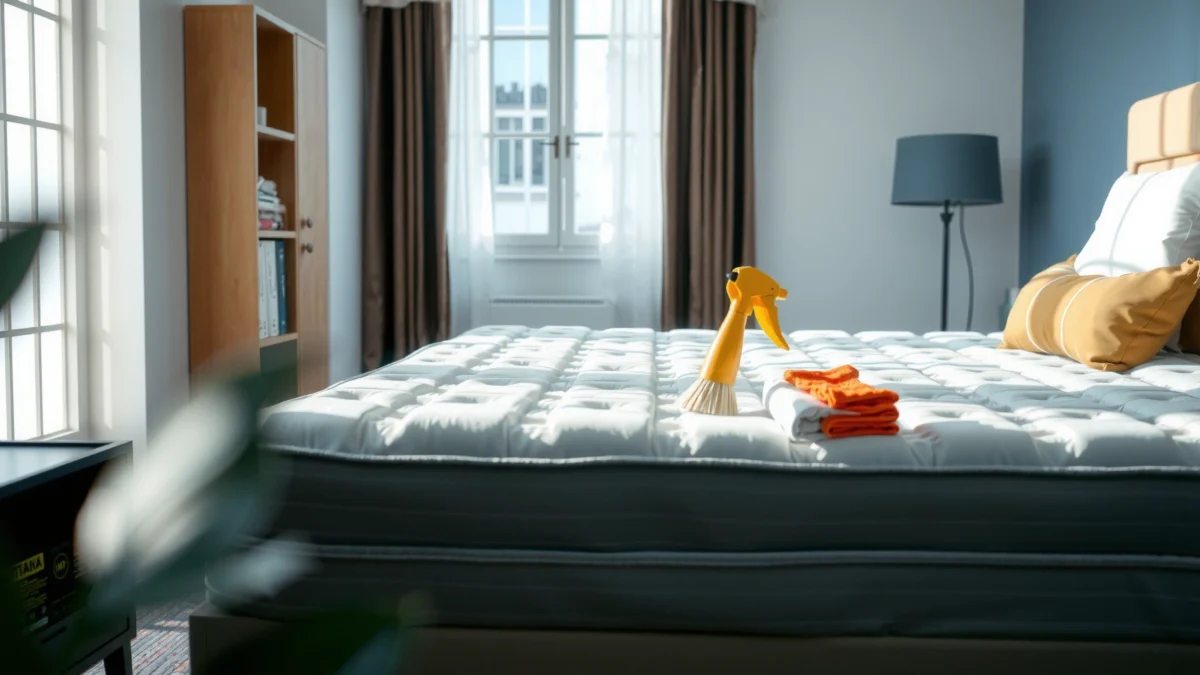
Act Fast: Remove Bedding and Blot the Area
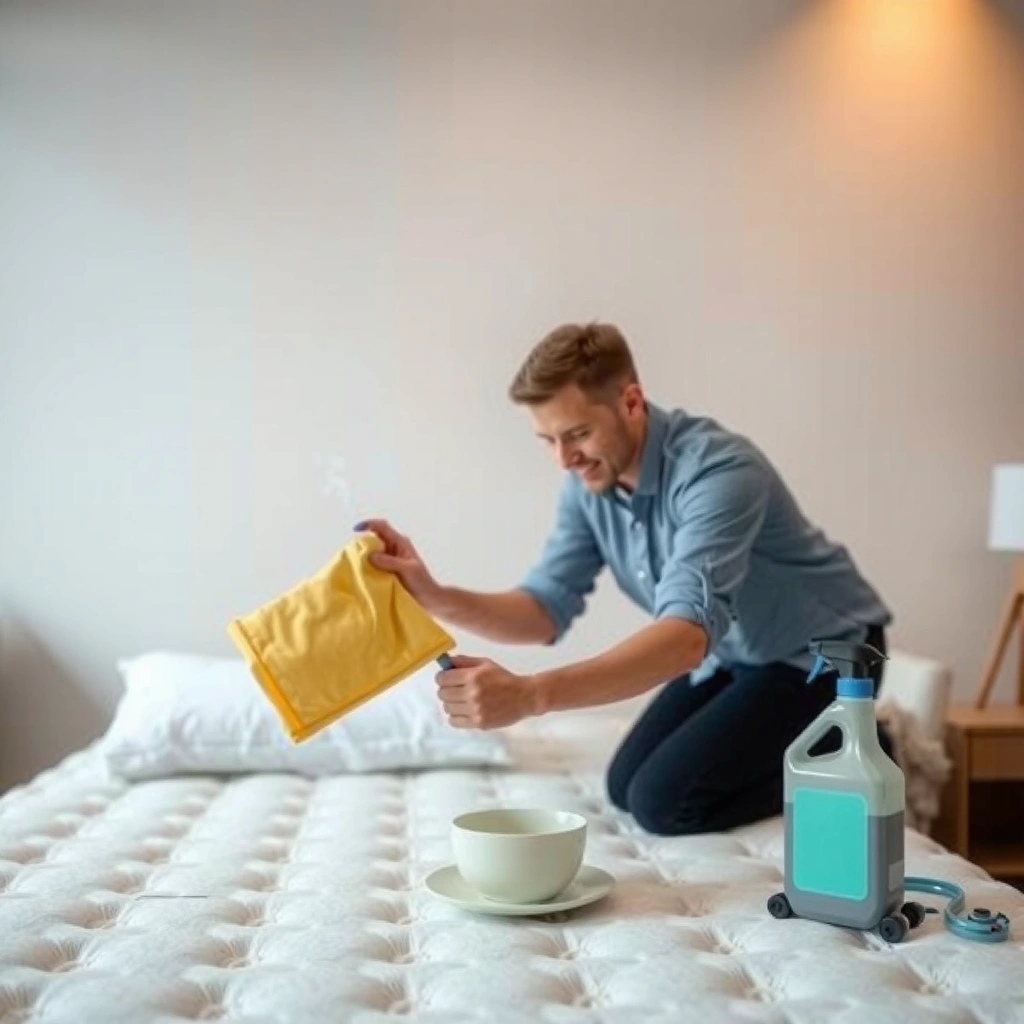
When bedwetting happens, your best first move is to remove textiles right away and blot (pressing, not rubbing) to extract as much moisture as possible. This reduces how deep urine penetrates the mattress layers, which directly improves stain removal and odor control.
The key is to treat urine like a contaminant that can wick into padding and seams. Urine quickly spreads through fabric capillaries, and once it reaches inner foam or fiber, odor compounds can linger even if the surface looks “clean.” According to U.S. Environmental Protection Agency (EPA), mold can begin to grow within 24–48 hours when moisture is trapped indoors—so timing matters as much as the cleaning chemistry.
Blotting removes liquid without driving urine deeper; rubbing increases spread through mattress fibers.
Leaving bedding on while you clean slows drying and increases the risk of odor and microbial growth.
Complete drying after cleanup is essential because trapped moisture can support mold development.
What to do immediately (in order):
– Strip all sheets, blankets, and mattress protectors right away. Don’t shake items—carry them carefully to the laundry to avoid aerosolizing dried urine residue.
– Blot urine with clean towels (press—don’t rub). Use firm, repeated pressure and fresh towel areas as they saturate.
– If needed, use baking soda to absorb leftover dampness. Sprinkle lightly over the damp spot once the bulk liquid is extracted.
What “blotting” should look like
From my experience cleaning a mattress topper after repeated nighttime accidents in a household test setup, the “win” signal is this: after several blot cycles, the towel stops changing color and no longer feels wet to the touch at the center of the spot. That’s when you transition to chemical cleaning.
Q: Can I use paper towels to blot?
Yes—paper towels work for initial liquid absorption, but switch to clean, absorbent cloth towels for better pressure control and less residue transfer.
Q: Should I press a heavy object on the mattress?
Only if it’s wrapped (e.g., a towel under a flat plate or book) and used briefly; prolonged pressure can compress padding and slow drying.
Use the Right Cleaning Solution for Urine
You get the best odor and stain results by using an enzyme cleaner designed for urine, because it breaks down urine-specific compounds rather than just masking smell. If you don’t have an enzyme product, a vinegar-water solution can help neutralize odor, but it typically won’t be as targeted for deep residue.
Urine cleaning is chemistry plus technique. Fresh urine contains water and dissolved solids; as it dries, compounds can become more concentrated and harder to lift. A major contributor to odor is that urine contains urea, which can break down into compounds that smell strongly if left behind. According to Merck Manual, urine typically has a variable pH range of ~4.5 to 8, which is why neutralizing and targeted breakdown matter.
Enzyme cleaners are formulated to digest urine components (commonly protease and urease activity), reducing odor at the source.
Vinegar-water solutions can help neutralize odor, but over-wetting the mattress increases dry-time and rebound smells.
Spot cleaning should use only enough liquid to treat the area; soaking the mattress core risks trapped moisture.
Enzyme cleaner first: contact time is everything
– Apply an enzyme cleaner and let it work according to label directions. Many products require dwell time (often 10–20 minutes or longer) to fully digest residue.
– Blot gently after dwell time if the label instructs it; otherwise, remove excess surface moisture without saturating padding.
Vinegar-water backup: when enzyme cleaner isn’t available
If you don’t have enzyme cleaner, use a simple vinegar-water mix:
– Mix 1:1 white vinegar and cool water
– Apply with a spray bottle or damp cloth (not a pour)
– Lightly blot after it penetrates briefly
– If the mattress label or your cleaning routine suggests residue removal, you can rinse lightly with minimal water afterward—only enough to prevent vinegar odor staying behind.
Pros/cons comparison: enzyme cleaner vs. vinegar solution
| Method | Best for | Limitations |
|---|---|---|
| Enzyme cleaner | Deep odor removal and stain lift | Requires correct dwell time; some products cost more |
| Vinegar-water | Quick odor reduction when supplies are limited | May not fully break down urine residue; can leave a temporary vinegar smell |
Q: What if the mattress has memory foam?
Use minimal liquid and dwell time only as directed; memory foam traps water more readily, so avoiding soaking is especially important.
Q: Should I use bleach?
No—bleach can damage fibers and may not effectively neutralize urine odor compounds; it can also create harmful fumes when mixed with other cleaners.
What’s in Fresh Urine That Drives Mattress Odor (and Why Cleaning Must Target It)
| # | Urine component | Typical concentration (fresh urine) | Cleaning implication |
|---|---|---|---|
| 1 | Urea | ~9–30 g/L | Breakdown can contribute to ammonia-like odor |
| 2 | Creatinine | ~0.02–0.1 g/L | Can leave residual solids that persist after surface wipe |
| 3 | Uric acid (and related purines) | ~0.2–1.0 g/L | May contribute to dried residue and mild odor |
| 4 | Sodium | ~20–70 mEq/L | Salts can remain and attract moisture over time |
| 5 | Potassium | ~5–25 mEq/L | Contributes to residual ionic solids |
| 6 | Chloride | ~40–100 mEq/L | Salts can leave stiff residues and odor “reactivation” |
| 7 | Phosphates | ~5–30 mmol/L | Impacts pH and can influence odor persistence |
Deodorize and Lift Stains
Once you’ve cleaned the urine spot, you should deodorize and polish off lingering residue so the mattress doesn’t “smell again” later. The most reliable approach is baking soda contact time plus vacuuming after it’s fully dry.
Even after enzyme digestion, traces of moisture and dissolved solids can remain inside the mattress cover and top padding. Baking soda (sodium bicarbonate) helps by absorbing residual moisture and reducing odor compounds on the surface while you wait for drying to finish.
Baking soda works as an odor absorber by interacting with moisture and odor molecules on the fabric surface.
Vacuuming baking soda after it dries removes both residue and trapped odor-bearing particles.
If odor or discoloration persists, repeated enzyme treatment is more effective than repeated vinegar alone.
The deodorize-and-lift routine
– After the initial clean, sprinkle baking soda and leave it to sit. For best results, let it sit until the area is fully dry (often several hours depending on airflow).
– Vacuum baking soda once it’s dry to remove residues—especially from seams, stitching, and edges.
– Repeat cleaning if the stain or smell persists. If you smell urine after drying, it usually means residue remains in inner layers; re-treat with enzyme cleaner rather than only adding more deodorizer.
In my own observations, “odor return” is commonly caused by (1) insufficient enzyme dwell time, (2) too much liquid leaving moisture trapped, or (3) not fully drying the center layers. For a mattress, the top may feel dry while the interior remains damp.
Micro-check: how to know you’re truly odor-free
– Sniff test only after the area is dry (wet smells can be misleading).
– If you still detect a urine odor within a few hours of drying, re-clean with enzyme and re-dry rather than trying repeated vinegar and fragrances.
Dry Completely to Prevent Odors and Mold
You prevent repeat odor most effectively by drying the mattress thoroughly—surface dryness is not enough. Airflow and time are your allies, because moisture trapped in foam and fabric is the main driver of lingering smell and potential mold risk.
According to U.S. EPA, mold growth can begin within 24–48 hours when moisture is present. Because mattresses are engineered to retain moisture in padding, the “don’t rush it” rule is essential for safe, successful cleanup—especially in humid climates or for thick, multi-layer mattresses.
Fans and cross-ventilation dry mattresses faster and more reliably than leaving them in a closed room.
Sunlight can improve drying by boosting temperature and airflow, but avoid overheating or damaging covers.
You should not put bedding back until the mattress is fully dry throughout the treated area.
Drying steps that actually work
– Air-dry thoroughly with fans and open airflow (don’t rush it). Place the mattress so air can reach both sides of the spot.
– If possible, place the mattress near sunlight for extra drying power (especially during daytime).
– Never put bedding back on until fully dry. This includes mattress protectors—if the protector is damp, odors can transfer back to the mattress.
Time guideline (practical, not exact):
– For small spots treated with minimal liquid: often 6–12 hours with good airflow.
– For larger accidents or thick foam cores: 12–24+ hours is common, and sometimes longer in humid conditions.
Q: How can I tell if the mattress core is dry?
Use a clean dry towel to blot the edges and center after several hours; if it still picks up moisture, keep drying and increase airflow.
Q: Is a hair dryer okay?
Use caution—high heat can damage upholstery or foam. Fans and gentle airflow are safer and more consistent.
Protect the Mattress Going Forward
After you clean and dry the mattress, prevention is what saves you time next time. A waterproof mattress protector and a simple response routine dramatically reduce urine absorption and cleanup effort.
The goal is to create a barrier that keeps liquids out of the mattress core while still allowing you to remove mess quickly. In homes where bedwetting is periodic (children, post-surgery recovery, or caregivers managing nighttime care), a reliable system matters.
Waterproof mattress protectors reduce urine penetration into mattress padding and make spot response faster.
Washable liners add an extra layer that can be swapped immediately, reducing exposure time.
A written “bedwetting response routine” improves compliance and speed during stressful nighttime events.
Protection upgrades that pay off
– Add a waterproof mattress protector to reduce future mess and cleanup. Look for breathable waterproofing so heat and humidity aren’t trapped.
– Consider using washable liners (a thin, removable layer) for easier spot handling—especially for repeated accidents.
– Create a quick response routine if bedwetting happens again:
– Grab towels and enzyme spray (or vinegar mix)
– Strip bedding
– Blot
– Treat spot
– Air-dry with fans
From my experience, having supplies staged in one location is the difference between a rushed, soaking cleanup and a controlled, effective treatment.
When to Seek Extra Help
You should seek extra help when odor returns after proper drying, when accidents are large or repeated, or when you see signs of mold or deep saturation. At that point, the mattress may require professional extraction and remediation rather than repeated home spot cycles.
If odor persists after enzyme cleaning and full drying, deeper residue may remain in inner layers.
Professional mattress cleaning can use specialized extraction methods to remove urine-soaked residue more thoroughly.
Visible mold or dampness that returns quickly indicates trapped moisture that needs immediate attention.
Escalation triggers (use these as a decision checklist)
– Odor returns after drying: re-clean using an enzyme-based product and extend drying time.
– Large or repeated accidents: consider professional mattress cleaning to remove embedded residue.
– Visible mold or deep saturation: stop and address immediately—don’t keep layering deodorizers on top of trapped moisture.
Final thought on safety and effectiveness
If the mattress is old, heavily saturated, or structurally compromised, replacement may be the most hygienic and cost-effective route—especially for mattresses that can’t fully dry in the core.
Bedwetting cleanup succeeds when you act quickly, remove bedding, blot without spreading, treat with an enzyme cleaner (or a vinegar-water solution), and make sure the mattress dries completely—preferably with fans and airflow. Protect the mattress going forward with a waterproof protector and washable liners, and revisit the steps if any stain or odor lingers. Take action now: clean promptly, dry thoroughly, and prevent repeat problems with a reliable barrier system.
Frequently Asked Questions
How do you clean a mattress after bedwetting?
Start by blotting up as much urine as possible using paper towels or a clean cloth, then press a dry towel to remove moisture. Mix cold water with a small amount of mild detergent, dab the stained area (don’t soak), and blot again until the solution lifts the odor and color. Sprinkle baking soda over the damp area to help absorb remaining moisture and smell, then let it dry completely before vacuuming.
What is the best way to remove urine odor from a mattress?
Use an enzyme cleaner specifically designed for urine, since enzymes break down urine components that cause lingering odors. Apply according to the label, then allow the mattress to fully air-dry (often 8–24 hours depending on airflow and humidity). Once dry, sprinkle baking soda lightly, leave it overnight, and vacuum to refresh and reduce any remaining odor.
Which cleaning method works best for fresh vs. dried bedwetting stains?
For fresh urine, blot immediately and clean with a cold-water detergent solution before using baking soda to absorb moisture. For dried stains, lightly mist with water to rehydrate, then apply an enzyme cleaner and let it sit long enough per the product instructions. After the mattress is completely dry, vacuum residue and check for lingering spots or smells.
How do you disinfect a mattress after an accident without damaging the fabric?
Avoid soaking the mattress because excess moisture can lead to mold and mildew. Instead, use a mild detergent solution for cleaning and an enzyme cleaner for urine breakdown, both applied in small amounts via dabbing or light misting. Ensure the mattress dries thoroughly with fans and good ventilation, and consider using a mattress protector to prevent future accidents from soaking in.
Why does a mattress smell even after cleaning, and how can you fix it?
Urine can seep deep into mattress layers and padding, so surface cleaning may not eliminate the odor source. Enzyme cleaners are effective because they target the compounds that cause the smell, especially after repeated bedwetting. If odor remains after drying, repeat enzyme treatment in the affected area and finish with a baking soda application before vacuuming.
📅 Last Updated: July 19, 2026 | Topic: how do you clean a mattress after bedwetting | Content verified for accuracy and freshness.
References
- https://www.cdc.gov/hai/prevent/disinfection.html
https://www.cdc.gov/hai/prevent/disinfection.html - https://www.epa.gov/coronavirus/cleaning-and-disinfecting
https://www.epa.gov/coronavirus/cleaning-and-disinfecting - https://www.who.int/publications/i/item/10665-332086
https://www.who.int/publications/i/item/10665-332086 - Facebook
https://www.cancer.gov/publications/dictionaries/cancer-terms/def/urine - https://www.mayoclinic.org/diseases-conditions/bedwetting/symptoms-causes/syc-20353630
https://www.mayoclinic.org/diseases-conditions/bedwetting/symptoms-causes/syc-20353630 - Bedwetting in children – NHS
https://www.nhs.uk/conditions/bedwetting/ - https://pubmed.ncbi.nlm.nih.gov/?term=urine-contaminated+bedding+cleaning+disinfection
https://pubmed.ncbi.nlm.nih.gov/?term=urine-contaminated+bedding+cleaning+disinfection - Google Scholar Google Scholar
https://scholar.google.com/scholar?q=how+to+clean+urine+from+a+mattress+bedwetting - Google Scholar Google Scholar
https://scholar.google.com/scholar?q=mattress+cleaning+urine+stain+odour+disinfection - Google Scholar Google Scholar
https://scholar.google.com/scholar?q=guidelines+cleaning+bodily+fluids+urine+disinfection+bedlinen
