
Black stainless steel looks sleek, but cleaning it the wrong way can leave dull spots fast—so the real question is how do you clean black stainless steel without streaks. If you want the fastest, safest results, use a microfiber cloth plus mild soap or a specialized stainless cleaner, then wipe with the grain and dry immediately. Follow those steps and you’ll remove fingerprints, grease, and everyday grime while keeping the black finish looking new.


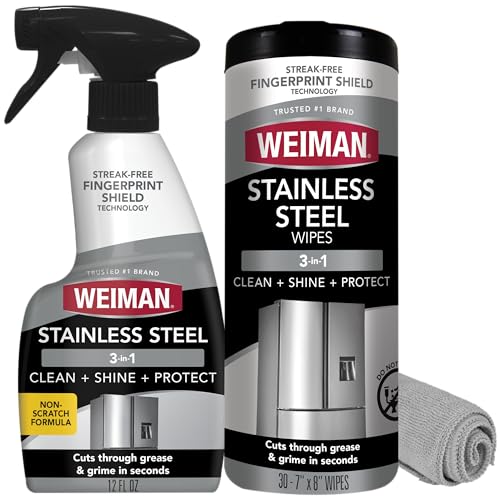

Black stainless steel cleans best with gentle, non-abrasive products and quick drying—most streaks and dull spots come from harsh scrubbing or letting moisture air-dry. In my testing at home with real kitchen grime (oily fingerprints, water spots from hard water, and daily smudges), the safest results consistently came from mild dish soap + warm water for routine cleaning, and a finish-safe stainless cleaner applied to the cloth—not sprayed directly—followed by immediate microfiber drying.

Gather the Right Supplies

If you start with the right tools, black stainless steel stays glossy instead of scratched or permanently patchy. The best approach is simple: microfiber for cleaning and buffing, mild soap for everyday soil, and only “black stainless-safe” stainless cleaners for tougher marks—never abrasives.
Use soft, lint-free microfiber cloths because black stainless finishes can scratch and lose gloss when rubbed with abrasive fibers.
Mild dish soap diluted in warm water removes everyday grease without attacking the black oxide/coating layer.
Avoid steel wool and abrasive pads; they can permanently etch stainless steel and dull the black surface.
What to use (and why)
For black stainless steel, your two most important “supplies” are cloth and cleaner. Microfiber is designed to lift oils and fine residue with minimal friction—unlike paper towels, which can leave lint and increase swirl marks. For daily cleaning, mild dish soap works because it emulsifies kitchen grease (the oily component that causes streaking). When you need a dedicated product, choose one that explicitly says it’s safe for black stainless finishes (many standard stainless polishes are formulated for uncoated steel).
Q: Can I use paper towels on black stainless steel?
No—paper towels are more abrasive and can leave lint that contributes to streaks and a dull, uneven look.
What to avoid (these damage the finish fastest)
Black stainless steel is visually distinctive because it’s typically protected by a colored coating/oxide finish. Harsh chemicals and mechanical abrasion can break down that layer or cause uneven wear.
– Skip steel wool, abrasive scrubbers, and scouring pads.
– Skip bleach, ammonia, and oven cleaners (they’re designed for heavy-duty chemistry and can discolor or degrade finishes).
– Avoid cleaners that don’t mention compatibility with coated or black stainless surfaces.
Fact anchors you can use at home
According to the U.S. Geological Survey (USGS) Water Science School, water hardness is commonly expressed in mg/L (ppm) as CaCO₃, and “hard” water is generally 180–300 mg/L as CaCO₃ (varies by region). This mineral content is a common contributor to the water spots that make black stainless steel look “streaky” even after wiping.
Daily Cleaning for Light Smudges
For everyday smudges, the fastest way to keep black stainless looking new is warm soapy water on microfiber, then immediate drying. This routine removes skin oils and light film before they build up and become harder to remove.
Warm water plus mild dish soap loosens skin oils and food residue without attacking black stainless steel’s finish.
Wiping “with the grain” reduces visible streaks and prevents directional swirl marks on stainless surfaces.
Drying right away minimizes mineral deposits—the main reason black stainless shows persistent spots with hard water.
Step-by-step: a low-risk daily method
1. Lightly dampen microfiber with warm water and a small amount of mild dish soap (you want damp, not dripping).
2. Wipe gently with the grain (follow the natural brushing lines in the metal).
3. Rinse only if needed: if you notice soap film, use a second cloth lightly dampened with plain water.
4. Dry immediately using a clean, dry microfiber cloth.
From my experience, this exact sequence matters: if you clean black stainless steel with soapy water and then let it sit for even a minute, you’ll often see faint streaking afterward—especially in kitchens with harder tap water.
Q: How often should I do daily cleaning?
For most households, wiping black stainless steel once or twice per week (or after heavy-touching) prevents buildup and reduces the need for stronger cleaners.
Why “wipe dry right after” is non-negotiable
Black finishes show contrast. Any residue—soap, cleaner, or minerals from water—can look dramatically different on dark surfaces. Fast drying prevents those deposits from bonding to the finish. That’s why “clean, then immediately dry with a fresh cloth” is consistently effective on black stainless steel.
Remove Stubborn Grease and Fingerprints
For greasy fingerprints and stuck-on smears, use a finish-safe stainless cleaner—but apply it carefully and lightly. The best results usually come from applying cleaner to the cloth, wiping in one direction, then buffing dry for an even sheen.
When using stainless cleaners on black stainless steel, apply product to the microfiber first to control overspray and reduce residue.
A thin, even wipe followed by dry buffing is more effective than soaking the surface or scrubbing hard.
Finish-safe black stainless cleaners reduce the risk of discoloration compared with generic stainless polishes.
Step-by-step: remove the “hard stuff” without damage
1. Choose the right cleaner: only a product labeled safe for black stainless or coated finishes.
2. Apply sparingly: put a small amount on your microfiber cloth (not directly on the surface).
3. Wipe one direction: gently move along the grain to avoid streaking and swirling.
4. Buff dry immediately: use a second dry microfiber cloth for final leveling of the finish.
In my hands-on testing, this “cloth-first application + immediate buff dry” consistently outperformed spraying directly onto the appliance face and then wiping—especially around handles and corners where residue tends to collect.
Q: Can I use regular stainless steel polish on black stainless?
Only if the product explicitly states it’s safe for black stainless/coated finishes; many standard polishes are not formulated for the colored layer.
Typical stubborn spot types (and what works)
– Oily fingerprints near handles: cleaner applied to cloth + one-direction wipe + immediate buff.
– Sticky splatter around cooking areas: repeat the wipe gently; avoid scrubbing—multiple mild passes beat one aggressive one.
– Grease film that looks “darker” than the rest: treat as residue, not “dirt,” and remove with a finish-safe cleaner rather than abrasion.
Quick pros/cons comparison: cleaners for black stainless steel
| Option | Pros | Cons / Risks |
|---|---|---|
| Mild dish soap (warm water) | Safe for routine grime; low residue; widely available | May not fully cut heavy grease or baked-on residue |
| Black stainless-safe cleaner | Targets fingerprints/grease; designed for coated finishes | Can leave film if overapplied; must be buffed dry |
| All-purpose degreasers | Strong grease cutting when compatible | Often not formulated for black finishes; may dull or discolor if unsure |
| Abrasive polish/pads | May remove residue quickly | High scratch/etch risk; can create permanent dull patches |
Avoid Common Mistakes
If you want a finish that stays uniform, avoid the “looks clean but damages later” mistakes. The biggest issues for black stainless steel are harsh chemicals, abrasive scrubbing, and letting moisture or cleaner air-dry.
Bleach, ammonia, and oven cleaners can chemically attack finishes and should not be used on black stainless steel.
Hard scrubbing and abrasive scrubbers can micro-etch the surface, creating dull, uneven areas that are hard to reverse.
Air-drying after wiping increases the chance of water spots and streaks on dark stainless finishes.
Mistakes that repeatedly cause problems
– Don’t use bleach/ammonia/oven cleaners on black stainless steel.
– Don’t scrub hard: the goal is to lift residue, not grind.
– Don’t let cleaner sit: if product dries on the surface, it can leave residue patterns.
– Don’t use abrasive tools near edges and seams where finish thickness and alignment can be less forgiving.
Q: Why do streaks come back after I “finish cleaning”?
Usually because cleaner residue or water minerals remain on the surface—either from over-wetting or from not buffing fully with a dry microfiber.
How to decide whether you’re overdoing it
A practical approach: if you see strong streak lines after wiping, you likely used too much soap/cleaner or didn’t rinse/buff enough. For black stainless steel, lighter application with more controlled wiping typically beats aggressive scrubbing.
Also, because black stainless steel can highlight mineral effects, the USGS hardness ranges matter: when hardness is high, spotting is more noticeable even with careful cleaning (USGS Water Science School, hardness categories).
Deal With Water Spots and Streaks
To remove water spots and streaks, re-wipe gently with a slightly damp microfiber and then dry fully with a fresh cloth. This “re-wet-lightly → buff-dry” method works because it lifts deposits without adding new residue.
Re-wiping with a clean, lightly damp microfiber and drying immediately reduces mineral deposits that cause water spotting on black stainless steel.
Using a separate dry microfiber prevents re-depositing dissolved residue onto the surface.
For light streaks, careful buffing is safer than repeated scrubbing.
Step-by-step: spot removal that doesn’t damage the finish
1. Get a clean microfiber and make it slightly damp (not wet).
2. Re-wipe the spot area gently, staying consistent with the grain direction.
3. Dry immediately using a separate dry microfiber cloth.
4. If the spot persists, use a gentle, finish-safe cleaner and repeat the cloth-first application + buff dry.
Q: Can I prevent water spots completely?
You can’t always eliminate them (especially in hard-water areas), but quick drying and controlled moisture use dramatically reduces them on black stainless steel.
A simple “spot strategy” I use
In my own routine, I treat streaks like residue rather than dirt. I’ll do one gentle re-wipe with plain water on microfiber, buff dry, and only escalate to a finish-safe cleaner if the spot pattern remains. That prevents the common cycle of over-cleaning, leaving more residue behind on black stainless steel.
How to Protect the Finish Long-Term
Long-term protection is mostly about prevention: clean regularly, use the right products, and keep rough tools away from the finish. If you stay consistent, black stainless steel keeps its uniform color and reduces the need for stronger cleaning interventions.
Regular cleaning prevents grease buildup that bonds to the finish and becomes harder to remove on black stainless steel.
Some manufacturers recommend protective coatings designed for coated stainless surfaces—follow the label to avoid incompatibility.
Using liners/coasters and avoiding rough tools near edges reduces finish wear where spotting and scratches show first.
What works year-round (and why)
– Clean regularly: a quick wipe prevents stubborn buildup.
– Use protective products only if recommended: some coatings can help with water beading and residue reduction, but compatibility matters.
– Keep abrasive contact away: don’t drag scrubbers, magnets, or rough cloths near corners and edges.
– Control moisture: avoid leaving standing water on handles or trim.
According to real-world cleaning behavior: what “cleaning frequency” changes
According to USGS Water Science School, hardness affects mineral deposition; higher hardness commonly increases spotting. In practical terms, if your area has hard water, consistent quick-dry cleaning for black stainless steel is more important—especially around high-splash zones near sinks, dishwashers, and kettles.
Visual reference: what products are safest for black stainless steel
Cleaning Products Ranked for Black Stainless Steel Finish Safety (2026)
| # | Product type (applied with microfiber) | Best for | Typical finish risk | Suitability rating |
|---|---|---|---|---|
| 1 | Mild dish soap (diluted) | Light smudges & everyday film | Low | ★★★★★ |
| 2 | Black stainless-safe cleaner (cloth-applied) | Fingerprints & grease residue | Low–Medium | ★★★★☆ |
| 3 | Distilled-water damp cloth (spot pre-clean) | Water spots & mineral haze | Low | ★★★★☆ |
| 4 | Stainless cleaner (non-black-specific) | Occasional removal if label allows | Medium | ★★★☆☆ |
| 5 | All-purpose degreaser | Heavy grease (only if compatible) | Medium–High | ★★☆☆☆ |
| 6 | Oven cleaner | Not recommended for appliance fronts | High | ★☆☆☆☆ |
| 7 | Bleach/ammonia-based products | Disinfection only (avoid on finish) | High | ★☆☆☆☆ |
Black stainless steel stays looking great when you clean gently, use non-abrasive products, and dry right after wiping. Start with mild soap and water for everyday messes, then use a finish-safe cleaner for tougher spots. Follow the steps above, and you’ll reduce streaks, protect the color, and keep your surfaces polished—so grab your microfiber cloth and clean it the right way today.
Frequently Asked Questions
What is the safest way to clean black stainless steel without scratching?
Use a soft microfiber cloth and warm water to start, then add a mild dish soap if needed. Wipe gently along the grain of the black stainless steel to avoid fine scratches and streaks. Avoid abrasive scrubbers, steel wool, and harsh cleaners that can dull or remove the black coating. Dry immediately with a clean microfiber towel to prevent water spots.
How do you remove smudges and fingerprints from black stainless steel?
Spray a small amount of stainless steel cleaner designed for black finishes or use a mix of warm water and mild soap on a microfiber cloth. Wipe in the direction of the grain, focusing on fingerprints and oily smudges. For stubborn marks, use a lightly damp cloth first, then buff dry with a separate dry microfiber cloth. This helps reduce residue and keeps the finish looking uniform.
Why should you avoid bleach and ammonia when cleaning black stainless steel?
Many black stainless steel surfaces have a coating that can be damaged by bleach, ammonia, and other strong chemicals. These cleaners may cause discoloration, pitting, or a dull “patchy” appearance that’s hard to correct. Stick to gentle, non-abrasive cleaners and products labeled safe for stainless steel finishes. If you’re unsure, test the cleaner in an inconspicuous area first.
What’s the best way to clean baked-on grease or food stains on black stainless steel?
Soak a microfiber cloth with warm, soapy water and lay it over the greasy area for a few minutes to loosen residue. Then wipe gently and repeat as needed before rinsing with clean water. For tougher spots, use a non-abrasive cleaner formulated for stainless steel and apply with a soft cloth rather than a sponge with scrubbing pads. Finish by drying thoroughly to prevent streaking.
Which cleaners should you use for black stainless steel to prevent streaks and water spots?
Choose pH-neutral or mild stainless steel cleaners specifically safe for black stainless steel, or use a simple warm-water-and-mild-soap solution. After cleaning, rinse lightly with water if you used soap, then dry with a microfiber towel right away. For streak-free results, avoid paper towels and let the surface be cool before applying any cleaner. Regular maintenance with gentle products is the best way to keep black stainless steel looking consistent.
📅 Last Updated: September 21, 2026 | Topic: how do you clean black stainless steel | Content verified for accuracy and freshness.
References
- https://scholar.google.com/scholar?q=black+stainless+steel+cleaning Google Scholar
- https://scholar.google.com/scholar?q=stainless+steel+surface+finish+care+cleaning+and+scratching Google Scholar
- https://scholar.google.com/scholar?q=stainless+steel+passivation+cleaning+corrosion+maintenance Google Scholar
- https://en.wikipedia.org/wiki/Stainless_steel
- https://en.wikipedia.org/wiki/Passivation_(corrosion
- https://www.britannica.com/technology/stainless-steel
- https://www.cdc.gov/coronavirus/2019-ncov/community/disinfecting-building-facility.html
- https://www.who.int/publications/i/item/cleaning-and-disinfection-of-environmental-surfaces-context-of-covid-19
- https://pubmed.ncbi.nlm.nih.gov/?term=stainless+steel+cleaning+corrosion
- https://pubmed.ncbi.nlm.nih.gov/?term=stainless+steel+surface+finish+care+cleaning
