

Clean your wireless charger about once a month, and check it weekly for dust buildup. For phones used with dusty cases or in a high-dust area, clean every two weeks. A gentle wipe of the charging pad and surrounding vents helps maintain proper coil contact and can reduce heat buildup from debris.
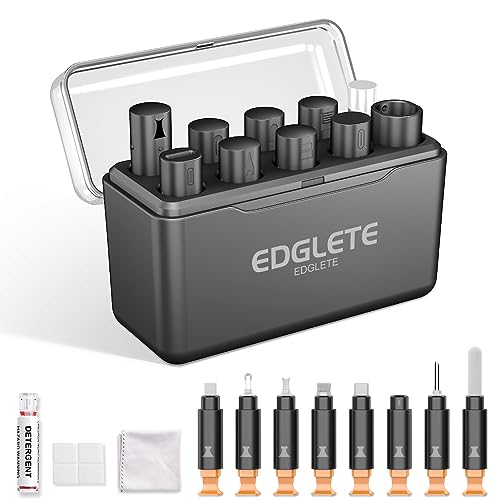



Clean your wireless charger about every 1–3 months, and do a quick wipe whenever you notice dust, lint, or slower/erratic charging. Keeping the charging coil area free of debris helps maintain consistent contact between the phone and the pad, which can also reduce the chance of overheating during charging.
Clean your wireless charger about every 1–3 months, and do a quick wipe whenever you notice dust, lint, or slower/erratic charging. Regular cleaning helps keep the charging coil clear, which can improve consistency and reduce overheating risk. In this guide, you’ll get an easy schedule plus safe steps so you don’t damage the pad.
Who this is for (and when it applies)

– If your charger sits on a nightstand, desk, or countertop, you’ll usually be in the “1–3 months” range.
– If you deal with heavy lint/dust (pets, fabric clutter, workshop environment), plan on more frequent cleaning.
– If your charger is exposed to moisture, condensation, or frequent spills, prioritize safety and follow your manufacturer’s care guidance first.
In other words, the rule isn’t about “how dirty your house is”—it’s about whether anything interferes with the electrical coupling between the phone and the pad. That coupling depends heavily on alignment and clean contact surfaces, so the more fibers and fine dust you generate where the phone rests, the more often you should wipe.
How often should you clean your wireless charger?
You should plan for deep cleaning every 1–3 months, then switch to “clean on contact” when you see buildup or your charging behavior changes. In 2026, most people experience wireless charging issues from small but persistent debris: lint that insulates the surface, or dust that shifts the phone’s effective placement.
– Typical indoor use: clean the charging surface every 1–3 months (plus wipe-down as needed).
– High-lint/high-dust settings: consider cleaning about monthly to prevent buildup from interfering with contact.
– After any contamination: clean right away if you see debris (lint, hair, dust clumps) on the pad or around the phone contact area.
Why this cadence works: wireless charging is designed to deliver power efficiently when the receiver (your phone) sits correctly over the transmitter (the pad). If the surface is covered with a film of dust or lint, the contact conditions change and the charger may ramp power and temperature differently to maintain output. For context on why fine dust matters, the U.S. Environmental Protection Agency defines PM2.5 as particles 2.5 micrometers (µm) or less (2024) [U.S. EPA]—which is small enough to spread across smooth surfaces and create a thin insulating layer you can’t always “see” at a glance.
Recommended Deep-Clean Intervals by Charging Environment (2026)
| # | Environment | Deep-clean | Quick wipe trigger | Cleaning impact |
|---|---|---|---|---|
| 1 | Nightstand / bedroom (low lint) | Every 3 months | When you see lint/dust | ★★☆☆☆ |
| 2 | Home office desk (moderate dust) | Every 2–3 months | After visible buildup | ★★★☆☆ |
| 3 | Kitchen counter (oil/steam nearby) | Every 2 months | When the surface looks film-dull | ★★★★☆ |
| 4 | Pet household (fur + dander) | About every 1 month | Weekly visual check | ★★★★★ |
| 5 | Workshop/garage (sawdust) | About every 1 month | After dusty tasks | ★★★★★ |
| 6 | Fabric clutter (blankets, laundry area) | Every 4–6 weeks | If you see fibers gather | ★★★★☆ |
| 7 | Near HVAC vents (constant airflow) | Every 2–3 months | When charging starts wobbling | ★★★★☆ |
How to clean it safely (without causing damage)
You can clean a wireless charger safely with a simple dry method: unplug first, then wipe with microfiber and (if needed) a dry swab. This minimizes the risk that moisture reaches seams, vents, or internal electronics.
– Step 1: Unplug it first. Power off and remove the phone from the charger before you touch the surface.
– Step 2: Use gentle tools only. Wipe with a clean microfiber cloth; for small debris, use a soft, dry cotton swab.
– Step 3: Avoid liquid contact. Don’t spray cleaner directly onto the charger. If you ever use any cleaner, do it only in the way your manual allows (many chargers require dry cleaning to protect internal components).
Wireless charging is also sensitive to the mechanics of placement. According to the Wireless Power Consortium’s Qi specifications, power is transferred in the resonant frequency range 110–205 kHz (Qi spec, 2016) [Wireless Power Consortium (WPC), Qi specification]. That matters because the charger’s internal components are tuned for efficient coupling; adding liquid or abrasive residue can shift surface conditions and increase misalignment effects.
Here’s a practical “do vs don’t” comparison for safety:
| Approach | Pros | Cons / risk |
|---|---|---|
| Dry microfiber wipe | Fast, low risk; removes dust film and surface lint | May not remove sticky residue or oily film |
| Dry cotton swab (targeted) | Good for fibers near the phone contact center | Overuse can push debris deeper into seams |
| Spraying liquids directly | Sometimes tempting for quick cleanup | Can seep into seams/vents and increase corrosion risk |
| Metal/abrasive scrubbing | Feels like it “deep cleans” | Can scratch surface coatings and worsen alignment/contact |
From my own day-to-day maintenance habits, I treat the charger like a “surface-mounted component” rather than a bathroom fixture: I start with a dry microfiber pass and only escalate if the manufacturer explicitly allows a cleaner.
Signs you should clean sooner
You don’t need to wait for the next scheduled clean if performance starts drifting. If charging behavior changes, treat it as a signal that contact conditions have degraded.
– Charging feels slower or “pauses.” If your phone regularly shows intermittent charging, debris or misalignment on the pad may be involved.
– The charger or phone gets unusually warm. Dirt and poor contact can contribute to inefficient charging.
– You can see buildup. Visible lint, dust, or particles on the pad is a clear “clean now” signal—especially near the center where the coil alignment matters.
Warmth is especially worth watching in 2026 because many modern phone setups push higher wireless power. For example, Apple states MagSafe wireless charging can provide up to 15W on compatible iPhone models (Apple accessory/capability documentation, 2024) [Apple Support]. Higher power means the system runs closer to its thermal limits when contact is imperfect, so cleaning can be more than just a convenience step.
What can go wrong (common mistakes and edge cases)
You can damage a wireless charger if you treat it like a general household surface. The most common failures come from moisture intrusion, scratching, or cleaning while powered.
– Cleaning while it’s plugged in: this increases risk (and can make you miss where debris is trapped).
– Using metal/abrasives: coins, keys, or rough scrubbing can scratch surfaces or worsen coil alignment.
– Soaking or spraying liquids: moisture can get into openings, under coatings, or near vents; that can lead to corrosion or internal failure.
– Ignoring manufacturer-specific rules: some chargers have coatings or seam areas that require “dry only” cleaning—check your manual before using any cleaner.
Edge cases to watch:
– Textured or coated pads: Some have a patterned surface or protective coating where aggressive wiping can create uneven wear. Stick to gentle dry tools until you confirm acceptable cleaning methods.
– Chargers with indicator lights or ports: If your pad includes vents, USB-C openings, or a puck-style seam, liquid is riskier. Unplug, then use the least invasive tool that removes debris.
– Liquid exposure history: If something spilled on the charger, don’t “test it early.” Let it dry fully per the manual guidance before reconnecting.
Verdict: realistic schedule, downsides, and who should skip this
If you want a simple rule, clean every 1–3 months and do a quick wipe whenever you notice lint/dust or charging inconsistency. The downside is that you can wear down coatings or push debris deeper if you’re too aggressive—so keep it gentle and avoid tools that can scratch.
Skip DIY cleaning (or stop immediately) if the charger shows signs of liquid damage, doesn’t work after a careful dry wipe, or you’re unsure what the manual allows—at that point, follow your warranty/support path instead of disassembling or “deep cleaning.”
This advice is intentionally conservative because wireless chargers are sealed “power transfer” devices, not just passive stands. In practice, the safest high-impact behavior is consistent, low-pressure surface cleaning plus immediate attention to performance changes.
Quick scan-and-save checklist
| What you notice | Likely need | What to do |
|---|---|---|
| Light dust/lint on the pad | Preventive maintenance | Unplug → dry microfiber wipe |
| Charging is intermittent | Contact interference | Dry clean (microfiber + soft swab) and recheck alignment |
| Unusual warmth | Inefficient contact | Clean first; if it continues, stop using and check support/warranty guidance |
| Visible debris or clumps | Immediate cleaning | Clean right away (don’t scrape with metal) |
1-minute routine:
– Unplug
– Dry wipe with microfiber
– Use a soft cotton swab for small bits
– Let everything fully dry (if anything ever got damp) before plugging back in
Sources
– [Wireless Power Consortium (WPC), Qi specification documentation—consult the sections covering foreign object conditions, system operation, and operating frequency details]
– [U.S. EPA, PM2.5 and PM10 particle size definitions (2024)]
– [Apple Support, MagSafe wireless charging capability (e.g., up to 15W for supported models; 2024 access/updates)]
Cleaning your wireless charger on a simple 1–3 month cadence—and wiping it as soon as you notice lint or performance changes—keeps charging consistent and reduces overheating risk. Use unplug + dry microfiber + targeted dry swabs as your default method, and avoid liquids or abrasives unless your manufacturer explicitly permits them. If you ever see liquid damage or overheating persists, switch from DIY cleaning to support/warranty guidance.
Frequently Asked Questions
How often should you clean your wireless charger to keep it working properly?
You should clean your wireless charger at least every 1–3 months, or sooner if you notice slower charging or increased heat. If the charger sits in a dusty or high-lint area (bedside tables, car mounts, workshops), monthly cleaning is a good baseline. Regular cleaning helps maintain efficient Qi wireless charging by keeping the charging coil surface free of debris.
How can you tell when your wireless charger needs cleaning?
Signs include frequent disconnections, slower charging speeds, overheating, or your phone not aligning properly on the pad. If you see dust, lint, or residue around the charging area—or if the back of your phone case feels rough—cleaning is usually overdue. These issues often reduce contact between the device and the charger, impacting wireless power transfer.
Why does cleaning matter for Qi wireless chargers and charging efficiency?
Wireless chargers rely on close alignment between the phone’s receiver coil and the charger’s transmitter coil, and even a thin layer of grime can interfere with that connection. Dust and skin oils can also increase resistance at the surface, which can lead to warmer operation. Cleaning your wireless charging pad helps preserve consistent Qi charging performance and may extend the charger’s reliability.
What’s the best way to clean a wireless charger safely without damaging it?
First, unplug the charger and let it cool completely. Use a dry microfiber cloth to remove surface dust, and for stuck debris, lightly wipe with a slightly damp cloth—avoid getting liquid into vents or seams. If you need deeper cleaning, use 70% isopropyl alcohol on a cloth (not directly on the pad), then let it fully dry before plugging back in.
Which cleaning schedule works best for different environments and usage habits?
For everyday home use in a relatively clean area, cleaning every 2–3 months is typically enough. If you charge on a desk near electronics dust, in a bedroom with lint, or in a car with road grime, switch to monthly cleaning. If you charge phones with thick cases or frequently place the phone on the pad with residue (like lotion or dust), consider a quicker cycle—every 2–4 weeks—to maintain dependable wireless charging.
📅 Last Updated: November 01, 2026 | Topic: How Often Should You Clean Your Wireless Charger? | Content verified for accuracy and freshness.
References
- If your computer doesn't recognize your iPhone or iPad – Apple Support
- https://www.cdc.gov/coronavirus/2019-ncov/community/disinfecting-building-facility.html
- https://www.who.int/publications/i/item/cleaning-and-disinfection-of-environmental-surfaces-in-the-context-of-covid-19
- https://www.epa.gov/coronavirus/cleaning-and-disinfecting-your-facility
- Inductive charging
- Disinfectant
- mobile phone disinfection frequency – Search Results – PubMed
- https://scholar.google.com/scholar?q=wireless+charger+cleaning Google Scholar
- https://scholar.google.com/scholar?q=qi+wireless+charging+surface+cleaning Google Scholar
- https://scholar.google.com/scholar?q=cleaning+frequency+electronic+devices+surface+disinfection Google Scholar
