
To achieve a flawless finish when applying clear coats, it’s essential to wait between 30 minutes to 24 hours, depending on the type of clear coat used and environmental conditions. Understanding the proper timing ensures optimal adhesion and durability. In this article, we’ll explore the factors that influence drying times, the various types of clear coats, best practices for application, and tips for testing dryness, along with common mistakes to avoid to achieve a professional-looking result.
Factors Affecting Drying Time
Several factors play a crucial role in determining how long you should wait between clear coats. Understanding these factors will help you make informed decisions during your project.

– Temperature: Higher temperatures can accelerate the drying process, allowing for quicker application of additional coats. For instance, ideal temperatures for applying clear coats typically range from 65°F to 85°F (18°C to 29°C). In contrast, cooler temperatures can significantly extend drying times, leading to potential issues with adhesion if additional coats are applied too soon.
– Humidity: Humidity also affects the curing process. High humidity levels can slow down evaporation rates, prolonging the time it takes for a clear coat to dry. Ideally, you want to work in a humidity level between 40% and 70% for the best results. When humidity exceeds this range, you may need to allow for longer wait times between coats to ensure proper adhesion and finish quality.
Types of Clear Coats
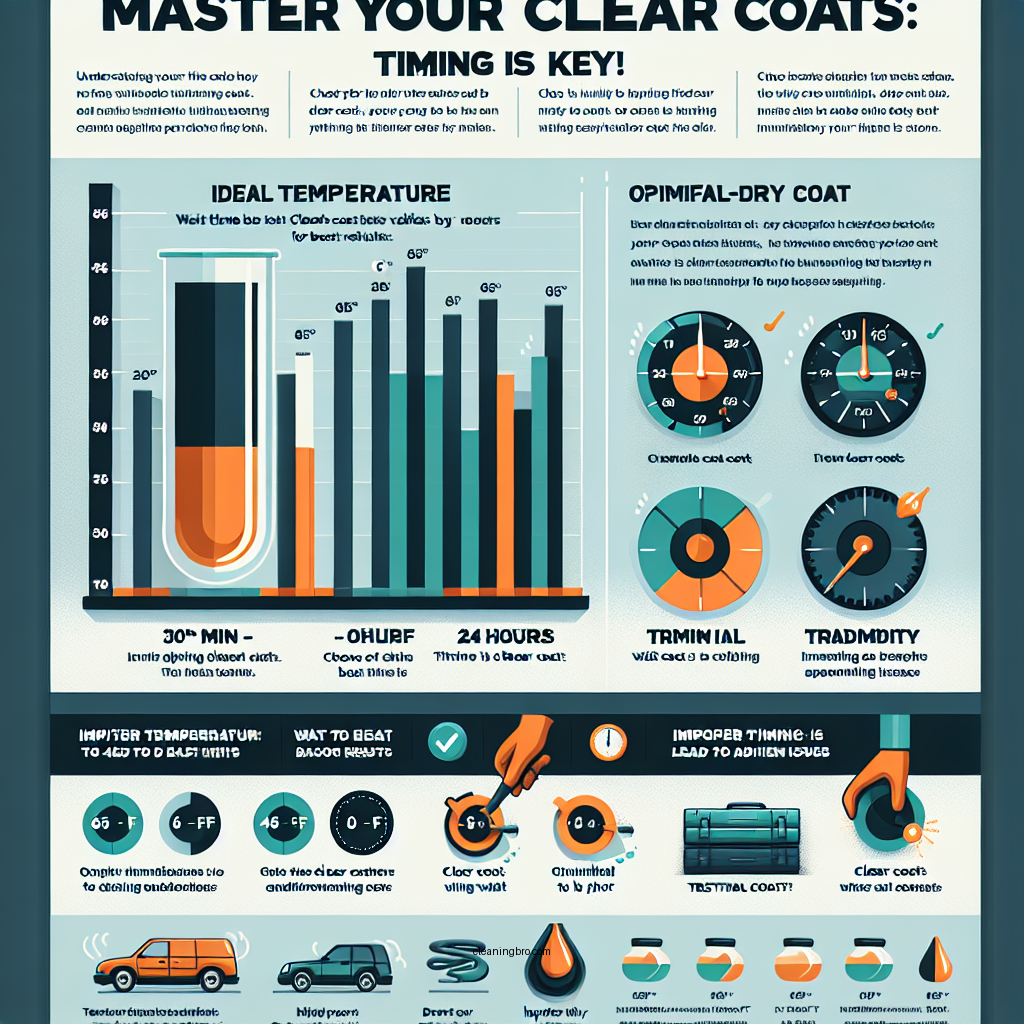
Different types of clear coats have varying drying times and application requirements. Here’s a closer look at the most common options:
– Fast-Drying Clear Coats: These products are formulated to dry quickly, making them ideal for projects that require multiple coats within a short timeframe. Fast-drying clear coats typically require a waiting period of around 30 minutes to 1 hour between coats. They are often used in automotive finishes and quick touch-up jobs.
– Traditional Clear Coats: Traditional clear coats, on the other hand, generally require longer drying times, ranging from 4 to 24 hours, depending on the specific product and environmental conditions. These coats provide a thicker, more durable finish, making them suitable for furniture and cabinetry applications where a high-quality appearance is desired.
Drying Times for Different Types of Clear Coats
| # | Type of Clear Coat | Drying Time (Hours) | Ideal Conditions |
|---|---|---|---|
| 1 | Fast-Drying Clear Coat | 0.5 – 1 | 65°F – 85°F, 40% – 70% Humidity |
| 2 | Traditional Clear Coat | 4 – 24 | 70°F – 80°F, 40% – 60% Humidity |
| 3 | Polyurethane Clear Coat | 6 – 8 | 70°F – 85°F, 30% – 50% Humidity |
| 4 | Water-Based Clear Coat | 2 – 4 | 70°F – 75°F, 50% – 60% Humidity |
| 5 | Acrylic Clear Coat | 1 – 3 | 65°F – 75°F, 40% – 50% Humidity |
| 6 | Epoxy Clear Coat | 24 – 48 | 70°F – 80°F, Low Humidity |
| 7 | UV Resistant Clear Coat | 6 – 12 | 70°F – 85°F, 40% – 60% Humidity |
Best Practices for Application
Achieving a professional finish involves adhering to several best practices during the application of clear coats:
– Apply Thin Coats: One of the most effective methods to ensure quick drying and minimize defects is to apply thin coats. Thinner layers not only dry faster but also help avoid issues such as runs or pooling. This is particularly important when working with traditional clear coats that have longer drying times.
– Monitor Conditions: Keeping an eye on the temperature and humidity is essential for successful application. Implementing a hygrometer and thermometer in your workspace can help you adjust your wait times accordingly. If the humidity is high or temperatures are low, you may need to extend your drying periods to ensure that each coat adheres properly.
Testing for Dryness
Before applying additional clear coats, it’s vital to ensure that the previous layer has dried adequately. Here are two effective methods for testing:
– Touch Test: Lightly touch an inconspicuous area of the project. If it feels tacky or sticky, it’s not ready for another coat. Ideally, the surface should feel dry and smooth to the touch before proceeding.
– Visual Inspection: A clear, glossy finish is a good indicator that the previous coat has dried adequately. If you notice any dullness or imperfections, it may be best to wait longer before applying the next coat.
Common Mistakes to Avoid
Avoiding common pitfalls can save you time and effort in the long run:
– Applying Coats Too Soon: Rushing the process is a frequent mistake that can lead to imperfections, such as bubbling or poor adhesion. Always ensure the previous coat has dried properly before proceeding.
– Ignoring Manufacturer Instructions: Every product comes with specific guidelines regarding drying times and conditions. Always refer to the product guidelines for the best results, as these can vary significantly between different clear coats.
Maintaining a Dust-Free Environment
A clean workspace significantly contributes to the quality of your finish. Here are some tips to maintain a dust-free environment:
– Use a Clean Workspace: Minimize dust by working in a controlled environment, such as a spray booth or a well-ventilated garage. Ensuring that surfaces are clean and free of debris will help you avoid imperfections in your final coat.
– Cover Surfaces: Protect freshly applied coats from airborne particles by using drop cloths or plastic sheeting. This simple step can prevent dust and other contaminants from settling on your project while it dries.
Summarizing the importance of waiting the appropriate time between clear coats ensures a high-quality finish. By following the guidelines outlined, you can achieve the best results for your project. So, gather your materials, prepare your workspace, and get started on achieving that perfect finish!
Frequently Asked Questions
How long should I wait between clear coats when painting a car?
The recommended waiting time between clear coats when painting a car is typically 30 minutes to 2 hours, depending on the specific clear coat product used and environmental conditions. It’s essential to follow the manufacturer’s guidelines for optimal results, as waiting too long can lead to issues like dust contamination, while applying too soon may cause the coats to blend improperly.
What happens if I apply a second clear coat too soon?
If you apply a second clear coat too soon, it can result in a number of issues, including improper adhesion, orange peel texture, and potential lifting of the first layer. This can lead to a compromised finish, requiring you to sand and redo the job, which is time-consuming and labor-intensive.
Why is it important to wait between clear coats?
Waiting between clear coats is crucial to ensure proper curing and adhesion of the layers. This time allows solvents to evaporate and reduces the risk of trapping moisture, which can lead to imperfections and a less durable finish. Proper timing enhances the overall look and longevity of the paint job.
What is the best practice for applying multiple clear coats?
The best practice for applying multiple clear coats includes ensuring that each layer is applied within the recommended timeframe specified by the product, usually 30 minutes to 2 hours. Additionally, lightly sanding the surface between coats can help improve adhesion and create a smoother final finish.
Which factors can affect the drying time between clear coats?
Several factors can affect the drying time between clear coats, including temperature, humidity, and airflow in the workspace. Higher temperatures and lower humidity typically speed up drying times, while cooler temperatures and high humidity can prolong the process. Always consider these conditions before determining your waiting period between coats.
References
- Automotive paint
https://en.wikipedia.org/wiki/Clear_coat - https://www.nature.com/articles/s41598-021-85873-7
https://www.nature.com/articles/s41598-021-85873-7 - https://www.sciencedirect.com/topics/engineering/clear-coat
https://www.sciencedirect.com/topics/engineering/clear-coat - https://pubmed.ncbi.nlm.nih.gov/29977654/
https://pubmed.ncbi.nlm.nih.gov/29977654/ - Google Scholar Google Scholar
https://scholar.google.com/scholar?q=how+long+between+clear+coats - Google Scholar Google Scholar
https://scholar.google.com/scholar?q=clear+coat+drying+time - Google Scholar Google Scholar
https://scholar.google.com/scholar?q=automotive+clear+coat+application - Paint | Interior, Exterior & Primer | Britannica
https://www.britannica.com/science/paint - https://www.who.int/news-room/fact-sheets/detail/air-pollution-and-child-health
https://www.who.int/news-room/fact-sheets/detail/air-pollution-and-child-health - how long between clear coats – Search results
https://en.wikipedia.org/wiki/Special:Search?search=how+long+between+clear+coats
