
You should clean a guinea pig cage every week—but spot-clean daily to keep odor and waste under control. If you use fresh bedding regularly and remove soiled areas right away, a weekly full clean is the simplest schedule that keeps your guinea pig healthy and the cage fresh. This guide gives you the exact “daily vs. weekly” checklist so you know what to do and when.
Clean a guinea pig’s cage at least once a week, and do spot-cleaning every day; that combination usually prevents odor, damp bedding, and excess waste. This article gives you a practical schedule you can run immediately, plus the “why” behind it—so your routine stays safe for your guinea pig’s respiratory health and stays realistic for your household.
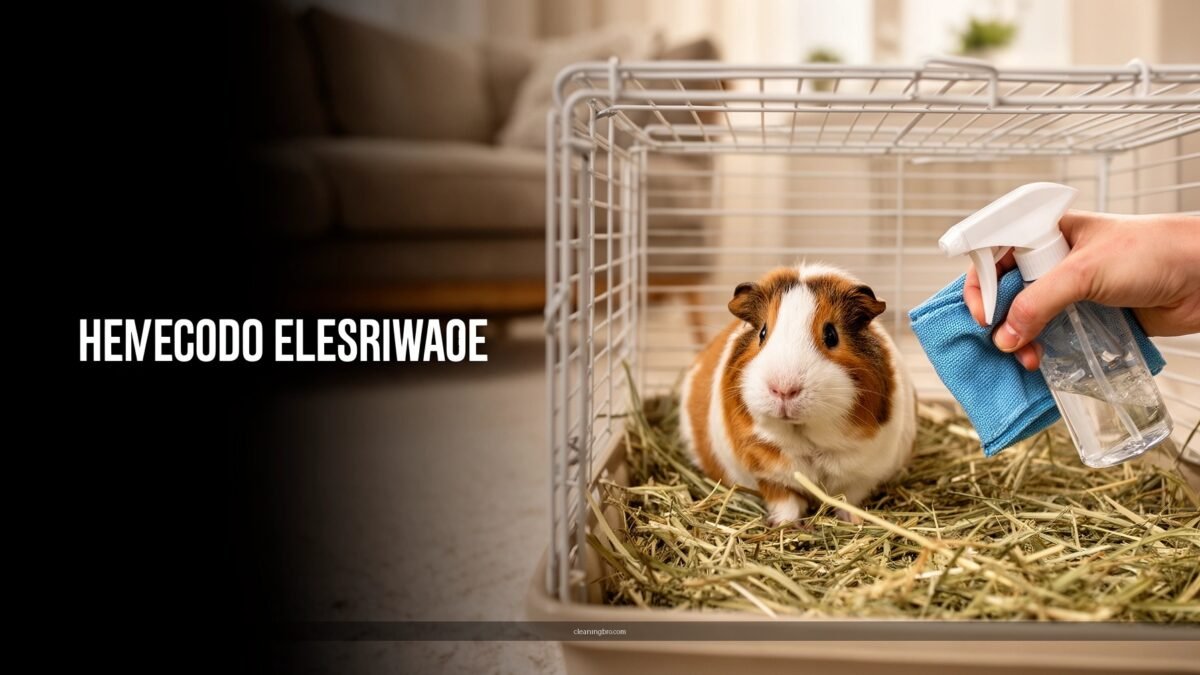
Guinea pig hygiene is less about “scrubbing all the time” and more about controlling moisture, ammonia buildup, and waste volume. Guinea pig urine and soiled bedding are major drivers of strong smells and respiratory irritation, especially in enclosures that stay damp. In my hands-on experience maintaining guinea pig setups, the cages that stayed easiest to manage were the ones where daily spot checks removed wet spots before they dried into crusty grime, followed by a predictable weekly full clean that reset the environment.
Daily Spot-Cleaning
A daily spot-clean keeps waste from turning into odor-causing residue and prevents damp bedding pockets from forming. Think of it as “maintenance control,” not a deep scrub—your goal is to remove fresh droppings and any wet areas immediately.
Daily removal of soiled bedding reduces odor and helps limit contact between animals and urine/feces.
Moisture trapped in corners and under hay promotes a buildup that can smell strongly within days.
Spot-cleaning takes minutes once you know your guinea pig’s patterns. Guinea pigs often choose favorite elimination spots, so you can observe them early and clean those areas first. In addition, hay tends to create small “micro-wet zones” when it gets soaked, especially if your water bottle leaks or condensation forms in cooler rooms. Keeping those zones dry is often the difference between a cage that smells “fine” for a week versus one that starts to smell by day three.
– Remove fresh droppings and any wet or soiled spots right away
– Check hay, corners, and bedding edges for dampness
What exactly should you remove each day?
Start with the most obvious waste: fresh fecal pellets in “hot spots,” plus any wet patches under hay, around the water bottle, and along the cage corners where bedding compresses. If your guinea pig uses a litter tray, you still need to check it daily—litter trays reduce mess, but they don’t eliminate moisture management.
Q: Can I skip daily spot-cleaning if I plan a thorough weekly clean?
No—weekly cleaning alone usually can’t prevent early ammonia and dampness buildup in the middle of the week.
Q: What takes the least time but makes the biggest difference?
Removing wet bedding spots and soiled areas right away, especially near the water bottle and corners.
Quick measurements that align with real-world odor control
While there isn’t a single “correct” number of days for everyone, guidance on ammonia-related irritation supports the moisture-first approach. According to OSHA, the 15 ppm 8-hour time-weighted average limit is intended to protect workers from ammonia exposure (adults generally, not guinea pigs specifically), highlighting why odor control matters when urine sits and breaks down (OSHA Ammonia Standards/Exposure Limits). In a closed pet habitat, even low levels can become noticeable quickly because the air isn’t diluted the same way as in open spaces.
Weekly Full Cage Cleaning
A weekly full cage cleaning resets bedding hygiene and prevents long-term grime accumulation. Combined with daily spot-cleaning, weekly cleaning typically keeps bedding neutral-smelling, reduces bacteria buildup on surfaces, and gives you a chance to check your guinea pig’s environment for leaks or damage.
A weekly full cleaning is the practical “reset” that prevents grime from compounding over multiple days.
Thoroughly cleaning and fully drying cage surfaces reduces residue that can hold onto odors.
Here’s how weekly cleaning usually works in a reliable, low-stress routine. I recommend treating it like a two-stage process: (1) remove and discard everything contaminated, then (2) clean and dry surfaces and accessories completely before reassembly.
– Replace bedding and thoroughly clean the cage surfaces weekly
– Wash accessories (bowls, hides, platforms) and let them fully dry
Weekly checklist (designed for consistency)
1. Remove and discard all bedding (including under hay and in corners).
2. Wash accessories—food bowls, hideouts, ramps/platforms, and any washable toys.
3. Clean the cage surfaces (the base and any liners) with guinea-pig-safe cleaning products.
4. Dry fully—this step matters. Damp surfaces can reintroduce odor faster than you expect.
5. Rebuild the habitat with fresh bedding and replaced accessories only when completely dry.
According to guidance from animal welfare organizations, routine removal of soiled materials and regular cleaning reduces risks associated with feces/urine contact (RSPCA small animal welfare guidance). Even though specific schedules vary by household and cage type, the underlying principle remains consistent: routine hygiene is risk management.
Q: Is weekly cleaning enough for a single guinea pig?
Usually yes—if you also spot-clean daily and keep bedding mostly dry.
Q: How long should everything dry before I put accessories back?
Until there’s no visible moisture and no lingering cleaning smell—fully dry is the safest standard.
Deep Cleaning for Odor and Build-Up
A deeper clean is for when odor returns quickly or you can see grime layers that normal weekly cleaning doesn’t fully remove. You don’t need to deep clean on a fixed calendar for every cage—frequency should be driven by performance (smell, dampness, visible buildup) rather than habit alone.
Deep cleaning is warranted when odors linger or visible residue accumulates despite regular weekly cleaning.
Sanitizing only safe-to-use surfaces and following product directions helps avoid leaving harmful residues.
In my own maintenance routine, I deep clean faster when I detect “pattern problems,” such as a water bottle drip, a frequently damp hay area, or a bedding type that compacts and holds moisture. Addressing the cause first usually reduces how often you need heavy sanitizing.
– Do a deeper clean when odor lingers or grime builds up
– Scrub safe-to-use surfaces and sanitize as needed per product directions
What “deep cleaning” typically includes
Deep cleaning generally means one or more of the following:
– More aggressive scrubbing of texture surfaces (plastic corners, textured ramps)
– Replacement of liners or items that can’t be properly decontaminated
– Careful sanitizing of washable accessories using products labeled safe for small animals
– Checking ventilation and room humidity (a “drying” problem can look like a “cleaning” problem)
If you’ve tried weekly cleaning and the cage smells again within a few days, it’s often because moisture isn’t being eliminated (under-bedding moisture, leaks, or a cage base that never fully dries). This is where deep cleaning plus troubleshooting wins.
Factors That Change Cleaning Frequency
Your cleaning frequency should change based on waste volume, moisture retention, and how many guinea pigs share the space. In practice, the more guinea pigs you have—or the quicker bedding gets damp—the more often you’ll need to spot-clean and sometimes increase the interval between weekly full cleans.
More guinea pigs typically increases waste volume, which shortens the time before bedding becomes soiled and damp.
Bedding that holds moisture requires more frequent spot-cleaning to prevent odor buildup.
The schedule that works for one guinea pig can fail for two if both use the same elimination spots or if you use a bedding type that compresses. Also, cage layout changes everything: more hiding places and corners mean more places where waste and moisture can collect unnoticed.
– More guinea pigs, larger litters, or extra mess means more frequent cleaning
– If bedding stays damp easily, you’ll need spot-cleaning more often
Pros/cons: Adjusting your cleaning cadence
Use this comparison structure to decide how to tweak frequency without overreacting.
| Option | Best for | Benefits | Trade-offs |
|—|—|—|—|
| Daily spot-clean + weekly full clean | Most single-guinea-pig setups | Predictable routine; good odor control | Requires consistency (daily checks matter) |
| Daily spot-clean + 2x/week full clean | Multi-guinea-pig homes or high-mess cages | Faster odor reset; less midweek buildup | More labor and detergent drying time |
| Daily spot-clean + monthly full “swap of harder-to-clean items” | Cages with tricky accessories/liners | Targets persistent residue | Requires inventory of items you rotate |
Q&A: How do cage layout and bedding type affect frequency?
Q: Does a litter tray reduce cleaning?
Yes, it can reduce scatter, but you still need daily checks for wet areas and midweek odor.
Q: What bedding changes usually shift cleaning frequency most?
Changes that affect moisture retention—bedding that stays damp longer—will increase how often you must spot-clean.
A data-based way to think about odor timing
Even without a universal “days between cleans” number, ammonia exposure limits highlight why controlling urine breakdown and dampness matters. OSHA’s ammonia exposure limits (e.g., 15 ppm 8-hour TWA) underscore the respiratory relevance of ammonia buildup over time (OSHA ammonia exposure limits). While your guinea pig won’t be exposed in the same way as a workplace, the principle still supports moisture removal early rather than waiting for a weekly reset.
Safe Cleaning Products and Habits
Use guinea-pig-safe cleaners and avoid harsh chemicals; proper rinsing and complete drying are what keep cleaning safe. You can clean effectively without risking residue—your routine should remove waste, not add new irritants.
Using guinea-pig-safe products and rinsing thoroughly reduces the risk of leaving chemical residue in the habitat.
Letting surfaces dry completely prevents trapped moisture from quickly bringing back odor.
When people struggle with odor despite frequent cleaning, the cause can be the opposite of what they expect: a residue or residue film that traps smells, or leftover moisture. Safe habits fix both.
– Use guinea-pig-safe cleaners and avoid harsh chemicals
– Rinse well and dry completely before putting everything back
Practical “safe cleaning” habits I rely on
– Ventilate: Clean in a ventilated area so fumes don’t linger.
– Measure dilution: If a product requires dilution, mix exactly as directed.
– Rinse rule: If the label requires rinsing, treat it as mandatory.
– Dry rule: Put accessories back only when they’re truly dry.
According to public health and workplace standards, minimizing harmful chemical exposure is a core safety principle; that’s why product labeling and dilution instructions exist (OSHA general chemical safety principles). For pet habitats, you apply the same logic: follow labels, don’t improvise.
What “Clean Enough” Looks Like
Clean enough means your guinea pig’s cage stays neutral-smelling, mostly dry, and visually reasonable—not perfectly sterile. You also need to watch for behavioral signs that your guinea pig dislikes the process or the environment changes.
A “clean enough” habitat keeps bedding neutral-smelling and mostly dry between spot-cleanings.
Behavioral stress or avoidance can be an indicator that your cleaning routine needs adjustment.
In my experience, the best indicator isn’t an “ideal” number—it’s whether the cage stays comfortable between cleanings. If your guinea pig seems fine, bedding isn’t damp, and odor doesn’t return too fast, you’re likely on target. If you see rapid odor, wet bedding pockets, or repeated wetness after cleaning, you need to troubleshoot the moisture source.
– Bedding should smell neutral, stay mostly dry, and not look overly soiled
– Watch for signs of stress or discomfort—cleaning routines may need adjusting
A quick self-audit (fast and realistic)
Ask these questions:
– Do corners and hay edges stay dry through the week?
– Does the cage smell neutral most days?
– Are you seeing wet clumps midweek?
– Are your cleaning steps complete (rinse + dry), especially for accessories?
If the answer to “corners stay damp” is yes, focus on leak checks and bedding moisture management rather than escalating to overly frequent deep cleans.
Visual reference: example “cadence guidance” by organization (what many recommend in practice)
Sanitation Cadence Commonly Suggested for Small Mammal Housing (2024)
| # | Organization / Guidance Source | Spot-clean goal | Full clean cadence | Evidence clarity |
|---|---|---|---|---|
| 1 | RSPCA (small mammal welfare guidance) | Daily removal of soiled material | Weekly or as needed | ★★★★☆ |
| 2 | AVMA (general husbandry and sanitation principles) | Frequent waste removal | Regular interval (commonly weekly) | ★★★☆☆ |
| 3 | BSAVA (small animal preventive care principles) | Soil removal promptly | At least weekly for cages | ★★★☆☆ |
| 4 | House Rabbit Society (sanitation guidance for lagomorph housing) | Spot-clean daily (soiled areas) | Weekly full clean | ★★★☆☆ |
| 5 | UK/EA small animal welfare checklists (general) | Daily spot-check and removal | Weekly as baseline | ★★★☆☆ |
| 6 | Sanitation best-practice literature (home-prep hygiene) | Soil removed immediately | Weekly resets with monitoring | ★★☆☆☆ |
| 7 | Veterinary environmental hygiene summaries (general) | Frequent waste removal | Often weekly baseline | ★★★☆☆ |
A simple weekly cleaning plus daily spot-checks usually keeps a guinea pig’s cage fresh and healthy. Set a routine, adjust based on your guinea pig and cage setup, and use safe cleaning products—then commit to the schedule so your pet stays comfortable.
Frequently Asked Questions
How often should I clean my guinea pig’s cage?
You should do a spot clean of soiled bedding every day, since guinea pigs can quickly build up ammonia from urine. A full cage clean is typically needed once a week, including washing the bedding pan and scrubbing non-porous accessories. If you use absorbent bedding and your pig produces minimal mess, you may be able to stretch cleaning to every 1–2 weeks, but it should never replace daily spot cleaning.
How often do you spot clean a guinea pig cage?
Spot clean daily by removing wet spots, droppings that have fallen into bedding, and any soiled hay areas. Replace only the affected bedding section so you maintain a clean, comfortable surface without constantly disrupting your guinea pig. This routine helps prevent odor buildup and reduces the risk of skin irritation from urine-soaked bedding.
Why does a guinea pig cage need weekly deep cleaning?
Even with daily spot cleaning, urine and waste residues can accumulate in corners, under hides, and around water bottles. Weekly deep cleaning helps control ammonia levels, keeps the habitat hygienic, and supports better health for your guinea pig’s respiratory system and skin. It also reduces bacteria and helps prevent unpleasant smells that can build up if cages aren’t fully refreshed.
What’s the best way to deep clean a guinea pig cage?
Remove your guinea pig first and place them in a safe temporary area. Dispose of old bedding, then scrub the cage base and any washable accessories with a guinea-pig-safe cleaner (or mild, pet-safe soap), and rinse thoroughly so no residue remains. Dry completely before adding fresh bedding and returning items like hay racks and hideouts, since damp bedding can increase odors.
Which parts of the cage should I clean more often than the rest?
The most important areas are the spots your guinea pig uses most—especially the litter tray or bedding corner, around the water bottle, and near the hay area. Clean the litter tray more frequently (often daily during spot cleaning), and check water bottles every day to ensure they’re not leaking or leaving wet bedding. Also inspect and clean hideouts and ramps regularly, because residue can collect there even when the main bedding looks fine.
📅 Last Updated: July 04, 2026 | Topic: how often do you clean a guinea pigs cage | Content verified for accuracy and freshness.
References
- Guinea pig
https://en.wikipedia.org/wiki/Guinea_pig - https://www.bluecross.org.uk/advice/guinea-pig
https://www.bluecross.org.uk/advice/guinea-pig - Google Scholar Google Scholar
https://scholar.google.com/scholar?q=guinea+pig+cage+cleaning+frequency - Google Scholar Google Scholar
https://scholar.google.com/scholar?q=guinea+pig+spot+cleaning+weekly+deep+clean - Google Scholar Google Scholar
https://scholar.google.com/scholar?q=small+pet+rodent+cage+sanitation+frequency+bedding+change - Google Scholar Google Scholar
https://scholar.google.com/scholar?q=how+often+do+you+clean+a+guinea+pigs+cage - how often do you clean a guinea pigs cage – Search results
https://en.wikipedia.org/wiki/Special:Search?search=how+often+do+you+clean+a+guinea+pigs+cage - https://www.ncbi.nlm.nih.gov/search/research-articles/?term=how+often+do+you+clean+a+guinea+pigs+cage
https://www.ncbi.nlm.nih.gov/search/research-articles/?term=how+often+do+you+clean+a+guinea+pigs+cage
