
You should clean a turtle tank every week as your default, with a quick spot-cleaning every 2–3 days. If you have a heavy-feeding setup, an overstocked tank, or strong waste buildup, plan on cleaning closer to every 5–6 days. Follow this simple schedule and you’ll keep water cleaner, reduce odor, and protect your turtle’s health without overdoing it.
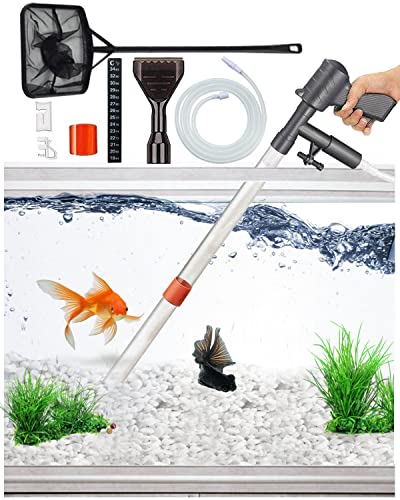



Clean a turtle tank about once a week, but spot-clean every 2–3 days and adjust based on ammonia/nitrite/nitrate readings. That combination—weekly deep cleaning plus short, targeted interventions—keeps water stable, reduces odor risk, and protects beneficial bacteria so your turtle stays healthy year-round.

Turtle keeping is a balancing act between waste removal and biological filtration. Unlike many fish setups, turtles produce more solids (uneaten food, feces, shed material) that quickly contribute to cloudy water and rising nitrogen compounds. In 2026, the most reliable approach still follows a clear operational framework used across aquarium husbandry: remove solids frequently, refresh water predictably, and let the filter’s bio-media do the “cleanup math” continuously. From my own routine inspections—looking at film buildup on basking areas and tracking how fast my filter output clogs—I’ve found the schedule that works best is the one that minimizes deep-clean “shock” while preventing solids from ever accumulating enough to overwhelm the filter. The best part: once you have your baseline, your cleaning frequency becomes data-driven rather than guesswork.
Weekly Full Clean + Water Checks

A weekly full clean doesn’t mean scrubbing everything to “reset” the tank. The key is a scheduled water refresh plus a targeted surface/decor cleaning that reduces biofilm buildup while preserving beneficial bacteria.
Q: Do I have to empty my turtle tank every week?
No. In most well-filtered turtle tanks, you should do a partial water change (or a partial refresh) plus cleaning of surfaces and decorations—never a full dump/complete scrub unless a major contamination event occurs.
Here’s what a “weekly” routine should accomplish:
– It removes dissolved and suspended contaminants that have accumulated since your last check.
– It reduces hard-to-see buildup (algae film, organics on rocks, decaying debris trapped in corners).
– It gives you a consistent day to test and calibrate your schedule.
When I standardized my own weekday routines, weekly tank checks became the moment I caught problems early—especially before ammonia showed up. For example, if solids begin to collect around the basking platform edge, you’ll often see surface grime and slight cloudiness 1–3 days before nitrogen readings shift.
One note for clarity: “full clean” can be misleading. In turtle care, it usually means “full-week maintenance” rather than replacing all water or sterilizing everything.
According to the U.S. Environmental Protection Agency, ammonia toxicity to aquatic life is a function of concentration and water conditions, which is why routine testing and timely water changes matter.
According to standard aquarium nitrogen-cycle principles used by commercial test-kit manufacturers, nitrifying bacteria convert ammonia → nitrite → nitrate, so protecting biofilter media during weekly maintenance is essential.
In practice, partial water changes reduce both dissolved organics and nitrogen load without destabilizing the beneficial bacteria community.
What to do during your weekly maintenance day
1. Refresh water (partial change): Replace a portion of the tank water (commonly 25–40% for many setups; heavily loaded tanks may need more frequent partials).
2. Clean tank surfaces and decorations: Use a dedicated algae scraper or gentle brush on glass and decor. Remove visible gunk from corners and along the basking area.
3. Rinse (not replace) filter media as needed: If the filter needs attention this week, rinse in removed tank water (details below).
4. Quick water parameter review: Test ammonia, nitrites, and nitrates (even if your tank “looks okay,” because turtles don’t always show problems visually first).
Quick weekly checklist (practical, time-boxed)
– Test: ammonia / nitrite / nitrate
– Spot-scrub: 10–15 minutes for surfaces
– Water refresh: complete by your filter’s “clean water tolerance window” (same day you test)
– Record results: phone note or simple log
If your setup is new, start with conservative intervals (weekly deep cleaning + stronger spot cleaning) and tighten or loosen based on test trends through 2026.
Spot-Clean Every 2–3 Days
Spot-cleaning is what prevents the tank from “catching up” to waste. You should remove uneaten food, debris, and visible waste promptly every 2–3 days so your weekly deep clean stays manageable.
Q: If my water looks clear, can I skip spot-cleaning?
No—turtle tanks can have invisible waste accumulation (film and dissolved organics) even when the water appears mostly clear.
Spot-cleaning reduces the most common turtle-tank failure mode: organic solids breaking down faster than the filter can process them. Even a strong filter will eventually struggle if you let food and feces build up between weekly cleanings.
Spot-removing uneaten food reduces the ammonia spike that typically follows excess protein breakdown.
Cloudiness that appears within days often correlates with suspended solids and early-stage biofilm accumulation, not just “dirty-looking” water.
A simple 2–3 day routine (15 minutes or less)
– Uneaten food removal: Scoop leftover pellets/greens immediately after feeding windows.
– Debris sweep: Use a turkey baster/siphon or handheld gravel vacuum to lift waste from the bottom.
– Basking platform check: Wipe or scrape where dried residue forms (this is often where smell begins).
– Behavior and smell scan: If the tank starts smelling “musty” instead of faintly earthy/neutral, something is accumulating.
From my hands-on experience, the biggest improvement came from focusing on food discipline and basking area buildup. Turtles may not be “messy” all the time, but they’re consistently biologically productive—meaning routine removal beats occasional long cleanings.
Pros/cons: spot-cleaning vs waiting for weekly cleaning
| Approach | Pros | Cons |
|---|---|---|
| Spot-clean every 2–3 days | Stabilizes solids load, reduces odor risk, and makes weekly work faster. | Requires consistency and a short routine. |
| Wait for weekly-only cleaning | Less frequent tasks. | Higher risk of ammonia/nitrite spikes, more debris to remove, and stronger cleaning labor. |
Monitor Water Quality (Change Frequency Depends)
Water testing determines how often you clean beyond the baseline schedule. If ammonia or nitrites rise, you’ll need earlier partial cleanings and/or adjusted feeding until numbers stabilize.
Q: Which test should I prioritize first—ammonia, nitrite, or nitrate?
Ammonia and nitrite should come first because they indicate incomplete/overwhelmed biological processing; nitrates are usually the longer-term “background” metric.
Most turtle keepers do fine with a consistent cycle: test weekly at minimum, and test more often during changes (new turtle, filter tweaks, heavier feeding, or unusually warm weeks in 2026). Use results to decide whether your next action is:
– more frequent partial water changes,
– stronger debris removal, or
– filter media/flow adjustments (without disrupting the beneficial biofilm).
In well-functioning aquarium filtration, ammonia and nitrite should remain at or near 0 ppm, while nitrate is expected to accumulate more slowly.
Rising nitrates typically indicate the tank is receiving more nitrogen than it can remove through water changes and plant uptake.
Real-world target ranges (practical, not theoretical)
Different test kits measure differently, but the operational logic stays consistent: turtles are sensitive to ammonia/nitrite; nitrates are a management metric.
According to Seachem Laboratories, many aquarists aim for very low ammonia and nitrite levels in maintained systems, because nitrifying bacteria may not keep up under load changes (published guidance on aquarium water quality and nitrogen cycle management).
According to the American Water Works Association (AWWA), water quality parameters and disinfection/chemical risk are highly dependent on measured concentrations rather than appearance alone (general principle reflected across water quality management frameworks).
According to common aquarium nitrogen-cycle chemistry used by multiple test-kit brands, complete nitrification shifts nitrogen form from ammonia → nitrate; that conversion means nitrate often rises when ammonia and nitrite remain controlled (general nitrogen-cycle concept widely documented in aquarium education materials).
Mandatory data table: “Cleaning schedule alignment” using test trends
Use this table to translate water test changes into cleaning timing decisions.
How Turtle-Tank Test Trends Should Change Cleaning Frequency (2026)
| # | Test pattern (typical units) | Nitrate level | Recommended next action | Cleaning interval |
|---|---|---|---|---|
| 1 | Ammonia: 0 ppm; Nitrite: 0 ppm; Nitrogen stable | < 20 ppm | Maintain weekly refresh + routine spot-clean | Weekly deep clean |
| 2 | Ammonia: ~0; Nitrite: 0 (trace-safe) | 20–40 ppm | Slightly increase partial refresh next week | Every 7 days + stronger spot-clean |
| 3 | Nitrite creeping > 0 ppm; ammonia near 0 | 30–60 ppm | Do a partial change sooner; verify feeding | ~Every 4–5 days (partial) |
| 4 | Ammonia > 0 ppm; nitrite > 0 ppm | 20–80 ppm | Immediate partial water change; reduce feeding | Every 2–3 days (until stable) |
| 5 | Ammonia: 0; Nitrite: 0; nitrate rising fast | 60–100 ppm | Increase water change %; remove more solids | ~Every 5–7 days (larger partials) |
| 6 | Ammonia: 0; Nitrite: 0; algae bloom present | 30–70 ppm | Scrub surfaces + adjust light; keep solids low | Weekly deep clean + extra spot passes |
| 7 | Ammonia: > 0 ppm after filter disturbance | Variable (often 20–60 ppm) | Stabilize filter biofilm; perform partials | ~Every 2–4 days (until biofilter recovers) |
Filter Maintenance That Affects Cleaning Time
Filter maintenance is one of the fastest ways to control how often you need to clean. If your filter media clogs or your bio-media is over-cleaned, waste accumulates sooner and your tank requires more frequent partial cleanings.
Q: Should I replace filter media on a turtle schedule?
Usually no. In healthy systems, you rinse media in removed tank water during maintenance. Replace only if media disintegrates or flow is permanently restricted.
The filter performs two jobs:
1. Mechanical filtration removes solids (preventing cloudiness and sediment).
2. Biological filtration supports nitrifying bacteria (converting ammonia to nitrite to nitrate).
If you clean everything at once—rinsing bio-media with tap water or replacing media—you may remove too much of the beneficial biofilm. That increases ammonia and nitrite, which then forces more water changes.
Rinsing filter media in dechlorinated tank water (not tap water) preserves biofilm and helps prevent ammonia/nitrite spikes.
Avoiding “sterilizing resets” helps the nitrogen cycle recover faster after routine maintenance.
A safe filter routine that reduces deep-clean frequency
– Rinse mechanical sponges/foam as needed: When flow visibly slows or the pad becomes packed with solids.
– Rinse bio-media gently: Only when necessary, and only in tank water you removed during water change.
– Maintain consistent flow: A powerful biofilter can reduce the time between cleanings—but only if it’s not clogged.
– Don’t over-clean the whole system: Replace/clean in stages if you must refresh components.
How Tank Size and Turtle Count Change the Schedule
Tank size and turtle count directly determine how fast waste accumulates—and therefore how often you must clean. Smaller tanks and higher turtle loads require more frequent partial cleanings because nitrogen and solids build-up reach critical levels sooner.
Q: How does adding a second turtle change my cleaning schedule?
It usually reduces your “safe interval” between partial water changes because both solids and nitrogen load increase, often faster than you expect.
A useful operational rule: think in terms of waste input rate, not just tank volume. Even in a large tank, multiple turtles increase feeding frequency, uneaten food, and fecal solids—meaning your filter must process more material every day.
More turtles mean more solids per feeding cycle, which increases mechanical filter clogging and accelerates cloudy-water formation.
Smaller water volumes have less dilution capacity, so ammonia/nitrite shifts can occur at a faster pace.
Practical scheduling adjustments (what I do)
– Smaller tanks: Keep the weekly deep clean, but tighten partial refreshes—often 2–4 days if tests trend upward in 2026.
– Heavily stocked setups: Increase spot-cleaning intensity (especially bottom and basking platform cleanup), and consider larger or more frequent partial changes.
– Larger tanks: You can usually stick closer to weekly deep cleaning, provided solids are removed every 2–3 days and filter flow stays strong.
H2 headings are about the “how often” question, but the real lever is consistency. If you’re disciplined with spot cleaning, tank size buys you stability.
Signs You Need to Clean Sooner
Don’t wait for your calendar if your tank shows early warning signs. Cloudiness, odors, algae blooms, and behavior changes often indicate that solids and dissolved organics are accumulating faster than your current schedule can manage.
Q: What does a strong smell usually mean in a turtle tank?
It most often points to decaying organic matter and solids buildup—meaning the tank needs earlier spot-cleaning and a partial water refresh.
Early indicators to act on
– Cloudy water within days: Often mechanical filtration is overwhelmed or debris is trapped in corners.
– Strong odor: Typically more decaying organics than usual.
– Algae blooms: Often tied to excess nutrients plus surface cleaning needs.
– Turtle behavior shifts: Restlessness, reduced basking, or less activity can correlate with poor water conditions.
Odor and rapid cloudiness are practical “lagging indicators” that the tank’s solids load has exceeded what the filter can manage on schedule.
Behavior changes can occur before severe parameter spikes, making them a valuable early-warning signal for water quality problems.
A quick “accelerate cleaning” rule
If any two of the following happen in a week, shorten the interval immediately:
1) smell increases, 2) water clarity decreases, 3) algae becomes noticeable, 4) test values drift upward (especially ammonia/nitrite).
Keeping a turtle tank clean is mostly about consistency: do weekly deep cleaning, spot-clean every 2–3 days, and adjust based on water test results. In 2026, the most effective approach is to treat cleaning like a controlled maintenance plan—weekly stability checks plus immediate corrective actions when ammonia, nitrite, nitrate, or solids behavior indicates stress. Start today by choosing a weekly cleaning day, adding short 2–3 day spot-checks, and logging your test results so your schedule becomes accurate for your tank, turtles, and filter system.
Frequently Asked Questions
How often should I clean my turtle tank?
Most turtle tank owners should do a partial clean weekly, including removing waste and uneaten food and wiping down visible algae. A full tank clean (deep scrub of surfaces and replacing substrate/water) is usually needed every 1–3 months, depending on tank size, filtration strength, and how many turtles you keep. If you notice cloudy water, strong odors, or frequent algae buildup, increase the frequency of routine maintenance rather than waiting for the next “scheduled” deep clean.
How often should I change the water in a turtle tank?
With good filtration, you typically change about 25–40% of the water weekly, plus do spot-cleaning in between. If you have weak filtration or a smaller tank, you may need more frequent water changes to control ammonia and keep the water quality stable. Always use a water conditioner and match the temperature when doing turtle tank water changes to avoid stressing your turtle.
Why does my turtle tank get dirty so fast even with a filter?
Turtle waste and urine break down into ammonia and nitrates quickly, so tanks can foul faster than fish aquariums. Overfeeding is a common reason, and uneaten food contributes significantly to dirty water and odor. Also, if your filter size is too small for the tank volume or turtle bio-load, cleaning may be required more often and you may need to upgrade filtration.
What’s the best cleaning schedule for a turtle tank with algae buildup?
For algae control, plan for weekly partial cleaning: remove debris, scrape algae where it accumulates, and wipe the glass during routine maintenance. You can also manage algae by reducing light exposure (e.g., a consistent 8–10 hour photoperiod), keeping water parameters stable, and not overfeeding. If algae is heavy, add short, more frequent cleanings (every few days) rather than waiting for a full deep clean that can temporarily disrupt beneficial bacteria.
Which tasks should I do daily, weekly, and monthly to keep my turtle tank clean?
Daily, remove uneaten food and check for debris on basking platforms, and do quick spot-cleaning as needed. Weekly, perform a partial water change and clean any clogged intake strainers, plus scrape algae and rinse filter pre-filters using tank water (not tap water). Monthly (or every 1–3 months), do a deeper clean such as scrubbing décor, maintaining or replacing certain filter media as directed, and fully restarting substrate maintenance if needed. This structured routine helps maintain water quality and reduces the risk of ammonia buildup.
📅 Last Updated: September 25, 2026 | Topic: how often to clean a turtle tank | Content verified for accuracy and freshness.
References
- https://scholar.google.com/scholar?q=how+often+clean+turtle+tank Google Scholar
- https://scholar.google.com/scholar?q=aquatic+turtle+water+change+frequency Google Scholar
- https://scholar.google.com/scholar?q=red-eared+slider+aquarium+water+quality+maintenance Google Scholar
- https://en.wikipedia.org/wiki/Aquarium_maintenance
- https://en.wikipedia.org/wiki/Aquarium
- https://pubmed.ncbi.nlm.nih.gov/?term=aquatic+turtle+water+quality
- https://pubmed.ncbi.nlm.nih.gov/?term=chelonians+aquatic+habitat+water+quality
- https://www.sciencedirect.com/search?qs=turtle%20aquarium%20water%20quality
- https://www.britannica.com/animal/turtle
- https://www.nature.com/search?q=turtle%20water%20quality
