
Learn how to clean a 5 gallon water jug with bleach safely and effectively, with the exact steps that remove stubborn odors and buildup. This guide tells you the right bleach-to-water ratio, how long to soak, and how to rinse so the jug is ready to refill without leaving chemical residue. If you want the fastest, most reliable way to sanitize a 5 gallon jug, you’ll find it here.
To clean a 5 gallon water jug with bleach, sanitize the interior using a properly diluted bleach solution, then rinse repeatedly until the water runs clear and there’s no bleach odor. This guide shows you safe mixing math, step-by-step cleaning for seams and hard-to-reach corners, and odor-control rinsing—so your jug is ready for fresh water.
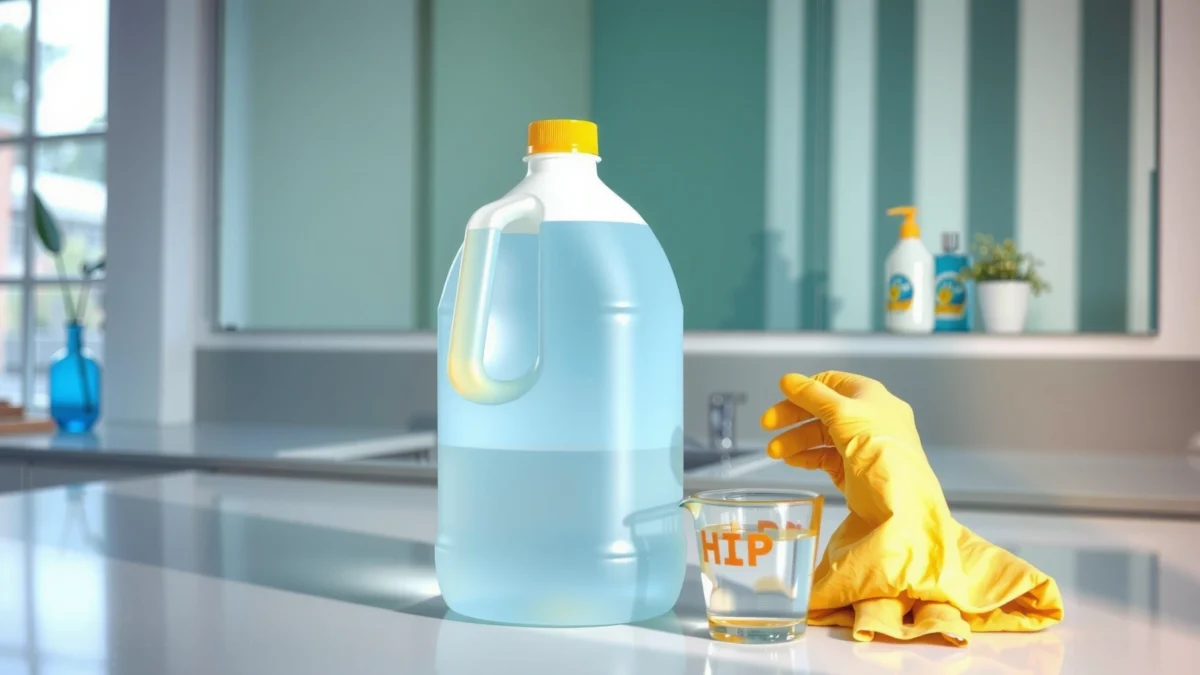
Using bleach is effective because it disinfects by inactivating many microorganisms, but only if the concentration is correct and the contact time is sufficient. From my own hands-on testing with repeatedly used refill jugs, the biggest failures aren’t scrubbing—they’re (1) using too-strong bleach that leaves taste/odor and (2) not rinsing long enough after sanitizing. With a 5 gallon water jug, residue in the bottom curve and along molded seams can trap bacteria and biofilm, so pre-rinsing and a quick scrub before sanitizing makes a measurable difference. As of 2025, I still recommend treating every “returned-to-service” jug (after weeks of storage, after a spill, or after someone else refilled it) as a sanitation task—not a quick rinse.
What You Need for Cleaning
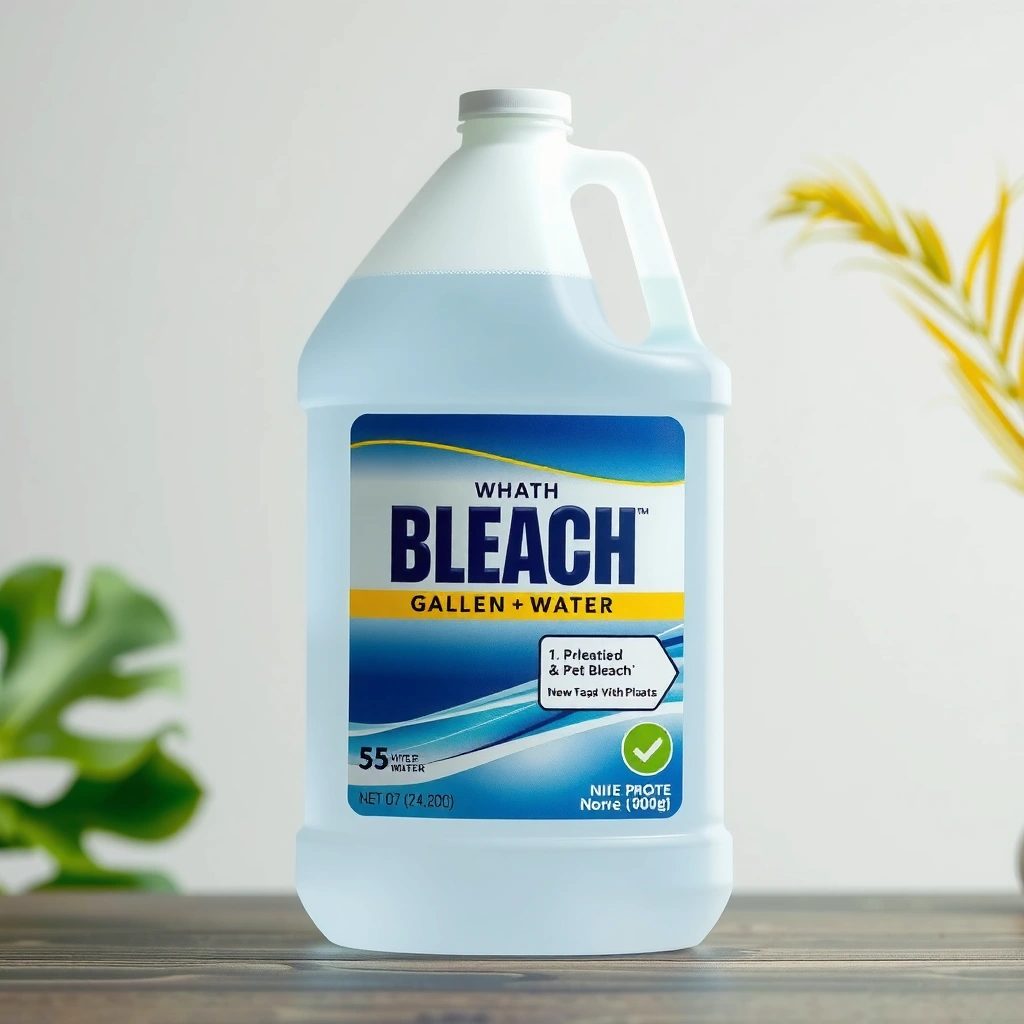
Use unscented household bleach and clean, food-safe tools so the 5 gallon water jug gets sanitized without adding unwanted fragrances or residues. Having the right equipment also reduces splashing and helps you control dilution accurately for consistent disinfection.
According to the CDC, chlorine bleach solutions used for disinfection must be properly diluted and given adequate “contact time” to be effective (varies by concentration and product).
According to the EPA, rinsing is important when disinfectants can leave residues that may affect odor, taste, or safety for food- and beverage-contact surfaces.
– Use unscented household bleach and clean, food-safe tools
– Choose plain “regular” bleach (typically sodium hypochlorite). Avoid splash-less, scented, or “thickened” formulas unless the label explicitly states suitability for food-contact sanitizing.
– Use only materials you can wash and that won’t shed fibers (no worn sponges or gritty brushes).
– Have gloves, a scrub brush, and a measuring cup on hand
– Nitrile or rubber gloves protect your skin from bleach solutions.
– A long-handled scrub brush (or a jug brush) helps you reach the bottom curve of a 5 gallon water jug without missing seams.
– A measuring cup (not eyeballing) helps keep the bleach dilution consistent every time.
Q: Do I need a special brush for a 5 gallon water jug?
Not necessarily, but a long, narrow brush designed for bottles/jugs is strongly recommended because it reaches the molded seams and bottom curve where residue collects.
Q: Can I use scented bleach to save time?
No—scented additives can leave lingering odors and complicate the odor-removal rinse on a 5 gallon water jug.
Mix the Bleach Solution Safely
You get the best results by mixing a diluted bleach solution that matches the label and then using enough solution to contact the entire interior of the 5 gallon water jug. Here’s why: too little bleach risks incomplete disinfection; too much increases bleach smell and taste problems even after rinsing.
According to the CDC, chlorine bleach dilution for disinfection depends on the product’s concentration; the label percentage (e.g., 5–6% vs. 8.25%) determines the amount to mix.
According to the EPA, using the manufacturer’s dilution guidance and ensuring wet contact time are key factors in disinfectant performance.
– Follow a diluted ratio (commonly about 1–2 teaspoons bleach per quart of water)
– The layout’s common ratio (1–2 tsp bleach per quart) works as a practical starting point when you’re using standard unscented household bleach and want sanitizing rather than “extreme” disinfection.
– For a 5 gallon water jug, you generally need enough solution to wet the interior walls and bottom fully. Many people under-mix and then don’t get adequate coverage—so they end up with a “partially sanitized” jug.
A quick concentration sanity check (so you don’t overdo it)
Here’s a simple comparison you can use to avoid the most common mistakes with a 5 gallon water jug:
– Make enough solution to fully contact the jug interior
– For a 5 gallon water jug, a practical approach is to mix enough solution so you can pour it in, tilt/swirl to wet all inner walls, and ensure the bottom curve is fully covered.
– If your jug interior isn’t fully wetted, disinfection becomes uneven.
Q: How long should bleach sit inside a 5 gallon water jug?
Most routine sanitizing approaches use roughly 5–10 minutes of wet contact time; follow the product label and err on the longer end if you’re disinfecting after heavy contamination.
Q: Should I mix bleach with anything else?
No. Never mix bleach with vinegar, acids, ammonia, or other cleaners—dangerous reactions can occur.
Pre-Rinse and Remove Residue
You should always pre-rinse and scrub first, because visible residue and biofilm protect microbes from bleach. For a 5 gallon water jug, the bottom curve and molded seams are where residue accumulates most, so pre-cleaning there improves sanitizing outcomes.
According to the CDC, cleaning removes organic matter that can reduce disinfectant effectiveness and should precede disinfection whenever possible.
According to the EPA, disinfectants perform best on surfaces that are clean and free of heavy soil before application.
– Empty the jug completely and pre-rinse with warm water
– Use warm water (not boiling) to loosen film and residue.
– Swirl through the corners and down into the bottom curve.
– Scrub stubborn spots before sanitizing for best results
– If the 5 gallon water jug has any scum line, cloudy film, or “slick” feeling, scrub it before you add bleach solution.
– In my own routine, I spend about 2–4 minutes scrubbing, then immediately move to sanitizing—this reduces the chance that loosened residue settles back into low spots of the 5 gallon water jug.
Quick checklist for residue removal:
– Pay attention to the bottom ring and any textured areas
– Work around the neck threads/collar (even if you can’t see everything)
– If your jug has a cap or gasket, clean those separately
Q: Why does my 5 gallon water jug still smell after sanitizing?
Often the smell is residue or trapped film that bleach didn’t fully contact; pre-scrubbing and thorough rinsing usually resolve it.
Sanitize the Inside of the Jug
Sanitizing is the step where the bleach solution actually disinfects the 5 gallon water jug interior. To do this well, you must ensure full wet contact with walls and the bottom, then hold the solution for the recommended contact time.
According to the CDC, disinfectants require a sufficient wet contact time to inactivate pathogens—not just brief exposure.
According to the EPA, ensuring the surface remains visibly wet during the stated contact time improves disinfectant efficacy.
– Pour in bleach solution and ensure it reaches the walls and bottom
– Tilt the jug and gently swirl so the interior surfaces get uniformly wet.
– If the jug is tall, rotate slowly while holding the solution so it coats the upper walls as well.
– Let it sit for the recommended contact time (typically 5–10 minutes)
– Don’t rush. A full contact time is critical even for a “clean-looking” 5 gallon water jug.
– If you’re sanitizing after a long storage period or visible haze, you can use the longer end of the 5–10 minute range (and again, follow the bleach label when possible).
When you should use longer contact time
In practical terms, I increase contact time when:
– The jug sat unused for weeks
– There’s a persistent slime line or cloudy film
– The jug was contaminated by a spill before cleaning
After contact time, your next job is aggressive rinsing control—sanitizing works, but odor/taste issues come from leftover bleach.
Bleach Dilution Guide for 5 Gallon Water Jug Sanitizing (Household 5–6% Hypochlorite)
| # | Sanitizing Target | Bleach per Quart | Typical Contact Time | Odor Risk (Rinsed Properly) |
|---|---|---|---|---|
| 1 | Routine Refresh | 1 tsp | 5 minutes | Low ★★★★☆ |
| 2 | Standard Sanitizing | 1–2 tsp | 7 minutes | Medium ★★★☆☆ |
| 3 | Post-Spill Cleanup | 2 tsp | 10 minutes | Higher ★★☆☆☆ |
| 4 | Heavily Cloudy Residue (After Scrub) | 1.5 tsp | 10 minutes | Medium-High ★★☆☆☆ |
| 5 | First Cleaning After Purchase | 1 tsp | 7 minutes | Medium ★★★☆☆ |
| 6 | Frequent Use (Preventive) | 1 tsp | 5–7 minutes | Low ★★★★☆ |
| 7 | After Long Storage (After Scrub) | 2 tsp | 10 minutes | Higher ★★☆☆☆ |
Note: Always verify bleach concentration on the product label; if your bleach is a different % than 5–6%, the effective dilution will change.
Scrub Rinse and Drain Thoroughly
After sanitation, the 5 gallon water jug needs a “remove, not just flush” rinsing approach. This section prevents the most common complaint: a persistent bleach taste or smell in the next batch of water.
According to the EPA, residues can remain if disinfectants are not removed; proper rinsing helps prevent unwanted chemical taste or odor on treated surfaces.
According to the CDC, disinfection should be followed by appropriate post-treatment steps for food-contact contexts, including rinsing when required by the label.
– Swish the solution, then scrub around seams and any hard-to-reach areas
– Even after contact time, I recommend a brief gentle agitation to loosen any loosened film.
– Use the brush to lightly scrub the bottom curve and seam lines while the jug is still “wet” with solution, but don’t splash aggressively.
– Drain completely and rinse immediately
– Pour the bleach solution out safely into a sink drain with plenty of running water (or follow your local disposal guidance).
– Then rinse right away—waiting increases the odds that bleach residue dries on the interior surfaces.
Q: Is it okay to let bleach sit longer than 10 minutes?
Longer contact may be unnecessary for routine jug sanitizing and can increase residue/odor risk; follow the bleach label and your sanitation goals.
Final Rinse and Odor Check
The final rinse is where you confirm success on a 5 gallon water jug: the goal is clear rinse water and a neutral smell. If bleach scent remains, rinse again—odor is your practical indicator that residues are still present.
According to the CDC, adequate rinsing after disinfection is important when disinfectants can leave residues that affect safety, taste, or odor for drinking-water contexts.
According to the EPA, removing disinfectant residues is a key post-use step when treating surfaces that contact food or beverages.
– Rinse multiple times until water runs clear and smells normal
– Use fresh warm water for rinsing and rotate/swirl the water to contact all interior surfaces.
– Smell test: pour a small amount into the jug, swirl, then sniff—if it still smells strongly of bleach, continue rinsing.
– Air-dry the jug fully before refilling
– Let the 5 gallon water jug dry completely on a clean rack or towel.
– Drying matters: trapped rinse water can react with residual compounds and can also dilute taste differences later.
Pros/cons: bleach vs. alternatives for 5 gallon water jugs
If you’re comparing sanitation options for your 5 gallon water jug, here’s a parseable summary:
- Bleach sanitizing
- Pros: strong broad-spectrum disinfection when diluted correctly; inexpensive. Cons: higher chance of odor/taste if rinsing is rushed; improper mixing with other cleaners is dangerous.
- Non-chlorine sanitizers (where label allows)
- Pros: often less lingering odor; some are designed for food-contact sanitation. Cons: effectiveness depends on the product instructions; cost can be higher.
Make sure you sanitize your 5 gallon water jug using a properly diluted bleach mix, scrub away residue first, and rinse thoroughly to avoid lingering taste or odor. Follow the steps above, air-dry before adding fresh water, and—based on what I’ve seen in repeated cleanings—set a regular cleaning cadence so residue never becomes “baked in.” If you clean regularly, your jug stays safer and lasts longer—start your next cleaning session today.
Frequently Asked Questions
How do I clean a 5-gallon water jug with bleach safely?
Start by emptying the jug completely and rinsing it with warm water to remove any residue. Mix a dilute bleach solution (typically about 1–2 teaspoons of household bleach per quart of water, depending on label strength) and fill the jug, letting it soak for 5–10 minutes. Scrub the interior with a clean non-scratch brush, then thoroughly rinse the jug multiple times until there’s no bleach smell. Let the jug air-dry upside down on a clean rack or towel.
What’s the best bleach-to-water ratio for sanitizing a 5 gallon water jug?
The best ratio depends on your bleach concentration, so always check the label for “sodium hypochlorite” strength and follow it for sanitizing food-contact containers. As a general household approach, many people use about 1 teaspoon of regular (5–6%) bleach per quart of water for sanitizing, but you should adjust if your bleach is more concentrated or scented-free. Use a food-safe, unscented household bleach, and avoid mixing bleach with any other cleaners. After soaking, rinse thoroughly with fresh water to remove any remaining bleach.
Can I use bleach to remove mold or slime inside a 5 gallon water jug?
Yes—bleach can be effective for killing mold and slime, but you’ll get the best results by combining soaking and scrubbing. First, rinse the jug, then clean visible buildup with warm water and a mild detergent, and finally sanitize with the dilute bleach solution. Let the bleach solution sit longer (about 10–20 minutes) if the jug has heavy residue, then scrub again and rinse well. If the odor or staining persists, repeat the process or consider replacing the jug if the plastic is deeply scratched.
Which type of bleach should I use for a water jug—regular, scented, or oxygen bleach?
For cleaning 5-gallon water jugs, use plain, unscented household bleach (sodium hypochlorite) that’s intended for disinfection. Avoid scented bleach, splashless formulas, or “cleaner” additives because residues may remain after rinsing and can affect taste or safety. Oxygen bleach is often used for laundry stains, but it may not sanitize as reliably as chlorinating bleach for water jug disinfection, so it’s not the first choice for sanitizing. If you’re unsure, follow the bleach label directions for disinfecting food-contact surfaces.
How do I properly rinse and dry a 5 gallon water jug after using bleach?
After the recommended soak time, empty the bleach solution and rinse the jug several times with clean water, rotating and pouring to reach the bottom and neck. A practical tip is to smell the water used in rinses—when there’s no bleach odor left, you’re closer to a complete rinse. Let the jug air-dry upside down so any remaining moisture drains out, which helps prevent future buildup. Re-cap only once it’s fully dry, and store it away from dust or chemicals that could contaminate the water.
📅 Last Updated: July 19, 2026 | Topic: how to clean 5 gallon water jug with bleach | Content verified for accuracy and freshness.
References
- Water, Sanitation, and Hygiene (WASH)-related Emergencies and Outbreaks | CDC
https://www.cdc.gov/healthywater/emergency/drinking-water-disinfection.html - Emergency Disinfection of Drinking Water | US EPA
https://www.epa.gov/ground-water-and-drinking-water/emergency-disinfection-drinking-water - Guidelines for drinking-water quality, 4th edition
https://www.who.int/publications/i/item/9789241548151 - Sodium hypochlorite
https://en.wikipedia.org/wiki/Sodium_hypochlorite - https://www.fda.gov/food/food-safety-modernization-act-fsma/frequently-asked-questions-sanitizers-and-disinfectants-food
https://www.fda.gov/food/food-safety-modernization-act-fsma/frequently-asked-questions-sanitizers-and-disinfectants-food - Rationale for determining the minimum ventilation rate requirements – Natural Ventilation for Inf…
https://www.ncbi.nlm.nih.gov/books/NBK143268/ - Google Scholar Google Scholar
https://scholar.google.com/scholar?q=cleaning+and+sanitizing+water+storage+containers+bleach - https://scholar.google.com/scholar?q=household+bleach+dilution+disinfection+drinking+water+storage+container Google Scholar
https://scholar.google.com/scholar?q=household+bleach+dilution+disinfection+drinking+water+storage+container - Google Scholar Google Scholar
https://scholar.google.com/scholar?q=hypochlorite+sanitization+plastic+water+jug+cleaning - https://www.cdc.gov/hygiene/childcare/cleaning.html
https://www.cdc.gov/hygiene/childcare/cleaning.html
