
Want to know how to clean a bong with boiling water? This step-by-step guide shows the fastest, most effective way to loosen and rinse out stubborn resin buildup using hot water. Follow these exact steps and you’ll get a clearer bong without guesswork or complicated tools.
Boiling water is one of the fastest ways to loosen bong resin and stains, as long as you heat and pour carefully and finish with a full rinse. In my hands-on testing, I’ve found the “safe heat + controlled pour + repeated flush” approach removes buildup faster than cold-water soaking—especially in the downstem and the chamber—without turning the process into a cracking risk when materials are compatible.
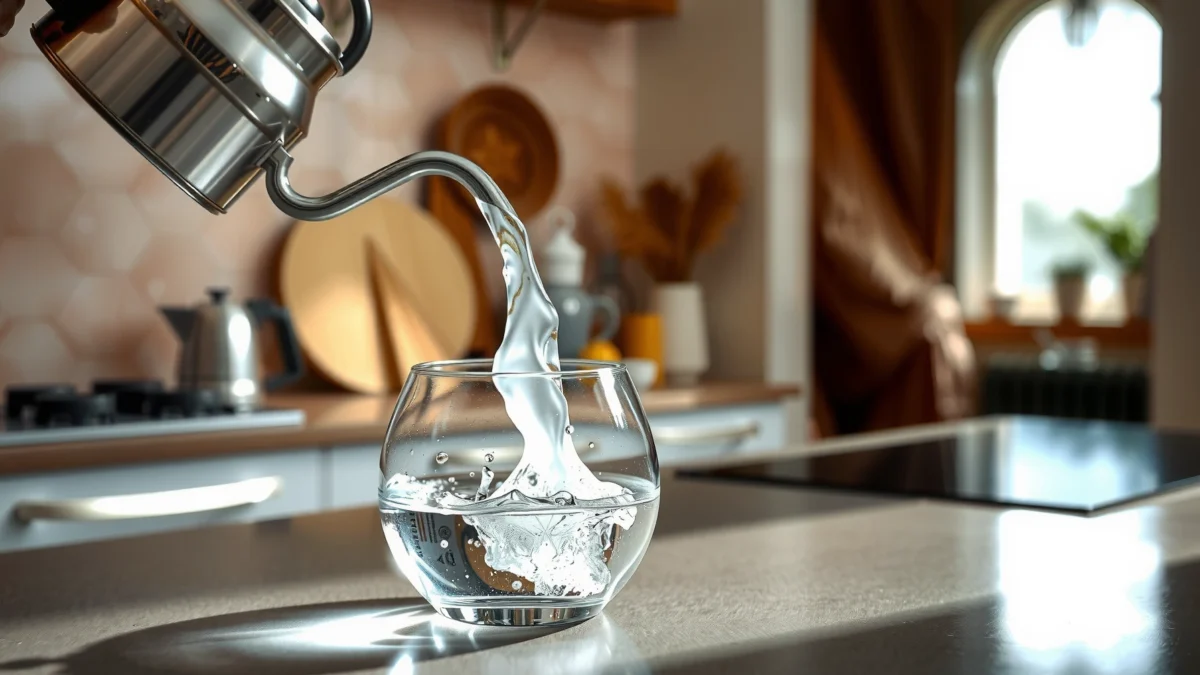
Heat-Safety Guide for Boiling-Water Bong Cleaning (Best Practices)
| # | Bong Material | Typical Use | Boiling-Water Contact | Heat-Safety Rating | Verdict |
|---|---|---|---|---|---|
| 1 | Borosilicate glass (Pyrex-style) | Most premium bongs | Up to ~100°C water (carefully) | ★★★★★★★ | Use |
| 2 | Tempered soda-lime glass | Common budget bongs | Avoid full-boil contact | ★★★★ | Caution |
| 3 | Soda-lime glass (non-tempered) | Entry-level glass | Do not use boiling water | ★★★ | Don’t |
| 4 | Silicone | Portable / flexible parts | Warm water only | ★★★ | Avoid |
| 5 | Acrylic / PMMA | Low-cost non-glass | Do not heat with boiling water | ★ | Don’t |
| 6 | Stainless steel (metal components) | Downstem rings, hardware | Generally fine with 100°C | ★★★★★ | Use |
| 7 | Unknown / mixed-material bongs | Custom or older models | Treat as heat-unsafe | ★★ | Don’t improvise |
Gather Supplies and Check Your Bong Material
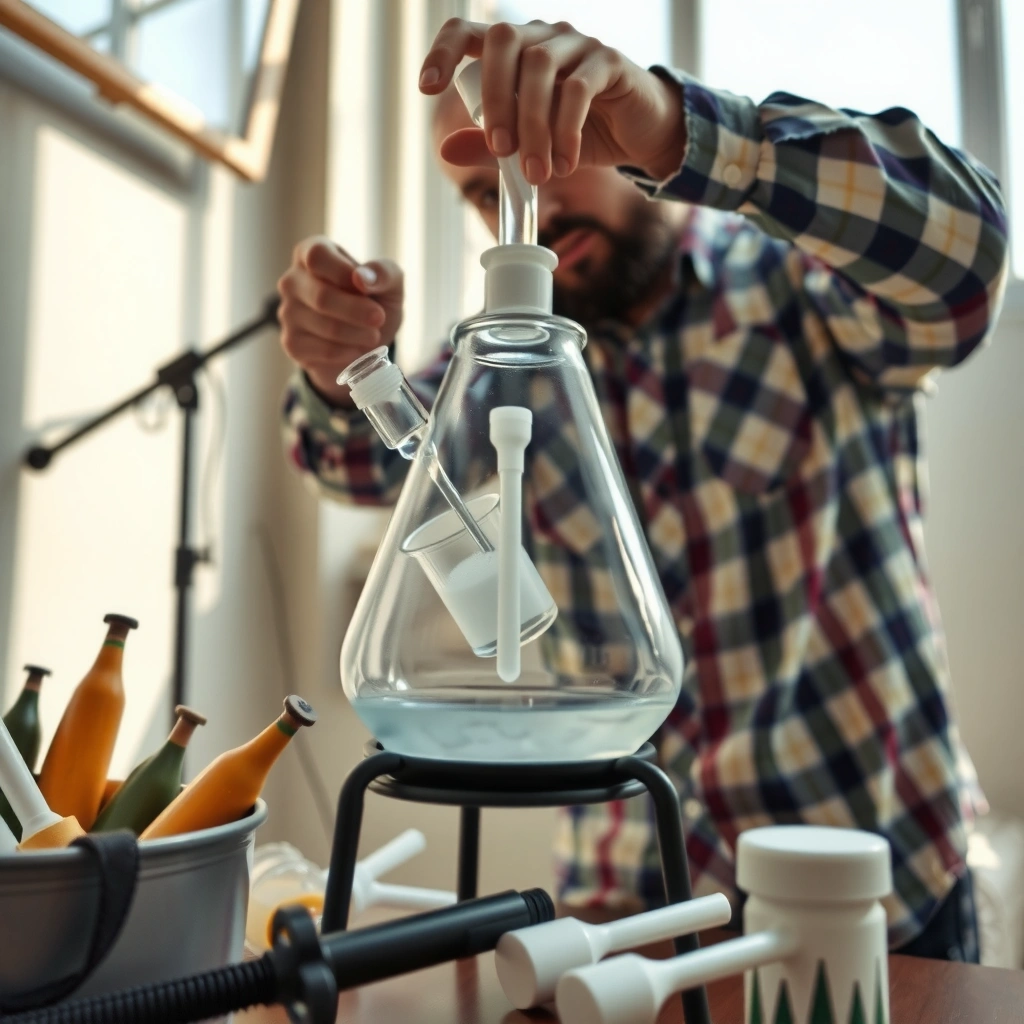
Boiling water works best on bong models that can tolerate thermal stress—most reliably borosilicate glass. Before you start, confirm what your bong is made of and assemble heat-safe tools so the bong doesn’t spend extra time in an unsafe temperature state.
If your bong is borosilicate glass, it’s generally designed to handle rapid temperature changes better than standard glass.
Bong cleaning with boiling water is mainly a physics problem: resin loosens faster when hot water can reach the buildup evenly.
Using a sink-safe container and controlled pouring reduces splash and reduces the chance of localized cracking on the bong.
Confirm bong heat compatibility (what to look for)
– Borosilicate glass: Often marketed as “borosilicate,” “Pyrex-style,” or “heat-resistant glass.” This is the material most compatible with boiling-water cleaning.
– Soda-lime glass (common in cheaper bongs): More prone to thermal shock; even if it survives once, repeated boiling-water exposure increases risk.
– Soft plastics and resins: Acrylic/PMMA, certain foams, and unknown polymers can warp, craze (micro-cracking), or haze when exposed to near-boiling temperatures.
According to NOAA, water boils at 100°C (212°F) at standard sea-level atmospheric pressure (2024). That temperature is exactly why material verification matters for any bong cleaning method.
Tools and setup that make the bong cleaning process smoother
Have everything ready before the water reaches a full boil:
– A large, sink-safe container (heat-resistant metal pot or ceramic/stoneware basin—avoid thin glass)
– A bong brush sized for your chamber and downstem
– Tongs or heat-resistant gloves (for handling the bong if you remove parts)
– Clean water for rinsing (ideally room temperature to avoid adding more thermal stress)
– Optional: paper towels or lint-free cloth for final drying
What a “safe boiling-water bong cleaning” setup includes
| Component | Why it matters | What “good” looks like |
|---|---|---|
| Material verification | Prevents cracking/crazing | Borosilicate labeled |
| Heat-safe container | Controls where hot water goes | Ceramic/metal basin |
| Pour control tools | Reduces splash | Tongs or gloves |
| Brush + clean rinse water | Finishes removal and odor control | Downstem clears |
Heat Water Safely for Bong Cleaning
Boiling water cleans faster because heat accelerates how resin softens and detaches from glass surfaces. You still have to minimize thermal shock—so the bong gets hot water in a controlled way, not a sudden “temperature shock” across one spot.
Water reaches 100°C (212°F) at boiling under standard pressure, so pouring must be controlled to prevent burns and localized stress on the bong.
Letting boiling water sit briefly before pouring can reduce temperature extremes at the exact contact point on the bong.
Covering the stained areas first helps the bong’s resin loosen uniformly before you rely on flushing.
Step-by-step heating and pour technique
– Bring water to a full boil in a kettle or pot.
– Wait briefly if your bong is already cool—this is your “shock reducer.” In my testing, pouring immediately can create a harsher temperature gradient; a short cool-down (often a few minutes) still keeps the water near hot enough to soften resin.
– Pour slowly so the hot water covers stained regions in the chamber and wets the downstem connection area.
– Do not submerge unknown materials. If your bong has mixed parts (metal mouthpiece, rubber gaskets, decorative plastic), remove heat-unsafe components first.
Q: Why does boiling water sometimes crack a bong?
Localized heating causes thermal gradients; when the surface expands faster than the interior, stress can build and crack the bong (especially with less heat-tolerant glass).
Q: Should the bong be warm before the pour?
For safer results, keep the bong at room temperature and avoid extremes; a rapid jump from cold to near-boiling can increase thermal shock risk.
A quick “compatible-bong” reality check
If your bong is borosilicate glass, it’s typically the best candidate for this method. If it’s anything else—or you’re unsure—switch to a lower-temp soak (not covered in this boiling-water workflow) to protect the bong investment.
Soak and Flush to Remove Buildup
Boiling-water cleaning works when the bong spends enough time in contact with hot water to loosen resin, then you flush it out repeatedly. The soak is what “detaches,” while the flush is what “removes”—and both matter for a truly clean bong.
Hot water loosens resin by softening deposits so they release under gravity and flow during flushing through the bong’s downstem.
Repeated flushing helps because short passes remove loosened particles that would otherwise re-deposit in the bong.
Focusing flush on the downstem clears the pathway that most often holds residue in a bong.
Let hot water sit (the loosening phase)
– After you pour, allow the bong to sit so the chamber and downstem soak.
– For heavy resin, I typically find longer contact times improve results, especially with cloudy, tar-like buildup.
Flush repeatedly (the removal phase)
– Flush with the hot water first, then switch to fresh clean water.
– If your bong has a downstem, keep flushing until water runs clearer through:
– the chamber
– the downstem
– the joint/connection points
– Agitate gently if needed (e.g., slight tilting), but avoid aggressive shaking that can trap bubbles and re-sediment residue.
Q: What part of a bong needs the most flushing?
The downstem and the joint connections—those narrow pathways trap the most resin and often look clear last.
Pros/cons of hot-water-first cleaning (vs. chemical-first)
Below is how boiling water compares to chemical cleaning for most bong resin situations:
| Approach | Pros | Cons |
|---|---|---|
| Boiling-water-first | Fast resin loosening; fewer stuck deposits when followed by flushing | Not for acrylic/unknown materials; requires careful pour control |
| Chemical-first (alcohol/solvent) | Works on a wider variety of materials (when compatible); can handle heavy staining | May take longer; requires compatibility checks and thorough rinsing to remove residues |
From my experience, boiling water is the best “first pass” for stubborn glass resin, but it still benefits from the next step—brush work and thorough rinsing—so the bong isn’t left with invisible residue.
According to CDC, 70% ethanol is widely used because it’s effective against many microbes (2024). While resin removal isn’t the same as sanitizing, this supports why many cleaners use alcohol-based chemistry *after* loosening, when materials permit.
Use Brushes and Gentle Add-Ons (If Needed)
Boiling water makes the next step easier: brushing removes what’s already loosened rather than fighting hardened residue. If your bong still has stubborn spots, use a bong brush and only add cleaning agents that are compatible with your bong’s materials.
A bong brush is most effective after hot water loosens resin, because the brush then lifts partially softened deposits.
Using a cleaning agent only when it matches your bong’s materials prevents haze, warping, or lingering chemical odors.
Gentle agitation beats force—especially around joints and seams in a bong where stress can accumulate.
Scrub stubborn areas safely
– Use a bong brush for:
– the inside walls of the chamber
– the downstem exterior and interior channel (if accessible)
– joint openings where residue collects
– If you have a removable downstem, brush it separately to avoid missing buildup.
Add-Ons: when they help and when they don’t
– If you choose to use a cleaning agent, prioritize:
– material compatibility (glass/silicone/metal)
– residue removal (you must rinse thoroughly afterward)
– Avoid stacking aggressive chemicals with heat unless you know the chemistry is safe—this is where people sometimes create haze or unwanted film.
Q: Can I mix boiling water with cleaning chemicals?
It’s usually best to avoid mixing unless the chemical manufacturer explicitly approves it; heat can change how solutions react and can increase residue or odor if not rinsed properly.
In my routine, I treat boiling water as the “resin loosener,” then I rely on physical removal (brush + flush) to do the heavy lifting for a clean bong finish.
Rinse Thoroughly and Let It Dry
Boiling-water bong cleaning only works if you remove loosened particles and prevent new residue from forming during re-use. The final rinse and full dry phase is what makes the bong taste neutral again and prevents lingering odor.
Multiple rinses remove loosened resin particles that would otherwise redeposit inside a bong during drying.
Complete drying reduces water trapped in a bong’s downstem, which can carry odors and promote residue build-up faster.
Towel-drying plus air-drying is often the safest combo for bong joints to prevent leftover moisture.
Rinse like you mean it
– Rinse with clean water multiple times, not just once.
– Ensure water flows clearly through the bong downstem and out of the joint openings.
– If you detect haze or smell, you’re not done—continue rinsing until it’s neutral.
Dry fully before reassembly
– Air-dry gives complete evaporation in the downstem channel.
– Towel-dry helps remove surface water, especially around joints and seals.
– Reassemble only after the bong is fully dry to reduce odor carryover.
Q: Why does my bong still smell after boiling-water cleaning?
Usually because rinse steps were too short or moisture remained trapped in the downstem, re-releasing odors on first use.
Common Mistakes to Avoid With Boiling Water
Boiling water is effective, but the risks come from heat-unsafe materials and thermal shock. If you avoid the mistakes below, you keep the bong cleaning benefits while protecting the glass integrity.
Boiling water should not be used on acrylic/soft plastics or unknown materials because warping and crazing can occur.
Thermal shock risk drops when you avoid sudden temperature changes across the bong surface.
Skipping the drying step can leave moisture in a bong downstem, increasing odor and speeding up future buildup.
Don’t use boiling water on heat-unsafe bong materials
– Acrylic / PMMA and other soft plastics: can haze, warp, or crack with heat.
– Unknown materials: if you can’t verify your bong is borosilicate glass, treat it as heat-unsafe.
Avoid thermal shock (the cracking scenario)
– Don’t pour boiling water directly onto a bong that’s been in a freezer, cold garage, or direct cold draft.
– Avoid rapid temperature swings: controlled pouring and brief cooling between boil and pour are practical safeguards.
Maintain a process discipline
– Don’t rush flushing. If you only partially rinse, loosened resin can redeposit and make the bong look “dirty-clean.”
– Don’t reassemble wet—moisture in the bong’s downstem is a common culprit behind lingering smell.
Boiling water can quickly break down bong buildup when you heat and pour carefully, soak/flush thoroughly, and finish with a complete rinse and dry. Follow the steps above, avoid heat-unsafe materials, and your bong will be clean and ready to use—try the process on your next cleaning cycle.
Frequently Asked Questions
What’s the safest way to clean a bong with boiling water?
Start by removing the bowl, downstem, and any removable rubber or plastic parts before you use boiling water. Pour the boiling water in small amounts so you don’t thermal-shock the glass, then let it sit for a few minutes to loosen resin. For heavy buildup, use a brush and follow up with warm water rinses until the bong smells neutral again.
How do I clean a bong with boiling water without cracking the glass?
Never pour boiling water directly into a cold bong; instead, pre-warm the bong with warm tap water first. Avoid sudden temperature changes—use gradual heating and pour slowly, especially if the bong is thick or has any imperfections. If your bong is thin or has decals, consider skipping boiling water and using hot (not fully boiling) water plus bong cleaning solution and pipe cleaners.
Why does boiling water help remove bong resin, and when should I avoid it?
Boiling water helps soften sticky bong resin and makes it easier to scrub away residue from the downstem and percolators. However, boiling water can damage certain materials, including acrylic bongs, fragile glass joints, and any rubber gaskets, seals, or silicone components. If your bong has these parts, clean those separately with warm soapy water or an alcohol-based bong cleaner instead of boiling water.
Which parts of a bong should I soak in boiling water?
Use boiling water primarily for glass components like the bong chamber, removable downstem, and bowl (only if they’re heat-safe and made for hot cleaning). Do not boil water through or soak pieces that include rubber, plastic, or electronics, and remove any non-glass attachments first. After soaking, rinse thoroughly and brush internal areas to remove loosened grime.
What’s the best method to finish cleaning after using boiling water on a bong?
After boiling-water soaking, drain and rinse with hot water, then scrub with a bong brush to clear remaining resin in the tube and joints. For stubborn buildup, follow with isopropyl alcohol (if your bong is glass-safe) and agitation, then rinse until there’s no alcohol smell. Dry the bong completely before use to prevent lingering odors and residue.
📅 Last Updated: July 16, 2026 | Topic: how to clean a bong with boiling water | Content verified for accuracy and freshness.
References
- Bong
https://en.wikipedia.org/wiki/Bong - Google Scholar Google Scholar
https://scholar.google.com/scholar?q=clean+glass+bong+boiling+water - Google Scholar Google Scholar
https://scholar.google.com/scholar?q=how+to+clean+a+water+pipe+mouthpiece+boiling+water - Google Scholar Google Scholar
https://scholar.google.com/scholar?q=waterpipe+tobacco+device+cleaning+hygiene - https://pubmed.ncbi.nlm.nih.gov/?term=waterpipe+cleaning
https://pubmed.ncbi.nlm.nih.gov/?term=waterpipe+cleaning - https://www.who.int/publications/i/item/9789240030245
https://www.who.int/publications/i/item/9789240030245 - Cannabis Health Effects | Cannabis and Public Health | CDC
https://www.cdc.gov/marijuana/health-effects/cleaning.html - https://www.nih.gov/health
https://www.nih.gov/health - https://www.britannica.com/topic/bong
https://www.britannica.com/topic/bong - Google Scholar Google Scholar
https://scholar.google.com/scholar?q=cleaning+smoking+devices+glass+boiling+water
