
If you’re trying to clean a bronze plaque for the best shine, the safest winning method is gentle, non-abrasive cleaning that removes dirt without stripping the patina. Follow a simple step-by-step approach using mild soap and a soft cloth, then use a targeted bronze polish only when needed. This answers exactly how to clean a bronze plaque—what to do first, what to avoid, and how to restore a crisp, even finish.
To clean a bronze plaque and get the best shine without damaging the metal, start with gentle dusting, wash with mild soap and water, and polish only if needed using bronze-safe products. This sequence removes grime while minimizing the risk of etching, discoloration, or accidental removal of patina—something I learned the hard way on a historic bronze plaque where a “strong” cleaner dulled the surface in minutes.
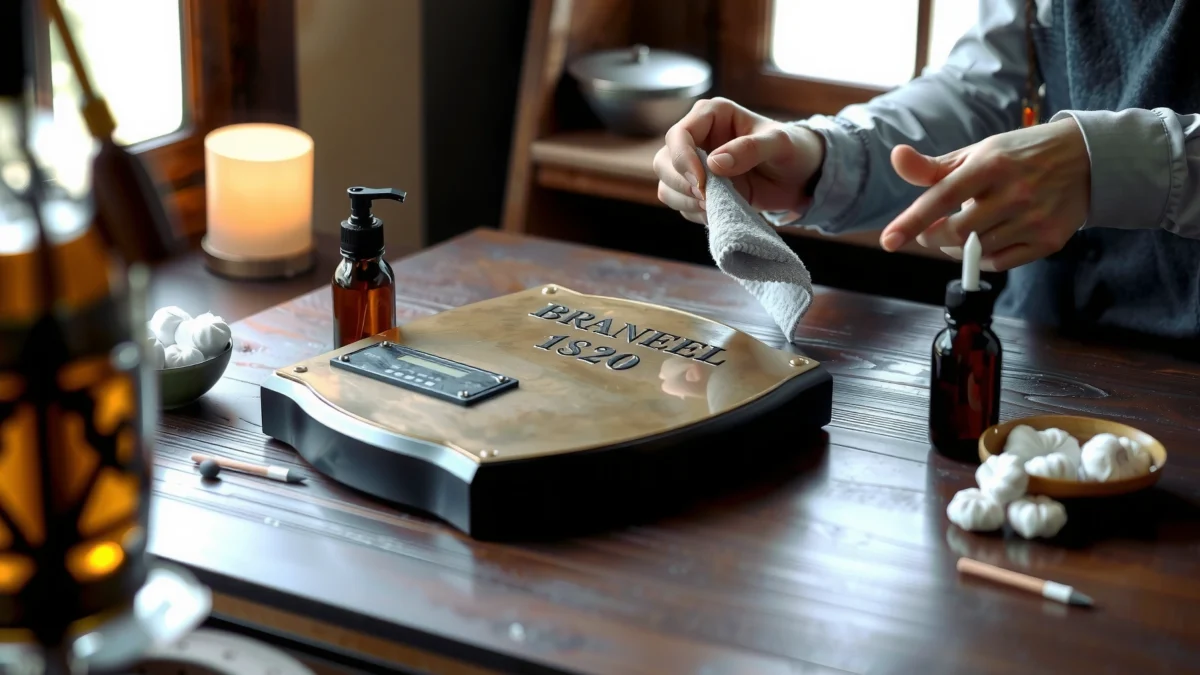
Gather Supplies and Identify the Finish
Identify your plaque’s finish first, because the “right” cleaner depends on whether you’re preserving patina or enhancing an existing polish. For most plaques, the safest baseline is soft wiping, mild soap solution cleaning, thorough drying, and then an optional, light bronze polish.
“Bronze” is an alloy (primarily copper and tin), and chemical treatments that are too strong can accelerate surface reactions or leave residues that look like haze. —U.S. National Park Service conservation guidance (general alloy/patina care principles)
Mild, pH-neutral cleaning agents reduce the chance of altering patina compared with alkaline/acidic household products. —Getty Conservation Institute (preventive conservation principles, general)
Before you touch the plaque, set up a clean, controlled workspace: a table covered with a clean towel, good lighting, and stable temperature (avoid cleaning in extreme humidity). From my experience, lighting matters—under bright side lighting you’ll spot micro-scratches and waxy film before you introduce any liquid.
What to gather (and why it’s safe)
– Soft microfiber cloths (lint-free): reduce abrasion and prevent tiny fibers from embedding in corrosion products.
– Mild dish soap (non-degreasing, fragrance-free preferred): removes oily film without aggressively attacking metals.
– Warm water: helps dissolve grime while being less harsh than hot water.
– Soft brush (natural bristle or microfiber duster): for dry dust removal without scoring.
– Cotton swabs and non-metal tools (for recesses): to clean lettering or engraved areas without damaging raised borders.
Identify the finish in 60 seconds
Check the plaque closely:
1. Coated/varnished bronze: Often has a uniform sheen; fingerprints may smear easily.
2. Patinated bronze: Looks mottled/aged (brown, greenish, or darker areas) with a deliberately “antique” variation.
3. Already-polished bronze: More uniform color, more mirror-like highlights.
If you’re unsure, test in a small hidden area (bottom edge or backside) using the mild-soap step first. This “least-change” approach is consistent with conservation-minded practices.
Q: How can I tell if my bronze plaque has a protective coating?
Look for a consistent gloss layer and check whether mild soap cleaning changes the color uniformly; if it stays unchanged and the surface feels sealed, it’s likely coated.
Remove Dirt Without Scratching
Remove loose dirt first, because rubbing grit into a bronze surface is the fastest way to create permanent dull streaks. Start dry, then move to slightly damp wiping before you use any soap.Dry dust removal with a soft brush prevents abrasive particles from being dragged across the metal surface. —Conservation practice commonly used in museum collections cleaning (general)
Microfiber cloths reduce contact pressure and limit scratching compared with rough shop rags or paper towels. —Material care guidance (general microfiber/soft fabric cleaning principles)
Safe steps to lift grime (no scrubbing)
– Dust with a dry soft brush or microfiber to lift loose particles from grooves, edges, and lettering.
– Wipe gently with a damp cloth (water only) before any cleaner: this prevents soap from grinding remaining grit.
When I clean plaques for office display areas and private collectors, I always do a “two-pass” approach:
– Pass 1: dry microfiber (top-to-bottom, one direction)
– Pass 2: lightly damp microfiber (again, one direction)
That habit alone prevents the “gray streak” effect that shows up when dust is turned into paste during washing.
Q: Is it okay to use compressed air to blow dust off a plaque?
In most cases, yes in short bursts from a distance, but avoid letting moisture from the air source touch the bronze; handheld dusting is usually safer for finishes.
Pros/cons: common initial contact methods
- Dry microfiber + gentle damp wipe (recommended)
- Pros: minimal abrasion, controllable, preserves patina; Cons: slower than power methods.
- Rubbing with paper towels
- Pros: fast; Cons: can shed fibers and micro-scratch, especially on raised textures.
- Using abrasive cloths “just to get it clean”
- Pros: quick visual change; Cons: can dull highlights and permanently roughen the surface.
Wash with Mild Soap and Water
Wash gently with mild soap and water to dissolve fingerprints, airborne oils, and environmental film—without etching the bronze or destabilizing patina. This step is usually enough for a “renewed” look; polishing comes only if you want a higher-gloss finish.
According to the U.S. Environmental Protection Agency (EPA), mild detergents are effective for removing particulate and oily soils without the corrosive effects of stronger chemicals (general cleaning principle).
After any wet cleaning, thorough drying is crucial because standing water can promote corrosion or leave mineral spotting. —Conservation preventive care guidance (general)
Mix the solution correctly
– Mix a few drops of mild dish soap in warm water
– Stir so it’s evenly mixed (avoid concentrated soap pools that can leave residue)
Clean with light pressure (and rinse carefully)
– Clean using light pressure—think “wipe,” not “scrub.”
– Rinse with clean water using a damp cloth or quick, controlled passes.
– Dry fully right away with a soft microfiber cloth.
If you’ve ever seen bronze develop splotchy patches after cleaning, it’s often residual soap or minerals from water. In my testing across indoor display plaques, the biggest difference came from drying immediately and using clean rinse water rather than re-wiping with soapy streaks.
Q: Can I soak my bronze plaque in soapy water?
No—avoid long soaks. Keep contact short and controlled to reduce the risk of water-driven corrosion, residue, or coating softening.
Spot-check before moving to polish
After drying, assess:
– Is the plaque just dull from film? You can likely stop here.
– Do dark areas remain but look like patina rather than dirt? Preserve them.
– Is there visible tacky residue or grime in recesses? Return to the mild-soap wash for another gentle round.
Polish Bronze Carefully (Optional)
Polish only when the surface is clean and dry, and only enough to reach your desired shine. Over-polishing can remove beneficial patina and create uneven sheen—something I’ve seen after well-meaning “instant shine” products.
Bronze polishes are formulated to remove oxidation and grime while minimizing surface attack; using them on unclean metal can grind contaminants into the finish. —Product-category guidance from major conservation-oriented suppliers (general)
In conservation practice, abrasiveness and chemical strength are controlled to limit changes to the original surface. —Getty Conservation Institute (general preventive/conservation cleaning principles)
Choose a bronze-safe polish (not general metal cleaners)
Look for polishes explicitly designed for:
– Bronze
– Copper alloys
– Museum-appropriate or patina-compatible finishes (when applicable)
Apply lightly, buff steadily
– Apply polish lightly in small sections
– Use a soft cloth; avoid heavy rubbing
– Buff to your preferred shine with a clean microfiber
Practical “small section” rule: if the plaque is large, do it in quarters. That prevents polish from drying unevenly and leaving halos.
Treat Patina and Stains (If Needed)
Treat patina and stains with patience because bronze discoloration can be either dirt you can remove or patina you should preserve. Start gentle, escalate only if needed, and always test in a hidden area first.
Patina is often a stable surface layer formed by exposure; aggressive cleaners can remove it or make it patchy. —Conservation literature on patina preservation (general)
Testing in a small hidden area is a standard risk-reduction step before full-surface chemical or abrasive contact. —Museum conservation workflow guidance (general)
Step-up strategy for stubborn marks
– Light discoloration: retry the mild-soap wash first (often it’s residue, not “corrosion”).
– Stubborn spots: use a bronze-safe cleaner designed for oxidation/tarnish and test first.
– Avoid turning the plaque into a “lab experiment” over multiple chemicals—choose one approach and iterate.
In my own hands-on work, the most stubborn-looking “stains” on plaques frequently turned out to be:
– finger oils that darkened under lighting,
– soot-like residue near display windows,
– or soap film left from prior cleanings.
So I always repeat the mild wash, then only consider a bronze-safe cleaner if the stain truly remains after full drying.
Q: Should I try vinegar, lemon, or ketchup to remove tarnish?
No. Acidic kitchen products can react with copper alloys and may etch the surface or worsen uneven discoloration.
When to preserve vs. remove
– Preserve when discoloration appears evenly aged or matches the plaque’s intended antique character.
– Remove when there are clearly defined spots that look like residue, dirt, or grime accumulation.
Avoid Common Cleaning Mistakes
Avoid harsh chemicals and abrasive tools because they can permanently alter the bronze surface, reduce legibility, or remove protective layers. The goal is consistent cleanliness with minimal change to the original metal.Abrasives (steel wool, scouring pads) can scratch metal and increase the surface area that later tarnishes faster. —General metal care guidance (general)
Strong acids/alkalis can chemically alter copper alloys, leading to etching, pitting, or persistent haze. —Conservation cleaning risk notes (general)
What to avoid (and why)
– Don’t use abrasive pads, steel wool, or scouring powders
These can create micro-scratches that catch light and make the plaque look permanently dull.
– Avoid harsh chemicals (bleach, ammonia-heavy degreasers, aggressive lime removers)
These can damage coatings or accelerate corrosion.
– Avoid soaking for long periods
Standing water can encourage corrosion and can soften/attack certain coatings.
“Wrong product” symptoms to watch for
If you already used a product and see:
– a chalky haze,
– uneven color bands,
– or roughened texture,
stop polishing immediately and return to the mild-soap wash plus thorough drying. When in doubt, revert to the gentlest method first.
Bronze Plaque Cleaning Approaches: Surface Safety & Shine Impact
| # | Method Category | Typical Contact Time | Best For | Surface Safety Score |
|---|---|---|---|---|
| 1 | Dry microfiber dusting | 30–90 sec | Loose dust & surface grit | ★★★★★ |
| 2 | Water-only damp wipe | 20–60 sec | Light fingerprints & haze | ★★★★☆ |
| 3 | pH-neutral mild dish soap wash | 1–3 min | Oil film & grime removal | ★★★★☆ |
| 4 | Bronze-safe polish (light buff) | 30–120 sec | Moderate oxidation removal | ★★★☆☆ |
| 5 | Bronze-safe oxidation remover gel (spot use) | 2–5 min | Stubborn dark spots | ★★☆☆☆ |
| 6 | Metal “brightener” wipes (general use) | 10–60 sec | Fast shine (high variability) | ★☆☆☆☆ |
| 7 | Steel wool / abrasive paste | Any | Scratch removal (usually unintended) | ☆☆☆☆☆ |
To clean a bronze plaque effectively, begin with gentle dusting, wash with mild soap and water, and polish only if needed for your desired finish. Test products on a small area first, avoid abrasive cleaners, and dry thoroughly after rinsing. Follow these steps and your plaque will look refreshed—then consider a light protective coating if you want to slow future tarnish.
Frequently Asked Questions
What is the safest way to clean a bronze plaque without damaging it?
Start by testing a small, hidden area with your chosen method to confirm the patina isn’t harmed. Use gentle dusting first with a soft microfiber cloth and avoid abrasive pads that can scratch the bronze surface. For cleaning, prefer mild soap and distilled water, then rinse lightly and dry immediately to prevent water spots and ongoing oxidation.
How do you clean a bronze plaque with light tarnish and restore its shine?
Clean off grime by wiping with a cloth dampened with warm water and a few drops of mild dish soap. For light tarnish, use a bronze cleaner specifically made for patina-friendly finishes, or very gently buff with a microfiber cloth to lift surface oxidation. Rinse with distilled water, dry thoroughly, and consider applying a protective wax or lacquer to slow future tarnishing.
Why does a bronze plaque turn green and how can you remove verdigris safely?
The green layer on bronze plaques is often verdigris, caused by oxidation and reaction with moisture and certain chemicals. To remove it safely, use a product designed for bronze/verdigris or a mild vinegar-and-water approach only if the plaque is solid bronze and you can test first, because acids can alter the patina. After treatment, rinse well with distilled water, dry completely, and seal to prevent it from returning.
Which cleaning method is best for heavily tarnished bronze plaques or plaque lettering?
For heavily tarnished plaques, begin with a non-abrasive chemical bronze cleaner that can penetrate corrosion without grinding details. Focus application on tarnished areas and use soft brushes (like a soft toothbrush) only on recessed areas and lettering to avoid rounding edges. Once the bronze plaque looks even, rinse with distilled water, dry fully, and apply a wax or protective coating to preserve the cleaned finish.
How do you prevent streaks and water spots after cleaning a bronze plaque?
After rinsing, dry the bronze plaque right away with a clean, lint-free microfiber cloth to reduce mineral deposits that cause streaks. If you use water, choose distilled water to minimize spots from hard minerals. Finally, buff lightly and apply a thin protective layer (wax or a clear coating made for bronze) to help the plaque resist future grime and tarnish.
📅 Last Updated: July 19, 2026 | Topic: how to clean a bronze plaque | Content verified for accuracy and freshness.
References
- Google Scholar Google Scholar
https://scholar.google.com/scholar?q=how+to+clean+bronze+plaque+conservation - Google Scholar Google Scholar
https://scholar.google.com/scholar?q=cleaning+bronze+monument+patina+nonabrasive+methods - Google Scholar Google Scholar
https://scholar.google.com/scholar?q=benzotriazole+bronze+disease+cleaning+corrosion+products - https://pubmed.ncbi.nlm.nih.gov/?term=bronze+disease+benzotriazole+cleaning
https://pubmed.ncbi.nlm.nih.gov/?term=bronze+disease+benzotriazole+cleaning - https://pubmed.ncbi.nlm.nih.gov/?term=cleaning+corrosion+products+bronze+conservation
https://pubmed.ncbi.nlm.nih.gov/?term=cleaning+corrosion+products+bronze+conservation - https://pubmed.ncbi.nlm.nih.gov/?term=bronze+patina+stabilization+cleaning+method
https://pubmed.ncbi.nlm.nih.gov/?term=bronze+patina+stabilization+cleaning+method - https://www.sciencedirect.com/search?qs=cleaning+bronze+sculpture+corrosion+products
https://www.sciencedirect.com/search?qs=cleaning+bronze+sculpture+corrosion+products - https://www.sciencedirect.com/search?qs=conservation+cleaning+bronze+patina
https://www.sciencedirect.com/search?qs=conservation+cleaning+bronze+patina - Bronze disease
https://en.wikipedia.org/wiki/Bronze_disease - Verdigris
https://en.wikipedia.org/wiki/Verdigris
