

To clean a Kohler faucet, use a mild dish soap and warm water with a soft microfiber cloth, then rinse and dry to prevent spotting. For buildup around handles and aerator areas, a soft toothbrush or cotton swab can gently lift grime in about 10–15 minutes. Keep the finish safe by skipping abrasive pads and harsh cleaners, and stop once the water runs clear.
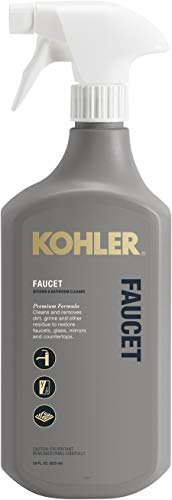


Cleaning a Kohler faucet is mostly about using mild soap, soft cloths, and avoiding abrasives that can dull the finish. For mineral spots, use a finish-safe descaling approach (gentle and thoroughly rinsed) rather than harsh chemicals that can damage coatings.
If your Kohler faucet has spots, soap scum, or mineral buildup, this is for you—especially if you’re trying to keep the finish looking good. It’s also useful if you’ve already tried a household cleaner and want a safer, more “faucet-friendly” routine.
Supplies and finish-safe cleaning approach

A good Kohler faucet cleaning routine starts with the right tools, because finish damage is usually caused by abrasive materials or strong chemicals—not by water. Before you start, decide what you’re cleaning for: everyday grime (soap film) versus mineral deposits (hard-water scale).
– Use a soft microfiber cloth and mild dish soap (or a gentle all-purpose cleaner diluted with water).
– Avoid abrasive pads, scouring powders, and strong chemicals that can dull or damage the finish.
– If you’re not sure what finish you have (chrome, brushed nickel, stainless, bronze, etc.), check Kohler’s care guidance first or choose a gentler option and test in an inconspicuous spot.
A quick reality check: hard water is one of the biggest drivers of visible spots on a Kohler faucet. According to the U.S. EPA, hardness is primarily calcium and magnesium measured as mg/L (milligrams per liter) of calcium carbonate equivalents, and 1 grain per gallon (gpg) equals 17.1 mg/L as CaCO3. That matters because higher hardness generally means faster mineral spotting unless you dry the faucet after cleaning.
How Water Hardness Levels Affect Kohler Faucet Spotting Risk
| # | Hardness range (mg/L as CaCO₃) | Equivalent (gpg) | German hardness (°dH) | Likely spotting pressure | Maintenance ease rating |
|---|---|---|---|---|---|
| 1 | 0–30 | 0.0–1.8 | 0.0–1.7 | Low | ★★★★★ |
| 2 | 31–60 | 1.8–3.5 | 1.8–3.4 | Mild | ★★★★☆ |
| 3 | 61–90 | 3.6–5.3 | 3.4–5.0 | Moderate | ★★★☆☆ |
| 4 | 91–120 | 5.3–7.0 | 5.1–6.7 | Moderate+ | ★★☆☆☆ |
| 5 | 121–150 | 7.1–8.8 | 6.8–8.4 | High | ★★☆☆☆ |
| 6 | 151–180 | 8.8–10.5 | 8.5–10.1 | Very high | ★☆☆☆☆ |
| 7 | 181–300 | 10.6–17.5 | 10.1–16.8 | Extreme | ☆☆☆☆☆ |
Even without “hard-water” test strips, the practical takeaway for any Kohler faucet finish is straightforward: if you routinely see mineral halos after drying, your local water hardness likely falls into the moderate-to-extreme ranges—and you’ll benefit from more frequent gentle cleaning and occasional descaling.
Step-by-step: How to clean a Kohler faucet
A reliable Kohler faucet cleaning method is a repeatable three-step cycle: wipe with mild soap, rinse, then dry. This prevents soap film and water spots from bonding to the finish.
– Wipe down the faucet: dampen a cloth with warm water and mild soap, then wipe the handles, spout, and body. Rinse with clean water and dry right away.
– Clean control surfaces carefully: use a soft toothbrush or cotton swab for creases around the handle and base without scrubbing hard.
– Finish the job: buff dry with a clean microfiber cloth to reduce water spots and keep the shine even.
For everyday Kohler faucet maintenance, think in terms of “surface contact time.” The longer a cleaner sits on a finish, the more opportunity there is for discoloration—especially on brushed nickel, specialty coatings, and darker metals like oil-rubbed bronze style finishes. Keep your soap-and-water step short, rinse promptly, and dry thoroughly.
In my own routine, I’ve learned that drying immediately after rinsing is the difference between “barely visible spots” and “noticeable mineral marks” on a Kohler faucet—.
Tackle mineral buildup (especially around the aerator and spout)
For mineral buildup on a Kohler faucet, the fastest path is to use a finish-safe descaling method with controlled contact time, then rinse thoroughly. Mineral spots are often calcium carbonate scale, which responds to mild acids but can also react with certain finishes if left too long.
– Remove removable parts if applicable: if your aerator or spray head comes off, take it down and clean it separately (only if it’s designed to).
– Descale gently: use a finish-safe method like a diluted vinegar soak, then rinse thoroughly.
– Clear nozzles: if you have small holes (spray heads/aerators), use a soft brush to remove loosened deposits—avoid sharp tools that could scratch.
If you use vinegar for descaling, stick to the chemistry you can control. According to the U.S. FDA, vinegar (including common distilled white vinegar) is defined as typically containing about 4–7% acetic acid by volume. That’s enough to dissolve limescale in many cases, but it still needs a finish-safe approach: dilute if your Kohler guidance recommends it, do not soak longer than instructed, and rinse completely afterward.
Here’s the part many people miss with a Kohler faucet: the aerator (the screen at the end of the spout) often traps mineral sediment before it ever becomes visible on the rest of the finish. If flow slows down or spray becomes uneven, removing the aerator (when designed to be removed) can improve results more than aggressive scrubbing.
Also, avoid “tool upgrades” like needles or metal picks. When abrasive materials contact the surface, they can create micro-scratches that catch dirt and water spots more easily. On the Mohs hardness scale, quartz is about 7, which is far harder than most plated or coated faucet surfaces—so even a small scratch can be a persistent problem over time (see U.S. Geological Survey (Mohs hardness concept)).
Cleaner type comparison for Kohler faucet descaling
Use this to choose an approach that protects common Kohler finishes.
| Method / cleaner type | Best for | Why it can be risky | Practical “safe use” note |
|---|---|---|---|
| Mild dish soap + warm water | Soap scum + everyday film | Low risk | Rinse and dry every time |
| Diluted vinegar (finish-safe) | Light-to-moderate limescale | Too long or too strong can dull finishes | Follow Kohler soak guidance; rinse thoroughly |
| Descaling paste marketed for fixtures | Stubborn scale | Formulation varies by brand and may include abrasive fillers | Test in a hidden spot first |
| Abrasive pads / scouring powders | None (generally) | Scratches reduce shine and increase spotting | Avoid on brushed/specialty finishes |
| Chlorine bleach or strong oxidizers | Nothing on most finishes | Can haze or damage coatings | Avoid unless the manual explicitly allows it |
What can go wrong (and when to stop)
A safe Kohler faucet cleaning process has stop points—if the finish starts to change, you switch methods immediately. Many “mystery dullness” issues trace back to either an incompatible chemical or too much scrubbing force.
– Using the wrong cleaner can haze or strip finishes—especially on brushed or specialty coatings. Stop and switch to milder products if the surface looks duller.
– Over-scrubbing can leave micro-scratches, which are harder to reverse than a light water spot.
– If parts won’t come apart or you feel resistance, don’t force them—clean around them or follow the faucet’s manual for disassembly guidance.
When to stop and reassess your Kohler faucet cleaning method:
– The finish looks different after the first attempt (clouding, color shift, or dull patches).
– You notice the detergent/cleaner “dries in place” before you can rinse.
– You had to apply unusual pressure to remove buildup—this is usually a sign the buildup needs a gentler descaling soak instead of mechanical force.
Warranty-sensitive caution: finish damage can sometimes affect how defects are evaluated. If Kohler’s documentation includes finish-specific limitations (for example, around acids or soak time), follow it first.
Verdict: best everyday routine (and who should skip this)
The best everyday routine for a Kohler faucet is “soap, rinse, dry”—with a careful spot-clean for minerals when needed. This approach minimizes finish risk while still handling the two common problems: soap film and limescale.
For heavy mineral deposits, descaling can help—but only if you’re confident it’s safe for your specific finish and you rinse thoroughly afterward. Skip DIY cleaning methods that involve strong acids, abrasive tools, or prolonged soaks if your finish is delicate, you don’t know the exact finish type, or you’re worried about warranties/finish damage.
Who should skip this DIY approach: If your Kohler faucet has an unusual specialty finish you can’t identify, if you see peeling, flaking, or corrosion at seams, or if disassembly is required for your setup, pause and consult Kohler care instructions or a qualified plumbing professional.
Quick checklist: clean your Kohler faucet fast
| Task | What to use | When |
|---|---|---|
| Daily wipe-down | Mild soap + warm water | After noticeable spots or spills |
| Rinse + dry | Clean water + microfiber | Always right after wiping |
| Handle/crevices detail | Soft toothbrush/cotton swab | When grime collects around controls |
| Mineral spots | Finish-safe descaling method | When water spots become persistent |
| Aerator cleanup | Gentle soak + brush | If buildup is clogging flow |
Frequently Asked Questions
How do I clean a Kohler faucet without damaging the finish?
Start by wiping the faucet with a soft, damp microfiber cloth to remove loose dirt. Use a mild soap or a non-abrasive cleaner, then rinse thoroughly and dry with a clean towel to prevent water spots. Avoid scouring pads, harsh chemicals (like bleach or strong acids), and abrasive powders because they can dull or strip Kohler finishes.
What’s the best way to remove hard water spots from a Kohler faucet?
For mineral buildup, soak a cloth or paper towel with equal parts white vinegar and water, then wrap it around the affected areas for 5–10 minutes. Gently wipe, rinse, and dry, repeating as needed until the spots lift. If the buildup is stubborn, use a non-scratch limescale remover made for your faucet finish and always follow the product instructions.
How do I clean the aerator on a Kohler faucet?
Unscrew the aerator from the spout using your fingers or a soft cloth-wrapped wrench to avoid scratching. Rinse it under warm water, then soak it in a vinegar-water solution for 15–30 minutes to dissolve mineral deposits. Brush away loosened debris with a soft toothbrush, rinse well, and reattach the aerator securely.
Why does my Kohler faucet have spots or discoloration even after cleaning?
Spotting is often caused by mineral-rich water that dries on the surface, especially in hard-water areas. If you’re using acidic or abrasive cleaners incorrectly, residues or etched surfaces can also cause discoloration that looks like stains. To reduce recurrence, rinse after cleaning, dry immediately, and use pH-neutral cleaners designed for fixtures.
Which cleaners are safe for Kohler faucets, and what should I avoid?
In general, mild dish soap, warm water, and non-abrasive bathroom cleaners are safe for regular Kohler faucet cleaning. Avoid abrasive scrubbers, steel wool, and cleaners containing chlorine bleach, hydrochloric acid, or strong solvents, which can damage plating and coatings. If you’re unsure, choose a product labeled safe for the faucet’s finish (chrome, stainless steel, brushed nickel, or polished surfaces) and test on a small, hidden area first.
📅 Last Updated: November 08, 2026 | Topic: How to Clean a Kohler Faucet: Care Guide | Content verified for accuracy and freshness.
References
- https://www.kohler.com/us/en/support/care-and-cleaning.html
- https://www.cdc.gov/coronavirus/2019-ncov/community/disinfecting-building-facility.html
- Hard water
- Limescale
- Corrosion
- faucet biofilm cleaning – Search Results – PubMed
- descaling scale removal metal surfaces citrate acid – Search Results – PubMed
- https://scholar.google.com/scholar?q=how+to+clean+faucets+descaling+limescale Google Scholar
- https://scholar.google.com/scholar?q=biological+biofilm+on+faucets+cleaning+disinfection Google Scholar
- https://scholar.google.com/scholar?q=hard+water+scale+removal+metal+surfaces+vinegar+citrate Google Scholar
