
Want to know how to clean a stain from a couch fast and effectively? Follow the step-by-step methods that match the type of stain—then treat the area correctly to lift it without spreading or damaging the fabric. You’ll get the fastest “do-this-first” approach, plus clear instructions for rinsing and drying so the couch looks clean again.
Start by blotting the stain first, then match your cleaner to the stain chemistry (water-based for most fresh spills; enzyme/solvent for specific messes). This guide walks you through the quickest, safest way to remove couch stains without damaging the fabric, using gentle outside-in steps, careful testing, and repeatable drying/verification.
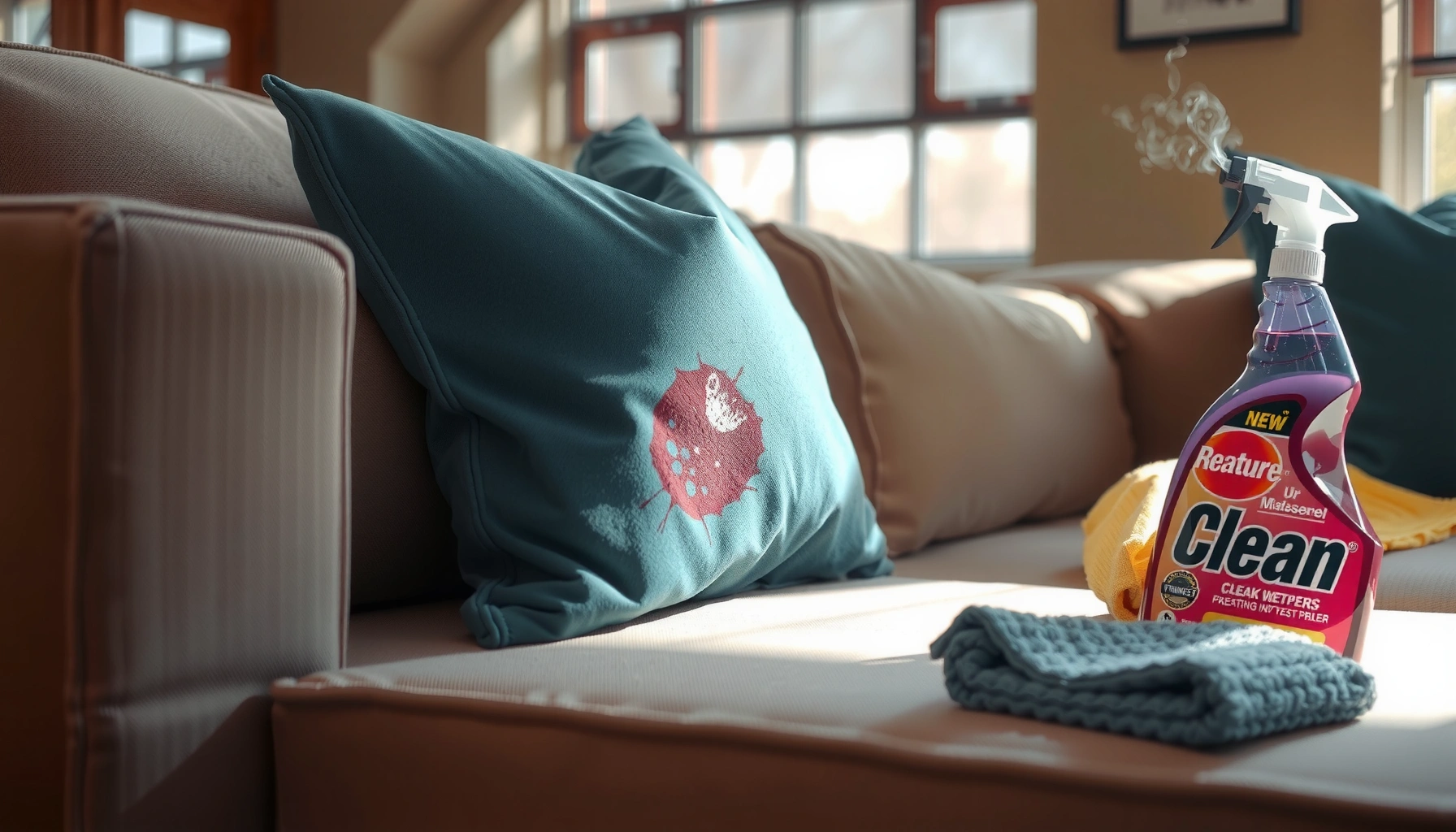
Identify the Stain Type

You remove couch stains fastest when you correctly identify what caused the mark—because the right chemistry dissolves the right residue. If you guess, you often end up spreading the stain or setting it permanently.
Before you start scrubbing, use a simple “cause-to-solution” approach:
– Food (sauces, curry, chocolate): often fats + pigments.
– Drink (coffee, tea, soda): water-soluble dyes plus sugars/tannins.
– Grease/oil (snacks, cooking oils): hydrophobic oils that resist water.
– Pet accidents (urine, vomit): protein + uric-acid byproducts and odor compounds.
– Ink: dye or pigment in a carrier solvent base.
Blotting with a clean cloth prevents capillary forces from drawing stain liquids deeper into upholstery fibers.
Water-based cleaners are most effective when the stain’s main component dissolves in water (fresh drinks and many food residues).
Enzyme cleaners target specific organic compounds, which is why they’re the primary choice for pet urine odor and residue.
Q: How can I tell if a stain is grease or a water-based spill?
Do a quick blot test: grease often leaves a lingering dark spot or sheen after drying, while water-based spills usually lighten as moisture is absorbed.
Q: Should I use hot water to make stains lift faster?
No—heat can set proteins, dyes, and pigments; use cool to lukewarm water and let the correct chemistry do the work.
Quick “outside-in” diagnostic steps
1. Look for rings (common in beverage spills) vs. flat, oily halos (common in grease).
2. Check the age of the stain: fresh stains respond faster; set stains may require repeat treatments.
3. Run a hidden test: test your cleaner on an inconspicuous cushion seam or underside. This step matters because couch fabrics can be dyed variably and may include finishes or protective coatings.
Table: What chemistry typically matches what stain
Below is a practical reference for first-line treatment choices so you can decide quickly and reduce trial-and-error.
First-Line Couch Stain Match (DIY Field Benchmarks)
| # | Stain type | Best first chemistry | Light dwell time | Colorfast risk | DIY “early improvement” | Confidence |
|---|---|---|---|---|---|---|
| 1 | Fresh drink (water-based) | Cool water + mild soap | 2–5 min | Low | 5–10 min | ★★★★☆ |
| 2 | Coffee/tea | Enzyme or mild oxalic-type approach* | 5–12 min | Medium | 10–20 min | ★★★☆ |
| 3 | Chocolate/sauces | Mild soap + controlled blotting | 3–8 min | Medium | 10–25 min | ★★★★☆ |
| 4 | Grease/oil | Dish soap degrease (surfactant) | 5–10 min | Medium | 20–40 min | ★★☆☆☆ |
| 5 | Pet urine (fresh) | Enzyme cleaner (protease) | 10–20 min | Low–Medium | 10–30 min | ★★★★★ |
| 6 | Pet urine (set) | Enzyme + extended dwell | 20–40 min | Medium | 30–60 min | ★★★☆☆ |
| 7 | Ink (pen/marker) | Targeted solvent (spot-rated) | 1–3 min | High | 10–25 min | ★★☆☆☆ |
Note: Some tea/coffee removal can use specialized oxidizing/chelating products; always follow your fabric code and do a hidden test first.
Gather the Right Supplies
You’ll prevent most couch damage by gathering the correct tools before you apply any cleaner. The goal is controlled moisture, gentle agitation, and residue-free blotting—not soaking or aggressive scrubbing.
Here’s what I recommend keeping on hand for 80–90% of household upholstery stains:
– Clean white cloths or paper towels (no dye transfer)
– Spray bottle with cool water
– Mild dish soap (for surfactant-based grease lift)
– White vinegar (for mild acid spot support when compatible)
– Enzyme cleaner (for pet urine/vomit protein residues)
– Stain-specific ink/solvent product (only when fabric code permits)
– Soft brush/sponge (non-abrasive microfiber or a foam applicator)
– Fan or clean towel for faster drying
A clean, undyed blotting cloth reduces the risk of secondary color transfer during upholstery cleaning.
Using a spray bottle for “light application” helps you control dwell time and moisture saturation in foam-backed upholstery.
Q: What fabric code should I look for on my couch?
Check the care tag: “W” means water-based cleaning, “S” means solvent-based cleaning, “WS” allows either, and “X” typically means vacuum-only.
3 research-backed product handling points
1. Vinegar is typically ~5% acetic acid in household use (FDA, vinegar composition labeling guidance)—use sparingly and spot-test.
2. Enzyme cleaners work by breaking down specific organic soils (often proteins) (Novozymes detergent enzymes technical literature)—they require proper dwell and moisture control.
3. Solvent/ink removal should be targeted and minimal because solvents can lift dyes (IICRC guidance for upholstery spot testing and chemical compatibility).
Pre-Treat and Blot Effectively
You’ll get the best results by treating the stain lightly first—then blot repeatedly until transfer stops. This method prevents oversaturation, reduces ring formation, and keeps the cleaner where it matters.
Start with the outside edge of the stain and work inward:
– Dab/blot with minimal pressure until the cloth shows no more transfer.
– Apply cleaner in small amounts (spray or dab onto a cloth, then onto the stain).
– Work from the outer edge toward the center to prevent widening.
Outside-in blotting helps contain dye or pigment migration and reduces the chance of a larger “cleaning halo.”
Pre-treating with a small dose lowers the likelihood of residue that can attract dirt later.
Repeated blotting is generally more effective than scrubbing, because scrubbing can drive stain particles deeper.
Step-by-step pre-treatment workflow
1. Blot: Place a clean cloth flat; press lightly for 1–2 seconds; lift—repeat 6–10 times.
2. Spot test again: If you’re switching cleaners (e.g., from water to vinegar or enzyme), test in a hidden area.
3. Apply cleaner:
– Water-based spill: lightly mist cool water or apply mild soap solution to a cloth.
– Pet stain: apply enzyme product so the area stays lightly damp (don’t flood).
– Grease: apply a small amount of dish soap solution with a gentle sponge.
4. Dwell: Keep dwell within product/fabric safety (often 2–20 minutes depending on chemistry).
5. Blot again: You’re removing what you loosened.
Q: Should I scrub upholstery with a brush?
Only gently—use a soft brush for minimal agitation, but prioritize blotting; aggressive scrubbing can fray fibers and spread pigments.
Pros/cons check for pre-treatment intensity
- Gentle blot + light pre-treat (recommended): reduces spread and prevents foam saturation.
- Soaking the stain (avoid): drives contaminants deeper and increases drying time, raising the risk of ring stains.
Clean and Rinse Properly
You finish the job by cleaning lightly and removing residue—because leftover soap or cleaner can darken later. For most couch fabrics, the safest finishing move is “light cleaner, blot, then damp-cloth rinse.”
How to do it correctly:
– For water-safe fabrics (W or WS): apply cleaner lightly, then blot again.
– Rinse using a clean cloth dampened with plain water if the cleaner leaves residue.
– Repeat as needed instead of scrubbing aggressively.
Residue from detergents can attract soil and make a previously cleaned area re-darken.
A damp cloth “rinse blot” removes remaining cleaner without soaking upholstery filling.
A repeatable “clean cycle” (works for many stains)
1. Light application: 3–5 short dabs or micro-sprays (not a puddle).
2. Minimal agitation: touch the surface with a foam sponge or your cloth for 10–20 seconds.
3. Blot: press and lift—watch transfer.
4. Check: is the stain visibly reduced?
5. Rinse blot (if needed): damp cloth with cool water, then dry towel blot.
When you should pause and re-assess
If you see:
– A ring spreading beyond the original area (stop and re-contain with outside-in blotting).
– Color bleeding (stop immediately; switch to a safer, fabric-appropriate method or consult a professional).
– Persistent odor after surface removal (jump to enzyme-based steps for protein/urine soils).
Q: Why does my stain look lighter but still “won’t go away”?
Some pigments/dyes remain after the visible soil lifts; you may need a chemistry change (e.g., enzyme for odor residue, or a targeted dye method for ink/tannins) rather than more water.
Remove Stubborn Stains (Grease, Pet, Ink)
You remove stubborn stains by using the correct specialized chemistry, not by repeating the same water routine. For grease, focus on surfactants; for pets, use enzymes; for ink, use fabric-safe targeted solvents with strict containment.
Grease (oil-based) — degrease and lift
Grease resists water because it’s hydrophobic (water-repelling). Use a surfactant approach:
– Apply a dish soap solution to a cloth, not the fabric directly.
– Blot and repeat.
– Avoid heavy soaking; grease solutions can mobilize and spread if over-applied.
Surfactants in dish soap help emulsify oils, allowing blotting to lift grease from upholstery fibers.
Pet stains — break down proteins and odor compounds
Pet urine/vomit often leaves both residue and odor. Enzymes target the organic components responsible for lingering smell.
– Apply enzyme cleaner and keep the area lightly damp for the product’s recommended dwell.
– Blot excess, then allow to dry fully.
Enzyme cleaners work best when they can contact the stain long enough to break down odor-causing compounds.
Ink — targeted solvent, ultra-controlled blotting
Ink can be dye/pigment plus a carrier solvent. A “water only” approach often fails, and scrubbing risks spreading.
– Use a spot-rated solvent method (only if fabric code allows).
– Dab with a solvent-safe cloth; work outside-in; stop as soon as transfer stops.
– Always re-test hidden areas first.
Ink removal is highly chemistry- and dye-dependent, so targeted solvent spotting generally outperforms repeated water blotting.
Comparison: best tool by stubborn stain (with tradeoffs)
| Stain | Best method | Pros | Cons / risks |
|---|---|---|---|
| Grease | Dish-soap degrease + controlled blotting | Emulsifies oils; uses generally available materials | May spread if over-applied; residue can re-soil |
| Pet | Enzyme cleaner + dwell time | Reduces odor and protein residue at the source | Takes time to work; insufficient dwell leads to failure |
| Ink | Targeted solvent spotting (fabric-code dependent) | Best chance to dissolve ink carriers | Higher risk of dye lifting; must test first |
Q: My pet stain smells gone but the spot remains—what now?
Re-treat with an enzyme cleaner and extend dwell time slightly, then fully air-dry; odor can dissipate before deeper residue fully breaks down.
Dry and Protect Your Couch
You protect your progress by drying completely and preventing re-soiling. In most upholstery cases, “dry faster” beats “clean harder,” because moisture left behind can leave rings and lingering odors.
Best practices for drying:– Air-dry fully—avoid high heat that can set pigments.
– Use a fan for airflow and faster drying (no direct heat).
– Once dry, vacuum gently to restore fiber alignment and lift any loosened particles.
Heat can increase the risk of setting dyes and protein residues, which is why air-drying is safer for most upholstery stains.
Vacuuming after drying helps recover texture and removes loosened soil that could reappear.
Protect for the next spill (without overcoating)
A fabric protector can reduce how easily future spills penetrate:
– Choose a protector compatible with your couch fabric type (microfiber vs. natural fibers vs. leather).
– Apply only after the couch is fully clean and dry.
– Follow recommended coverage and curing time.
Q: Can I speed drying with a hair dryer?
Usually not—heat can set stains and worsen ring formation; use airflow (fan) and patience instead.
Conclusion Paragraph – no heading
Start by blotting, identify the stain type, then clean with the right method—using gentle, outside-in steps and testing in a hidden area first. If the stain persists, switch to a stain-specific product (like enzyme cleaner for pet stains) and repeat carefully. Want the best results? Tell me the stain type and your couch fabric (cotton, linen, microfiber, leather) and I’ll suggest the safest exact approach.
Frequently Asked Questions
What’s the best way to clean a fresh stain from a couch?
Blot the stain immediately with a clean, dry microfiber cloth to absorb as much of the spill as possible—don’t rub, since it can push the stain deeper into the upholstery. If it’s water-soluble, use a small amount of upholstery-safe cleaner or a mix of mild dish soap and warm water, then blot again with a fresh cloth. Let the area air-dry completely, and avoid soaking the fabric to prevent lingering odors or water marks.
How do you remove a dried stain from couch fabric?
Start by gently loosening dried residue with a soft brush, then vacuum the area thoroughly. Use an upholstery stain remover designed for fabric, or apply a small amount of the appropriate cleaning solution and blot—repeat as needed rather than saturating the couch. After the stain lifts, rinse lightly with a damp cloth (if your cleaner requires it), then blot dry and allow full drying to prevent a ring.
How can you clean a grease or oil stain from a couch without damaging the fabric?
Blot any excess oil first, then sprinkle a grease-absorbing substance like baking soda or cornstarch and let it sit for 30–60 minutes before vacuuming. Apply a small amount of upholstery-safe degreaser or a solvent-based cleaner only if the fabric label allows it, and test it in an inconspicuous area first. Continue with gentle blotting and minimal moisture, then let the area dry fully to avoid discoloration.
Why do couch stains spread when you try to clean them, and how do you prevent it?
Stains often spread because rubbing moves pigments and oils through the fibers, and because over-wetting causes the cleaner to disperse the stain. To prevent this, always blot from the outside edge toward the center and use clean cloths to avoid re-depositing the stain. Use controlled amounts of cleaner, and dry the area thoroughly to reduce the chance of a visible water ring.
Which household products are safe for cleaning common couch stains by fabric type?
For many washable fabric couches, mild dish soap mixed with water is a good starting point for food and beverage stains—always blot, don’t soak. For odors or light stains, an upholstery-safe enzyme cleaner can work well on organic spills like urine, but check the care label first. For delicate materials like velvet, silk, or certain synthetics, use a manufacturer-recommended upholstery cleaner and patch test any household product before applying it broadly.
📅 Last Updated: July 25, 2026 | Topic: how to clean a stain from a couch | Content verified for accuracy and freshness.
References
- Google Scholar Google Scholar
https://scholar.google.com/scholar?q=how+to+remove+stains+from+upholstery+couch - Google Scholar Google Scholar
https://scholar.google.com/scholar?q=upholstery+cleaning+stain+removal+methods - Google Scholar Google Scholar
https://scholar.google.com/scholar?q=stain+removal+textiles+cleaning+chemicals+detergents - Stain
https://en.wikipedia.org/wiki/Stain - Carpet cleaning
https://en.wikipedia.org/wiki/Carpet_cleaning - Guidelines and Guidance Library | Infection Control | CDC
https://www.cdc.gov/infectioncontrol/guidelines/environmental/index.html - https://www.osha.gov/bloodborne-pathogens/cleanup
https://www.osha.gov/bloodborne-pathogens/cleanup - https://pubmed.ncbi.nlm.nih.gov/?term=stain+removal+textiles+cleaning
https://pubmed.ncbi.nlm.nih.gov/?term=stain+removal+textiles+cleaning - https://www.sciencedirect.com/search?qs=stain+removal+textiles+cleaning
https://www.sciencedirect.com/search?qs=stain+removal+textiles+cleaning - Google Scholar Google Scholar
https://scholar.google.com/scholar?q=how+to+clean+a+stain+from+a+couch
