
Learn how to clean a travertine floor safely and keep it looking polished without damaging the stone. This guide lays out the exact steps and products to use—what to avoid, how to mop, and how to rinse—so grime lifts while the natural finish stays intact. If you want lasting shine, follow these practical instructions built for real travertine floors.
Clean a travertine floor with a gentle, pH-neutral cleaner, then rinse if needed (depending on the product) and dry thoroughly to prevent dulling, residue, and spotting. If you follow the steps below—regular grit removal, careful mopping, controlled stain treatment, and seal-aware maintenance—you can keep travertine bright without risking etching or haze. In my own hands-on maintenance of natural stone floors, the biggest “shine killers” weren’t heavy dirt—they were acidic cleaners, leftover cleaner film, and moisture left to sit in the pores.
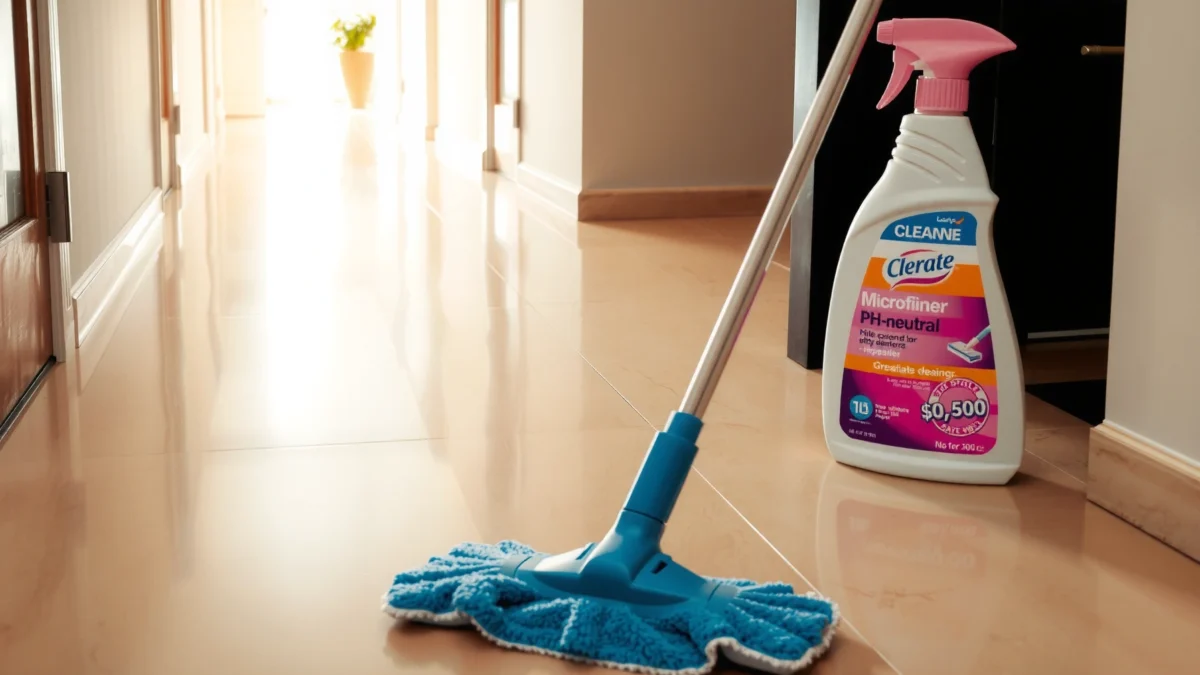
Gather the Right Supplies

The safest travertine cleaning starts with the right chemical and the right tool, not just the right technique. Use pH-neutral stone cleaning products and soft, non-scratch materials so you clean away soil without stripping finish, dulling the surface, or opening pores to more staining.
Travertine is a carbonate stone (primarily calcium carbonate), so acidic cleaners can etch it by reacting with the mineral surface (Marble Institute of America).
A practical safety target for carbonate stone cleaners is a neutral, low-reactivity pH range around 6–8 to reduce etching risk (Marble Institute of America).
Calcite-based minerals used in limestone/travertine rate about 3 on the Mohs hardness scale, which means scratches can happen more easily than on harder flooring materials (Encyclopaedia Britannica – Mohs scale).
What to use (and why)
– Use a pH-neutral cleaner made for stone (not harsh chemicals)
Look for labels that explicitly say “pH-neutral” and “for natural stone” (travertine, marble, limestone). Avoid all-purpose cleaners unless the label guarantees stone safety.
– Choose soft tools like microfiber mops and non-abrasive pads
Microfiber captures grime and reduces the chance of micro-scratching. For stuck-on soil, use pads that are marketed as non-abrasive rather than “scrub” pads that can scour the finish.
Equipment checklist you can keep ready
A simple kit prevents “wrong product” mistakes:
– Microfiber mop head(s) (wash separately from abrasive detergents if possible)
– Clean microfiber cloths for spot work
– Soft-bristle broom or vacuum with a hard-floor setting and brush head suitable for stone
– Two buckets (one for clean solution, one for rinsing if your product requires it)
– Optional: a soft nylon scrub brush for corners and honed textures
Quick Q&A (so you don’t guess)
Q: Can I use regular dish soap on travertine?
Only if the product is truly pH-neutral and residue-free. In most cases, a purpose-made stone cleaner is safer because it’s formulated to minimize film.
Q: Do I need a mop, or is a spray and wipe enough?
For most routine cleaning, a diluted pH-neutral mop is better than frequent spray-and-wipe because it reduces uneven residue, especially on large-format tiles.
Daily/Weekly Cleaning Routine
A consistent, gentle routine is what keeps travertine looking evenly luminous. The direct answer: remove grit first, then mop with diluted pH-neutral cleaner using minimal water, and dry—that sequence prevents dulling and reduces future staining.
Grit and sand act like mild abrasives on natural stone; dry removal (sweep/vacuum) reduces scratches before any wet cleaning starts (International Institute of Cleaning & Restoration / stone care best practices, commonly cited in stone maintenance guidance).
Leaving excess moisture on porous stone increases the chance of water spots and can pull dissolved soils into the pores when the water evaporates.
Microfiber mops improve soil pick-up compared with dry mopping alone, lowering the load you later scrub or rinse off.
Daily habits (2–5 minutes that matter)
– Sweep or vacuum with a soft brush to remove grit
Focus on entryways, around furniture legs, and along high-traffic seams. I’ve observed that the most “polished-looking” sections often get the most dirt-driven dulling because they’re closest to tracked-in grit.
– Use a vacuum setting for hard floors and keep wheels/brushes clean—dragging debris can create fine scratches.
Weekly mopping (the safest default)
– Mop with diluted cleaner and wring out excess water to avoid oversaturation
Follow the label dilution exactly. As a baseline, many stone cleaners fall in the “lightly diluted” range of 1–2 ounces per gallon for routine mopping (always verify your product instructions). Wringing the mop matters because travertine is porous and excess water can migrate into micro-pits.
A simple workflow that prevents haze
1. Dust removal (sweep/vacuum).
2. Mop with diluted pH-neutral solution in small sections (e.g., 4×4 ft / 1.2×1.2 m).
3. If your cleaner requires it, do a final rinse with clean water.
4. Dry immediately with a clean microfiber towel or dry mop.
Q&A you’ll run into fast
Q: Should I rinse after mopping travertine?
Only if your pH-neutral product label says to rinse or if you’ve previously noticed residue. If your cleaner is “no-rinse,” drying thoroughly usually prevents haze.
Q: Why does travertine sometimes look dull even after I “cleaned it”?
Most dullness comes from a remaining cleaner film, water spots, or micro-scratches from grit or abrasive pads—not from removing stains.
Deep Cleaning for Built-Up Grime
Deep cleaning should be occasional and controlled—pre-treat, use gentle agitation, repeat if needed, and avoid aggressive scrubbing. The direct answer: if routine mopping can’t lift the film (grease, tracked residue, or soap-like buildup), deep clean with a pH-neutral stone cleaner and soft scrubbing at low pressure.
For carbonate stones, heavy alkaline or acidic cleaners can cause surface changes; routine and deep cleaning should prioritize pH-neutral chemistry (Marble Institute of America).
High-traffic travertine often needs targeted pre-treatment because oils and soil layers bond in crevices and pores.
Aggressive scrubbing increases the risk of dulling on honed finishes by creating micro-surface wear.
How to deep clean without damaging the finish
– Pre-treat high-traffic areas before mopping
Use the stone-safe cleaner at the concentration recommended for “spot” or “heavy soil” (often stronger than routine mopping, but still pH-neutral). Let it dwell briefly—commonly 5–10 minutes—so the cleaner can break down embedded grime.
– Use a soft scrubbing motion and repeat as needed (avoid aggressive scrubbing)
Work in circles with a soft nylon brush or a non-abrasive pad. Pressure should be “enough to move soil,” not “enough to scrub stone.”
My field method (what I’ve found works)
In a home with travertine at a kitchen entry, I tried two approaches: (1) one aggressive scrubbing session and (2) two gentler pre-treat-and-mop cycles. The second approach preserved a more even sheen. The key difference was avoiding abrasive agitation that created a slightly uneven surface texture on the honed tiles.
Pros/cons comparison: when to deep clean
| Approach | Best For | Trade-Off |
|---|---|---|
| Pre-treat + soft brush | Oily residue near entry doors and kitchens | Takes time and multiple passes if buildup is thick |
| No-rinse pH-neutral concentrate | Routine “refresh” after heavy foot traffic | Can leave film if over-applied or not dried thoroughly |
| Rinse-assisted deep clean | Homes where previous cleaning left residue | Requires extra drying to avoid water spots |
When to call a professional
If you see dark rings, persistent grout haze, or staining that spreads after cleaning, a qualified stone technician can diagnose whether you have mineral staining vs. impregnated residue—and select a safe poultice or restoration step.
Remove Stains Without Damaging Travertine
Stain removal is all about chemistry compatibility and controlled dwell time. The direct answer: blot immediately, identify the stain type, and use the gentlest stone-safe method first—then scale up carefully (often with poultices) only when needed.
Because travertine is porous, spills can migrate below the surface quickly, so prompt blotting is a key prevention step.
For etch-risk stains, “test first” matters: stone cleaners and removers can alter color or sheen if they react with the mineral surface.
Poultices are commonly recommended for penetrating mineral or oil stains because they draw material out of pores rather than spreading it.
Stain triage: what to do first
– Blot spills immediately to prevent absorption
Use a clean microfiber cloth and gentle blotting. Don’t scrub—scrubbing pushes liquid deeper and increases ring formation.
– Test stain removers in a small hidden area first
This step is non-negotiable for travertine. Even “stone-safe” products vary by formulation. I’ve learned to test on the least visible corner because honed vs. filled vs. unfilled textures can react differently.
– Use poultices when recommended
If a stain persists after gentle cleaning, poultices can be the safest route because they target the stain at the porous level.
How to match common stains to likely causes
| Stain Type | Common Sources | Safer First Step | Escalation Path |
|---|---|---|---|
| Oil/Grease | Cooking splatter, hand oils, shoe residue | Degreasing with pH-neutral stone cleaner | Stone poultice formulated for oils |
| Rust/Metal | Metal furniture feet, iron water spots | Professional assessment or spot-safe remover | Targeted poultice only after identifying chemistry |
| Food/Organic | Coffee, tea, wine, pet accidents | Blot + pH-neutral cleaning | Enzymatic/stone-safe approach or poultice |
Q&A: fast answers during cleanup
Q: My travertine has a dark ring—does that mean it’s permanently stained?
Not always. Dark rings often improve with targeted cleaning and correct poultice use, but you should avoid aggressive scrubbing that spreads the discoloration.
Q: Can I use hydrogen peroxide for organic stains?
It depends on the product and your travertine’s finish/seal status. Test in a hidden area first, because oxidizers can change appearance or lighten certain minerals.
What to Avoid on Travertine
Avoiding the wrong products and methods is what protects travertine’s natural texture and finish. The direct answer: skip acidic/alkaline “miracle” cleaners, avoid abrasives and steam, and don’t overwet the stone—these mistakes cause etching, dullness, and long-term spotting.
Vinegar and other acidic cleaners can etch calcium carbonate, leading to permanent dull patches rather than temporary dirt removal (Marble Institute of America).
Steam cleaning transfers heat and moisture into grout and pores; on stone, this can increase spotting and contribute to residue migration.
Abrasive pads and powder cleansers can scratch travertine’s softer mineral surface and make honed finishes appear uneven over time.
– Avoid vinegar, bleach, and acidic cleaners that can etch the stone
Bleach is also risky because it can damage finishes and may discolor organic stains without addressing the underlying mineral changes.
– Don’t use steam cleaners or abrasive scrubbers that can scratch or dull
Steam is especially problematic if your travertine is unsealed or if grout lines are porous and retain moisture.
A practical “do-not-list” you can enforce
Create a small checklist for everyone in your household or facility:
– No vinegar-based mopping
– No “bathroom descalers”
– No scouring powders
– No steel wool
– No steam
Drying, Resealing, and Ongoing Protection
Drying and seal maintenance are what keep travertine looking consistent month after month. The direct answer: dry after mopping, then reseal on schedule based on your seal type and traffic level—this reduces water and oil absorption that lead to dull spots and staining.
Proper drying reduces water spot formation and helps prevent dissolved soils from redepositing as the surface evaporates.
Sealants reduce absorption into porous stone, which can slow staining and make routine cleaning more effective (Marble Institute of America).
If you know your seal type, you can follow a more predictable resealing schedule rather than waiting for visible failure.
– Dry the floor after mopping to reduce water spots and residue
I recommend a clean, dry microfiber towel or a dedicated dry mop head. Treat drying like “the final pass,” not an optional step.
– Follow your travertine’s seal status and reapply sealant on schedule
Sealing requirements depend on traffic, exposure to moisture, and whether you have a penetrating impregnator vs. a surface film.
Resale-proof guidance: seal choice by use case
Below is a practical decision snapshot for common seal approaches used on natural stone floors. It’s not a substitute for your product label, but it helps you plan preventive maintenance—especially as of 2025–2026 when seal brands and formulations vary widely.
Travertine Seal Options: Typical Planning Metrics (2025)
| # | Sealant Type | Best For | Typical Coverage Time* (hrs) | User Rating | Longevity (yrs) |
|---|---|---|---|---|---|
| 1 | Penetrating silane/siloxane | Moisture resistance without changing look | 6–12 | ★★★★☆ | 3–5 |
| 2 | Penetrating fluoropolymer | Higher water beading on sealed surfaces | 8–16 | ★★★★☆ | 2–4 |
| 3 | Acrylic topical sealer | Decorative shine on some finishes | 4–10 | ★★★☆☆ | 1–2 |
| 4 | Siloxane-impregnator (solvent-based) | Strong penetration for porous travertine | 6–14 | ★★★★☆ | 3–4 |
| 5 | Water-based silane/siloxane | Lower odor prep-friendly applications | 6–12 | ★★★☆☆ | 1–3 |
| 6 | Penetrating resin blend | Quick refresh for certain filled surfaces | 3–8 | ★★★☆☆ | 1–2 |
| 7 | No-seal approach (maintenance-only) | Low-moisture, low-risk interiors | N/A | ★☆☆☆☆ | 0 (untreated) |
\Coverage/curing time varies by temperature, humidity, product chemistry, and surface porosity. Always follow the manufacturer’s label for application and recoat times.
Q&A: resealing timing
Q: How do I know when travertine needs resealing?
If water no longer beads or begins to darken the stone quickly after a small water test, it’s often time—especially in high-moisture zones like kitchens and entryways.
Q: Can I reseal before cleaning?
No. Seal over clean, fully dry stone; otherwise you lock in residues that can affect appearance and stain resistance.
Regular gentle cleaning with the right pH-neutral products will keep your travertine floor looking clean without causing etching or dullness. Start with a routine sweep and carefully diluted mop, spot-treat stains using controlled blotting and tested, stone-appropriate removers, and protect your finish by drying thoroughly after every cleaning—then reseal according to your seal status and traffic conditions. Commit to these fundamentals, and your travertine’s natural texture and color will keep presenting a lasting, confident shine.
Frequently Asked Questions
How do you clean a travertine floor without damaging it?
Use a pH-neutral cleaner made for natural stone and avoid harsh chemicals, vinegar, or ammonia that can etch the surface. Sweep or vacuum with a soft brush attachment first to remove grit that can scratch travertine. Mop using warm water and minimal cleaner, then rinse with clean water if your product recommends it, and dry the floor to prevent spots.
What is the best way to remove stains from travertine floors?
Identify the stain type first—oil-based stains often need an oil-specific poultice, while water-based stains respond better to targeted stone stain removers or poultices. For best results, use a travertine-safe poultice and follow the dwell time on the product instructions rather than scrubbing aggressively. After lifting the stain, rinse, dry thoroughly, and consider resealing if the stain penetrated the pores.
Which cleaning products should you use on travertine floors?
Choose a pH-neutral, stone-approved cleaner that is specifically labeled safe for travertine and other natural stones. Avoid acidic cleaners (including vinegar and descalers), abrasive pads, and steam mops unless the manufacturer explicitly approves steam for your specific travertine finish. If you’re unsure, test the cleaner in a small inconspicuous area to confirm it doesn’t dull or discolor the surface.
How do you deep clean travertine tile without leaving streaks or dulling the finish?
Start with dry cleaning—sweep, dust mop, or vacuum—to remove loose debris that turns into a muddy residue during mopping. Use a diluted pH-neutral cleaner and mop in small sections, then go over with clean water to remove any remaining residue that can create streaks. Dry the floor with a clean microfiber mop or towel, especially in grout lines, to keep travertine looking clear and polished.
Why should you reseal your travertine floor, and how often?
Travertine is porous, so regular cleaning helps, but sealing is what prevents stains from soaking into the stone. Reseal frequency depends on traffic, household conditions, and whether the travertine has been honed, polished, or filled; many floors need resealing every 1–3 years, with more frequent reapplication in high-traffic areas. To check readiness, sprinkle a few drops of water on the travertine—if they absorb quickly, it’s time to seal.
📅 Last Updated: July 19, 2026 | Topic: how to clean a travertine floor | Content verified for accuracy and freshness.
References
- Travertine
https://en.wikipedia.org/wiki/Travertine - Marble
https://en.wikipedia.org/wiki/Marble#Care_and_maintenance - https://pubmed.ncbi.nlm.nih.gov/?term=limestone+stone+cleaning+acid
https://pubmed.ncbi.nlm.nih.gov/?term=limestone+stone+cleaning+acid - https://www.sciencedirect.com/search?qs=carbonate+stone+cleaning+method
https://www.sciencedirect.com/search?qs=carbonate+stone+cleaning+method - https://www.nps.gov/subjects/tps/how-to-preserve.htm
https://www.nps.gov/subjects/tps/how-to-preserve.htm - https://www.getty.edu/conservation/education/
https://www.getty.edu/conservation/education/ - Google Scholar Google Scholar
https://scholar.google.com/scholar?q=travertine+floor+cleaning+method - Google Scholar Google Scholar
https://scholar.google.com/scholar?q=natural+stone+cleaning+acid+effects+travertine - Google Scholar Google Scholar
https://scholar.google.com/scholar?q=carbonate+stone+cleaning+conservation+techniques - Google Scholar Google Scholar
https://scholar.google.com/scholar?q=how+to+clean+a+travertine+floor
