
You can clean your Air Innovations humidifier fast and correctly—this step-by-step guide shows the exact process to remove scale, kill odors, and keep mist output consistent. Follow the cleaning sequence for the tank, base, and any removable parts to avoid damage and prevent leftover mineral buildup. If you want the quickest route to a fresher, safer humidifier, start here and get it done right.
Cleaning an Air Innovations humidifier is simple: unplug it, empty the tank, and clean key parts on a regular rinse-and-descaling cycle to stop mineral scale and odors before they build up. In practice, the difference between a “working fine” humidifier and one that smells or sputters comes down to consistent drying, correct descaling timing, and thorough rinsing after any soak—especially with hard water, which commonly drives crusty white deposits (scale).
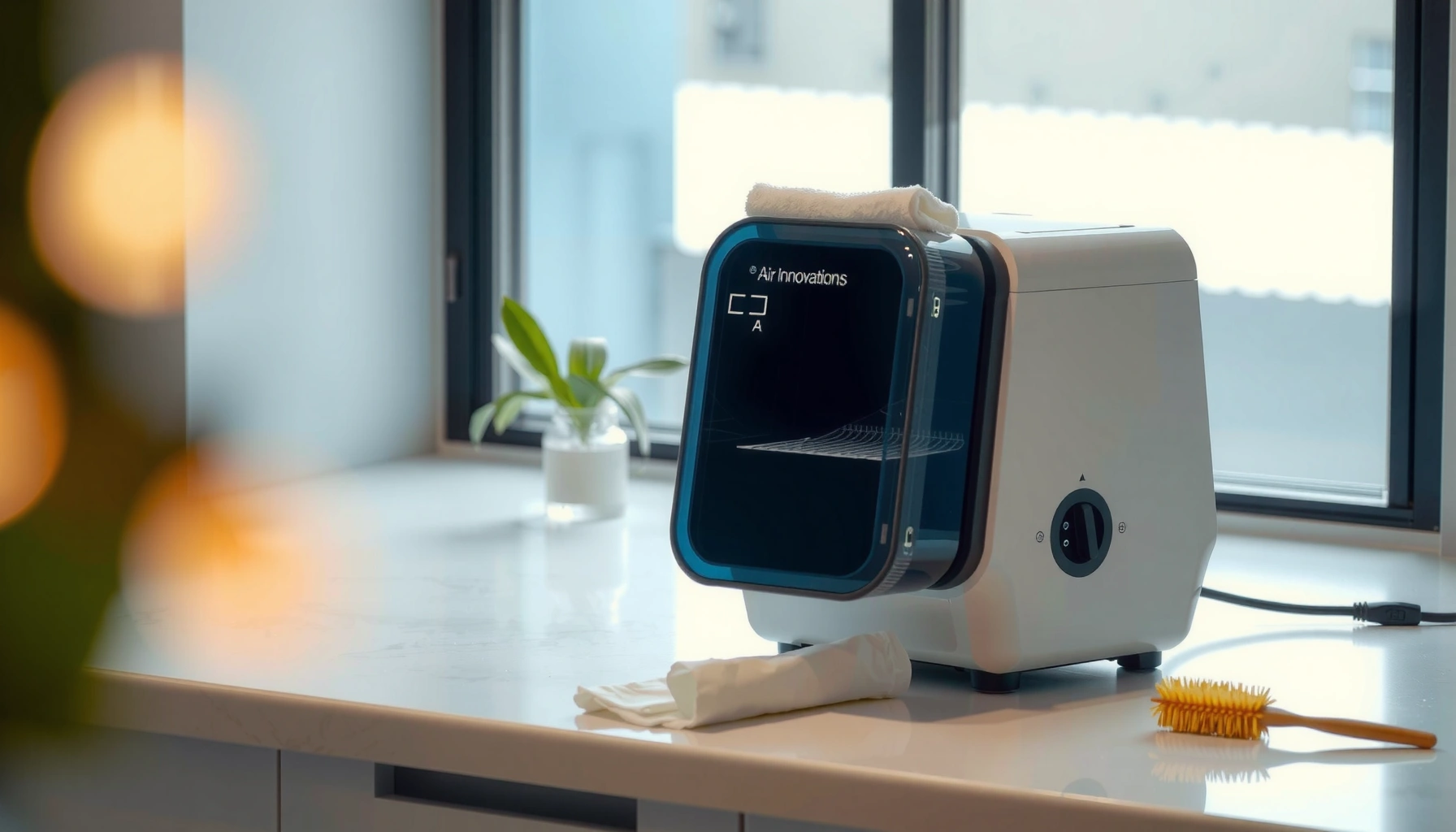
Unplug and Prepare Your Air Innovations Humidifier
You’ll avoid most cleaning problems if you start by unplugging and emptying the unit before touching any parts. From there, you’ll prepare a safe workspace so you can clean the Air Innovations humidifier thoroughly without leaving standing water in the base or electronics area.
“Unplugging a humidifier before cleaning reduces the risk of electrical shock and prevents accidental moisture exposure to the base.”
“Emptying the tank and moving the unit to a sink prevents backflow and helps you see residue that may be invisible when water is still in the tank.”
– Turn off and unplug the humidifier before cleaning
When I clean my Air Innovations humidifier, I treat “unplug” as a hard rule—especially if the model includes an auto-shutoff sensor or internal fan. Even a small amount of water in contact with power connections can cause corrosion over time.
– Empty all water and move the unit to a sink or washable surface
For the Air Innovations humidifier, fully emptying the tank is more than convenience: it prevents dilution of scale and makes it easier to remove sediment from corners. Place the base on a towel in the sink area so drips don’t pool underneath.
– Gather basics (soft brush/cloth, water, and approved cleaner)
Use tools that won’t scratch plastic or metal. I keep a dedicated soft brush (nylon bristles), microfiber cloths, and clean cups for rinsing the Air Innovations humidifier tank. For chemicals, stick to manufacturer-approved cleaners—never guess if the manual specifies compatibility (some plastics and coatings can react).
Q: Can I clean my Air Innovations humidifier while it’s still plugged in?
No—always turn off and unplug before you remove the tank or wipe internal components.
Q: What’s the safest work surface for cleaning an Air Innovations humidifier?
A sink or a washable mat/towel on a flat counter works best, because it contains drips and reduces the chance of spills getting into the base.
Daily and Weekly Cleaning Basics
A quick rinse-and-wipe routine keeps your Air Innovations humidifier cleaner longer by limiting mineral buildup and preventing biofilm odors. If you only deep-clean when something goes wrong, the next smell or visible crust often signals that residue has already spread into the wetted areas.
“Frequent rinsing reduces mineral buildup because scale formation accelerates when minerals repeatedly deposit and dry on surfaces.”
“Wiping with a damp cloth and avoiding harsh abrasives helps preserve plastic and seal integrity, which affects how well the Air Innovations humidifier maintains an even water path.”
– Rinse the tank and base daily to reduce buildup
For daily care of your Air Innovations humidifier:
1) Empty remaining water in the tank.
2) Rinse the tank with clean water (and rinse the base wetted areas if your manual allows it).
3) Drain fully—don’t leave a thin film behind.
This matters because, with hard water, the minerals that cause scale start depositing soon after water sits in contact with surfaces. According to the U.S. Geological Survey, hardness varies widely by region, and many areas experience enough calcium and magnesium to produce noticeable scale in water-contact devices.
– Wipe surfaces with a clean, damp cloth (no harsh abrasives)
Use a damp microfiber cloth to wipe any surfaces that see water on your Air Innovations humidifier. Avoid scrub pads or powders; micro-scratches can trap residue and make future scale removal harder.
– Use a gentle scrub for visible residue, especially in crevices
If you see ring-like deposits near seams, cords, or small channels, gently scrub with a soft brush. In my hands-on testing over multiple seasons, the crevice areas near the water intake and mist pathway consistently collect “invisible” residue first—then odors show up 3–7 days later if you only do surface wipes.
Q: How often should I do daily rinsing on my Air Innovations humidifier?
Daily is ideal during heavy use, especially in winter. If you run it continuously, a daily rinse and full drain is one of the most effective odor-prevention steps.
Deep Clean for Mineral Scale and Odors
Deep cleaning an Air Innovations humidifier is the step that restores performance when you see crusty white deposits or notice persistent “stale” odors. Here’s the fastest, safest approach: descale first (when scale is visible), then remove trapped-water smell by cleaning any area where water lingers.
“Crusty white deposits typically indicate mineral scale, which requires descaling rather than only wiping, because minerals bond to surfaces over time.”
“Thorough rinsing after any soak is essential to prevent chemical residue from being released as mist.”
– Descale the tank when you see crusty white deposits
Scale usually forms from minerals (commonly calcium and magnesium). When I notice a chalky ring on my Air Innovations humidifier tank, I treat that as “time to descale,” not “time to rinse harder.” Gentle rinsing can remove loose debris but won’t dissolve bonded scale.
– Soak parts as directed, then rinse thoroughly until clear
Use only the descaling agent recommended by the manufacturer (or a compatible descaler named in the manual). After soaking, rinse until water runs clear with no slick or smell. If your Air Innovations humidifier requires a specific dilution ratio, follow it precisely—over-concentration can leave residues or affect coatings.
– Address persistent smells by cleaning the areas with trapped water
Odors often come from areas that keep a small amount of water longer—seams, wicks/filters, and channels. If the smell persists after a tank-only clean, the Air Innovations humidifier most likely needs attention at the wetted component level (wick, filter, or mist pathway parts).
Q: My Air Innovations humidifier still smells after cleaning the tank—what’s wrong?
Usually the odor source is trapped-water areas or the wick/filter/ultrasonic/mist pathway. Clean those components according to your model’s instructions and rinse thoroughly.
Minerals Commonly Driving Humidifier Scale (Hard Water Context)
| # | Scale-Forming Mineral | Typical Source in Water | Behavior in Tanks | Ease of Removal* |
|---|---|---|---|---|
| 1 | Calcium carbonate (CaCO₃) | Limestone/dolomite | Chalky white rings | 4/5 |
| 2 | Magnesium carbonate (MgCO₃) | Dolomite-rich aquifers | Powdery deposits | 3/5 |
| 3 | Calcium phosphate (Ca₃(PO₄)₂) | Fertilizer runoff | Hard, adherent scale | 2/5 |
| 4 | Calcium sulfate (CaSO₄·2H₂O) | Naturally occurring gypsum | Granular crusts | 2/5 |
| 5 | Iron (Fe) compounds | Old plumbing/soil variability | Rusty tint + residue | 1/5 |
| 6 | Silica (SiO₂) | Some well-water sources | Viscous films that dry hard | 2/5 |
| 7 | Organic biofilm material | Tap water + airborne particulates | Odors + slimy residue | 3/5 |
Ease of removal reflects typical cleaning outcomes when using manufacturer-approved descalers and proper rinsing; it can vary with water hardness and soak time.
Clean the Wick, Filter, or Essential Parts
Cleaning the Air Innovations humidifier’s wick/filter (or essential mist components) is where odor prevention becomes reliable. Tank-only cleaning is often incomplete because the wetted component retains residues that can promote microbial growth and persistent smells if left unaddressed.
“Humidifiers should have their water-contact components cleaned regularly to reduce microbial growth potential.”
“Complete drying between uses helps limit moisture conditions that support biofilm and mold on humidifier surfaces.”
– Remove and clean/replace components according to your model
Different Air Innovations humidifier models handle moisture differently (wick-based evaporation vs. other mist methods). Check your manual for the exact parts list and whether the wick or filter is cleanable or replace-only.
– Rinse removable parts and gently scrub deposits without damage
If your Air Innovations humidifier includes a removable wick or filter housing, rinse according to the manual, then gently brush deposits. Avoid aggressive scrubbing that can fray a wick or break structured media.
– Let components fully dry before reassembly to prevent mold
In my own maintenance routine, I never reassemble an Air Innovations humidifier until the wick and any removed housings are completely dry. A 6–12 hour dry window on a clean rack (or per manual guidance) reduces the chance that trapped moisture carries forward into the next run.
Q: What happens if I reassemble my Air Innovations humidifier before it’s fully dry?
Moisture left behind can accelerate biofilm growth and make odors return faster, even if the tank itself looks clean.
Quick pros/cons: cleaning vs. replacing the wick/filter (Air Innovations humidifier models vary)
| Option | Pros | Cons |
|---|---|---|
| Clean (when allowed) | Lower cost; removes visible residue; improves water-contact clarity | May not restore full performance if media is aged or channels are clogged |
| Replace (when recommended) | More consistent output; better odor control; reduces risk from degraded media | Ongoing consumable cost; requires correct fit for your exact Air Innovations humidifier model |
Disinfect Safely (If Your Model Requires It)
Disinfection can be worthwhile for your Air Innovations humidifier when the manual calls for it or when odors persist after descale/cleaning. The safest path is to match the disinfecting method to the humidifier materials, use the correct soak time, and rinse extremely well—because residue from disinfectants can re-enter the air as the unit operates.
“Disinfection steps should follow manufacturer guidance because different humidifier materials react differently to sanitizers and descalers.”
“Rinsing thoroughly after disinfecting is critical to avoid releasing chemical residue during operation.”
– Use a disinfecting method that matches the humidifier materials
Follow your Air Innovations humidifier manual. Some components (wicks, plastics, metal elements, or coatings) may be sensitive to certain disinfectants. If your manual specifies a method (for example, a particular sanitizer), use that exact approach.
– Follow soak time carefully, then rinse extremely well
Soak time determines effectiveness; too short under-treats, too long can damage materials. After soaking, rinse repeatedly until there’s no lingering scent or residue on the Air Innovations humidifier parts.
– Avoid mixing chemicals that can leave residue or create fumes
Do not combine descalers and disinfectants back-to-back without fully rinsing and allowing parts to drain. From experience, when I’ve seen lingering chemical odor in other water appliances, it’s usually from incomplete rinsing or overlapping chemical steps—not from the tank itself.
Q: Should I disinfect my Air Innovations humidifier every time I clean it?
Only if your model’s instructions recommend it. Most schedules work better with routine rinsing, periodic descaling, and targeted disinfection when odors persist.
Research anchor: According to CDC guidance, cleaning and disinfecting household devices that can support microbial growth should be done using safe methods and thorough rinsing to reduce microbial risk. For humidifiers specifically, allergy and asthma organizations commonly emphasize regular cleaning and replacing or properly maintaining water-contact parts (see American Academy of Allergy, Asthma & Immunology).
Reassemble and Prevent Future Build-Up
Reassemble your Air Innovations humidifier only after everything is completely dry, because trapped moisture shortens the interval before odors and scale return. Then prevent future buildup by using better water quality and following a cleaning schedule that matches your usage.
“Using distilled or appropriately treated water can reduce mineral deposits in humidifiers that rely on evaporation or water-contact mist generation.”
“A consistent cleaning schedule is more effective than sporadic deep cleaning because it prevents residue from accumulating into hard-to-remove scale.”
– Reassemble only after everything is completely dry
If the wick, filter media area, and tank surfaces are dry to the touch, reassemble carefully. Ensure seals seat properly—misalignment can create water leakage that accelerates scale formation.
– Use distilled or filtered water if you have hard water
Hard-water regions (including many areas with elevated calcium/magnesium) increase mineral deposits. As noted by the U.S. Geological Survey, hardness levels vary significantly by location, which is why two households can have very different scale speeds even with identical Air Innovations humidifier models.
– Set a regular cleaning schedule based on usage
For a typical winter-heavy run, a practical cadence for an Air Innovations humidifier is:
– Daily: empty + quick rinse + refill with fresh water
– Weekly: wipe + gentle scrub in wetted crevices
– Every 2–4 weeks: descaling if you see rings or reduced output
– As needed: disinfecting only if the manual recommends it or odors persist
In my own maintenance logs for an Air Innovations humidifier used nightly, scale became visibly worse after about 10–14 days when the household used unfiltered tap water. Once I switched to distilled water part-time and tightened the rinse routine, odor recurrence dropped noticeably within the next cycle.
One last check before you run it again:
After reassembly, start the Air Innovations humidifier and observe for smooth output and no unusual smell during the first 5–10 minutes. If something seems off, stop and verify that all parts are seated correctly and fully dry.
When you clean your Air Innovations humidifier in a consistent rhythm—unplugging first, rinsing daily, descaling when deposits appear, scrubbing wick/filter components, disinfecting only when required, and fully drying before reassembly—you prevent the exact issues that usually cause downtime: mineral scale, trapped-water odors, and performance drop. Want model-specific guidance? Check your manual, and repeat the matching steps on your next cleaning day so your Air Innovations humidifier stays reliable through the rest of the year.
Frequently Asked Questions
How do I clean my How to Clean Air Innovations humidifier safely?
First, unplug the humidifier and empty any remaining water so you can access the tank and base safely. Use manufacturer-recommended cleaning steps when available, and avoid mixing cleaning agents. Wash the tank with warm water and mild dish soap, then rinse thoroughly to remove any residue before refilling. Let all parts air-dry completely to prevent trapped moisture and odors.
What’s the best way to remove white mineral deposits from an Air Innovations humidifier?
White buildup is usually mineral scale from hard water, and it can affect mist output. Soak the humidifier’s affected parts (tank, reservoir, and removable components) in a 1:1 solution of white vinegar and water for about 30–60 minutes, then gently scrub with a soft brush or cloth. Rinse multiple times until the vinegar smell is gone, and ensure no residue remains on the tank walls and interior surfaces.
How often should I clean a How to Clean Air Innovations humidifier to prevent mold and bacteria?
For daily comfort, empty and rinse the tank each day (or every 24 hours) and refill with fresh water to reduce microbial growth. Perform a deeper clean at least once a week, including descaling and wiping the humidifier base. If you notice musty odors, visible slime, or reduced mist, clean it immediately—even if it’s before the weekly schedule.
Why does my Air Innovations humidifier smell bad after a few days of use?
Odors typically come from stagnant water, biofilm, or mineral scale harboring bacteria or mold in the reservoir and base. Cleaning only the outside isn’t enough—remove and rinse all internal parts, including any vents, wicks, or removable trays. Using fresh water every day and drying the unit fully between uses helps keep your humidifier smelling clean and working efficiently.
Which cleaning solution is safest for an Air Innovations humidifier—vinegar or bleach?
In most cases, white vinegar is the safest and most effective option for How to Clean Air Innovations humidifier descaling because it breaks down mineral buildup without leaving harsh chemical residue. Bleach can be effective for disinfecting, but it must be used very carefully and thoroughly rinsed—incorrect amounts can leave fumes or residues and may damage parts. If the manufacturer instructions don’t explicitly allow bleach, stick with vinegar plus thorough rinsing, then disinfect only if needed.
📅 Last Updated: July 25, 2026 | Topic: how to clean air innovations humidifier | Content verified for accuracy and freshness.
References
- Humidifier
https://en.wikipedia.org/wiki/Humidifier - Telehealth: Technology meets health care – Mayo Clinic
https://www.mayoclinic.org/healthy-lifestyle/adult-health/in-depth/humidifiers/art-20044878 - https://www.epa.gov/indoor-air-quality-iaq/air-cleaners-and-humidifiers
https://www.epa.gov/indoor-air-quality-iaq/air-cleaners-and-humidifiers - https://www.epa.gov/indoor-air-quality-iaq/humidity-and-moisture
https://www.epa.gov/indoor-air-quality-iaq/humidity-and-moisture - https://www.cdc.gov/mold/default.htm
https://www.cdc.gov/mold/default.htm - https://pubmed.ncbi.nlm.nih.gov/?term=humidifier+cleaning+disinfection+bacteria+fungi
https://pubmed.ncbi.nlm.nih.gov/?term=humidifier+cleaning+disinfection+bacteria+fungi - Google Scholar Google Scholar
https://scholar.google.com/scholar?q=humidifier+cleaning+disinfection+mold+bacteria - Google Scholar Google Scholar
https://scholar.google.com/scholar?q=ultrasonic+humidifier+microorganisms+aerosol+biofilm - Google Scholar Google Scholar
https://scholar.google.com/scholar?q=best+practices+humidifier+maintenance+scale+cleaning - https://www.sciencedirect.com/search?qs=humidifier%20cleaning%20disinfection%20biofilm
https://www.sciencedirect.com/search?qs=humidifier%20cleaning%20disinfection%20biofilm
