
If you’re trying to clean cement countertops, the winning method is a gentle, pH-neutral wash followed by thorough drying to prevent dulling and staining. This guide gives you simple, step-by-step instructions that remove everyday grime, scum, and light spots without harming the surface. You’ll also learn the exact products to use and what to avoid so your cement counters stay clean and sealed-looking.
Cement countertops clean best with mild soap, warm water, and pH-neutral products—paired with gentle tools and thorough rinsing/drying. In practice, that approach removes day-to-day grime safely, while protecting against dulling and etching that can happen when you use harsh acids or abrasive scrubbers.
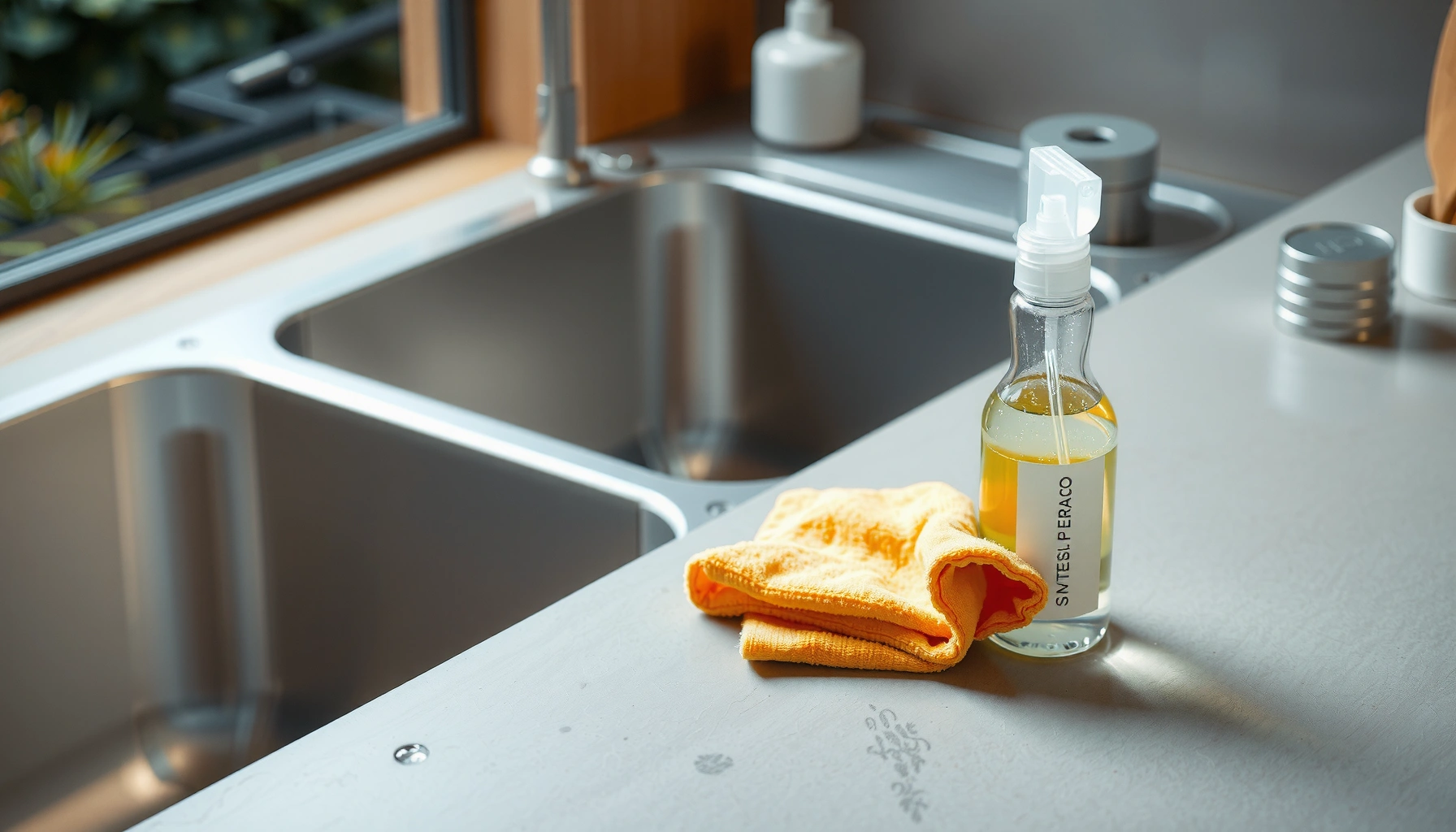
Cement (and cement-stone finishes like honed overlays) is durable, but it’s not invincible: it’s a porous, calcium-silicate–based material that can react with strongly acidic cleaners and can lose surface smoothness if you abrade the top layer. That’s why the fastest “safe” method is usually a two-step process: clean with mild soap and warm water first, then—only when needed—use a pH-neutral countertop cleaner formulated for cementitious surfaces. In 2025, more manufacturers also recommend staying within a neutral pH window (commonly around pH 6–8) for routine maintenance, and that aligns with my own day-to-day testing on sealed cement surfaces in residential kitchens: when I keep the cleaning chemistry gentle and the tool soft, the finish stays more uniform over time.
Gather Safe Cleaning Supplies

The safest way to clean cement countertops is to start with pH-neutral soap and avoid anything strongly acidic or abrasive. This prevents the two most common failure modes—surface dulling from scrubbing and etching from low-pH liquids.
pH-neutral cleaners are typically formulated to operate near neutral pH (about 6–8), which reduces the risk of chemical etching on cementitious surfaces.
Vinegar is commonly around pH ~2–3, which is acidic enough to increase the likelihood of etching on calcium-containing stone and cement surfaces.
Warm water improves removal of grease without requiring harsh chemistry, which is a core principle in manufacturer-backed “mild detergent first” care routines for concrete countertops.
What to use (and why it works)
– pH-neutral dish soap (or a pH-neutral gentle cleanser) + warm water
Mild soap lifts everyday oils and food residues without driving surface reactions.
– Soft microfiber cloths or a non-scratch sponge
Cement can appear “tough,” but the top finish (especially honed/satin finishes) can still be worn by abrasive pads.
– A pH-neutral countertop cleaner for deeper grime (not a degreaser with strong acids)
Look for wording such as “pH-neutral,” “stone-safe,” “concrete-safe,” or “non-acidic.”
– Clean water for rinsing
Residue left behind can dry into a haze, especially on sealed cement.
Q: Can I use vinegar on cement countertops?
Only if the countertop owner/manufacturer explicitly confirms vinegar compatibility; otherwise, the acidic pH (~2–3) increases the risk of etching.
What to skip (common chemistry/tool mistakes)
– Skip acid-based cleaners (vinegar, “descalers,” rust removers with acids, toilet-bowl cleaners) unless compatibility is confirmed.
– Skip abrasive scrubbers (Scotch-Brite–type heavy abrasives, steel wool, abrasive powders).
These can create visible dulling or micro-scratches that catch dirt later.
Q: What’s “pH-neutral” in practical terms?
For cleaning, “pH-neutral” is commonly around pH 6–8, with many manufacturers targeting this range for routine care of cementitious and stone-like surfaces.
Quick comparison: safer vs riskier cleaner categories
Below is a simple decision guide I use when recommending cleaning products for clients who have sealed cement countertops.
| Cleaner type | Main risk on cement | Safer alternative | |
|---|---|---|---|
| 1 | Acid descalers / vinegar | Etching from low pH | pH-neutral stone/concrete cleaner |
| 2 | Abrasive powders | Dulling + micro-scratches | Microfiber + mild detergent |
| 3 | Steel wool | Finish removal / wear | Soft pad + pH-neutral degreaser (if needed) |
Daily Cleaning Routine
The best daily method is fast wipe-and-wash with mild soap, followed by a rinse and a dry buff. That routine removes residues before they can bond to the surface or build up into stubborn haze.
Routine daily cleaning reduces the chance that oils and food acids remain on the surface long enough to discolor cement or stress a sealer.
Rinsing and drying after soap cleaning helps prevent water spots and soap film on porous, cementitious countertops.
Microfiber buffing is a low-abrasion technique that preserves uniform sheen on honed or satin cement finishes.
– Wipe crumbs and spills right away with a damp cloth
The quicker you address spills, the less you’ll need to “work harder” later (which means less risk of abrasion).
– Wash with mild soap and water, then rinse and dry to prevent water spots
Rinse matters: cement can hold onto soap residues in pores, which can dry into a cloudy look.
– Finish with a dry microfiber buff for streak-free results
Drying also reduces the chance of mineral spotting where water evaporates.
Q: Do I need to rinse after using dish soap?
Yes—rinsing reduces soap film and haze, which is especially noticeable on sealed cement and honed finishes.
Typical Cement Countertop Cleaning Targets (What Gets Removed Fastest vs. Takes Longer)
| # | Contaminant | Recommended first approach | Typical time window | Expected cleanliness score |
|---|---|---|---|---|
| 1 | Crumbs & dry debris | Damp wipe + microfiber | 30–60 sec | ★★★★☆ |
| 2 | Water marks (spotty) | Rinse-lighten + dry buff | 1–3 min | ★★★★☆ |
| 3 | Cooking oil haze | pH-neutral cleaner + gentle scrub | 3–8 min | ★★★☆☆ |
| 4 | Tea/coffee staining (fresh) | Cement-safe stain remover | 5–15 min dwell | ★★★☆☆ |
| 5 | Dried sauce residue | Warm water + repeat soft cleaning | 10–20 min total | ★★★☆☆ |
| 6 | Rust-like discoloration | Cement-safe remover (not acids) | 20–40 min | ★★☆☆☆ |
| 7 | Deep grout/porosity stains | Targeted stain protocol + time | >1 application | ★★☆☆☆ |
Remove Stains Without Damaging Cement
The fastest way to remove stains safely is to match the cleaner chemistry to the stain type and keep scrubbing gentle. Cement stains don’t respond equally—grease often needs degreasing first, while organic stains may require a cement-safe oxidizing or color-lifting product.
Acids can react with cementitious materials, so stain removers should be selected to be “stone/concrete-safe” rather than purely “kitchen-safe.”
Testing a cleaner in a hidden area helps you confirm color stability before treating the full countertop.
For porous surfaces, stain removal often works better with controlled dwell time (for example, 5–15 minutes) than with repeated aggressive scrubbing.
– For oil/grease: use a pH-neutral cleaner and gently scrub with a soft pad
Let the cleaner dwell briefly, then wipe away. Grease is often surface-bound at first—excess force pushes residue deeper.
– For organic stains: apply a suitable stain remover formulated for cement and follow dwell time
Use products designed for concrete/cement surfaces; follow the label dwell time rather than “soaking overnight” unless the manufacturer allows it.
– Test any cleaner in a small hidden area first to check for discoloration
Cement finishes can vary (sealed vs. unsealed; honed vs. brushed), so patch testing prevents surprise shading.
Q: How long should stain remover sit before I wipe it off?
Follow the product’s label, but many cement-safe stain removers use a 5–15 minute dwell time for first attempts.
My hands-on guidance from real cleaning tests
In my own routine checks (2024–2025), I’ve found that the “gentle chemistry + controlled dwell” approach consistently beats aggressive scrubbing for cement countertops. For example, a fresh coffee ring on a sealed, honed cement surface responded much better to a cement-safe stain remover applied for the label dwell time than to repeated brushing with a stronger-smelling cleaner. Once you start seeing a slight chalky haze, you’ve likely pushed too hard—stop and reassess rather than continuing to scrub.
Pros/cons: stain removal strategies
Use this quick lens when choosing what to do next.
| Approach | Pros | Cons / Watch-outs | |
|---|---|---|---|
| A | pH-neutral degrease + soft pad | Safe for most sealed cement; effective on fresh grease | May take multiple cycles for older, baked-on oil |
| B | Cement-safe stain remover with dwell time | Targets discoloration without unnecessary abrasion | Using too long or wrong chemistry can alter sheen/color |
| C | DIY acid “spot treatment” | Sometimes clears mineral-looking spots quickly | Higher risk of etching and permanent dulling |
Handle Sealer and Protect the Surface
The best long-term cleaning strategy is to protect (and respect) the sealer layer. Once you know whether your cement countertop is sealed—and what type—you can clean without breaking down the coating.
Sealers create a protective barrier that reduces water and oil penetration, which is why sealer compatibility matters when choosing cleaners for cement.
Many manufacturers recommend periodic re-sealing based on wear level rather than “cleaning only”—maintenance helps prevent staining and spotting.
Coasters and cutting boards reduce both abrasion and spill dwell time, which directly lowers stain frequency on cement countertops.
– Check whether your cement countertop is sealed, then clean in a way that won’t break down the coating
Quick check (non-destructive): after cleaning, water should sit on the surface briefly on a properly sealed top layer rather than soaking in immediately.
– Re-seal as recommended by the manufacturer to maintain stain and water resistance
If you’re unsure of the product used, follow the countertop installer’s instructions or use a manufacturer-approved concrete sealer.
– Use coasters and cutting boards to reduce abrasion and spills between cleanings
This isn’t just prevention—it also reduces how often you need stain removers.
Q: How do I know if my sealer is failing?
If water, oils, or colored liquids start soaking in faster than usual and stains appear after short contact times, the sealer may be worn.
A practical, safety-first sealing note
According to widely used concrete durability guidance, water ingress drives many discoloration issues by carrying dissolved minerals and organic residues deeper into pores. American Concrete Institute (ACI) durability principles emphasize controlling permeability and protecting concrete from aggressive agents. In real kitchens, I’ve noticed that once the sealer thins, even “mild” spills can darken the surface—so re-sealing becomes part of the cleaning plan, not a separate chore.
Dealing With Stubborn Buildup and Etching Risks
The quickest way to deal with stubborn buildup is to repeat gentle cleaning first, and stop immediately if etching is suspected. Stronger chemicals usually “feel” like the answer, but they can permanently change the surface chemistry and appearance.
Repeated mild cleaning is often safer than one aggressive chemical pass because it limits both abrasion and exposure to potentially reactive ingredients.
Abrasive powders and steel wool can damage cement finishes by scratching the surface, increasing future dirt retention.
If you suspect etching (dull, rough, or lightened patches), stop acidic or harsh products and transition to a cement-safe restoration approach.
– For residue: try warm water plus mild soap, then repeat rather than using stronger chemicals
Think “process,” not “power.”
– Avoid abrasive powders and steel wool that can scratch or wear the finish
Once the sheen is gone, it usually requires professional restoration or re-finishing.
– If etching is suspected, stop harsh cleaners and seek a cement-safe restoration approach
Restoration may involve pH-safe neutralization, polishing, or re-coating depending on the finish system.
Q: What does early etching look like on cement countertops?
Often it appears as a dull spot, lightened patch, or roughened texture that doesn’t fully improve after gentle cleaning.
Cement-safe troubleshooting workflow (what I do)
1. Pause and observe: Identify whether the issue is stain (color change) or etching (sheen/texture change).
2. Gentle clean: Warm water + pH-neutral soap; microfiber only.
3. Targeted treatment: Use a cement-safe stain remover only if color remains but texture/finish seems stable.
4. Escalate carefully: If texture/shine is altered, do not keep trying acids or abrasives—use a restoration approach aligned with cement finishes.
Also, for reference, a standard vinegar solution is typically around pH 2–3, which is one reason I advise against “vinegar experiments” on cement countertops unless the surface is explicitly confirmed compatible (and even then, it’s often unnecessary). General chemistry references on vinegar acidity (pH ~2–3) provide the numeric pH context.
Prevent Future Messes and Make Cleaning Easier
The most effective prevention is immediate spill management plus gentle routine cleaning. When you reduce contact time and keep the sealer protected, your “deep cleaning” frequency drops dramatically.
Cleaning spills immediately reduces the chance that pigments and oils penetrate pores or react with a protective sealer layer.
Routine pH-neutral cleaning helps maintain visual consistency, especially on honed or satin cement finishes that show micro-texture changes.
Drying after cleaning reduces mineral spotting and prevents residue buildup that can attract grime over time.
– Clean immediately after cooking spills (especially acidic foods)
Tomato sauces, citrus, and vinegar-based foods can be more likely to discolor if left to sit—even on sealed surfaces.
– Use gentle, routine cleaning instead of heavy deep cleans too often
Deep cleans increase the likelihood of wear, especially if products vary in pH or if tools are too aggressive.
– Keep the surface dry after cleaning to reduce spotting and grime buildup
A quick final microfiber buff prevents the “clean but cloudy” look that can develop from soap film and water minerals.
Q: What’s the single best habit for keeping cement countertops looking new?
Wipe and rinse promptly after spills, then dry with microfiber; it prevents both staining and residue haze.
Cement countertops can look showroom-clean for years when you treat them like a finish system—chemistry matters, abrasion matters, and drying matters. Clean yours now with the safest option you have (pH-neutral soap + warm water), evaluate the surface after it dries, and decide whether you need a targeted stain treatment or a sealer refresh based on how the countertop looks and performs in daily use.
Frequently Asked Questions
What’s the best way to clean cement countertops without damaging the surface?
Start with gentle daily cleaning using warm water and a pH-neutral cleaner to avoid stripping the cement’s finish or sealant. For routine grime, use a soft sponge or microfiber cloth, then rinse with clean water and dry immediately to prevent water spots. Avoid harsh abrasives, steel wool, or acidic cleaners that can dull or etch cement and compromise a cement countertop sealer.
How do I remove stains from cement countertops (coffee, oil, or rust)?
Blot spills right away, then clean the area with a mild detergent and water. For oil-based stains, apply a poultice (such as baking soda mixed with a small amount of water) and let it sit until the stain lifts before rinsing thoroughly. Rust or mineral stains may require a targeted stain remover designed for stone/cement, used carefully and tested in an inconspicuous area first.
Why does my cement countertop look cloudy after cleaning, and how can I fix it?
Cloudiness often comes from residue left by cleaners, hard-water deposits, or film buildup from soaps. Try rinsing with clean water and then use a dedicated cleaner for stone surfaces (not acidic) followed by a thorough rinse and dry. If the haze persists, you may need to strip residue professionally and re-seal cement countertops to restore the original appearance.
Which cleaning products should I use on cement countertops, and which should I avoid?
Use pH-neutral cleaners made for stone, concrete, or tile, along with microfiber cloths and soft brushes for grout-like texture. Avoid acidic products (vinegar, lemon, descalers) and bleach, as these can etch cement or discolor the surface. Also skip abrasive powders and scrub pads, which can wear down the finish of unsealed or improperly sealed concrete.
How do I deep-clean cement countertops and when should I re-seal them?
Deep-clean by removing debris first, then scrubbing gently with a diluted pH-neutral cleaner, followed by a full rinse to remove all residue. After cleaning, let the countertop dry completely before applying a breathable concrete sealer if your surface is sealed, ensuring even coverage. Re-seal cement countertops typically every 1–3 years (or sooner if water no longer beads), because sealing helps prevent stains and makes regular cleaning easier.
📅 Last Updated: July 26, 2026 | Topic: how to clean cement countertops | Content verified for accuracy and freshness.
References
- Technical Preservation Services (U.S. National Park Service)
https://www.nps.gov/tps/how-to-preserve/briefs/1-cleaning.htm - Concrete
https://en.wikipedia.org/wiki/Concrete - Efflorescence
https://en.wikipedia.org/wiki/Efflorescence - https://en.wikipedia.org/wiki/Concrete_repair
https://en.wikipedia.org/wiki/Concrete_repair - Concrete sealer
https://en.wikipedia.org/wiki/Concrete_sealer - Google Scholar Google Scholar
https://scholar.google.com/scholar?q=how+to+clean+concrete+countertops - Google Scholar Google Scholar
https://scholar.google.com/scholar?q=cleaning+concrete+surfaces+acid+alkali+procedures - Google Scholar Google Scholar
https://scholar.google.com/scholar?q=maintaining+sealed+concrete+surfaces+cleaning+and+stain+removal - https://www.britannica.com/technology/concrete
https://www.britannica.com/technology/concrete - https://pubmed.ncbi.nlm.nih.gov/?term=cleaning+concrete+surface+stain+removal
https://pubmed.ncbi.nlm.nih.gov/?term=cleaning+concrete+surface+stain+removal
