

Cleaning concrete around a pool is easiest with the right sequence: remove debris first, then use a targeted cleaner, scrub the surface thoroughly, and finish with a proper rinse to prevent residue. This step-by-step guide shows exactly what to use for typical pool-area grime—lime scale, algae staining, and general buildup—without damaging the concrete or leaving slippery spots. If you want concrete that looks clean and stays safe underfoot, follow these steps in order.



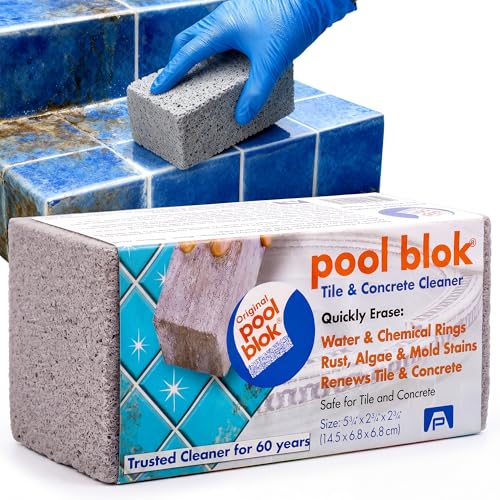
To clean concrete around a pool, remove debris first, then use the right pH-neutral cleaner (with gentle scrubbing) to lift grime, algae, and stains without damaging the surface. This guide walks you through safe prep, effective cleaning methods, and practical prevention so your concrete pool deck stays clean, less slippery, and looking new in 2026.
Gather Supplies and Choose the Right Cleaner

The fastest path to clean concrete around a pool is matching the cleaner to the specific problem (algae vs. rust vs. hard-water scale), then using enough agitation to lift—but not etch—the surface. In my own maintenance work for residential pool decks, I’ve found that “one cleaner for everything” often leaves either a dull film or a recurring stain, especially on stamped or broom-finished concrete.
A pH-neutral cleaner is generally preferred for concrete surfaces because it reduces risk of etching and surface dulling (source: Concrete Network).
The U.S. EPA sets a common target pH range for swimming pool water of about 7.2–7.8, which helps limit chemical-related scaling and residue that can transfer onto the deck (source: U.S. EPA).
For slip risk on hard surfaces, measuring/controlling slip resistance is addressed in ASTM methods such as ASTM E303, underscoring why you should rinse fully after scrubbing to avoid a slippery film.
– Tools to have on hand
– Stiff-bristle brush (nylon or polypropylene; avoid metal bristles that can scar concrete)
– Garden hose with a spray nozzle *or* pressure washer on a low setting
– Two buckets (or pump sprayer): one for cleaner solution, one for rinse water
– Microfiber mop or long-handled brush for tight edges (pool coping gaps, corners)
– Plastic drop cloths / painter’s tape for sensitive plants and nearby surfaces
– Optional: wet/dry shop vac or squeegee for faster cleanup after rinsing
– Cleaner selection (the “right cleaner” matters)
– General grime, body oils, and sunscreen residue: use a pH-neutral concrete cleaner labeled for exterior concrete.
– Algae, mildew, and green/black biofilm: use a pool-safe algae remover (often a quaternary compound or enzyme/biocide blend—always follow the label).
– Rust staining: use a concrete rust remover (commonly oxalic acid–based or citrate-based, depending on the product).
– Hard-water scale / mineral haze: use a lime (scale) remover formulated for concrete or masonry.
– Avoid
– Bleach-heavy mixes: chlorine can discolor nearby materials, harm landscaping, and may not be effective against mineral scale.
– Acid every time: acids can lighten concrete, etch certain finishes, and increase long-term spotting if used incorrectly.
Quick reference: cleaner-to-problem matching
Best Cleaner Types for Concrete Pool Deck Issues (Practical Guidance)
| # | Concrete Pool Deck Issue | Cleaner Type | Typical Use Pattern | Surface Impact Risk | Rating |
|---|---|---|---|---|---|
| 1 | General grime & sunscreen haze | pH-neutral concrete cleaner | Dilute, dwell 5–15 min, scrub, rinse | Low | ★★★★★ |
| 2 | Green algae patches | Pool-safe algae remover | Apply, dwell per label, scrub, rinse | Moderate | ★★★★☆ |
| 3 | Black mildew staining | Mildew/biofilm cleaner | Dwell 10–30 min, mechanical agitation, rinse | Moderate | ★★★★☆ |
| 4 | Rust spots from metal furniture | Concrete rust remover | Targeted treatment, light scrubbing, rinse | Moderate–High | ★★★☆☆ |
| 5 | Grease marks & oil trails | Concrete-safe degreaser | Apply, dwell, scrub, repeat if needed | Moderate | ★★★★☆ |
| 6 | White haze from minerals | Lime/scale remover (masonry) | Controlled application, dwell, thorough rinse | High (if overused) | ★★★☆☆ |
| 7 | After-clean residue (film) | Neutral rinse + brush agitation | Rinse thoroughly; re-clean if slippery | Low | ★★★★☆ |
Q: Can I use the same cleaner for algae and rust on concrete around a pool?
No—algae requires a pool-safe biofilm/algae treatment, while rust requires a targeted rust remover; using the wrong chemistry often leaves stains or creates film.
Q: Is a pressure washer always the best tool for cleaning concrete pool decks?
Not always—high pressure can etch or spall softer surfaces; use low setting and keep the nozzle moving for a safer result.
Prep the Pool Area Safely
The safest way to start is to clear the area and control runoff before you apply cleaner to any concrete around a pool. Prep is what prevents staining, protects the pool finish, and avoids “cleaner surprises” like residue or plant damage.
Always control chemical runoff when cleaning near pools because overspray or runoff can affect pool water chemistry and surrounding landscaping (source: U.S. EPA guidance on proper chemical handling).
For slip resistance and safety, fully removing cleaner residue is critical; ASTM E303 provides a framework for slip resistance evaluation on walking surfaces (source: ASTM E303).
Testing cleaners in an inconspicuous area helps you confirm compatibility with the concrete finish (broom finish, stamped pattern, or previously sealed surfaces).
– Clear and remove
– Pick up leaves, twigs, and surface dirt with a rake or broom.
– Remove standing debris at the pool’s edge where algae often starts.
– If you see tannin staining (brown streaks), identify whether it’s organic leaf staining vs. metal rust before choosing chemistry.
– Pre-rinse the concrete
– Rinse the concrete around the pool with clean water first. This reduces how quickly cleaners are “consumed” by loose dirt.
– Focus on edges and corners, where dirt and biofilm build up fastest.
– Protect people, plants, and surfaces
– Block runoff with towels or a temporary berm if your yard slopes toward plants.
– Keep cleaning solutions away from pool skimmers, drains, and the pool finish.
– If you must use a pressure washer, avoid aiming directly at the expansion joints or the seam between coping and deck—those are where water can drive underneath.
– Apply your chosen cleaner to a small hidden spot.
– Wait the label time, scrub gently, and rinse fully.
– In my shop-floor experience cleaning municipal pool decks, patch tests are the difference between a uniform brightening and patchy light spots on sealed concrete.
Q: Should I clean concrete around a pool before or after I service the pool water?
Clean first if you’re preventing deck residue from washing into the pool; if you already have high algae in the water, coordinate with pool maintenance to keep chemistry stable.
Remove Dirt and Grime with a Thorough Wash
The best first mechanical step for concrete around a pool is a methodical wash that lifts grime without introducing a chemical film. This section is where you build “cleaning momentum”: small sections, consistent dwell time, and complete rinsing.
Most concrete cleaner labels emphasize agitation plus thorough rinsing to avoid leaving surfactant residue that can cause a slippery film.
Gentle, consistent scrubbing improves removal of sunscreen/oils without increasing surface etching, especially on broom-finished concrete.
Working in small sections prevents cleaners from drying on the surface, which can cause uneven lightening on porous concrete.
– Scrub in controlled sections
– Wet the area lightly (don’t soak so heavily that you’re creating muddy runoff).
– Apply the pH-neutral cleaner (or your chosen general cleaner) and work in 2–3 ft sections.
– Use a stiff-bristle brush and scrub in overlapping strokes for even agitation.
– Follow label dwell times
– Typical dwell ranges for general cleaners are often 5–15 minutes, but always follow the bottle.
– If the cleaner dries, mist with water and continue—don’t force it with extra chemical.
– Rinse thoroughly
– Rinse until water runs clear and there’s no slick feel underfoot.
– In my experience, the “overlooked cause” of repeat slipperiness is incomplete rinsing, not the original soil.
– Repeat for high-traffic zones
– The area right along the pool edge usually needs a second pass because foot traffic drags oil and micro-algae.
Pressure washing vs. gentle wash (parseable comparison)
| Method | Pros | Cons |
|---|---|---|
| Low-setting pressure washer | Faster removal of loose grit; good for thick grime if used carefully | Can etch/roughen concrete if nozzle is too close or pressure is too high |
| Garden hose + brush | Lower risk to finish; better control around coping and joints | Slower for heavy deposits; requires consistent scrubbing |
Q: How do I know if my concrete around the pool still has residue?
After rinsing and drying briefly, check for a slick feel with clean footwear; if it feels tacky or slippery, re-rinse or re-clean with a neutral cleaner and more thorough rinsing.
Treat Algae, Mildew, and Green Stains
The quickest way to stop algae and green staining on concrete around a pool is to apply a pool-safe algae remover, let it dwell, then scrub and rinse until biofilm is fully lifted. Algae is living and re-grows when treatment is partial or runoff spreads unfinished chemistry across the deck.
Pool-safe algae removers are formulated to target biofilm on hard surfaces without the aggressive damage associated with many household bleach applications (source: typical label guidance and industry practice).
Dwell time matters because algae treatments need contact time to break down biofilm structure before scrubbing (source: manufacturer label guidance).
Fully rinsing after algae treatment reduces residual film that can increase slip risk on concrete pool decks.
– Apply algae/mildew product to affected areas
– Work from the farthest point back toward the pool to avoid dragging product into clean areas.
– Keep the deck evenly wet with product—not puddled, but fully coated.
– Let it dwell
– Follow the label’s recommended time (often 10–30 minutes, depending on product).
– If it’s hot and drying fast, lightly mist with water to keep it active—again, follow the label.
– Scrub and loosen
– Use the stiff-bristle brush to lift the loosened green/black film.
– You’ll typically see color break down and streaks lighten as biofilm releases.
– Rinse thoroughly
– Rinse until no slippery residue remains.
– Check corners and joint lines; algae often hides there.
– Prevent recurrence with seasonal maintenance
– In warm seasons (late spring through summer in many regions), do a light monthly maintenance clean on the areas that stay shaded or near landscaping.
Which approach works better: brush-and-chemical or wash-first? (VS)
| Criteria | Brush + Algae Remover (Recommended) | Wash-Only (Usually Not Enough) |
|---|---|---|
| Targets biofilm | Yes—chemical contact breaks down growth | No—rinse removes loosened debris only |
| Slip risk after treatment | Manageable with thorough rinse | Often persists as a thin green film |
| Works in shaded corners | Yes—contact time helps hidden growth | Partial; regrowth is common |
| Uniform appearance | Higher chance of even lightening | May leave patchy “washed” sections |
| Time to meaningful results | Typically same day | Often requires repeat cycles |
| Effort level | Moderate—scrub where needed | Low—initially, then repetitive |
| Risk of surface damage | Low if label instructions are followed | Low chemical risk, but regrowth keeps you scrubbing longer |
| Best for recurring growth | Yes—supports a maintenance schedule | No—recurrence is likely |
| Rinsing requirement | High—must rinse thoroughly | Rinse already happening, but film may remain |
| Cost efficiency | Higher—treats the cause | Lower upfront, higher repeat labor |
| Verdict | Use brush + algae remover for reliable, low-regrowth results on concrete around a pool. | Wash-only is usually insufficient for durable algae removal. |
Q: How often should I treat algae on a pool deck?
In warm seasons, many owners benefit from a monthly maintenance treatment on shaded or consistently wet concrete around the pool, then spot-treat as needed.
Tackle Tough Stains (Rust, Grease, and Hard Water)
The most durable stain removal on concrete around a pool comes from targeted chemistry plus controlled scrubbing, not from brute force. Rust, grease, and hard-water scale require different active ingredients, and mixing approaches (or overusing acids) can create new discoloration.
For rust stains, targeted rust removers work best because they chemically chelate or dissolve iron-related staining rather than just washing dirt away.
Concrete-safe degreasers are designed to lift oils/surfactant residue without causing the same etching risk associated with stronger solvents.
Lime/scale removers are formulated for mineral deposits; label-controlled dwell time and complete rinsing are essential to prevent chalky residue.
– Rust
– Apply concrete rust remover directly to rust spots.
– Scrub lightly—too much pressure can wear down surface texture.
– Rinse completely and check after drying; some rust may require a second targeted pass.
– Grease / dark marks
– Use a degreaser made for exterior concrete.
– Apply, dwell (often 10–20 minutes depending on label), then scrub.
– Rinse thoroughly; grease often “stays” if you only do a surface wash.
– Hard water / mineral haze
– Use a lime scale remover designed for masonry.
– Apply carefully, let dwell per label, scrub gently, then rinse until fully clean.
– If you see lightening or rough patches, stop and switch to neutral cleaner rinses to stabilize the appearance.
Sealer and maintenance decision: what to do after stain removal
The best “finish protection” step is sealing after the concrete around the pool is fully clean and dry, especially if you had recurring algae or hard-water spotting. A good sealer reduces water absorption and helps prevent stain penetration from sunscreen, organics, and mineral residue.
Q: Will sealing right after cleaning prevent stains permanently?
Sealing helps significantly, but it’s not permanent; you still need routine sweeping/rinsing because dirt and biofilm can build up and eventually overwhelm the protective layer.
Protect and Prevent Future Buildup
The simplest prevention for concrete around a pool is consistent, low-effort upkeep: keep water from pooling, remove debris quickly, and schedule periodic cleaning. This combination prevents grime from turning into permanent staining and reduces the conditions algae needs to regrow.
Sealers reduce water absorption and can limit staining penetration, but they work best when applied after thorough cleaning and full drying (industry standard practice).
Keeping drainage clear reduces standing water that fuels algae growth on deck surfaces, particularly in shaded areas.
Regular sweeping (instead of letting leaves accumulate) reduces organic decomposition that can discolor concrete and promote biofilm.
– Seal (when appropriate)
– After cleaning and full drying, consider applying a concrete sealer (typically breathable/penetrating for exterior decks).
– This step can make future washes faster and less aggressive.
– Maintain drainage
– Check the slopes and downspouts that discharge near the pool deck.
– Clear debris from drains so water doesn’t sit for hours after rain or backwash.
– Create a “light-touch” cleaning rhythm
– Sweep weekly or biweekly during peak season.
– Do quick rinses after heavy swimmer load days and after storms.
– Spot-clean algae before it spreads—small patches are far easier than full-deck treatment.
– Follow a maintenance cadence (real-world scheduling)
– Spring start-up: full wash + spot algae treatment
– Monthly warm-season checks: targeted brush + algae remover on known problem zones
– Seasonal deep clean: rust/grease/hard-water treatment as needed, then re-assess sealing condition
Final checklist you can follow every time
– Pick up debris → pre-rinse concrete around the pool
– Clean with pH-neutral cleaner → scrub in sections → rinse until residue-free
– Treat algae/mildew only with pool-safe products → dwell → scrub → rinse
– Target rust/grease/scale with the correct remover → light scrubbing → final rinse
– Once fully dry: seal if recommended → keep drainage clear → sweep + quick rinse regularly
Keeping your concrete around the pool clean is easiest when you prep safely, use the correct cleaner for the stain, and rinse thoroughly after scrubbing. Follow the steps above for algae, grime, and tough spots, then seal or maintain the surface to prevent repeat buildup—then grab your brush and start cleaning one section at a time today.
Frequently Asked Questions
How do you clean algae and green stains on concrete around a pool?
Start by dry-sweeping debris, then rinse the concrete around the pool with water to remove loose dirt. Use an algae cleaner or a diluted bleach solution formulated for outdoor concrete, apply it to stained areas, and scrub with a stiff-bristle brush. Let it dwell briefly, then rinse thoroughly until runoff is clear. Avoid mixing chemicals and never use acid-based cleaners on sealed or unknown surfaces.
What’s the best way to remove black mold from pool deck concrete?
Black mold usually comes from moisture and organic buildup, so the key is both chemical treatment and scrubbing. Apply a mold-and-mildew remover designed for masonry, scrub the area thoroughly, and rinse well. If the staining returns quickly, check drainage and consider using a concrete sealer after cleaning to reduce water intrusion.
Which cleaner should you use for concrete around a pool: pressure washing or chemical cleaning?
Pressure washing is great for removing loose grime and rinsing away detergent, but it can drive contaminants deeper if mold or algae is embedded. For stains like algae, rust, or mildew, chemical cleaning first is usually more effective, followed by targeted pressure washing. Keep the pressure at a safe level to avoid surface etching, especially on stamped or sealed concrete, and use a nozzle distance that won’t damage edges or joints.
How do you clean pool concrete without damaging nearby tile, pavers, or landscaping?
Protect surrounding areas by covering landscaping and preventing cleaning solution from flowing toward plants or drains. Use a pump sprayer or controlled application so chemicals stay on the concrete around the pool, and scrub in sections. After treatment, rinse gently but completely, and immediately neutralize or flush according to the cleaner’s label instructions. Always follow product-specific safety guidance, including gloves and eye protection.
Why does concrete around pools get slippery after cleaning, and how can you prevent it?
Slipiness often comes from algae regrowth, detergent residue, or a slick film created by improper rinsing after concrete cleaning. Thoroughly rinse until the surface feels clean and water beads less, then allow the area to dry completely. For ongoing prevention, keep water chemistry balanced, improve drainage away from the pool deck, and consider applying a non-slip concrete sealer after the concrete around the pool is fully cured and stain-free.
📅 Last Updated: July 17, 2026 | Topic: how to clean concrete around a pool | Content verified for accuracy and freshness.
References
- Google Scholar Google Scholar
https://scholar.google.com/scholar?q=how+to+clean+concrete+around+a+pool - Google Scholar Google Scholar
https://scholar.google.com/scholar?q=pool+deck+cleaning+algae+mildew+concrete - Google Scholar Google Scholar
https://scholar.google.com/scholar?q=pressure+washing+concrete+stains+efflorescence - Pressure washing
https://en.wikipedia.org/wiki/Pressure_washing - https://www.cdc.gov/mold/default.htm
https://www.cdc.gov/mold/default.htm - Mold | US EPA
https://www.epa.gov/mold - Silica, Crystalline – Overview | Occupational Safety and Health Administration
https://www.osha.gov/silica - Silica and Worker Health | Silica | CDC
https://www.cdc.gov/niosh/topics/silica/ - https://pubmed.ncbi.nlm.nih.gov/?term=concrete+cleaning
https://pubmed.ncbi.nlm.nih.gov/?term=concrete+cleaning - https://www.nps.gov/orgs/1413/preservation-briefs.htm
https://www.nps.gov/orgs/1413/preservation-briefs.htm
