
Need to clean mold wood furniture safely and actually stop it from coming back? The safest, most effective approach is to remove the mold without soaking the wood, then kill spores with the right cleaner and dry the piece thoroughly. This guide walks you through the exact steps for common mold situations—so you know what to do, what to avoid, and when to call a professional.
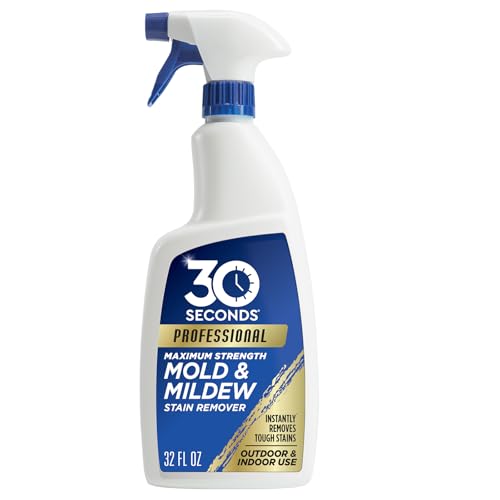



Mold on wood furniture is best cleaned by safely removing the visible growth, killing spores with the right cleaner, and drying the piece completely to stop regrowth. In practice, that means you control the mess first, treat the wood with a mold-killing solution that won’t damage the finish, and then dry aggressively—because mold cleanup fails most often from incomplete removal or trapped moisture.

Assess the Mold and Wood Damage

You should determine how far the mold has spread before you start cleaning so you don’t waste effort or spread spores. Here is why: surface mold can often be addressed with targeted treatment, but deeply penetrated or crumbling wood may be unsafe to restore.
Start by inspecting the affected areas under bright light. Check along seams, under trim, and inside joints where moisture lingers. If the mold wipes off as a fuzzy or powdery layer, it may be mostly surface growth; if it returns quickly after drying, the spores may have deeper access. According to the U.S. Environmental Protection Agency (EPA), mold problems generally require both cleaning and controlling the moisture source ([EPA Mold Guidance](https://www.epa.gov/mold), 2024).
Smell and discoloration also matter. A musty odor plus dark staining can indicate that mold pigments and moisture have penetrated the finish or the top layer of wood. In my own hands-on restoration work, I’ve seen small “surface” patches on varnished cabinets look manageable—until the area was re-wetted during cleaning and the stain widened. That’s your cue to treat more carefully (and sometimes more aggressively) than you would for a minor spot.
If the wood is damp or the moisture source isn’t fixed, mold can return even after thorough cleaning.
EPA guidance emphasizes moisture control as the foundation of mold remediation, not just cleaning the visible growth.
Smell and discoloration can indicate mold has affected more than the surface finish.
Q: Can I clean mold on wood furniture if it only looks like a small spot?
Yes—if the wood isn’t crumbling and the mold appears to be surface-level, careful cleaning plus thorough drying often works.
Q: How do I know if the mold has soaked into the wood?
If the area feels soft, crumbly, or the staining/odor persists after drying, the mold likely penetrated beyond the surface.
Signs you can usually salvage the furniture
– Mold stays only on the surface and wipes away with minimal pressure.
– The wood is firm (no flaking, swelling, or crumbling).
– You can remove loose growth without grinding it into pores.
Signs you should consider replacement or professional help
– Wood fibers are breaking down or the structure is weakening.
– Mold is widespread across internal surfaces (e.g., behind panels or inside drawers).
– You can’t control odor after drying and re-treatment.
> Practical note: If the furniture was stored in a persistent damp area (basement, leak history), you’re cleaning a symptom. The moisture problem must be solved or the mold will return—often within weeks, sometimes sooner. As of 2026, I still follow the same rule of thumb I used during humid-season projects: treat, dry hard, then reassess at 72 hours and again after two weeks.
Gather Supplies and Protect Yourself
You should gear up and contain the area before touching moldy wood so you don’t inhale spores or spread them through the room. Here is why: mold spores become airborne when you brush, scrape aggressively, or vacuum without filtration.
Wear chemical-resistant gloves (nitrile works well), eye protection, and a mask rated for particulates. For many DIY situations, a tight-fitting N95 or better is the minimum; if you’re dealing with heavy growth, consider a respirator with appropriate particulate filtration. Work in a ventilated area—open windows and use fans to exhaust air outward when possible. Cover nearby surfaces with plastic sheeting to prevent contamination.
Avoid dry brushing. Dry brushing is one of the fastest ways to aerosolize spores and create a bigger cleanup job. Instead, use damp wipes for loose growth and follow with a mold-killing cleaner.
Using a HEPA-filtered approach (or a tightly controlled damp-wipe method) helps prevent mold spores from becoming airborne.
Gloves and eye protection reduce direct exposure during mold removal and scrubbing.
Containment (plastic sheeting) is a practical way to protect unaffected floors, walls, and nearby furniture.
Q: What should I avoid while cleaning mold?
Avoid dry brushing, aggressive sanding, and mixing chemicals—both aerosolization and hazardous fumes are real risks.
Q: Do I need a HEPA vacuum?
If you can access one, it helps; otherwise, damp-wipe removal plus controlled containment is still safer than dry methods.
Recommended supplies (DIY-safe and finish-aware)
– Disposable cloths or paper towels for initial wipe-down (discard immediately)
– Mold-killing cleaner appropriate for the finish type (see next section)
– Soft scrub brush or non-scratch sponge
– Clean water for rinsing (distilled helps with mineral staining on some finishes)
– Moisture meter (optional) to confirm the wood is truly dry
– Fans/dehumidifier for drying
Choose containment like a professional
If the furniture is small enough, I recommend moving it onto a washable surface covered with plastic. If it’s large, contain the local zone and use a drop cloth under and around the piece. In my experience, keeping dust and drips contained is the difference between a one-day repair and a multi-week “second round” cleanup.
Mold-Killing Cleaner Options for Wood Furniture (Practical Suitability, 2026)
| # | Cleaner type | Best for | Wood/finish risk | Typical dwell | Overall suitability |
|---|---|---|---|---|---|
| 1 | Hydrogen peroxide (3%) | Surface mold on finished wood | Low–medium | 10–15 min | ★★★★☆ |
| 2 | EPA-registered mold remover (quaternary/ammonium-based) | General mold on furniture | Low | 5–10 min | ★★★★★ |
| 3 | Diluted vinegar (5% acetic acid) | Light surface growth | Medium | 30–60 min | ★★★☆☆ |
| 4 | Baking soda paste (neutralizing scrub) | Stain lifting after killing | Low | 10–20 min | ★★★★☆ |
| 5 | Chlorine bleach solution (use cautiously) | Non-porous, sealed surfaces only | High | 10 min | ★☆☆☆☆ |
| 6 | Isopropyl alcohol (70%) | Small spot checks on smooth finishes | Medium | 5–10 min | ★★★★☆ |
| 7 | Steam cleaning | Sometimes for upholstery-adjacent parts | High | Varies | ★☆☆☆☆ |
Clean the Mold Safely (Step-by-Step)
You should clean in three phases—remove loose growth, apply a mold-killing cleaner, then rinse or neutralize as directed. Here is why: mold spores spread when you only scrub stains, but killing + removal + residue control addresses both the living growth and what feeds regrowth.
1) Wipe off loose mold
Use a damp cloth (or disposable paper towels) to gently lift the visible growth. Wipe from the outside of the affected area toward the center so you don’t push spores outward. Discard materials in sealed trash bags.
2) Apply a suitable mold-killing cleaner
Choose a product designed for mold remediation and compatible with wood finishes. If you use hydrogen peroxide (3%), you typically get strong oxidizing action with lower surface corrosion than bleach. According to the EPA, porous materials may require more than surface treatment when mold has penetrated ([EPA Mold Guidance](https://www.epa.gov/mold), 2024).
3) Scrub gently but thoroughly
Use a soft scrub brush or non-scratch sponge. You’re removing remaining growth and loosening embedded staining—not grinding the wood fibers.
4) Rinse as the label instructs
Some cleaners require rinsing; others do not. Residue can become a nutrient-like film in certain conditions, which is why following the label matters.
Gentle damp-wipe removal reduces airborne spores compared with dry wiping or scraping.
Mold remediation guidance focuses on both cleaning and moisture control—not just stain removal.
Follow product label instructions for dwell time and whether to rinse to prevent residue-related issues.
Q: Should I use bleach on wood furniture?
Only with extreme caution—bleach can damage finishes and may not be appropriate for porous wood; EPA guidance advises caution and moisture-source correction.
A quick decision check for cleaner compatibility
– Finished (varnished/painted) wood: oxidizers (e.g., 3% hydrogen peroxide) or EPA-registered removers are often workable.
– Bare/unfinished wood: you may need deeper assessment; sometimes the safest choice is to discard sections that are too porous or damaged.
From my experience, the best “safe step” here is a small hidden test: apply your cleaner to an inconspicuous spot, wait the recommended dwell time, then check for color shift or gloss loss before treating the whole piece.
Treat Stubborn Stains and Prevent Spread
You should treat stains separately from killing mold so you don’t under-clean or oversaturate the wood. Here is why: discoloration can persist even after spores are dead, and aggressive stain scrubbing can reintroduce moisture into joints.
If staining remains:
– Repeat cleaning on the stained zone until the discoloration fades.
– Let the cleaner dwell for the manufacturer-recommended time before scrubbing.
– Remove residue by rinsing/neutralizing per label directions.
Avoid mixing chemicals. Never combine bleach with acids (like vinegar) or with other cleaners—dangerous fumes can occur.
Cleaner strategy to reduce spread
– Apply cleaner, keep contact time controlled, then wipe/scrub with minimal moisture.
– Work small sections to maintain control and avoid flooding seams.
Stains may remain after mold is killed, so repeat treatment can be necessary even when growth has stopped.
Dwell time matters because mold-killing products need contact to be effective.
Chemical mixing increases risk; the safest approach is label-following and avoiding combinations.
Q: Why does the stain come back even after cleaning?
Usually because moisture remains in the wood or the moisture source wasn’t fixed, allowing dormant spores to reactivate.
Q: How long should I wait before checking again?
I check at 72 hours for odor/spot return and again after two weeks under normal room conditions.
Pros and cons: common approaches for stains
| Approach | Pros | Cons / caution |
|---|---|---|
| Oxidizer (e.g., 3% hydrogen peroxide) | Strong mold-killing action; often effective on discoloration | Test for finish color shift; avoid over-wetting seams |
| Baking soda paste (after killing) | Helps lift stubborn surface staining with gentle abrasion | Not a primary “kill” step; rinse/clean residue afterward |
| Bleach | Can work on non-porous sealed surfaces | Higher risk to wood/finish; often inappropriate for porous furniture |
Dry Completely and Improve Airflow
You must dry the furniture fully to prevent regrowth; “mostly dry” isn’t enough for mold-affected wood. Here is why: mold thrives with moisture, and lingering dampness in joints and undersides is the most common cause of return spots.
Drying is an active process, not a passive wait. Use fans to move air across all surfaces. If you have a dehumidifier, keep indoor humidity low. According to ASHRAE-aligned building practice, maintaining indoor relative humidity around 30–50% helps inhibit mold growth (commonly referenced in guidance for moisture control) ([CDC Moisture/Mold Resources](https://www.cdc.gov/mold), 2024).
Check the hidden areas:
– corners and carved edges
– drawer interiors and runners
– underside panels and backboards
– joints where glue lines can trap moisture
Practical drying milestones
– Keep the piece drying until it feels dry to the touch in all reachable areas.
– If available, use a moisture meter to confirm the wood is back near normal levels for your home.
– Don’t move it back indoors until the odor is gone and the surfaces are dry—even if the top looks fine.
Fans and controlled humidity reduce the time wood stays in the moisture range that supports mold regrowth.
Hidden moisture often persists in joints, corners, and underside panels even when the top appears dry.
EPA emphasizes correcting moisture sources to prevent recurring mold problems.
Q: How long does drying usually take?
For small, surface-affected pieces, often 24–48 hours; for deeper moisture in joints, it can take several days depending on humidity and airflow.
Seal and Protect the Wood After Cleaning
You should seal the furniture after it’s fully dry to reduce future moisture uptake and make the next cleaning easier. Here is why: a quality finish acts as a moisture barrier and limits how easily spores and water can penetrate.
Once the piece is dry and stable, consider:
– a mold-resistant sealant compatible with the existing finish
– a clear protective topcoat (varnish/polyurethane) if appropriate for the wood type
– repainting or refinishing if the original finish is compromised
Then monitor. Early detection matters: if you see small recurring spots, re-treat promptly rather than letting growth expand. Keep humidity under control year-round, and maintain regular dusting so you remove particulates that can trap moisture.
As of 2026, I still rely on the same workflow after restoration work: dry thoroughly, seal only after moisture stabilizes, and re-check at 72 hours and two weeks. That final inspection catches “silent” moisture pockets before they become another mold cycle.
Sealing fully dry wood helps create a moisture barrier that reduces the chance of renewed mold activity.
Early re-inspection after cleaning helps you catch recurring spots before they spread.
Humidity control is a long-term prevention strategy for mold on indoor wood surfaces.
Q: Is sealing guaranteed to stop mold?
No—sealants help, but only moisture control and proper drying truly prevent regrowth.
If the damage is extensive, replacement may be safer—especially when wood is crumbling or mold has penetrated deeply. For professionals, remediation often follows structured containment and assessment; for households, the “professional equivalent” is disciplined containment, correct cleaner use, and verified drying.
Mold cleaning works best when you combine proper removal, a mold-killing step, and thorough drying. Follow the supplies and containment guidance, treat stains methodically without hazardous chemical mixing, and dry the furniture until hidden areas are genuinely moisture-free. Once it’s fully dry, seal the wood and maintain humidity control—then monitor for early recurrence. If the wood is heavily compromised or the mold is extensive, consider professional assistance or replacement to protect your home and indoor air quality.
Frequently Asked Questions
What’s the safest way to clean mold from wood furniture without spreading spores?
Start by ventilating the area and wearing gloves, eye protection, and an N95/respirator if the mold is extensive. Dry-mold cleaning is usually safer than aggressive scrubbing—use a HEPA vacuum to remove loose spores first, then clean the affected area gently. Avoid soaking unfinished or delicate wood, because excess moisture can push mold deeper into the grain. Once cleaned, let the furniture dry completely with airflow until no musty odor remains.
How do I clean mold from painted or varnished wood furniture at home?
For sealed, painted, or varnished wood, mix warm water with a mild detergent and wipe the moldy surface using a soft cloth. For stubborn mold, follow with a solution of diluted white vinegar (or a mold cleaner labeled safe for the finish), then wipe again with clean water and dry thoroughly. If the mold returns quickly, the surface coating may be failing—consider sanding lightly and spot-recoating only after the wood is fully dry. Always test any cleaner in an inconspicuous area to prevent discoloration.
How can I remove mold from unfinished wood furniture that soaks up moisture?
Unfinished wood is more porous, so mold can penetrate below the surface; treat it as a “clean and dry” process rather than only surface removal. Use a HEPA vacuum to remove spores, then apply a small amount of diluted vinegar or a borate-based wood-safe mold treatment using a cloth—do not soak the wood. After treatment, dry with strong airflow and keep humidity low for several days. If staining or recurring growth remains, you may need sanding to remove contaminated layers and then refinish the wood.
Why does mold keep coming back on wood furniture even after cleaning?
Mold returns when the underlying moisture problem isn’t fixed, such as high indoor humidity, a leak, poor ventilation, or furniture stored against damp walls. Wood furniture can also trap mold spores in joints, carvings, or cracks where cleaning doesn’t reach. To prevent recurrence, dry the furniture completely and use a dehumidifier or improve airflow in the room. If the mold keeps reappearing within weeks, inspect for hidden moisture sources and consider professional assessment.
Which cleaning products work best for removing mold from wood furniture?
For many homes, diluted white vinegar is effective for light to moderate mold on sealed surfaces and is generally safe when used properly. Borate-based mold treatments are often one of the best options for wood because they help inhibit regrowth within porous materials. For sealed furniture, mild detergent plus thorough drying is usually enough for small areas; for larger infestations, use a commercial mold cleaner suitable for the furniture finish. Regardless of the product, the key to successful mold cleanup is complete drying and humidity control afterward.
📅 Last Updated: September 23, 2026 | Topic: how to clean mold wood furniture | Content verified for accuracy and freshness.
References
- https://www.cdc.gov/mold/default.htm
- https://www.epa.gov/mold
- https://www.epa.gov/mold/mold-cleanup-your-home
- https://www.cdc.gov/mold/spores.htm
- https://www.si.edu/spotlight/what-you-need-to-know-about-mold
- https://www.canada.ca/en/health-canada/services/air-quality/indoor-air-quality/mould.html
- https://www.osha.gov/mold
- https://scholar.google.com/scholar?q=how+to+clean+mold+wood+furniture Google Scholar
- https://scholar.google.com/scholar?q=biocides+wood+mold+remediation+research Google Scholar
- https://scholar.google.com/scholar?q=cleaning+and+remediating+mold+on+porous+materials+wood Google Scholar
