

Need to clean motor oil from your driveway fast and safely? The best approach is to contain the spill, absorb it with kitty litter or oil-absorbing pads, then scrub with a degreasing cleaner before rinsing thoroughly—this removes oil without damaging concrete. Follow these steps and you’ll get the cleanest results while minimizing slip risks and runoff.


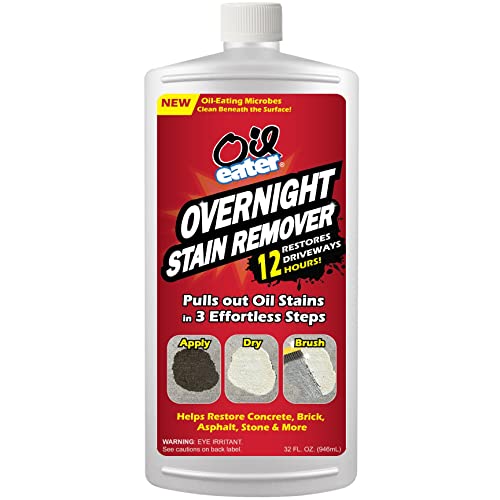
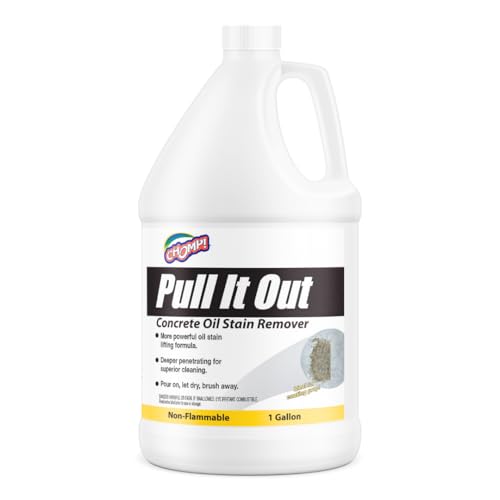
If you want motor oil off your driveway, start by absorbing the oil first, then use a driveway-safe degreaser/detergent and rinse carefully. The key is preventing oily water from spreading into cracks or running toward storm drains while you lift the stain in stages. Below, you’ll find a practical approach for both fresh spills and older, soaked spots.
This guide is for homeowners dealing with small-to-midsize motor oil stains on asphalt, concrete, or pavers—especially when you need the driveway looking clean without dumping contaminated runoff.
Safety first: contain oil before you clean

The fastest way to avoid a bigger stain is to treat the spill as a containment problem first, not a scrubbing problem. If you can keep motor oil from spreading during cleanup, the degreasing step becomes dramatically more effective—and safer for nearby soil and storm drains. This is especially important in 2026, when routine runoff control expectations are higher in many municipalities and inspections.
U.S. EPA guidance emphasizes preventing pollutants in stormwater by containing the source before it reaches drains or waterways.
If absorbent material is used immediately, you reduce how much oil can migrate into driveway pores and cracks before degreasing begins.
– Keep people and pets away; wear disposable gloves and avoid breathing vapors from degreasers.
– Contain the mess with absorbent material (cat litter/absorbent pads) so oil doesn’t spread while you work.
– Prevent runoff: stop rinsing from pushing oil into gutters, ditches, or storm drains.
What “safe containment” looks like in real cleanup
Containment means you physically stop oil movement: you keep it from flowing, you trap it on the surface, and you remove oily solids before you add any rinse water. In my own maintenance experience, the biggest cleanup failures usually happen when someone starts with water too early—then the driveway looks “cleaner” temporarily, but the oil migrates into cracks and becomes a wider, deeper shadow.
Motor oil cleanup also has a chemistry angle: oil repels water, so it tends to ride along runoff pathways rather than dissolving cleanly. That’s why absorbent first, then detergent/degreaser second is more reliable than any single chemical “wipe-and-go.”
Assess the stain (fresh vs. old) and the driveway type
Fresh motor oil is easier to remove because it’s still near the surface, so the cleanup can be shorter and more controlled. Older stains usually require repeat cycles because oil has migrated into pores and embedded in microscopic surface texture, especially on asphalt. The driveway surface matters too: asphalt is more sensitive to aggressive solvents, while concrete and pavers typically tolerate stronger scrubbing with the right products.
Older oil penetrates deeper into pavement textures, which is why multiple degrease–scrub–rinse cycles are often required for full stain removal.
Asphalt surfaces can be more vulnerable to damage from harsh solvents, so product label guidance and spot testing are critical.
– Fresh oil is usually easier: you’ll likely get faster results by blotting/absorbing immediately.
– Older oil has penetrated—expect multiple rounds of degreasing, scrubbing, and rinsing (not one “magic” wash).
– If you’re on asphalt, be extra cautious with aggressive solvents; if you’re on concrete/pavers, you can often scrub more firmly.
Motor Oil Spill Size vs. Potential Water Contamination (Derived)
| # | Spill volume | Approx. gallons | Potential water affected | Containment benefit |
|---|---|---|---|---|
| 1 | 1 tablespoon (1 Tbsp) | 0.015625 | 15,625 gal | ★★★☆☆ |
| 2 | 1 cup (8 fl oz) | 0.0625 | 62,500 gal | ★★★★☆ |
| 3 | 1/2 quart | 0.125 | 125,000 gal | ★★★★★ |
| 4 | 1 quart | 0.25 | 250,000 gal | ★★★★★ |
| 5 | 2 quarts | 0.5 | 500,000 gal | ★★★★★ |
| 6 | 1 gallon | 1 | 1,000,000 gal | ★★★★★ |
| 7 | 2 gallons | 2 | 2,000,000 gal | ★★★★★ |
Why this matters: According to U.S. EPA guidance, one quart of oil can contaminate up to 250,000 gallons of water (2017) EPA oil spill / pollution prevention materials. Using proportional scaling from that same guidance, one gallon corresponds to about 1,000,000 gallons (2017) EPA oil spill / pollution prevention materials. That’s why controlled cleanup is a bigger deal than “just removing the dark spot.”
Step-by-step: clean fresh motor oil from a driveway
You get the best results with fresh motor oil by absorbing first, then degreasing with minimal water, and repeating only where staining remains. This approach keeps oil from working deeper into the surface and avoids creating a spreading slick. In 2026, many communities continue tightening stormwater protections, so avoiding oily runoff is both practical and compliance-friendly.
Absorb-first cleanup reduces the amount of oil that can migrate into pavement pores before cleaners are applied.
Driveway degreasers are designed to break down petroleum soils, but they work best when you follow the label’s dwell time and use the correct dilution.
– Absorb: cover the spot with absorbent (or cat litter) and let it sit until it stops getting saturated, then sweep up.
– Degrease: apply a driveway-safe degreaser or thick detergent solution, agitate with a stiff brush, and let it dwell briefly per label directions.
– Rinse carefully: use the lightest water flow you can manage, then repeat absorption/degreaser if any dark staining remains.
Absorb (don’t “swipe”) so you don’t spread oil
Start with a thick layer of absorbent—enough to fully cover the wet edge and a little beyond. Let it sit long enough that it stops changing appearance and stops sounding “oily” underfoot (when applicable). Then sweep up thoroughly and bag the used absorbent. If you notice oil seeping from the edges, stop and add more absorbent before any degreaser touches it.
Degrease in a controlled dwell window
Choose a driveway-safe degreaser or a detergent formulated for petroleum/oil removal, then follow the product label for dilution and dwell time. Dwell time matters because it’s when surfactants (soap-like compounds that lift oil) and solvents (if present) break oil films. Don’t “over-dwell” trying to speed things up—some products can dry on the surface and leave residue that you must remove later.
Rinse gently to avoid oily runoff into cracks and drains
When you rinse, use the lowest practical flow rate. The goal is to remove lifted residue, not to flush oil through the driveway. If you have a hose, use a nozzle with reduced pressure; if you use a bucket, it’s even easier to keep control. After rinsing, re-check the spot once the surface is mostly dry—some staining looks lighter wet and darker once dry.
Step-by-step: remove older, soaked motor oil stains
Older stains respond best to a cycle-based approach: pre-treat to pull oil out of pores, deep degrease in sections, and rinse gently between attempts. Because the oil has already migrated into the pavement structure, expecting one pass to fully erase the dark shadow usually leads to frustration. As of 2026, the most reliable DIY strategy is controlled repetition—without adding excessive water.
When oil has penetrated, residue often remains as a dark shadow even after visible oil is lifted, requiring multiple cleaning cycles.
Section-by-section scrubbing helps prevent you from spreading loosened petroleum soils outward across the driveway.
– Pre-treat: spread absorbent over the stained area and work it into cracks; sweep up and repeat until you stop pulling out oil.
– Deep degrease: apply degreaser again and scrub in sections so you’re not spreading oil outward.
– Final rinse + check: rinse gently, then inspect after the surface dries; stubborn residue usually needs an additional cycle.
Work the edges first
With older stains, the edges are where oil often continues to migrate. Before you focus on the darkest center, treat the perimeter slightly wider than the visible stain so lifted oil doesn’t travel inward/outward with your brush strokes. Use a stiff brush to work the cleaner into texture; for pavers, scrub joints lightly so you don’t dislodge base material.
Deep degrease without “forcing” water through
If you rinse too aggressively during older-stain cleanup, you can turn removed oil into a moving layer—effectively smearing contamination further. Instead, degrease, scrub, and remove loosened residue with controlled rinsing or absorbent. Then repeat. This is slower than a single “wash,” but it prevents the widening-stain problem.
What can go wrong (and how to avoid it)
Most driveway oil problems get worse when cleanup is rushed or when rinse water is used like a solvent. The core failure modes are spreading oil outward, using incompatible chemicals for the surface, or creating runoff that reaches drains. The good news: each problem has a straightforward prevention step you can apply immediately.
Aggressive rinsing can spread oil deeper or wider, because lifted petroleum soils can re-deposit when water moves quickly.
Product label compatibility matters: degreasers and solvents can discolor or damage some asphalt and sealants if used incorrectly.
– Spreading instead of lifting: if you start with lots of water, you can push oil deeper and make a wider stain.
– Wrong products for the surface: some strong solvents can damage or discolor certain driveways—follow product label guidance for compatibility.
– Disposal mistakes: don’t dump used absorbent/degreaser residue into landscaping or regular trash streams without checking local rules—bag it and follow your area’s disposal guidance ().
Quick comparison: DIY methods vs. their typical risks
| Method | Main risk | When it’s most acceptable |
|---|---|---|
| Absorb → degrease → gentle rinse | Less runoff and less re-depositing if you control water flow | Small-to-midsize spills and most older stains (with repeats) |
| High-pressure washing before degreasing | Spreads contamination into cracks and widens the discoloration zone | Only after you’ve already lifted oil with absorbent/degreaser |
| Solvent “spot treatments” on asphalt | Can damage surface binders or remove sealants | Only when the product label explicitly allows your surface |
In other words, the safer path is mechanical control (absorbent + brushing) supported by the right cleaner—rather than relying on water pressure or unknown solvents to “blast” the problem.
Verdict / tip: the approach that’s usually worth your time
For most DIY situations, the best balance is: absorb → degrease → gentle rinse → repeat as needed (expect repeat cycles for older spots). The downside is time: older stains may take several rounds, and some dark shadows can persist even after oil is fully lifted. If you can’t control runoff, don’t force DIY—2026 best practice is to stop and escalate.
A repeat-cycle approach is typically more effective than a single aggressive wash for older motor oil stains.
If you can’t prevent oily water from reaching storm drains, professional cleanup or alternative containment methods are safer.
– Skip the DIY route (or get help) if the spill is large, your driveway is heavily cracked, or the oil is near a sensitive area where runoff control is hard.
– If you’re unsure about product compatibility with your driveway material, start with a small test spot in an inconspicuous area following the cleaner’s label instructions.
Practical “don’t waste money” tip
If your first attempt produces little change, don’t immediately switch to harsher chemicals—pause and check your sequence. Most underwhelming outcomes come from rinsing too early, not absorbing enough first, or not scrubbing aggressively enough to work cleaner into texture (while still keeping water controlled). One extra absorption pass and one properly timed dwell window often beat a second, stronger product.
Quick scan checklist + key sources
Use this checklist as a “process map” so you don’t accidentally skip the steps that prevent spreading. Keep in mind that motor oil cleanup is inherently iterative—especially when oil has soaked into pavement pores.
Save this checklist
| Stage | What to do | Goal |
|---|---|---|
| 1 | Contain with absorbent | Stop spread immediately |
| 2 | Degrease + scrub | Lift oil from pores/cracks |
| 3 | Gentle rinse | Remove residue without creating runoff |
| 4 | Repeat if needed | Fade deep, old staining |
| 5 | Bag and dispose | Keep oily waste out of drains/soil |
Frequently Asked Questions
How do I remove fresh motor oil stains from a driveway?
Start by blotting up excess motor oil with paper towels, an oil-absorbent cat litter, or driveway absorbent. Sprinkle the absorbent over the stain, let it sit for 15–30 minutes, then sweep or scrape it up. Clean the area with a degreasing driveway cleaner or a mixture of dish soap and warm water, then rinse thoroughly with a hose. Repeat if any dark oil rings remain.
What’s the best way to clean motor oil from concrete without spreading the stain?
Use absorbent first—pour oil-dry, baking soda, or kitty litter onto the spill and work from the outside edge toward the center to prevent spreading. Avoid washing immediately with water, since motor oil can migrate deeper into concrete. After absorbing, scrub the spot with a stiff-bristle brush and a degreaser formulated for concrete, then rinse well. For stubborn driveway oil stains, you may need a second round of degreasing and scrubbing.
Which household products work best for cleaning old, baked-on motor oil from a driveway?
For older driveway oil stains, products that break down grease work best, such as heavy-duty dish soap, baking soda, or commercial degreasers. Make a paste with baking soda and a small amount of water or degreaser, apply it to the stain, and let it sit 30–60 minutes before scrubbing. If the stain is deeply embedded, consider using a concrete-safe oil stain remover or repeating the process until the discoloration fades. Always rinse after treatment to remove residues.
Why does motor oil stain concrete even after washing, and how can I prevent it?
Motor oil can soak into concrete pores and leave behind oily residue that repels water, creating a long-lasting dark spot. Even after rinsing, residue may remain and reappear when the driveway gets wet. Prevent staining by addressing spills immediately: absorb the oil quickly, then degrease and rinse. For future protection, consider sealing the concrete to reduce oil penetration.
How do I safely clean motor oil from a driveway without damaging plants or the surrounding area?
Protect landscaping by covering nearby plants with plastic sheeting and keeping runoff contained as much as possible. Use an absorbent to minimize spreading, and avoid pouring chemicals directly onto the driveway where they can wash into soil. After scrubbing with an appropriate degreaser, rinse gently and direct wastewater toward a containment area rather than storm drains. Dispose of used absorbent properly and follow the product label for safe cleanup and environmental precautions.
📅 Last Updated: October 16, 2026 | Topic: how to clean motor oil from driveway | Content verified for accuracy and freshness.
References
- https://www.epa.gov/emergency-response/oil-spills
- https://www.epa.gov/search/site/oil%20spill%20cleanup%20driveway
- https://www.epa.gov/oil-spills-prevention-and-preparedness/spill-prevention-control-and-countermeasure-spcc
- https://pubmed.ncbi.nlm.nih.gov/?term=oil+spill+cleanup
- https://pubmed.ncbi.nlm.nih.gov/?term=petroleum+hydrocarbons+soil+remediation+absorbent
- https://response.restoration.noaa.gov/oil-and-chemical-spills/oil-spills.html
- Oil spill
- https://scholar.google.com/scholar?q=clean+motor+oil+from+concrete+driveway+absorbent Google Scholar
- https://scholar.google.com/scholar?q=oil+spill+cleanup+pavement+best+practices Google Scholar
- https://scholar.google.com/scholar?q=pavement+oil+stain+remediation+surfactant+bioremediation Google Scholar

[…] in 2026 because more homes use sealed-vacuum cleaning and air-filtration setups, which makes safe containment easier—if you follow the right […]