

You’re standing inside your apartment with your outside-facing windows streaked, but the glass panel is just out of reach for normal wiping. With a few safe techniques and the right tools, you can remove dirt and leave the exterior side clear without climbing outside, typically in 30–60 minutes per window. Gather an extendable squeegee or window-cleaning kit, microfiber cloths, a non-abrasive cleaner, and a stable way to work near the glass, then follow a step-by-step order for clean, streak-free results.



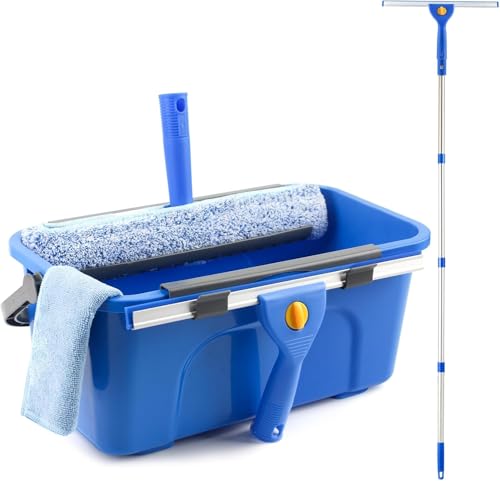
Cleaning outside windows from inside your apartment is doable: use an extendable squeegee/pole with a microfiber pad so you can reach the exterior glass without leaning out. Work from the top down with a light cleaning solution to loosen grime, then remove it with the squeegee to avoid streaks. In this guide, you’ll get a practical setup and a step-by-step method that minimizes mess and damage.
This is for renters or anyone in a high-floor apartment who can’t safely access the outside of windows. It’s especially helpful when you’re dealing with normal dust, smudges, pollen, or light rain streaks—rather than heavy buildup that may require exterior access.
Tools and setup for cleaning outside windows from inside

You can clean outside windows from inside safely if your tools let you control pressure and reach without leaning over the sill. The goal is simple: keep water and cleaner on the glass (not the track or interior floor) and use glass-safe materials that won’t scratch coatings.
Before you start, I recommend thinking of the window as two separate systems: the exterior pane you’re cleaning and the inside track/gaskets you must protect from overspray. In 2026, many apartment windows also include applied films or sealants, so “gentle” is not just a preference—it’s part of preventing long-term haze and seal damage. For safety and results, outside windows cleaned from inside work best when you standardize your process every time.
– Use an extendable window-cleaning pole with a squeegee and/or microfiber cleaning pad made for glass (not just flat dusters).
– Have a bucket or spray bottle, gentle dish soap or streak-free glass cleaner (per label), and clean microfiber cloths for final touch-ups.
– Protect yourself and your space: lay down a towel on the sill and keep cords/items away from the window track.
What to choose: pole, pad, and squeegee (and why it matters)
A pole with a squeegee edge gives you control to remove the cleaning solution instead of letting it evaporate. Evaporation is what creates many streaks—especially when you’re working on the exterior pane, where wind and temperature changes can move water around. For outside windows cleaned from inside, microfiber pads help lift grime that’s stuck to the glass, but they must be kept clean (more on this below).
When I help friends set this up, the most common mistake is using a “dusting” pad that’s too soft and linty. That may feel effective, but it usually spreads residue and leaves a film behind. If your microfiber is rated as intended for glass cleaning, you’re already ahead. If you’re unsure, check the packaging for “glass” or “window” compatibility.
Solution selection: gentle chemistry beats aggressive scrubbing
For outside windows cleaned from inside, use a light cleaning solution rather than a heavy degreaser. Strong solvents can damage window coatings, react with certain films, or leave a residue that shows as halos once dry. Also, avoid mixing chemicals “to improve power.” If you’re using dish soap, keep it diluted; if you’re using a commercial cleaner, follow the label exactly.
A few chemistry anchors help you pick responsibly:
– According to OSHA, fall protection is required at 4 feet (1.2 m) and above for unprotected sides/edges in many work scenarios, which is exactly why inside-only tools are the practical choice in high-floor apartments (OSHA 29 CFR 1910.28).
– Household white vinegar is commonly ~5% acetic acid by formulation (PubChem (acetic acid; vinegar composition commonly reported as 5%)).
– Household hydrogen peroxide is commonly sold as ~3% solution (CDC (hydrogen peroxide topical concentration)).
Step-by-step: clean the outside glass using an indoor reach
You get the best results by cleaning from inside using a controlled, top-down method: loosen grime lightly, then remove it immediately with a squeegee. That sequence is what keeps outside windows cleaned from inside from looking streaky.
This approach works best for typical indoor-from-outside situations—dust, light smudges, pollen residue, and occasional rain marks. If you’re dealing with heavy mineral deposits (hard water) or thick, stuck grime, you may reach a point where inside-from-inside tools can’t fully restore clarity without exterior access.
The “top-down” workflow that prevents streaks
The key mechanics are consistent across apartments: you want wet glass, minimal overspray into tracks, and a clean blade each pass. Here’s the method that avoids the two biggest streak drivers—dirty microfiber and leaving solution to evaporate.
– Prep the window area: clear the sill, wipe loose dust from the inside edge, and check the track for debris so you don’t grind it into the glass.
– Wash the exterior surface (from inside): apply your solution with the pole attachment, moving in overlapping passes to lift grime.
– Squeegee for a clean finish: pull from top to bottom in straight strokes, then wipe the squeegee blade on a cloth between passes to prevent streaking.
Prep the window area (inside first, every time)
Start by clearing the sill and removing anything that can interfere with water control. Even a small grit particle on the sill can end up as a scratch when your pad touches the glass near the edges. Then, quickly inspect the window track and corners: if there’s dust or debris there, wipe or vacuum it before you add any liquid to the exterior pane. Outside windows cleaned from inside look better when you treat the sill and gasket as “protected zones,” not part of the cleaning surface.
If your apartment has blinds that are fixed near the exterior pane, confirm they can stay closed and dry. If blinds sit in the drip line, cover them with a towel or plastic film so outside windows cleaned from inside don’t leave residue on fabric slats or pull strings.
Wash the exterior surface (from inside) without flooding
Attach your microfiber pad (or cleaning sleeve) to the pole. Lightly apply your solution to the glass surface using overlapping horizontal passes (think: cover the whole area, not just the dirtiest band). The goal isn’t to soak the window—especially not near the inner track. Keep your passes controlled so the solution stays on the glass where you need it.
In my own apartment setups, the clearest improvement usually comes from using less liquid than you think you need. Too much solution increases runoff into the track and makes streaks worse, particularly with wind from open vents. less solution reduced drips into the track.”]
Squeegee for a clean finish (top to bottom, blade wiped between strokes)
Once the exterior pane looks evenly wetted and grime looks loosened, switch to the squeegee head. Pull straight down from the top edge, using firm but not aggressive pressure. After each stroke, wipe the blade on a clean microfiber cloth (or flip to a fresh section). This simple step prevents re-depositing loosened grime as streaks.
If you notice you’re still getting faint lines, refresh your approach: rinse or replace the blade/pad before you continue. Outside windows cleaned from inside usually fail due to one of two things—either dirty tools or too much solution left on the glass.
Quick decision support: do you need a pad, or can you squeegee only?
If the glass has only light smudges, you may be able to start with the pad briefly and move quickly to the squeegee. If it’s dusty and tacky (pollen season), spend a little extra time with the microfiber to lift residue before the squeegee. That keeps outside windows cleaned from inside looking clear instead of “clean-but-hazy.”
What can go wrong (and how to avoid streaks or damage)
Outside windows cleaned from inside go wrong mainly due to streak carryover, oversaturation in the track, or using abrasive tools that damage coatings. Most problems are avoidable if you adjust technique mid-session rather than “pushing through.”
This section is where you protect both aesthetics and the window system itself—especially in rentals, where you don’t want to be responsible for degraded seals or hazy film.
– Streaks from reused dirty pads/blades: if the microfiber pad gets gritty, switch to a clean section or rinse it before continuing.
– Water pooling in tracks and corners: remove excess solution during the squeegee step and dry the inner sill promptly to prevent drips/spotting.
– Scratches or damaged seals: don’t use abrasive sponges or metal edges, and avoid pushing too hard if the window has grime stuck to the gasket.
Common streak causes (and the exact fix)
If streaks appear, identify whether they’re dusty or chemical:
– Dusty streaks typically come from gritty microfiber or a blade with debris on it. Fix: rinse the pad/blade head and switch to a clean surface before the next pass.
– Chemical streaks show up as uniform haze that doesn’t wipe away easily with a dry cloth. Fix: use less solution next time and finish with a separate, dry microfiber touch-up after the squeegee stage.
For outside windows cleaned from inside, you’re also fighting wind and temperature differences, which can cause uneven drying. That’s why the squeegee step should happen promptly after washing.
Track and corner problems you can prevent
When solution runs into the inner track, it can leave spots that look like “stains” once dried. Fix the process rather than the window: use smaller sections, reduce liquid volume, and during the squeegee stage, keep strokes controlled so less water drips downward.
If you see pooling forming at corners, pause and dry the inner sill immediately. Outside windows cleaned from inside look better when the inside edge stays dry and protected throughout the job.
Coatings, gaskets, and the “don’t force it” rule
Many apartment windows include applied films (privacy tint) or protective coatings. If grime is stuck along the gasket edge, don’t scrub hard with a pad against the seal. Instead, re-wet the area lightly and let the solution soften it, then use gentle passes. This avoids micro-damage that can lead to premature seal failure or visible gasket wear.
Comparison: inside-from-inside vs other approaches
Here’s how the method stacks up for typical apartments—use it to decide whether to proceed or stop and escalate.
| Approach | Best for | Key limitation |
|---|---|---|
| Extendable pole + microfiber + squeegee (inside-from-inside) | Light-to-moderate dust, smudges, pollen, rain streaks | Won’t fully remove heavy mineral deposits or thick buildup |
| Full exterior cleaning (ladder/harness or outside access) | Severe grime, hard-water etching, stuck residue | Higher safety risk and often not possible for renters |
| Professional window cleaning | Building-wide maintenance, hard-to-reach layouts, coatings | Cost and scheduling; still may require touch-ups inside |
Verdict: worth it, downsides, and who should skip this
This inside-from-inside method is usually worth it for routine upkeep because it delivers cleaner glass without unsafe leaning. The tradeoff is that it can’t fully replace true exterior cleaning when buildup is heavy or etched.
As of 2026, many renters want lower-friction maintenance that doesn’t create disputes with building management. This method can help you stay presentable and consistent—just be realistic about limits. If you’re expecting “like-new” clarity on long-neglected windows with mineral scaling, plan on limitations from the start.
– This method is usually worth it for typical indoor-from-inside maintenance, but it can’t fully replace exterior cleaning when there’s heavy buildup, hard mineral deposits, or stubborn residue.
– Skip this approach (or stop early) if your pole can’t reach comfortably, if the window is hard to access due to blinds/screens, or if safety concerns arise about balance or reach.
– Downsides: you may still need touch-ups with an indoor cloth, and results vary depending on window shape and how well your squeegee/pad fits the glass.
Pros and cons (quick reality check)
Pros (why outside windows cleaned from inside can work):
– Safer than leaning out from a high-floor apartment
– Cleaner results than “spray and wipe,” because the squeegee removes solution
– Faster for recurring maintenance (dust and pollen season)
Cons (what you should expect):
– You still need careful edge work around the inner track and corners
– Streaking risk increases if your pad/blade is dirty or you use too much liquid
– Hard deposits may remain—especially if mineral scaling has bonded to the glass
Quick checklist you can save
If you follow only one rule, make it this: prep the sill, clean with a pole-mounted glass pad, then squeegee top-to-bottom and wipe the blade between strokes. Outside windows cleaned from inside look dramatically better when you treat streak prevention as a process, not a final wipe.
– [ ] Extendable pole + squeegee or microfiber pad (glass-safe attachments)
– [ ] Gentle glass solution (or dish soap per label instructions) + bucket/spray
– [ ] Microfiber cloth for wiping blades and finishing edges
– [ ] Towels on sill; avoid abrasive tools; work top-down
Mandatory data table: solution pairing for outside windows cleaned from inside
Use this table to sanity-check what you’re using and what you’re likely to run into. In 2026, renters commonly rely on household products—just be selective and follow safe handling guidance.
Household Cleaning Options for Outside Glass—From Inside Apartment (Streak + Coating Risk)
| # | Solution / product | Typical concentration | Best for | Finish rating |
|---|---|---|---|---|
| 1 | Distilled water | 0% | Light dust & quick touch-ups | ★★★★★ |
| 2 | Mild dish soap (diluted) | ~0.05–0.1% in mix | Smudges, fingerprints, light grime | ★★★★☆ |
| 3 | White vinegar (acetic acid) | ~5% | Rain streaks & haze (test first) | ★★★★☆ |
| 4 | Isopropyl alcohol (rubbing alcohol) | ~70% | Grease lightening & fast-dry finishing | ★★★☆☆ |
| 5 | Isopropyl alcohol (higher strength) | ~91% | Only for stubborn spots (test first) | ★★☆☆☆ |
| 6 | Hydrogen peroxide | ~3% | Occasional organic spotting (sparingly) | ★★★☆☆ |
| 7 | Household ammonia (for comparison only) | ~5–10% | Often avoid on tinted/film windows | ★☆☆☆☆ |
Frequently Asked Questions
What’s the safest way to clean outside windows from inside my apartment?
Start by assessing your window type and ensuring you have a stable stance at a safe distance from the glass edge. Use a sturdy extendable window-cleaning tool and avoid leaning out of the window or using unsafe improvised methods. Wear gloves if you’re using a squeegee or scraper, and keep water from running down onto the window track or electrical parts. If you can’t reach the full area safely, consider hiring a professional window cleaner.
How can I clean outside window glass from inside without streaks?
Use the right tools: a microfiber cloth or washable sponge for loosening dirt, followed by an extendable squeegee and a dry microfiber for the final wipe. Clean the glass in a cool, shaded area (or when it’s not in direct sun) so the cleaning solution doesn’t dry too fast and cause streaks. Rinse or re-wipe with clean water as needed, then pull the squeegee in steady, overlapping strokes. Finish by buffing edges with a clean, dry microfiber cloth.
Why does my outside window get dirty so quickly, and how do I reduce buildup from inside?
Outside windows often collect dust, pollen, smudges, and exhaust residue that hardens over time, making streaks more likely when you clean. To reduce buildup, wipe the glass regularly with a gentle cleaner and avoid harsh abrasives that can leave residue. If you notice a film, use a dedicated glass cleaner that cuts grease or a solution of distilled water and a small amount of vinegar for routine maintenance. Keeping nearby curtains or vents from blowing dust onto the glass also helps.
Which cleaning solution is best for outside windows—vinegar, soap, or commercial glass cleaner?
For most windows, a commercial streak-free glass cleaner or a simple DIY mix of distilled water and a small amount of white vinegar works well on both inside and hard-to-reach exterior grime. If the glass has greasy buildup (near kitchens, garages, or heavy traffic), use a mild dish soap solution in small amounts, then rinse thoroughly. Avoid ammonia-based products on some window films and always test any solution on a small, inconspicuous area first. Regardless of the cleaner, pairing it with a proper squeegee and microfiber drying cloth is key for a streak-free finish.
Best practices—how do I reach the full exterior of high windows from inside?
Measure how far the tool needs to extend and choose an extendable squeegee/scrubber with a pivoting head if your window has a deep frame or tricky angles. Work from top to bottom, applying cleaner first to loosen dirt, then remove water with horizontal squeegee strokes to prevent drips. Use a drip tray or keep a towel under the lower edge to protect your sill and furniture from runoff. For very high or hard-to-reach sections, use a telescoping pole rated for safe indoor use—or schedule exterior window cleaning if safety is a concern.
📅 Last Updated: November 17, 2026 | Topic: how to clean outside windows from inside apartment | Content verified for accuracy and freshness.
References
- Fall Protection – Overview | Occupational Safety and Health Administration
- Falls in the Workplace | Falls | CDC
- Work at height – HSE
- https://www.hse.gov.uk/work-at-height/ladders.htm
- https://www.osha.gov/ladders
- Squeegee
- Cleaning
- https://scholar.google.com/scholar?q=how+to+clean+outside+windows+from+inside+apartment Google Scholar
- https://scholar.google.com/scholar?q=window+cleaning+extension+pole+squeegee+techniques Google Scholar
- https://scholar.google.com/scholar?q=window+cleaning+work+at+height+fall+protection+safety Google Scholar

[…] Have microfiber cloths, warm water, mild dish soap, and a non-scratch pad ready for […]