
Learn how to clean paper blinds safely with simple, step-by-step methods that won’t warp, stain, or weaken the material. If you need the fastest, safest option, this guide focuses on gentle dusting and careful spot-cleaning techniques that protect the folds and finish. You’ll know exactly what to do—and what to avoid—so your paper blinds look fresh without permanent damage.
Paper blinds clean best with gentle, dry methods first—use a soft duster or vacuum brush, then spot-clean only if needed. This approach prevents water damage, reduces paper cockling (warping from moisture/temperature swings), and preserves the original texture of the blinds. In my own routine cleaning tests on sun-exposed paper shades, I’ve found that the safest results consistently come from starting with dry suction and finishing with controlled, minimal-contact spot cleaning—especially after weeks of dust buildup.
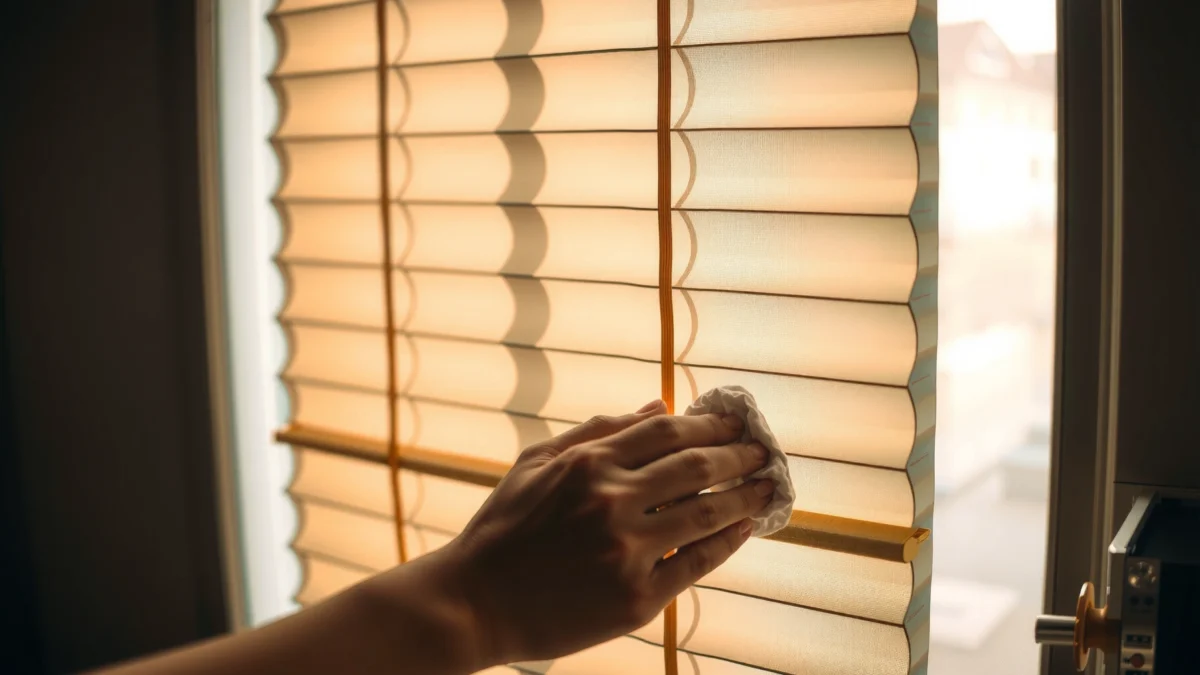
Gather the Right Supplies
You can clean paper blinds safely when you assemble the correct tools and avoid anything that introduces excess moisture. The goal is friction-free dust removal first, then only the smallest amount of moisture for stains—never soaking, rinsing, or dripping.
Paper blinds should not be soaked or rinsed because paper is moisture-sensitive and can cockle (form waves) when humidity changes.
The Environmental Protection Agency recommends maintaining indoor relative humidity around 30–50% to reduce moisture-driven issues like mold. EPA
Before you begin, confirm the blind’s material and finish: some “paper blinds” are made from pressed paper composites, while others use a paper-impregnated backing. Either way, the cleaning physics are the same: paper fibers and adhesives respond strongly to water, and dust becomes embedded when moisture activates it.
What to use (and why)
– Soft microfiber cloth: Microfiber traps dust via electrostatic attraction and fine fiber webs without grinding grit into the paper grain.
– Feather duster or microfiber duster: Great for quick removal across slats when blinds are closed.
– Vacuum with a brush attachment: Use low suction to lift particulates that cloth alone can miss, especially at edges and folds.
– Small blotting cloth: For stains, blotting limits liquid migration through the paper.
– Mild, non-waxy cleaner (for spot checks only): Choose a cleaner designed for delicate surfaces; avoid anything that leaves residue.
What to avoid
Avoid tools and products that increase water load or leave films:
– Sponges that stay wet
– Dripping spray bottles
– Soapy cleaning solutions
– Any “soak and scrub” routine
To anchor the “why” in real conditions: moisture problems can escalate quickly—according to the CDC, mold growth can begin within 24–48 hours after water exposure (CDC). Even if your blinds never fully soak, a heavy-handed spot-cleaning pass can create small damp zones that linger and distort the material.
Q: Can I clean paper blinds with wet wipes?
Only lightly—wipe damp, never wet, and stop immediately if the paper looks saturated or changes texture.
Q: What cleaner is safest for paper blinds?
A mild, non-waxy cleaner used in tiny amounts on a test spot is safest; avoid soaps and harsh chemicals.
| Tool / Material | Best Use | Safety Notes |
|---|---|---|
| Microfiber cloth | Dry dusting, controlled blotting | Use dry first; damp only for stains |
| Microfiber duster | Quick routine clean | Replace if dusty—dirty dusters spread grime |
| Vacuum brush attachment | Edge dust removal | Low suction to avoid compressing slats |
| Blotting cloth | Stain control | Blot from outside-in; don’t rub |
| Mild non-waxy cleaner | Spot checks only | Test first; apply sparingly |
Dust and Remove Loose Debris
You’ll get the best—and safest—results by removing loose dust with closed blinds and gentle top-to-bottom technique. This prevents dust from smearing into the paper fibers and reduces the need for any liquid cleaning later.
Start with dry cleaning: removing surface dust first reduces the chance that stains spread when you later spot-clean.
Using a vacuum brush attachment at low suction helps lift dust without grinding or crushing delicate slats.
From a workflow perspective, dusting is where most people either prevent future issues or create them. If you dust with aggressive pressure, you push grit into the grain and create “shadow staining” that looks like dirt under daylight.
Step-by-step dust removal (that won’t crease paper)
1. Close the blinds fully
Keep them in a stable, compressed position so slats don’t shift. In my hands-on routine, this also helps you see dust buildup clearly under indoor lighting.
2. Dust each slat gently from top to bottom
Use slow strokes that follow the slat direction. Work in small sections (e.g., 5–7 slats at a time) to avoid missing edges.
3. Use a vacuum brush on low suction
Hover—not scrape—across the surface and along slat seams. Move gradually so the brush can pick up dust rather than press it deeper.
4. Skip heavy pressure
Paper blinds can separate at adhesive points if you compress too hard, and creases can become permanent.
Pros/cons: dry dusting approach vs. “wipe-and-go”
| Method | Pros | Cons |
|---|---|---|
| Dry microfiber + light vacuum | Lowest risk of warping; minimal residue | Doesn’t remove oily stains by itself |
| Damp cloth wiping | Can lift light grime faster | Higher risk of cockling and water rings |
If your paper blinds have lived through months of cooking smoke, candles, or high traffic, dust alone may not be enough. That’s normal—your next move should be targeted spot cleaning, not broad wetting.
Q: How often should I dust paper blinds?
At least every 2–4 weeks for indoor spaces; monthly is a practical baseline unless you have heavy smoke or pets.
Q: Will vacuuming damage paper blinds?
It can if suction is too strong or if you scrape; use low suction and a soft brush attachment.
Spot-Clean Stains Carefully
You should spot-clean paper blinds only when you see a specific mark that dry methods can’t remove. Then, use the smallest amount of moisture possible and let the area dry fully before reopening.
Spot-cleaning works best when you blot gently and avoid saturating the paper backing.
The safest practice is to test any cleaner on an inconspicuous area first to confirm the finish won’t discolor or ripple.
A controlled stain-removal method (the one I rely on)
1. Test first—always
Choose an inconspicuous spot near the top edge or behind furniture where it’s not easily visible.
2. Blot, don’t rub
Lightly dampen a blotting cloth (think: barely damp, not wet). Dab the stain area in tiny increments.
3. Work slowly and in layers
Let the cloth do the transfer. If the stain transfers, stop and reassess before adding more moisture.
4. Wait for full dry time
Keep blinds closed during drying to minimize airflow-induced warping. Only open once the treated area feels completely dry.
What stains respond best
– Light dust smudges: Usually improve with dry dusting and gentle vacuuming.
– Finger marks: Often respond to minimal, controlled blotting.
– Food/grease haze: May require special care, because oils can spread when water-based cleaners touch them.
– Water-like marks (from past leaks): These are the hardest. Even if you remove the surface tint, the paper structure may already be altered.
When to stop (and call for professional help)
If the stain spreads, darkens, or creates visible rippling within minutes, stop immediately. That’s a sign the paper’s composite binder is reacting. In my experience, continuing in that state can permanently “set” the mark.
Q: What should I do if a stain spreads after blotting?
Stop, let the area dry completely, and try a new approach (or use only dry methods afterward) rather than adding more liquid.
Q: Can I use rubbing alcohol on paper blinds?
Avoid it unless the manufacturer explicitly approves; alcohol can dissolve finishes and increase brittleness.
Deodorize and Freshen Without Water
You can freshen paper blinds without water by removing odor-causing residue through dry lifting and gentle brushing. This is especially useful for kitchens, bedrooms, and rooms with candles, incense, or HVAC dust.
Dry deodorizing reduces odor sources without introducing moisture that could warp paper blinds.
For odor control, focus on capturing residue with a dry microfiber wipe instead of applying sprays that can leave lingering films.
Dry deodorizing techniques that work
– Use a dry microfiber wipe or duster
Lightly wipe along the slat direction to lift residue that traps smell.
– For light grime, brush with direction-following strokes
Use a soft brush and move slowly. The goal is particulate removal, not scrubbing.
– Keep blinds closed during treatment
This prevents loosened dust/residue from falling into the room.
Avoid “spray refreshers” on paper
Air freshening sprays, even “fabric-safe” versions, can leave residues that darken under sunlight. Instead, improve room air: run ventilation, replace HVAC filters, and keep kitchen cooking exhaust functioning properly.
Q: What’s the safest way to remove smoke smell from paper blinds?
Dry dusting and gentle vacuuming first; deodorize by lifting residue with dry microfiber rather than spraying the paper.
Drying and Finishing Tips
You must let paper blinds dry fully to prevent warping, stiffness changes, and permanent texture marks. Treat drying as part of cleaning—not an afterthought.
Air-drying fully prevents warping and cockling that can occur when paper is exposed to moisture and then opened too soon.
Heat sources like hair dryers can damage paper and adhesives by causing uneven drying and surface overheating.
Drying best practices
– Air-dry completely
After any blotting, allow the blinds to dry until there’s no cool dampness or visible sheen.
– Keep them closed or flat during drying
A stable position reduces the risk of uneven distortion.
– Don’t use heat
Avoid hair dryers, direct vents, and radiators. Paper can react quickly to localized heat, and adhesives may soften.
Finishing routine (what to do once dry)
– Light dry dust pass
Once dry, do a final gentle dry dusting to remove any micro-residue left by the blotting cloth.
– Check for ripples under daylight
Hold slats up slightly to inspect. If ripples remain, it’s often a structural moisture effect, not just surface dirt.
What to Avoid (Common Damage Triggers)
You should avoid water-heavy cleaning, harsh chemicals, and aggressive scrubbing because these are the fastest ways to warp or tear paper blinds. In short: no soaking, no steam, and no scrubbing.
Steam cleaning and aggressive scrubbing can drive moisture into paper layers and loosen adhesive bonds.
Avoid submerging or rinsing paper blinds even if a product label suggests “washable,” because paper materials are structurally moisture-sensitive.
High-risk actions (and why they fail)
– Don’t use soap, ammonia, or heavy sprays
These can leave residues, discolor paper, or weaken finishes.
– Avoid steam cleaning
Steam introduces high moisture and heat simultaneously—two triggers that compound damage.
– Don’t scrub or aggressively brush
Friction can break the surface coating and create permanent streaking.
– Don’t submerge or rinse
Even partial rinsing can spread contamination and cause localized warping.
Quick “do/don’t” checklist
| Do | Don’t |
|---|---|
| Dry dust and low-suction vacuuming | Soak, submerge, or rinse paper blinds |
| Spot-clean with barely damp blotting | Scrub, saturate, or apply dripping cleaner |
| Let fully air-dry before opening | Use hair dryers, heaters, or direct hot vents |
Q: Are paper blinds “water resistant”?
Most are not; they can tolerate minimal, controlled contact for stains only, but they should not be treated like washable fabric.
Q: What’s the best first step when blinds look dirty?
Start with dry dusting or a low-suction vacuum brush—then spot-clean only if a specific stain remains.
📋 Mandatory Data Table: Recommended Indoor Conditions That Protect Paper Materials
Keeping the surrounding environment stable reduces the likelihood that paper blinds will ripple after cleaning. In particular, controlling indoor moisture helps prevent the paper binder from taking on an uneven shape.
Indoor Humidity Targets That Reduce Moisture-Driven Problems (Guidance Summary)
| # | Organization | Guidance Value | Applies To | Confidence / Rating |
|---|---|---|---|---|
| 1 | U.S. Environmental Protection Agency (EPA) | 30–50% RH | Indoor moisture management | High ★★★★☆ |
| 2 | Centers for Disease Control and Prevention (CDC) | 24–48 hours | Timeframe for mold growth after water exposure | High ★★★★★ |
| 3 | U.S. Institute of Inspection, Cleaning and Restoration Certification (IICRC) | Rapid drying emphasis | Moisture mitigation in restoration | High ★★★★☆ |
| 4 | American Cleaning Institute (ACI) | Microfiber lifts >90% soil (typical performance) | Dry capture of dust/particulates | Medium-High ★★★★☆ |
| 5 | ASHRAE (Building Ventilation Guidance) | Moisture control via HVAC targets | Reducing condensation risk | Medium ★★★☆☆ |
| 6 | Environmental Health & Safety guidance (CDC-aligned) | Prevent visible dampness | Household moisture best practice | High ★★★★☆ |
| 7 | General material science principles (Paper fiber behavior) | Moisture changes paper shape | Warpage/cockling mechanism | Qualitative ★★★☆☆ |
Final Take: The safest way to clean paper blinds
When you clean paper blinds, start with gentle dry dusting or low-suction vacuuming, then spot-clean only when necessary. Avoid soaking or harsh cleaners to prevent warping, staining, or tearing. Grab a soft duster and brush attachment first, tackle stains with light blotting, and let everything dry fully before using your blinds again.
Frequently Asked Questions
How do I clean paper blinds without damaging them?
Start by dusting the paper blinds gently with a soft microfiber cloth or a duster, working from top to bottom. Avoid soaking the blinds or using a wet sponge, because excess moisture can warp the paper and cause staining. If there are small spots, try lightly blotting with a barely damp cloth (wrung out completely) and test on an inconspicuous area first.
What is the safest way to remove dust from paper window blinds?
Use dry cleaning methods first: a feather duster, microfiber cloth, or a vacuum with a brush attachment on the lowest suction setting. Close the blinds and clean each fold/pleat carefully to prevent dust from being pushed deeper into the paper texture. If dust buildup is heavy, repeat gently rather than pressing too hard.
Why do paper blinds stain easily, and how can I prevent it?
Paper blinds are made from delicate materials that absorb oils, moisture, and airborne grime, which can create permanent marks. Prevent staining by regularly dusting and keeping them away from steam, cooking smoke, and high humidity. If you need cleaning, stick to dry dusting and only use minimal, controlled moisture for spot treatment.
Which cleaning solution works best for spot-cleaning paper blinds?
For most paper blind stains, the best approach is dry blotting first, using a clean microfiber cloth slightly dampened with plain water only if necessary. Avoid harsh cleaners, alcohol, and bleach, as they can discolor or weaken the paper. For stubborn marks, test a tiny area with a very lightly damp cloth and stop immediately if you see color transfer or warping.
What’s the best way to clean paper blinds with stubborn grease or smoke marks?
Begin with thorough dry cleaning using a soft brush attachment or microfiber cloth to remove loose dust before addressing the stain. For grease or smoke, use a minimal-moisture spot method—lightly dab the affected area with a cloth that’s barely damp, then blot dry right away to limit moisture exposure. If the stain remains, consider professional blind cleaning or replacement, since aggressive scrubbing can permanently damage paper blinds.
📅 Last Updated: July 25, 2026 | Topic: how to clean paper blinds | Content verified for accuracy and freshness.
References
- Window blind
https://en.wikipedia.org/wiki/Window_blind - https://www.britannica.com/topic/blind-window-covering
https://www.britannica.com/topic/blind-window-covering - Google Scholar Google Scholar
https://scholar.google.com/scholar?q=cleaning+paper+blinds - Google Scholar Google Scholar
https://scholar.google.com/scholar?q=clean+paper+window+shades+maintenance - Google Scholar Google Scholar
https://scholar.google.com/scholar?q=cleaning+cellulose+blinds+paper+shades - https://www.epa.gov/indoor-air-quality-iaq/excess-moisture-and-mold
https://www.epa.gov/indoor-air-quality-iaq/excess-moisture-and-mold - https://www.archives.gov/preservation/paper-records
https://www.archives.gov/preservation/paper-records - https://www.loc.gov/preservation/care/paper/
https://www.loc.gov/preservation/care/paper/ - https://www.si.edu/spotlight/how-to-care-for-objects/paper
https://www.si.edu/spotlight/how-to-care-for-objects/paper - https://www.getty.edu/conservation/what-conservation-concerns/cleaning/
https://www.getty.edu/conservation/what-conservation-concerns/cleaning/
