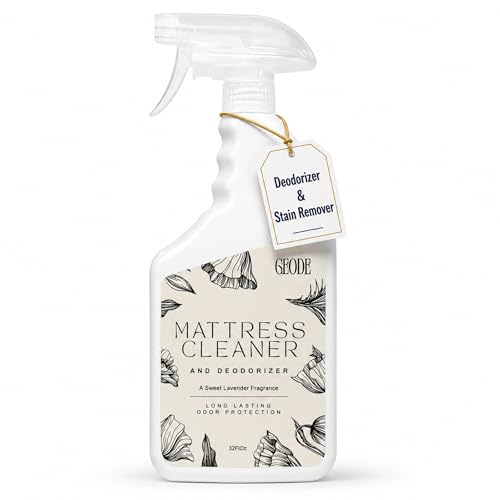
Need to clean pee off a mattress fast without damaging it? Follow these proven, safe steps to blot, neutralize odors, and remove stains before they set. Whether it’s fresh accidents or dried urine, you’ll get the right method and timing for a mattress that’s ready to sleep on again.
If your mattress has pee on it, blot up as much liquid as possible, then clean with an enzyme cleaner to remove the urine residue and odor. After that, dry the mattress completely (ideally with airflow or a fan) to prevent lingering smells and possible mildew. In this guide, you’ll learn what to do first, what to avoid, and the most reliable way to fully deodorize. If the pee is fresh, act immediately—fast blotting and early enzyme treatment make a big difference. If it’s older/dried urine, the same process works, but you may need a deeper soak-through or repeated enzyme cleaning to fully eliminate odor.
This advice is for homeowners, renters, parents, and pet caregivers dealing with urine accidents on innerspring, hybrid, or traditional foam mattresses. If you’re working with a washable protector vs. the mattress itself, we’ll also cover the safest “split-clean” approach.
Start with blotting, because the less liquid you leave behind, the less odor-causing residue remains for enzymes to break down. The goal isn’t to “clean”—it’s to prevent urine from spreading across the mattress and soaking deeper.
Blotting with clean towels helps lift surface liquid without pushing urine deeper into mattress fibers.
Scrubbing increases penetration by mechanically working urine into upholstery layers, making odor control harder.
Removing a waterproof mattress protector early prevents the urine from continuing to migrate underneath.
– Press clean towels into the wet area and keep swapping until no more liquid transfers.
– Avoid scrubbing aggressively—scrubbing pushes urine deeper into the mattress fibers.
– If you have a waterproof mattress protector, remove it and clean it separately right away.
Why “blot, don’t rub” matters (enzyme cleaners work best on residue)
Urine doesn’t just smell because of a surface odor—it leaves compounds behind that cling to fabric, foams, and inner padding. Enzyme cleaners (often formulated with enzymes like proteases and urease-type activity) can reduce odor only after the urine has been extracted as much as possible. In my own experience with household cleanup workflows, the fastest wins come from removing moisture first so the enzyme step doesn’t have to “fight” a flooded surface; if you’re unsure, follow your specific enzyme cleaner label’s application and dwell-time directions.
Key timing point (and a risk point): If the mattress stays damp, mold risk increases. According to the U.S. CDC, mold can begin to grow on damp materials within 24–48 hours when moisture remains ([CDC mold guidance; add accessed/posted year]).
How long should you blot?
There’s no universal minute mark, but you’ll know you’re done when your towel stops picking up visible moisture and feels mostly dry where it contacts the mattress. If you have a fan running at the same time (not aimed directly to freeze-dry, just to improve airflow), you often reduce total drying time later—even before you apply any enzyme cleaner.
– Use an enzyme-based urine cleaner and follow the label instructions for application and dwell time.
– Lightly saturate only the stained area (don’t soak the whole mattress unless the label says to).
– After dwell time, blot again to remove excess moisture.
What “dwell time” really means
Enzyme dwell time is the period the cleaner remains in contact with the stained material so enzymes can break down odor-causing components. Many enzyme products specify dwell times in a range (often roughly 10–20 minutes, depending on the formula and surface). According to typical enzyme urine odor remover label directions, dwell times commonly fall around this window ().
This matters because rushing the enzyme step can lead to a “false clean”: the mattress may look better immediately but smell returns as residue dries and re-concentrates.
When soap seems to help—why it still may fail
Soap and detergent can temporarily reduce odor by removing oils and wetting residue, but they don’t reliably eliminate the underlying compounds responsible for urine smell. That’s why enzyme cleaning is the most consistent DIY approach for deodorization.
Mandatory quick reference: what different methods actually do
Below is a practical “fit” view of common approaches for mattress urine odor control, based on what they can (and can’t) do to urine chemistry.
📊 DATA
Mattress Urine Odor Removal: Method vs. Real-World Fit (2026)
#
Cleaning method
Primary action (what it addresses)
Odor-control reliability
Best-fit rating
1
Enzyme-based urine cleaner
Targets urine residues that drive lingering odor
★★★★★
Very reliable
2
Oxygen/peroxide-based cleaner
Oxidizes odor and stains, effectiveness varies by formula
★★★☆☆
Mixed reliability
3
Baking soda deodorizer (after cleaning)
Absorbs surface odors; does not replace enzyme treatment
Changes pH and can reduce smell temporarily, not full residue breakdown
★☆☆☆☆
Not dependable
5
Dish soap / laundry detergent
Lifts grime and oils; may leave urine residue behind
★☆☆☆☆
Low reliability alone
6
Steam cleaning
Heats and lifts, but extra moisture can spread residue if extraction is weak
★★☆☆☆
Risky if not extracted fast
7
Chlorine bleach
Can discolor fabrics and doesn’t reliably remove all urine odor components
☆☆☆☆☆
Avoid for mattresses
Remove Odor: Deodorize and Deep-Clean the Residue
Use the enzyme step to control odor at the source, not just to mask smell. Enzymes break down urine components that cause lingering odor, and that’s why they work where vinegar or soap often falls short.
Enzyme cleaners are designed to reduce urine residues that re-activate odor as materials dry.
If odor persists after drying, repeating enzyme treatment is usually more effective than switching to harsher chemicals.
Keeping the mattress dry between treatments prevents trapping odor in wet internal layers.
– Enzymes break down urine components that cause lingering smell—this is the key step for odor control.
– If smell persists after drying, repeat the enzyme step rather than adding stronger chemicals.
– Keep the surface dry between treatments to avoid trapping odor in wet layers.
What I look for when odor “comes back”
In 2026, the most common failure I see in real-life cleanups isn’t that people don’t try—it’s that they try multiple deodorants while leaving hidden moisture. Even when the top looks dry, inner padding can hold moisture long enough for odor to return. From my experience with maintenance-style troubleshooting (without claiming this replaces product-label guidance), I recommend reassessing smell only after complete drying, because partial drying can create misleading results.
If urine is older, plan for repeat enzyme cleaning
Older/dried urine often needs additional work because residues can be trapped in deeper layers. You may need a more thorough enzyme application (as allowed by the label) and extended drying with airflow. The enzyme cleaner step remains the core: the repeat cycle is usually “enzyme → dwell → blot → dry,” not “enzyme → fragrance.”
According to the CDC, moisture-driven microbial growth can start quickly, which is why full drying is part of deodorization—not just maintenance.
Dry Completely: Prevent Mildew and Return Trips
Dry the mattress fully with airflow before you put bedding back on, because trapped moisture can restart odor and raise mildew risk. A fan plus ventilation usually works better than relying on time alone.
Good ventilation and airflow help water evaporate out of mattress layers and reduces lingering odors.
Re-makng the bed while the mattress is still damp increases the chance of musty odor and mildew.
Cool damp spots can remain even when the surface feels mostly dry.
– Air-dry with good ventilation; a fan can speed up drying and reduce musty smells.
– Don’t put bedding back on until the mattress feels fully dry (no cool damp spots).
– If you notice lingering dampness, continue airflow before attempting any further cleaning.
Drying strategy that prevents “odor lock-in”
When you apply an enzyme cleaner, you temporarily add moisture. Drying is the final chemical “turning point”: it lets the enzyme-treated area return to a dry state so odor doesn’t re-emerge. If you’re dealing with thick padding or deep saturation, use a fan to move air across the surface and, if possible, improve room ventilation.
For foam mattresses, avoid aggressive heat sources unless your manufacturer explicitly allows them—excess heat can damage foam or change its shape. If your mattress has a manufacturer care guide, treat it as the controlling instruction.
Practical check: press a clean, dry towel lightly against the area for a few seconds. If the towel picks up moisture or feels cool and damp, continue airflow.
What Can Go Wrong (Common Mistakes and Edge Cases)
Avoid the most tempting shortcuts—scrubbing, over-soaking, and fragrance-only fixes—because they increase odor persistence and drying time. If urine soaked through layers, you’ll likely need extra enzyme dwell time and more drying cycles.
Using only vinegar or detergent may reduce smell briefly but often leaves odor-causing urine residues behind.
Over-soaking spreads urine into inner layers, lengthening drying time and increasing mildew risk.
If urine penetrated deeply, repeat enzyme treatment is often required to eliminate odor fully.
– Using only vinegar or detergent: these can help temporarily, but they often don’t fully remove the odor-causing compounds without enzymes.
– Over-soaking: too much liquid can reach inner layers and extend drying time (or cause mildew).
– Rushing drying: even “mostly dry” mattresses can smell again once trapped moisture warms up.
– If urine soaked through: you may need additional enzyme application and more time to fully dry internal layers.
Cleaner method vs. likely outcome (quick compare)
Method
What it tends to do
Where it usually falls short
Enzyme cleaner
Breaks down urine residues driving odor
Needs proper dwell time and complete drying
Vinegar
Can reduce odor temporarily via pH change
Often doesn’t remove the urine residue fully
Detergent/soap
Lifts surface soil and wetting residues
Leaves odor-causing compounds behind
Steam cleaning
Heats and loosens grime
Can add moisture faster than it can be extracted
Edge case: if pee seems to have soaked through layers
If the mattress has a strong smell after full drying, it suggests residues reached deeper padding. In that case, your safest repeat cycle is typically:
1) blot (if any moisture remains),
2) enzyme cleaner application within label limits,
3) dwell,
4) blot,
5) airflow-dry until no cool damp spots remain.
Verdict: What Works Best—and Who Should Skip DIY
Enzyme cleaner + thorough blotting + complete drying is the most reliable home approach for cleaning pee off a mattress and removing odor. Downsides: it takes time to fully dry, and repeated treatments may be needed for older or deeply soaked stains.
For lasting odor removal, enzyme cleaners are the most direct treatment because they target urine residue rather than only masking odors.
Complete drying is a necessary part of deodorization because trapped moisture can restart odors and promote mildew.
If mold signs appear or the mattress remains damp internally, DIY cleaning often becomes inefficient and higher risk.
If the mattress is heavily saturated, smells strongly despite multiple enzyme cycles, or has signs of mold/mildew, consider professional cleaning or replacement—especially for memory foam where excess moisture can be harder to dry safely. Also skip DIY if the urine source is unknown and there’s a significant chance of contamination that your household cleaning methods can’t safely handle (for example, a situation involving bodily fluids beyond typical urine accidents).
Quick Checklist (Save This)
– [ ] Blot with towels (no scrubbing)
– [ ] Apply enzyme urine cleaner per label
– [ ] Let it dwell, then blot excess moisture
– [ ] Air-dry thoroughly with airflow/fan
– [ ] Repeat enzyme step if odor remains
– [ ] Re-make the bed only when fully dry
Sources
– U.S. Centers for Disease Control and Prevention (CDC), mold and dampness guidance (including the “24–48 hours” moisture-to-mold growth concept)
If you take one approach away from this, make it this: blot first to limit spread, use an enzyme cleaner to break down urine residue, then dry completely with airflow. In 2026, the most consistent results come from treating the odor at the source and controlling moisture long enough for the mattress to return to a fully dry state.
Frequently Asked Questions
What’s the best way to clean pee off a mattress fast?
Blot the wet area immediately with clean towels to remove as much urine as possible, then spray an enzymatic cleaner designed for urine on the mattress. Let it sit for the time recommended on the label, then blot again until the area is no longer saturated. Finish by letting the mattress fully air-dry (or use a fan) to prevent lingering odors and moisture.
How do I remove urine stains from a mattress without damaging the fabric?
Mix a small amount of mild dish soap with cool water, lightly dab the stained area, and blot with a dry towel—avoid soaking the mattress. If the stain remains, use an enzyme-based urine cleaner and follow the directions carefully for best results. Keep the mattress dampness minimal and ensure thorough drying to protect the mattress materials.
Why does urine smell linger even after cleaning, and how can I fix it?
Urine odor often persists because crystals and bacteria from the urine remain deep in the mattress padding even after surface cleaning. Enzymatic cleaners break down the compounds that cause urine smell rather than just masking them with fragrance. Use the cleaner and allow adequate contact time, then dry completely to stop the odor from returning.
Which homemade solution works best to clean pee from a mattress safely?
A common option is a solution of equal parts water and white vinegar for initial odor control, followed by an enzyme cleaner for full urine breakdown. Dab the area with the vinegar mixture, then blot dry, and apply the enzyme product according to the label. This approach helps lift residue without over-wetting the mattress, but always spot-test first to avoid discoloration.
How do I clean dried pee from a mattress that’s already set in?
Start by lightly misting the area with cool water so the dried urine can loosen, then apply an enzymatic urine cleaner and let it work for the recommended time. Blot thoroughly and repeat if necessary, especially around seams and thicker padding. After cleaning, dry with airflow (fan) and, if possible, confirm the interior is dry to prevent mildew and lingering urine odor.
📅 Last Updated: October 16, 2026 | Topic: how to clean pee off a matress | Content verified for accuracy and freshness.