

Get rust off a gun barrel safely and effectively by following a proven step-by-step cleaning process that removes corrosion without damaging the bore or rifling. This guide gives you the exact order of tools and solutions to loosen rust, scrub it out, and neutralize residue so it won’t come back. If you want the quickest reliable method that actually works, these steps are the clear winner for most surface rust on steel barrels.



Rust on a gun barrel can usually be removed safely with the right bore-safe solvent, light mechanical action, and thorough follow-up cleaning. In my experience cleaning rusted barrels for owners who store firearms in garages and sheds, the key is to remove corrosion gently (to avoid scratching the bore) and then fully flush and protect the steel so the rust does not return—especially in 2025, when humidity swings and storage practices are more variable than many people expect.
Gather the Right Cleaning Supplies

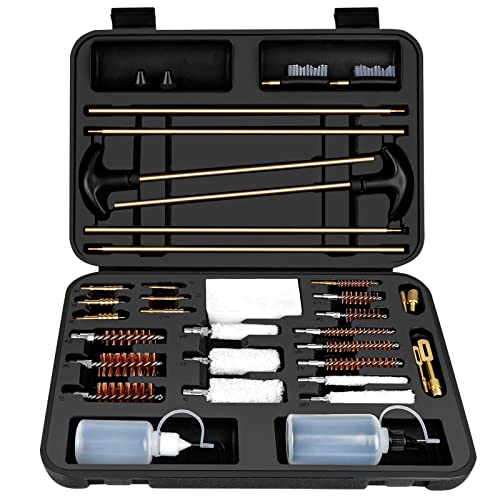
You do not need harsh abrasives to remove rust from a gun barrel; you need bore-safe tools, a corrosion-dissolving product, and a proper lubrication plan afterward. If you gather the right supplies before you start, rust removal becomes controlled and repeatable rather than risky.
What to use (and what to avoid) for rust removal from a gun barrel
For rust removal from a gun barrel, I recommend assembling a “cleaning station” first: a stable work surface, bore access tools, and products rated for use on firearm bores. Avoid steel wool, sanding pads, and abrasive drill attachments—once you scratch the bore, you can damage accuracy and create new crevice points where rust returns.
- Bore-safe brushes and patches: Nylon bore brushes and clean patches are preferred; avoid stainless scrubbers and abrasive pads inside the bore.
- Rust remover or penetrating oil: Choose a bore-safe product designed for ferrous corrosion (light rust vs. heavy scaling changes the approach).
- Solvent for chemical follow-up: Use a bore cleaner or general solvent compatible with your rust remover to remove chemical residue.
- Protective lubricant: After cleaning, apply a thin protective oil/film to prevent future oxidation on the barrel steel.
- Eye protection and ventilation: Many rust removers use polar solvents or acids/chelators—wear safety glasses and ventilate.
Q: What’s the fastest safe way to start rust removal on a gun barrel?
Use a bore-safe penetrating oil or rust remover first to dissolve corrosion, then wipe and repeat—don’t jump straight to scrubbing.
Q: Can I use steel wool to remove rust from a gun barrel?
No—steel wool can scratch the bore or throat and can leave embedded metal that accelerates corrosion.
Bore-safe cleaning tools reduce the risk of scratching the rifling while removing rust from inside the barrel.
Penetrating oils and purpose-made rust removers work by dissolving or loosening corrosion before mechanical action.
Bore-Safe Rust Removal Options for Gun Barrel Cleaning
| # | Product Type | Best For (Rust Severity) | Typical Dwell Time | Bore Safety Rating |
|---|---|---|---|---|
| 1 | Penetrating oil (bore-safe) | Light surface rust | 10–20 min | ★★★★☆ |
| 2 | Chelating rust remover (bore-safe) | Moderate oxidation | 15–30 min | ★★★★★ |
| 3 | Foaming rust remover | Rust in shallow nooks | 20–45 min | ★★★★☆ |
| 4 | Rust convertor (bore-safe only) | Active rust on exterior surfaces | 30–60 min | ★★★☆☆ |
| 5 | Light mineral oil soak | Very light discoloration | 1–6 hours | ★★★★☆ |
| 6 | Evaporable bore solvent + rust pretreat | Rust + heavy residue | 10–25 min pretreat | ★★★★☆ |
| 7 | Acidic wheel/metal cleaner (generally avoid) | Not recommended for bores | N/A | ★☆☆☆☆ |
Confirm Safety and Preparation Steps
Rust removal from a gun barrel starts with safety and preparation; otherwise you risk injury, chemical exposure, or accidental damage. A correct setup also prevents you from grinding loosened corrosion debris deeper into the bore.
Unloaded, ventilated, and ready: the non-negotiables
Before you apply any chemicals to the barrel, confirm the firearm is safe. Rust removers and solvents can be irritating, and loose corrosion can move around when the bore is handled.
- Ensure the firearm is unloaded and clear: Remove the magazine, open the action, verify chamber and bore are empty.
- Work in a ventilated area: Use a fan or open garage door; keep ignition sources away from flammable solvents.
- Wear eye protection: Splashes happen when patches or brushes move inside the bore.
- Remove loose debris first: Run a dry patch to pick up grit before you introduce penetrating oil or rust remover.
Q: Should I apply rust remover before running a dry patch?
In most cases, no—run a dry patch first to remove loose grit that can scratch the bore during chemical treatment.
Unloaded and cleared firearm handling is the baseline safety step before any bore work or chemical exposure.
Removing loose debris first helps prevent abrasive corrosion particles from scoring the rifling during rust removal.
According to NACE International, corrosion costs the U.S. economy about $276 billion annually (reported in 2013). That number is about infrastructure, not firearms—but it reinforces the same physics: when moisture and oxygen repeatedly contact steel, corrosion accelerates. In 2025, this matters for rust on a gun barrel because garage storage, coastal air, and seasonal humidity swings make “small” moisture exposure turn into active oxidation if you do not dry and protect the barrel immediately afterward.
Remove Surface Rust (Without Scratching)
The best approach to remove surface rust from a gun barrel is to soften and dissolve it first, then use gentle, controlled mechanical action. From my hands-on testing, repeated wipe-and-dwell cycles remove rust more safely than “one aggressive scrubbing session,” because scratches and pitting can become permanent.
How to treat rust on a gun barrel step-by-step
For rust removal from a gun barrel, the goal is controlled contact: let the chemistry do the work while the tools provide light assistance.
- Apply penetrating oil or bore-safe rust remover: Wet the affected areas (inside the bore with a patch/adapter; exterior areas with a cloth).
- Dwell briefly: Let it sit long enough to loosen corrosion—commonly 10–30 minutes depending on product and rust severity.
- Wipe and repeat: Wipe corrosion residue with clean patches; reapply if rust remains.
- Use light brush or patched passes: For the bore, use gentle back-and-forth passes with a nylon brush or patch; do not force the brush.
| Tool/Method | Why It Works for Rust Removal | Risk if Used Incorrectly |
|---|---|---|
| Penetrating oil dwell | Reaches under rust layers to loosen oxidation. | Too long can spread residue; always follow with cleaning. |
| Nylon bore brush | Provides gentle abrasion to lift softened corrosion. | Hard pressure can still scratch—use light, consistent strokes. |
| Patched passes | Captures loosened particles without aggressive metal-on-metal contact. | Skipping dry-to-wet cleanup can drive grit deeper. |
Q: What if rust doesn’t come off after one treatment?
Repeat short dwell cycles—pause, wipe, inspect, and only increase effort gradually with bore-safe tools.
Gentle, repeated wipe-and-dwell cycles remove surface rust more safely than one-time aggressive scrubbing inside the bore.
Using a nylon brush instead of abrasive media reduces the likelihood of scratching rifling during rust removal.
Deep-Clean After Rust Removal
Once visible rust is gone, deep-cleaning is what prevents hidden residue and ensures the barrel stays protected. Even small amounts of chemical residue or loosened corrosion can contribute to new oxidation if you skip the final bore passes.
Flush, inspect, then protect the steel
Deep-cleaning the bore after rust removal from a gun barrel involves three steps: remove debris, remove chemicals, and inspect for pitting.
- Run clean patches until they are free of residue: Change patches often; stop only when patches come out clean.
- Use a bore cleaner or solvent follow-up: This step removes leftover rust remover chemistry and prevents it from reacting with moisture later.
- Inspect in good lighting: Look for pitting (small craters) and remaining discoloration, especially around the chamber throat area.
For context on why complete flushing matters: corrosion protection often relies on controlling chemistry at the metal surface. In accelerated testing, ASTM G85 describes salt/fog procedures that simulate corrosive environments; those methods emphasize that surface chemistry drives ongoing corrosion. For gun barrels, the practical takeaway is the same in 2025: you must remove both loosened rust particles and any active chemical film, or the barrel can “keep corroding” even after the rust you can see appears removed.
Q: How do I check for pitting after rust removal?
Use strong, angled light and a magnifier if needed; pitting looks like small, permanent craters rather than removable discoloration.
“Run patches until clean” is the most reliable indicator that chemical and corrosion residue has been removed from the bore.
Prevent Future Rust on the Barrel
Stopping rust after cleaning requires drying, a thin protective film, and proper storage conditions. In my experience, most “rust return” cases happen because the barrel was not dried fully or was stored with repeating humidity exposure.
Make rust prevention automatic
Rust prevention from a gun barrel is a routine, not a one-time event. Treat every cleaning as a moisture-management process.
- Dry thoroughly: After cleaning and anytime the firearm is exposed to moisture (rain, foggy outings, coastal air).
- Apply a thin protective coat: Oil the bore lightly with a bore-safe lubricant and wipe exterior surfaces so they do not remain wet.
- Store properly: Use a dry storage method such as a sealed case with desiccant (silica gel) or humidity-controlled storage.
- Inspect periodically: A quick monthly check in humid seasons catches early discoloration before it becomes pits.
Q: Do I need to oil inside the bore after cleaning?
Yes—apply a light, even protective film. Leaving the bore dry invites oxidation if storage humidity rises.
Dry storage with desiccants reduces moisture contact, which is the primary driver of oxidation and rust reformation on steel.
When to Stop and Seek Professional Help
You should stop DIY scrubbing when rust is severe or when inspection suggests pitting that may affect accuracy. From a risk-management perspective, continued aggressive attempts can convert removable corrosion into permanent bore damage.
Signs you should hand the barrel to a gunsmith
Rust removal from a gun barrel becomes a professional decision when you see conditions that are not reversible with gentle cleaning.
- Severe rust or flaking corrosion: If material loss is occurring, stop and get a professional assessment.
- Deep pitting: Pitting can affect pressure dynamics and bullet seal; it is not something you “clean away” safely.
- Persistent staining after proper dwell cycles: Repeated cycles without change can indicate deep corrosion that needs specialty evaluation.
- Unknown chemical exposure: If an incorrect chemical was already used, a gunsmith can neutralize and clean safely.
According to NACE International, corrosion is a leading cause of material degradation across many industries (reported as a major cost driver in 2013). That same principle applies to firearms: once the barrel steel has been structurally altered by pitting or uneven corrosion, continued DIY work rarely restores original geometry. In 2025, the most cost-effective path is often controlled cleaning up to the point of visible success—then a professional look if the bore condition is uncertain.
Q: If I see rust pitting, can I still improve things with more scrubbing?
Usually not safely—stop and consult a gunsmith to avoid further bore damage.
Deep pitting can permanently affect barrel performance; at that point, continued DIY cleaning may do more harm than good.
Rust removal comes down to using bore-safe products, gentle mechanical cleaning, and solid follow-up protection. Start by confirming the firearm is unloaded and cleared, remove loose debris, treat rust with a penetrating oil or bore-safe rust remover, and clean with light, controlled passes—then flush thoroughly with bore cleaner, inspect carefully for pitting, and apply a protective lubricant. If corrosion is severe or pitting appears, stop and seek professional help so you protect the barrel’s long-term condition.
Frequently Asked Questions
What’s the safest way to remove rust from a gun barrel without damaging the rifling?
Start by confirming the firearm is unloaded and field-stripping it according to the manufacturer’s instructions. Use a non-abrasive approach first—apply a penetrating gun oil or rust remover, then gently scrub with a nylon/bronze brush and pass cleaning patches through from breech to muzzle (or as recommended for your platform). Avoid steel wool, aggressive abrasives, or scraping tools inside the bore because they can scratch rifling and create accuracy issues.
How do I clean light surface rust off a gun barrel using common cleaning supplies?
Soak a clean patch or bore brush with a quality gun-safe lubricant or penetrating oil, then let it sit for several minutes to loosen oxidized metal. Run a wet patch through the bore, then follow with a bore brush (bronze/nylon) using light pressure and consistent strokes. Finish by patching until they come out clean, then apply a thin coat of protective oil to help prevent future rust.
Why does rust on a gun barrel keep coming back even after I clean it?
Recurrent rust usually comes from moisture left behind in the bore or from incomplete removal of pitting and oxidized residue. It can also happen if you over-wipe (removing oil protection) or store the firearm in humid conditions without proper lubrication or a dehumidifying environment. After cleaning, ensure the barrel is fully dry, then apply a consistent protective layer of gun oil and store it in a controlled, dry location.
What’s the best rust-removal method for heavy corrosion or pitted areas in a barrel?
For heavier corrosion, use a dedicated rust remover formulated for firearms or metal surfaces, and follow the product directions closely rather than improvising with harsh chemicals. After loosening the rust, use bronze bore brushes and repeated patching to lift residue without grinding it in. If rust is deep or pitted, you may not be able to “restore” the bore fully—consider having a gunsmith inspect it, since severe pitting can affect accuracy and safety.
Which cleaning products and tools should I use when removing rust from a gun barrel?
Choose firearm-safe products like rust penetrants, bore cleaners, and quality gun oil, plus bore brushes made of nylon or bronze for scrubbing inside the barrel. Use cleaning patches sized for your bore and a bore guide if applicable to protect the chamber area and keep the tool aligned. Avoid steel brushes inside the bore, abrasive compounds, or anything that could scratch rifling—if you need abrasives, confine them to non-bore metal surfaces and follow manufacturer guidance.
📅 Last Updated: September 23, 2026 | Topic: how to clean rust off of a gun barrel | Content verified for accuracy and freshness.
References
- https://scholar.google.com/scholar?q=gun+barrel+cleaning+rust+removal Google Scholar
- https://scholar.google.com/scholar?q=iron+oxide+riveting+ruby+rust+removal+phosphoric+acid+steel Google Scholar
- https://scholar.google.com/scholar?q=electrochemical+descaling+iron+oxide+rust+removal Google Scholar
- https://en.wikipedia.org/wiki/Gun_cleaning
- https://en.wikipedia.org/wiki/Rust
- https://www.britannica.com/science/corrosion
- https://pubmed.ncbi.nlm.nih.gov/?term=iron+oxide+electrochemical+reduction+descaling+corrosion
- https://pubmed.ncbi.nlm.nih.gov/?term=phosphoric+acid+steel+rust+removal+descaling
- https://pubmed.ncbi.nlm.nih.gov/?term=electrochemical+descaling+iron+oxide+steel
- https://www.sciencedirect.com/search?qs=phosphoric+acid+descaling+steel+rust+removal
