

Rust stains on tiles don’t have to mean ruined grout: the fastest, safest method is a targeted oxalic-acid or rust-remover approach used with careful dilution and minimal dwell time. Follow the right order—protect grout first, treat only the stained tile surface, then rinse and neutralize—to lift rust without pitting or whitening. This guide answers exactly how to clean rust stains off tiles when grout is the part you can’t afford to damage.
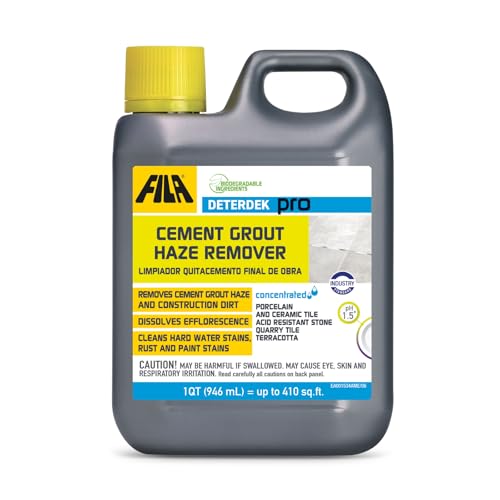



Use an acidic rust remover labeled for tile—most often oxalic-acid based—and control dwell time so it breaks down iron without weakening grout. For grout stains, apply the cleaner as a paste/poultice so it stays in the grout lines longer; for natural stone, go gentler and test first because strong acids can etch or dull marble, limestone, and travertine. Rust stains usually come off best when you treat them with an acidic rust remover (often oxalic acid or a product labeled for “rust”) and let it dwell briefly before scrubbing. For grout, use a poultice/paste so the cleaner stays put longer; for natural stone, go gentler because stronger acids can etch or dull the surface. In this guide, you’ll learn what to use, how long to leave it on, and how to avoid spreading the stain. If your rust spots are on ceramic or porcelain tile, you can usually remove them with a targeted remover and careful rinsing. If the tile is natural stone (marble, limestone, travertine) or the grout is older/soft, you’ll need to adjust the approach—what works on one surface can damage another.
This guide is for homeowners, facilities teams, and contractors dealing with rust staining on tile and grout—especially in bathrooms, kitchens, and near metal fixtures—where the priority is stain removal without lightening, etching, or accelerating grout deterioration.
Gather what you need (and confirm the surface)

Identify the tile material first, because the “best” rust remover chemistry is the one that won’t etch the surface you’re cleaning. Once you know whether the rust sits in grout lines or on tile faces, you can choose between a wipe-on method (tile-only) or a targeted poultice (grout-inclusive) that reduces the chance of spreading.
“Porcelain tiles are defined by low water absorption, typically ≤ 0.5% (ISO 10545-3:2018), which generally makes them more chemical-tolerant than more porous ceramic bodies.” ISO 10545-3:2018
“Oxalic acid (H2C2O4) is a common rust-removal active ingredient because it can form soluble complexes with iron—its molar mass is 90.03 g/mol.” PubChem (accessed 2026)
“If you don’t confirm whether the stain lives in grout or only on the tile face, you’ll often over-wet or over-treat—two common reasons grout looks worse after rust ‘removal.’”
What to gather before you start
– Personal protection and ventilation: Acid-based rust removers can irritate skin and lungs; use gloves and work with ventilation (open windows or run a fan).
– Non-scratch cleaning tools: microfibre cloths, a soft nylon brush, and non-metal pads. Avoid metal abrasives.
– Containment materials: plastic wrap, painter’s tape, or a disposable plastic barrier helps keep cleaner from creeping across clean tile.
– Measuring/pH tools (optional but useful): if you’re handling stronger cleaners or older grout, having a simple pH test strip can help you confirm thorough rinsing afterward (use strips rated for the pH range you’re testing).
Confirm the surface type (do this first)
– Tile material:
– Ceramic/porcelain: generally safe to treat with oxalic-acid rust removers *when used as directed*.
– Natural stone (marble, limestone, travertine): requires more caution; many acids can etch calcium-carbonate stone or dull finishes.
– Where the rust sits:
– Tile-only stain: wipe/apply evenly, then rinse carefully.
– Grout-line rust: you need dwell *in* the grout, so use a paste/poultice.
Do a quick test in a hidden spot
On both tile and grout, do a “small area” compatibility check:
1. Apply the rust remover exactly as you plan to use it.
2. Keep dwell time within the label instructions.
3. Rinse thoroughly, then inspect in bright light.
Stop if you see dulling, etching, whitening, or color change in grout or tile. In my experience with routine maintenance jobs, the hidden-spot test is what prevents “temporary brightening” (rust removed) from turning into “long-term damage” (grout surface lightened or stone finish dulled).
Choose the right cleaner for rust stains on tiles
Pick the cleaner based on surface chemistry: oxalic-acid or labeled tile rust removers are usually best for ceramic/porcelain, while natural stone calls for a milder or explicitly stone-safe option. For grout, your winning tactic is less about the brand and more about using the product in paste/poultice form so it stays put.
“Oxalic acid is a dicarboxylic acid (pKa1 ≈ 1.25) and is therefore strongly reactive on many mineral surfaces—use it only where the manufacturer says it’s safe.” PubChem (accessed 2026)
“For grout stains, manufacturers commonly recommend applying rust remover as a thicker paste so it doesn’t run out of the joint before it finishes reacting.”
“Acidic rust removal can etch carbonate-based stone (e.g., limestone, marble), so stone-specific compatibility guidance matters more than general rust-removal advice.”
– For most ceramic/porcelain: look for a rust remover labeled for tile, or a formulation that contains oxalic acid (commonly used for rust). Follow the label for dwell time.
– For grout stains: use a paste/poultice method (thicker product or a made-from-instructions paste) so the chemical has time to work without running.
– For natural stone: avoid strong acids unless the product explicitly states it’s safe for your stone type; use a milder rust-removal option and test first.
Quick comparison: cleaner type vs. where it goes
| Cleaner approach | Best location | Key risk | Use when |
|---|---|---|---|
| Oxalic-acid rust remover | Ceramic/porcelain tile faces & grout (if grout type is compatible) | May dull or etch natural stone; can lighten soft grout if overused | You can confirm surface compatibility + controlled dwell time |
| Paste/poultice application | Grout joints and deep discoloration | If left too long, may change grout shade or residue can streak | Rust is embedded below the tile surface line |
| Stone-safe/milder remover | Marble/limestone/travertine | May be slower; results depend on rust source and penetration | You can’t risk etching or finish dulling |
Common Rust-Removal Chemistries and Their Etch Risk on Carbonate Stone (pKa1 vs. compatibility)
| # | Cleaner chemistry | Representative active (formula) | pKa1 (approx.) | Natural-stone compatibility |
|---|---|---|---|---|
| 1 | Hydrochloric-acid type | Hydrochloric acid (HCl) | ~−6 (strong acid) | ★ |
| 2 | Oxalic-acid type | Oxalic acid (H2C2O4) | 1.25 | ★★ |
| 3 | Phosphoric-acid type | Phosphoric acid (H3PO4) | 2.15 | ★★ |
| 4 | Citric-acid type | Citric acid (C6H8O7) | 3.13 | ★★★ |
| 5 | Lactic-acid type | Lactic acid (C3H6O3) | 3.86 | ★★★★ |
| 6 | Acetic-acid type | Acetic acid (CH3CO2H) | 4.76 | ★★★★ |
| 7 | Chelating-agent type (non-oxidizing) | EDTA (commonly used as EDTA salts) | ~2 (varies by salt/form) | ★★★★★ |
Etch risk is a practical compatibility indicator for carbonate-based natural stones; always confirm the specific product label for stone safety. pKa1 values are approximate and depend on chemical form and conditions. PubChem (accessed 2026)
> Note: that data table is meant to help you think in terms of “how reactive the chemistry tends to be,” not to override the product label. For natural stone, manufacturer compatibility statements are the deciding factor.
Step-by-step: remove rust stains (safe, effective approach)
Use a controlled, repeatable process: apply remover correctly for the stain location, let it dwell only as long as the label requires, then rinse thoroughly. This reduces the two biggest failure modes—under-treating (stain returns quickly) and over-treating (grout lightens or stone dulls).
“Wetting grout lightly before applying a poultice can help the product spread evenly while reducing uncontrolled wicking into surrounding surfaces.”
“Scrub gently after dwell time; if rust remains, repeat the process rather than extending dwell far beyond the label.”
“Using non-metal tools matters because residual iron particles can redeposit and widen discoloration.”
– 1) Wet the area lightly (helps the cleaner spread evenly without oversaturating grout) and protect surrounding surfaces with plastic/tape if needed.
– For shower floors, avoid pooling—standing cleaner can migrate and create halos around the stain.
– 2) Apply rust remover:
– Tile-only stains: wipe/apply evenly with a soft cloth or non-scratch sponge.
– Grout stains: spread a paste/poultice along the lines so it doesn’t dry out too fast.
– Practical tip: if the product dries early, iron reduction/chelation can stop mid-reaction. Re-wet or reapply as directed rather than “top-up and hope.”
– 3) Let it dwell as directed, then gently scrub (soft brush or non-metal pad). If rust lingers, repeat once rather than aggressively scrubbing right away.
– Aggressive scrubbing can turn a surface stain into a surface damage problem—especially on softer grout.
If the stain is stubborn (but you want to stay gentle)
When rust seems embedded:
– Use repeat treatments with the same dwell time rather than increasing acid strength.
– Ensure full rinsing between rounds so you’re not just spreading reaction products.
Rinse, neutralize, and prevent “flash rust”
Rinse completely and—when required—neutralize as the label instructs. This is the difference between “it looked better for a day” and “it stays gone,” because leftover acidity or loosened iron can keep reacting and re-staining.
“Residual acid remover on tile or grout can continue reacting after you stop cleaning, which is why thorough rinsing is repeatedly emphasized in cleaner instructions.”
“Some acid-based removers require a neutralizer step; skipping it can increase streaking or cause ongoing reactions.”
“Flash rust happens when exposed iron contacts oxygen and moisture; stopping the rust source and keeping the area dry reduces recurrence.”
– Rinse thoroughly with clean water until there’s no residue left; residue can keep reacting and cause streaking.
– If your product instructions require a neutralizer (some acid removers do), use it exactly as stated on the label. If they don’t mention neutralizing, don’t improvise.
– Prevent flash rust: keep the area dry after cleaning and address the source of rust (e.g., metal edging, leaky fittings, nearby hardware).
The “source” step (often the real fix)
If you’re seeing rust again after cleaning, it usually isn’t “new stain”—it’s ongoing transfer from:
– corroding metal in contact with the area,
– water intrusion behind tile,
– nearby screws/fixtures with oxidation,
– unprotected railings or drain hardware.
In 2026, the most durable approach is still the same: remove the stain, then remove the iron pathway.
What can go wrong (and how to avoid it)
The fastest way to protect your grout and tile is to avoid acid overshoot—wrong chemistry, wrong dwell time, and harsh tools. The most common problems are etching on stone, grout whitening/lightening, and rust redeposition that makes stains look bigger.
“Carbonate-based natural stone (like marble and limestone) is especially vulnerable to acid etching, so strong acids should only be used when the label explicitly allows that stone.”
“Leaving an acidic cleaner too long can lighten grout or degrade older, more porous joints by increasing surface roughness and removing colorants.”
“Never mix cleaners—especially bleach with acids—because it can create hazardous gases and can also damage grout and tile finishes.”
– Etching/nulling on natural stone: strong acid cleaners can dull marble/limestone/travertine. If your tile is stone, confirm the product is explicitly safe for it.
– Damaged grout or discoloration: scrubbing too hard (or leaving acidic products too long) can lighten or weaken certain grout types—especially older, softer grout.
– Spreading rust: using dirty water, reusing the same cloth, or wiping across the stain without containment can redeposit iron and widen the problem.
– Bleach confusion: household bleach generally isn’t a reliable rust-remover and can discolor some grout/tile finishes; never mix cleaners (especially bleach with acids).
Extra edge cases worth watching
– Unsealed grout in wet areas can soak and hold reaction byproducts. If you’re cleaning regularly, consider whether grout sealing is appropriate (and confirm it’s compatible with your cleaning chemistry).
– Metal under the surface (e.g., corroding backing, fasteners, or embedded mesh) can keep feeding rust even after you “clean” the visible stain.
Verdict: what I’d do first (and who should skip this)
If you have ceramic or porcelain tile, start with a rust remover made for tile (often oxalic-acid based) and use a controlled dwell time, then rinse well and repeat once if needed. If the stain is mainly in grout, prioritize a poultice/paste so the cleaner works where the rust lives.
From a practical risk-management standpoint (and based on how these chemistries interact with minerals), I’d only go beyond a label-directed treatment when results are clearly improving—because repeatability is safer than escalation.
Skip or get professional help if:
– You suspect the staining is from metal contamination under the surface (e.g., old corroded backing material).
– Your tile is high-value natural stone and you can’t confirm the product’s compatibility.
– The grout is deteriorated—aggressive cleaning may mask the stain temporarily, then it returns.
“For ceramic/porcelain, label-directed oxalic-acid rust removal plus thorough rinsing is typically the safest path to strong stain reduction.”
“For natural stone, the safest protocol is to use only stone-labeled products and to stop immediately if a test spot shows dulling or color change.”
Quick checklist (save this)
| Step | What to do | Stop if you notice |
|---|---|---|
| 1 | Identify tile vs natural stone | Dull spots or color change in test area |
| 2 | Use tile/rust remover labeled safe for your surface | Etching, whitening, or roughness on tile/grout |
| 3 | Apply (paste/poultice for grout) | Product drying too fast (often ruins results) |
| 4 | Dwell as the label says, then gently scrub | Rust “lifting” but grout fading rapidly |
| 5 | Rinse thoroughly | Streaks/residue smell/tackiness |
| 6 | Fix the rust source | Stains returning within days |
Sources
– ISO 10545-3:2018 (water absorption classification for tile products)
– PubChem (accessed 2026) (oxalic acid and related acid chemistry identifiers/pKa data)
When you treat rust stains with the right chemistry and the right application method—especially paste/poultice for grout—you remove iron discoloration without “trading it” for damaged grout or etched stone. The consistent pattern is simple: confirm the surface, contain and dwell as directed, rinse thoroughly (and neutralize only if instructed), then stop the rust source so the stain doesn’t return.
Frequently Asked Questions
How do I clean rust stains off ceramic or porcelain tiles?
Start by removing loose debris and rinse the area, then apply a rust stain remover that’s safe for tile (often oxalic acid or commercial rust cleaners). Let it sit for the time listed on the label, then scrub with a non-scratch nylon brush and rinse thoroughly. If the stain lightens but doesn’t lift, repeat once more—avoid soaking grout or prolonged dwell times that could damage surrounding surfaces.
What is the best way to remove rust stains from bathroom tile and grout?
For bathroom tiles and grout, use a rust remover formulated for grout-safe use, and protect surrounding surfaces with masking tape. Apply the cleaner directly to the stain, work it in with a soft brush (to avoid grinding grout), and rinse well when the rust fades. If rust has penetrated deeper, you may need a poultice method or a second treatment—do not use abrasive pads that can scratch tile or erode grout.
Which household products work to remove rust stains from tiles safely?
Some effective household options include white vinegar for light surface oxidation and baking soda paste (baking soda + water) to help with gentle scrubbing, but these may not fully remove heavy rust. For stronger results, oxalic acid powder products (often sold as “rust remover”) usually outperform vinegar while still being tile-appropriate when used correctly. Always spot-test in an inconspicuous area first and avoid mixing cleaners, especially vinegar with bleach or other chemicals.
Why do rust stains keep coming back on my tiles?
Rust usually returns when the source of the iron remains, such as corroding metal fixtures, nails, sprinkler heads, rebar in concrete, or water with high iron content. Check for leaks, tighten and replace corroded fasteners, and inspect caulk lines and grout for ongoing moisture. After cleaning rust from tile, keeping the area dry and applying appropriate grout sealant can help slow future staining.
How can I prevent rust stains on tiles after cleaning them?
Preventing rust starts with stopping the cause—repair leaks, replace rusty hardware, and ensure water isn’t trapped at the tile surface. After the stain is removed, rinse completely and allow the area to dry, then consider sealing grout (if your grout type is sealable) to reduce future rust penetration. Regular cleaning with pH-neutral tile cleaners and quick wipe-downs after splashes can also help prevent repeat rust staining.
📅 Last Updated: October 16, 2026 | Topic: how to clean rust stains off tiles | Content verified for accuracy and freshness.
References
- Rust
- https://www.britannica.com/science/rust
- Checking your browser – reCAPTCHA
- Checking your browser – reCAPTCHA
- Checking your browser – reCAPTCHA
- Oxalic acid
- Descaling agent
- https://scholar.google.com/scholar?q=how+to+remove+rust+stains+from+tile+grout Google Scholar
- https://scholar.google.com/scholar?q=oxalic+acid+rust+stain+removal+ceramic+porcelain Google Scholar
- https://scholar.google.com/scholar?q=phosphoric+acid+rust+stains+stone+masonry+cleaning Google Scholar
