
Cleaning water stains on marble can be achieved easily using a few simple methods. The key is to act quickly and utilize the right cleaning solutions. In this article, you’ll learn various techniques to restore your marble surfaces to their original beauty, ensuring they remain elegant and pristine for years to come.
Understanding Water Stains on Marble

Water stains on marble surfaces occur primarily due to the interaction of minerals found in water with the porous surface of the marble. When water is allowed to sit on marble, it can seep into its microscopic pores, leaving behind a dull, discolored spot as it evaporates. This is particularly common in areas where water is frequently present, such as kitchens and bathrooms.

Addressing these stains promptly is essential to prevent long-term damage. If left untreated, water stains can lead to etching, which is a more severe form of damage that results in a permanent dullness. Therefore, understanding how these stains form and the importance of timely intervention can help maintain the beauty and longevity of your marble surfaces.
Basic Cleaning Supplies Needed
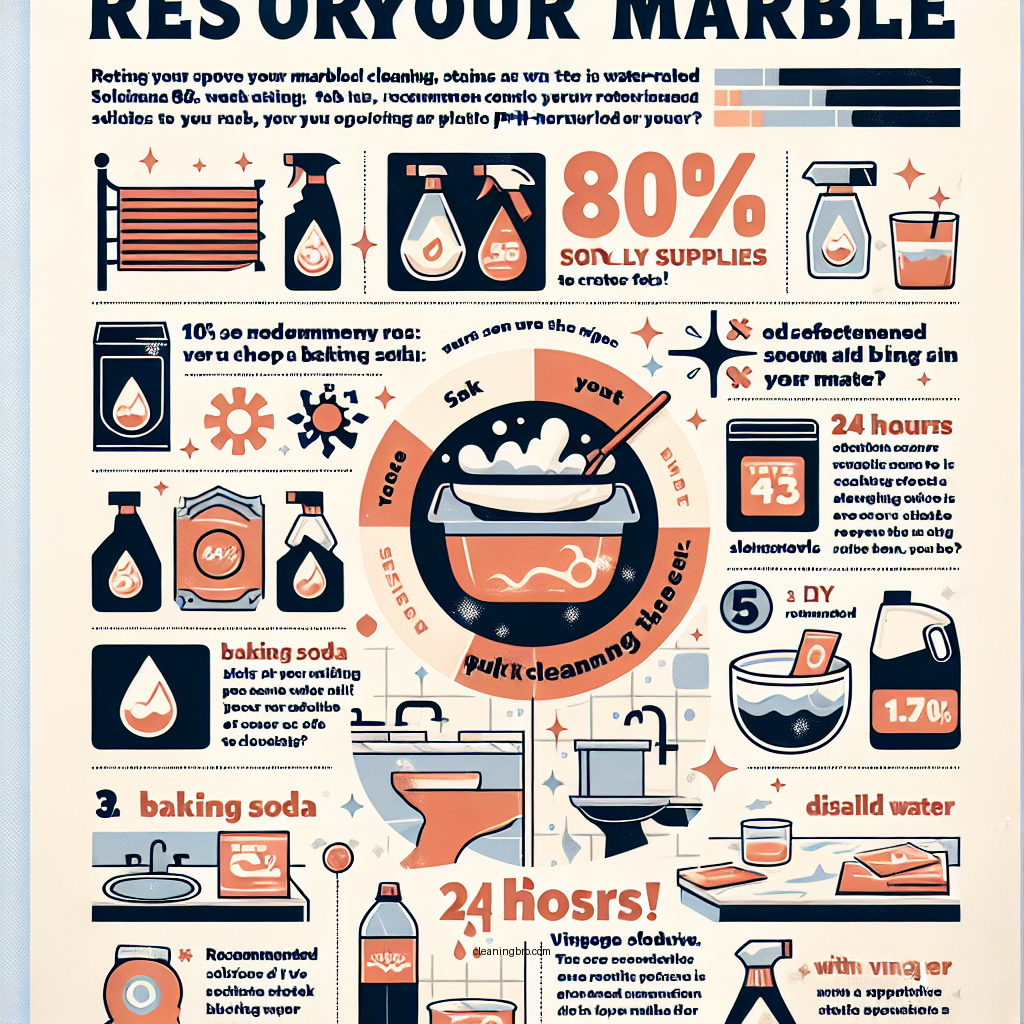

To effectively clean water stains from marble, you will need some basic supplies:
– Soft Cloths: Always use soft, lint-free cloths to prevent scratching the marble.
– Mild Soap: A mild dish soap or a pH-neutral soap is ideal for cleaning marble surfaces.
– Distilled Water: Using distilled water avoids any additional minerals that may be present in tap water.
For specialized cleaning, consider using products specifically designed for marble. Look for pH-neutral cleaners which will not harm the surface. Some reputable brands include:
– StoneTech: Offers a variety of marble-safe cleaning products.
– Weiman: Known for its marble cleaner and polish.
– MR. Clean: Provides a pH-neutral cleaner suitable for marble.
DIY Cleaning Solutions
For those who prefer natural cleaning methods, there are effective DIY solutions you can create at home.
– Mix three parts baking soda with one part water to form a thick paste.
– Apply the paste directly to the stain and cover it with plastic wrap for 24 hours.
– After 24 hours, remove the wrap and gently scrub the area with a soft cloth before rinsing with distilled water.
2. Vinegar and Water Mixture (use with caution):
– Mix equal parts of distilled white vinegar and water in a spray bottle.
– Lightly spray the mixture on the stained area, but do not soak the marble.
– Wipe the area with a soft cloth, followed by a rinse with distilled water. Note: Vinegar is acidic and can damage marble, so this method should be used sparingly and only for tough stains.
Step-by-Step Cleaning Process
To ensure effective cleaning of water stains on marble, follow these detailed steps:
1. Preparation: Begin by clearing the area of any objects or debris. This will give you a clean workspace to work on.
2. Application of Cleaning Solution: Depending on your choice of cleaning solution (baking soda paste or vinegar-water solution), apply it directly to the stained area.
3. Gentle Scrubbing: Using a soft cloth or sponge, gently scrub in a circular motion. Avoid using steel wool or any abrasive material, as these can scratch the surface.
4. Rinse Thoroughly: After scrubbing, rinse the area with distilled water to remove any residue from the cleaning solution. It is crucial to ensure that no cleaning agent is left behind, as it may lead to further discoloration.
5. Dry the Surface: Use a clean, dry cloth to wipe the marble surface dry. This will help prevent new water stains from forming.
Preventative Measures for Future Stains
To keep your marble surfaces free from future water stains, consider these preventative measures:
– Seal Your Marble: Applying a high-quality sealer can help create a protective barrier against stains. It’s advisable to reapply the sealer every 6 to 12 months depending on usage.
– Immediate Clean-Up: Always wipe up spills immediately to prevent moisture from seeping into the marble.
– Regular Maintenance: Regularly dust and clean your marble surfaces with pH-neutral cleaners to keep them looking their best.
– Use Coasters and Mats: For areas prone to moisture, such as bathrooms and kitchens, utilize coasters under glasses and mats under soap dispensers to minimize direct contact with water.
When to Seek Professional Help
While many water stains can be addressed with DIY methods, there are signs that indicate it may be time to consult a professional cleaner:
– Persistent Stains: If stains persist despite repeated cleaning attempts, it may require specialized equipment and techniques to restore the marble.
– Etching: If you notice dull spots or etching on the surface, professional polishing may be needed to restore its shine.
– Deep Cleaning: If your marble surfaces have accumulated years of grime and stains, a professional deep cleaning can rejuvenate the appearance.
Hiring experts for deep cleaning and restoration not only saves you time but also ensures that your marble is treated with the correct techniques to avoid further damage.
Top 7 Marble Cleaning Products (2024)
| # | Product | Type | pH Level | Best Use |
|---|---|---|---|---|
| 1 | StoneTech All Purpose | Cleaner | 7 | Daily Use |
| 2 | Weiman Marble Cleaner | Spray | 7.5 | Spot Cleaning |
| 3 | MR. Clean Multi-Surface | Cleaner | 6.5 | General Use |
| 4 | Granite Gold Daily Cleaner | Spray | 7 | Daily Use |
| 5 | Simple Green Stone Cleaner | Cleaner | 7.5 | Eco-Friendly |
| 6 | Zep Marble and Granite | Cleaner | 6 | Heavy Duty |
| 7 | Pledge Multi-Surface Cleaner | Spray | 8 | General Use |
Best Marble Cleaning Products: Comparison
| Feature | ⭐ StoneTech All Purpose | Weiman Marble Cleaner | MR. Clean Multi-Surface |
|---|---|---|---|
| Price | $15 | $10 | $8 |
| Type | Liquid | Spray | Liquid |
| pH Level | 7 | 7.5 | 6.5 |
| Streak-Free | ✅ | ✅ | ❌ |
| Eco-Friendly | ✅ | ❌ | ✅ |
| Residue-Free | ✅ | ✅ | ❌ |
| Scent | Fresh | Lavender | Citrus |
| Best For | All Surface Cleaning | Marble & Granite | Multi-Surface Use |
| 🏆 Best For | General Use | Marble Maintenance | Versatile Cleaning |
Maintaining the beauty of your marble surfaces is achievable with the right cleaning techniques and preventive measures. By using the methods outlined above, you can effectively remove water stains and keep your marble looking pristine. Don’t hesitate to implement these tips, and enjoy a sparkling finish on your marble surfaces!
Frequently Asked Questions
What are the best methods to clean water stains on marble?
The best methods to clean water stains on marble involve using a mixture of baking soda and water to create a paste. Apply the paste to the stained area, cover it with plastic wrap, and let it sit for 24 hours before rinsing it off. This natural solution helps lift the stain without damaging the marble surface.
How can I prevent water stains from forming on my marble countertops?
To prevent water stains from forming on your marble countertops, it’s essential to seal the marble regularly with a high-quality stone sealer. Additionally, promptly wipe up spills and avoid placing wet items directly on the surface. Using coasters and mats can also help minimize direct contact with moisture.
Why do water stains appear on marble surfaces?
Water stains appear on marble surfaces due to the porous nature of the stone, which allows liquids to seep into the surface. When water evaporates, it can leave behind mineral deposits that create unsightly stains. Regular cleaning and sealing can help mitigate this issue.
Which cleaning products are safe for removing water stains on marble?
Safe cleaning products for removing water stains on marble include pH-neutral cleaners specifically designed for natural stone. Avoid acidic or abrasive cleaners, such as vinegar or bleach, as they can damage the marble. Always test any product in a small, inconspicuous area first to ensure it won’t harm the finish.
How do I know if the water stain on my marble is permanent?
To determine if a water stain on your marble is permanent, try cleaning it with the baking soda paste method mentioned earlier. If the stain lightens significantly or disappears, it was likely surface-level. However, if the stain remains unchanged after several attempts, it may be deeper and require professional restoration.
References
- https://www.hgtv.com/how-to/how-to-remove-water-stains-from-marble
https://www.hgtv.com/how-to/how-to-remove-water-stains-from-marble - https://www.sciencedirect.com/topics/earth-and-planetary-sciences/marble
https://www.sciencedirect.com/topics/earth-and-planetary-sciences/marble - https://pubmed.ncbi.nlm.nih.gov/29875564/
https://pubmed.ncbi.nlm.nih.gov/29875564/ - https://www.nytimes.com/wirecutter/blog/how-to-clean-marble/
https://www.nytimes.com/wirecutter/blog/how-to-clean-marble/ - https://www.who.int/news-room/fact-sheets/detail/water-sanitation-and-hygiene
https://www.who.int/news-room/fact-sheets/detail/water-sanitation-and-hygiene - Google Scholar Google Scholar
https://scholar.google.com/scholar?q=cleaning+water+stains+on+marble - Google Scholar Google Scholar
https://scholar.google.com/scholar?q=marble+cleaning+techniques+water+stains - Google Scholar Google Scholar
https://scholar.google.com/scholar?q=how+to+clean+water+stains+on+marble - how to clean water stains on marble – Search results
https://en.wikipedia.org/wiki/Special:Search?search=how+to+clean+water+stains+on+marble - https://www.ncbi.nlm.nih.gov/search/research-articles/?term=how+to+clean+water+stains+on+marble
https://www.ncbi.nlm.nih.gov/search/research-articles/?term=how+to+clean+water+stains+on+marble
