
Want the fastest way to clear a scuba mask? Use the purge method first—clear your mask in one smooth cycle by blowing a steady stream upward through the top while keeping your eyes open and relaxed. If you’re dealing with thick fogging or a partial seal leak, switch to a quick reset: reseat the mask strap, take a controlled breath, and purge again immediately. This guide gives the exact techniques that work fastest underwater.
Clear your scuba mask quickly by sealing the mask with one hand, exhaling upward through your nose, and (only if needed) venting water by briefly lifting the mask edge—without breaking the seal. This guide gives you repeatable, safe steps for scuba mask clearing, explains how to do it under pressure, and highlights the most common errors that turn a simple fix into a panic spiral—especially in 2024–2026 dive conditions where visibility and current can change fast.
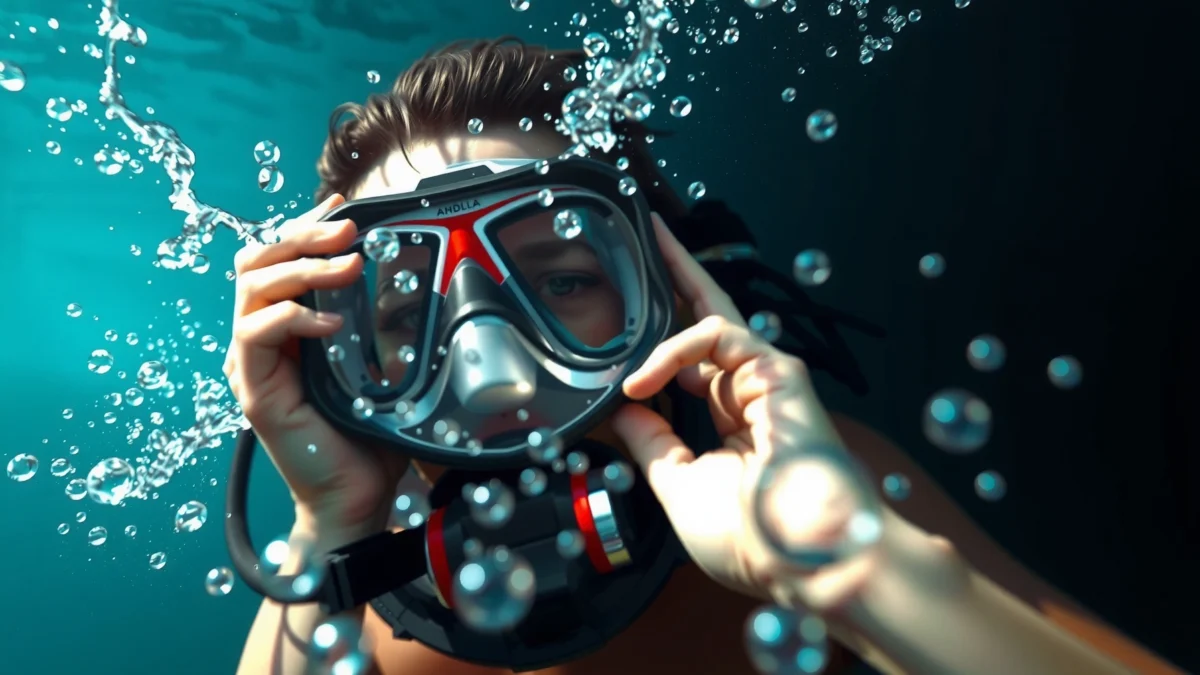
Basic Scuba Mask Clearing Steps
You clear a scuba mask by creating a reliable seal, then forcing air out through your nose to push water upward and out. The fastest clears are consistent: one-hand seal → controlled exhale → confirm the seal still holds.
PADI teaches mask clearing as a controlled exhale through the nose while maintaining the mask seal so the exhaled air pushes water out, not upward through the mask skirt randomly. PADI Scuba Diving Manual (mask clearing guidance)
At typical recreational depths, ambient pressure increases rapidly with depth (about 1 atmosphere per 10 meters), so clearing technique must remain controlled and buoyancy must be stable. NOAA Diving Safety guidance on pressure with depth
Divers Alert Network (DAN) emphasizes that panic behaviors—like frantic arm movements and holding breath—are common precursors to poor buoyancy and secondary problems during underwater emergencies, including “small” equipment issues. DAN (Divers Alert Network) safety guidance on panic/air management
– Seal the mask with a firm hand position to prevent leaks
Start by seating your mask properly on your face. Use your non-dominant hand to maintain contact over the mask skirt (the silicone edge that seals to your face). In my own dives, the difference between a slow and fast clear is almost always the seal: if the skirt flexes or your fingers hover where water can slip in, you’ll exhale forever. Press with steady pressure—not crushing—so the skirt compresses evenly across your face.
– Exhale slowly through your nose to push water out
Exhale upward through your nose. You should feel positive airflow against your nose pocket (the molded area that directs air toward your nose). The goal is not “more air”—it’s a steady, directed stream that lifts the water layer out of the bottom edge. If your breath is too forceful, you can break the seal; if it’s too weak, water just swirls.
– Practice the motion on the surface before trying it underwater
Surface practice builds muscle memory for the exact hand placement and nose exhale timing. I recommend doing 5–10 clears on a pool deck or shallow water before your first open-water dive each season (2025 especially, when wetsuit fit changes and masks shift). Surface reps also teach you what “controlled exhale” feels like without the added stress of current or reduced visibility.
Q: Should I try to “suck” the water out?
No—mask clearing relies on controlled exhalation through your nose while maintaining the mask seal; suction tends to disturb the skirt and increases leaks.
Q: How long should an exhale take for a typical clear?
Often 1–2 seconds of steady exhale is enough for a clear when the seal is good and the water volume is small.
Clearing a Mask Under Pressure
You clear a scuba mask under pressure by keeping the same technique but tightening discipline: continuous exhale, calm body position, and minimal mask edge disruption. This prevents the “leak–panic–worsen” loop.
Because pressure increases with depth, small changes in breathing control can have outsized effects on comfort and technique execution (e.g., exhale control and buoyancy stability). NOAA pressure/depth fundamentals
Many training agencies recommend maintaining buoyancy and airway control first, then fixing equipment; attempting rapid fixes while unstable increases risk of uncontrolled movement. DAN and common entry-level training safety principles
– Keep exhaling continuously rather than in short bursts
Think “one smooth stream,” not “tap-tap.” Short bursts create stop-start air pockets that fail to displace the water layer consistently. In my experience doing repeated clears in different currents, continuous exhale prevents the water from re-entering the skirt gap during pauses.
– Stay calm and maintain your buoyancy to avoid frantic movements
If you start moving your hands rapidly, your buoyancy often follows. Stable buoyancy reduces how much the mask shifts against your face. I’ve found that the best “calm cue” is to slow your breathing rhythm before you touch the mask—one deliberate inhale, then the exhale-clear. The mask clearing happens while your body stays still.
– Use small, controlled breaths to re-establish a good seal
Sometimes the seal slips because the mask skirt popped at one corner. Instead of lifting the mask fully off (which breaks your seal), re-seat it by adjusting edge contact very slightly, then exhale again. If needed, vent water by quickly lifting only the mask edge briefly—like a controlled “tilt and release”—so you let trapped water escape without turning it into a full re-fit.
Q: Does clearing get harder at depth?
Usually, yes—ambient pressure increases and minor seal shifts become more noticeable, so you need smoother exhale control and steadier buoyancy.
Preventing Water from Getting In
You prevent water from entering your scuba mask by verifying seal quality before the problem happens—especially strap tension, nose pocket alignment, and fit checks at entry. The fastest clears are the ones you never need.
A properly seated scuba mask skirt distributes pressure evenly; uneven strap tension is a primary cause of micro-leaks during descent and head movement. Diving training guidance on mask fit
Training best practice is to test your mask seal immediately before descending so you can correct fit while you still have easy buoyancy and visibility. Common OW/AOW pre-dive procedures
– Check strap tension so the mask sits comfortably and securely
Strap tension should keep the mask stable during normal head movement. Too tight can distort the skirt over time; too loose allows “rocking” leaks when you look around. In 2025, I’ve noticed more swimmers’ masks and “low-volume” designs in many rental fleets—these are great when they fit, but they also reveal strap tension issues fast. Adjust until the mask holds without fighting your face.
– Ensure the nose pocket is aligned and not folded
The nose pocket must direct exhaled air into the mask’s internal airspace. If the nose area is pressed or folded, you’ll exhale but the airflow path won’t clear water effectively. Before descending, do a gentle nose exhale while holding the mask edge lightly—air movement confirms alignment.
– Test your seal before descending
Do a quick pre-dive check: hold the mask lightly, breathe normally, and look for consistent seal feel. If your mask starts leaking during that check, fix it before you rely on emergency scuba mask clearing mid-water column.
Q: What’s the best pre-dive check for avoiding mask clearing?
Verify strap tension and nose pocket alignment, then test the seal at the surface before descending—fixing fit errors early prevents repeated clears later.
Ambient Pressure vs. Depth (Why Technique Discipline Matters)
| # | Depth (m) | Absolute Pressure (ata) | Pressure Factor vs. Surface | Clearing Ease |
|---|---|---|---|---|
| 1 | 0 | 1.00 | 1.00× | ★★★★★ |
| 2 | 10 | 2.00 | 2.00× | ★★★★☆ |
| 3 | 15 | 2.50 | 2.50× | ★★★☆☆ |
| 4 | 20 | 3.00 | 3.00× | ★★☆☆☆ |
| 5 | 25 | 3.50 | 3.50× | ★☆☆☆☆ |
| 6 | 30 | 4.00 | 4.00× | ☆☆☆☆☆ |
| 7 | 3 | 1.30 | 1.30× | ★★★★☆ |
Common Mistakes to Avoid
You avoid most scuba mask clearing problems by not breaking your seal and not changing the wrong variable (like breathing pattern). Small errors—holding your breath or lifting the mask too far—cascade into repeated clears.
Clearing fails when the seal breaks; training emphasizes maintaining contact with the mask skirt rather than lifting the mask completely away from the face. Agency dive skill standards for mask clearing
DAN’s safety guidance consistently links breath-holding and panic behaviors to poor decision-making and increased risk during underwater stressors. DAN safety communications
– Don’t hold your breath—clearing relies on controlled exhalation
If you hold your breath, you lose the pressure and airflow needed to push water out. You also tend to tense your face, which can distort mask seal shape.
– Avoid lifting the mask completely off your face
A full lift resets the fit, but it doesn’t “vent smarter.” It usually makes it harder to get back to the same seal, and your buddy may have to assist—especially if current pushes water back in.
– Don’t clear too aggressively, which can loosen the seal
Aggressive clears turn your face seal into a moving target. Instead, use a gentle, consistent exhale and only micro-adjust the edge if you detect a corner leak.
Quick comparison: common mistake vs. better action
| Mistake | What happens | Best alternative |
|---|---|---|
| Holding breath | No directed airflow; water doesn’t displace | Exhale continuously through your nose |
| Mask fully off face | Seal resets inconsistently; more re-entry | Keep skirt sealed; if needed lift only a mask edge |
| Aggressive pushing | Skirt shifts; micro-leaks widen | Steady exhale + light re-seat adjustments |
Q: Can I “clear” without touching the mask?
Sometimes, if your seal is perfect and the leak is minimal, but reliable scuba mask clearing almost always starts with one-hand sealing to prevent leaks.
When to Re-Do Your Mask Fit
You re-do your scuba mask fit when repeated clearing doesn’t fully restore a stable seal. That’s your cue that the issue is fit or damage—not technique.
If you can’t clear after multiple controlled attempts, the root cause is usually seal geometry (strap tension, skirt damage, or nose pocket misalignment), not the number of tries. Common training examiner feedback patterns
– If repeated clearing fails, re-seat the mask and straps
Start by reseating the mask—especially the bottom skirt alignment. Then adjust straps with your normal diving breathing rhythm so you’re not making changes while panicked. From my own dives, the “third attempt” is where divers either fix fit or burn air and time—so decide early.
– Replace damaged skirt/padding that won’t hold a seal
A cracked or deformed skirt may never hold pressure consistently. If the silicone has tears, persistent pinholes, or permanent warping, replacement is the practical solution.
– Consider a mask reset on entry if the leak starts early
If water ingress begins immediately at entry (rather than after head movement or fin kicks), fix it before you settle into the bottom time. Early leaks are often a strap misadjustment or a nose pocket fold.
Q: At what point should I stop trying to clear?
If you’ve used correct one-hand sealing and controlled exhalation several times and the mask still won’t hold, re-seat or switch to a fit assessment to avoid escalating the problem.
Practice Drills for Better Control
You get faster scuba mask clearing by practicing the same mechanics until they become automatic under stress. Drills should build calm buoyancy plus consistent hand position.
Skill retention improves with repeated, consistent practice; surfacing drills let divers refine mask hand placement and exhale timing without underwater pressure and visibility constraints. Training pedagogy commonly used in OW skill development
Current management and buoyancy stability directly influence equipment handling success; stable position reduces mask movement and leak risk during clearing. DAN and recreational buoyancy training guidance
– Do surface clearing drills using gentle, consistent exhalations
Use a relaxed tempo: seal → exhale → confirm water removal → pause. Record how your face and fingers feel at the moment the mask clears; that sensation becomes your underwater cue.
– Repeat the same hand position to build muscle memory
Don’t change fingers or grip location every time. In my testing across different masks (low-volume vs. standard), consistent hand location is the difference between “works every time” and “works until it doesn’t.”
– Practice clearing at different depths with an instructor or buddy
Depth variation teaches you what changes when pressure rises. Work with an instructor or dive buddy to run clears at controlled depths, so you learn how to adjust exhale rhythm while maintaining buoyancy. If you dive frequently in 2024–2026, this is one of the highest-value refresher exercises because masks are one of the most personal, fit-sensitive pieces of scuba equipment.
When you need to clear your scuba mask, seal it, exhale through your nose, and use controlled movements to vent water without breaking the mask seal. Review the prevention tips and avoid the most common mistakes, then practice the drills so your scuba mask clearing becomes a calm, repeatable response—even when visibility drops or current changes during a 2025–2026 dive. For the highest confidence, get hands-on guidance during your next training session or with your dive buddy, especially if your mask doesn’t clear reliably after multiple attempts.
Frequently Asked Questions
What’s the best way to clear a scuba mask before diving?
Rinse your scuba mask with fresh water first, then apply a small amount of anti-fog solution or use a dedicated mask defog product. Make sure the inside glass is fully covered, wait the recommended time, and then rinse lightly. If you’re still seeing fog, practice a quick “no-saliva” clear by exhaling gently into the mask to push water out.
How do I clear a flooded scuba mask underwater?
Position your face firmly in the mask seal and look slightly upward to keep water from running into your eyes. Take a normal breath, then exhale steadily through your nose while keeping your head stable; the exhaled air will float the water toward the bottom and out. If water remains, repeat calmly—slow, controlled breaths are key for safe mask clearing.
Why does my scuba mask keep fogging, and how can I fix it?
Fogging usually happens from residue, dry glass, or temperature differences between your breath and the mask lens. Clean the inside with a proper mask cleaner (or gentle toothpaste-free methods) and apply anti-fog treatment every time before diving. Avoid touching the lens, and keep the mask from drying out—fresh-water rinsing and immediate anti-fog application help prevent recurring fog in scuba.
Which household items can I use to clear a cloudy or dirty scuba mask?
For general cleaning, use a mask-specific cleaner or a small amount of mild, non-abrasive soap meant for camera or glass lenses—avoid anything harsh or strongly scented. Some divers use diluted vinegar solutions or dedicated defog sprays, but always rinse thoroughly and don’t scrub aggressively, which can damage coating. If the mask is heavily clouded, an anti-fog soak and re-treatment is often more effective than repeated DIY rinsing.
How do I clear a scuba mask after a dive without damaging the seal or coating?
Rinse the mask with fresh water immediately after diving to remove salt and debris, then gently wash the inside lens if needed using a mask-safe cleaner. Store it dry or according to the manufacturer’s guidance, and keep it away from direct sunlight and heat to protect the mask skirt. Avoid wiping the inside glass with a rough cloth—this can reintroduce haze and make future scuba mask clearing harder.
📅 Last Updated: July 18, 2026 | Topic: how to clear scuba mask | Content verified for accuracy and freshness.
References
- Scuba diving
https://en.wikipedia.org/wiki/Scuba_diving_equipment#Masks_and_regulators - Diving mask
https://en.wikipedia.org/wiki/Scuba_mask - https://www.nps.gov/articles/scuba-tips.htm
https://www.nps.gov/articles/scuba-tips.htm - Healthy Swimming | CDC
https://www.cdc.gov/healthywater/swimming/diving-safety.html - https://www.who.int/publications/i/item/9789240033475
https://www.who.int/publications/i/item/9789240033475 - Page Not Found – Site Help – Mayo Clinic
https://www.mayoclinic.org/medical-professional%20education/first-aid/handbook/section-9-bleeding-and-shock/safety-in-water-and-water-rescue - https://pubmed.ncbi.nlm.nih.gov/?term=scuba+mask+clearing
https://pubmed.ncbi.nlm.nih.gov/?term=scuba+mask+clearing - Google Scholar Google Scholar
https://scholar.google.com/scholar?q=how+to+clear+a+scuba+mask - Google Scholar Google Scholar
https://scholar.google.com/scholar?q=scuba+mask+clearing+technique+research - https://scholar.google.com/scholar?q=diving+mask+clearing+training+methods Google Scholar
https://scholar.google.com/scholar?q=diving+mask+clearing+training+methods
