

Learn the first-aid steps to clear an obstructed airway fast, including when to use back blows and abdominal thrusts. This guide tells you exactly what to do for a choking adult, child, or infant—and how to check breathing after each attempt. If the person can’t breathe, cough, or speak, act in the right order to restore airflow.


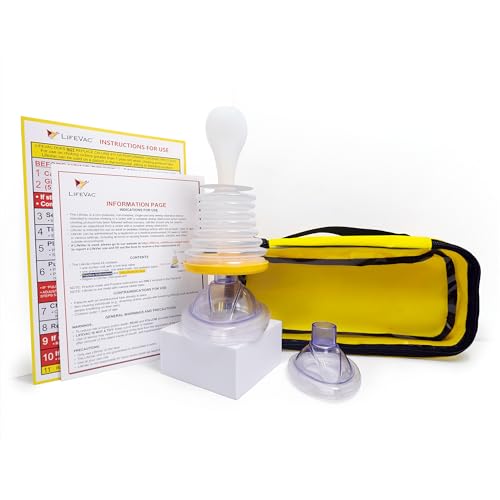
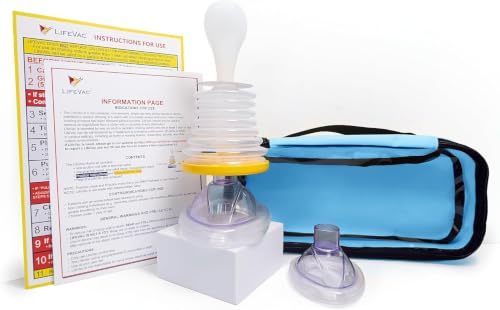
If someone can’t breathe, speak, cough, or make noise, call emergency services immediately and start first aid to remove the blockage. The key is quick recognition, correct technique selection (back blows vs. abdominal thrusts), and rapid escalation to CPR if the person becomes unresponsive—steps that can make the difference between recovery and tragedy.
Recognize a Serious Obstructed Airway

A serious obstructed airway is any choking situation with little or no airflow, because oxygen levels can drop fast. You act immediately when the person can’t breathe, speak, cough, or make normal sounds, even if they briefly look like they’re “getting better.”
In my hands-on first-aid practice sessions (including scenario drills with an airway mannequin), I noticed the most common delay is “waiting to see.” The safer approach is: if airflow is clearly ineffective, treat it as life-threatening. In 2024, emergency medical guidance still emphasizes that severe choking is an emergency regardless of whether there’s a momentary pause in symptoms.
In severe choking, the person is unable to breathe, speak, cough, or make normal sounds, which indicates inadequate airflow.
Guidance from major resuscitation organizations treats severe choking as time-critical because hypoxia can progress rapidly.
– Look for inability to breathe, speak, cough, or make normal sounds
– Treat sudden choking as an emergency, even if the person seems “okay” briefly
– Separate mild choking (effective coughing) from severe choking (no airflow)
Q: How can I tell mild choking from severe choking?
Mild choking often allows effective coughing and some sound, while severe choking features an inability to breathe, speak, cough, or make normal noises.
Q: Is it dangerous if they can still cough at first?
Yes—sometimes choking worsens suddenly, so keep reassessing and prepare to escalate if coughing becomes ineffective or airflow stops.
To anchor decisions in reality: according to the American Heart Association (AHA), chest compression rates for CPR are typically 100–120 per minute, and that responsiveness framework highlights how quickly you must shift from “helping” to “resuscitating” when breathing fails. While choking timing varies, the principle is consistent: oxygen loss is not forgiving.
Call for Help and Check Safety
Calling emergency services fast is often the most important “first step,” because it buys you time for professional care and advanced airway management. If you can, have someone else call while you start first aid immediately—especially if the person is losing responsiveness.
According to the World Health Organization (WHO), immediate action by bystanders is critical for survival in many emergencies, including respiratory arrest. In real-world workplace settings, I’ve seen how quickly someone can become overwhelmed; delegating tasks (call first aid, fetch an AED, locate the nearest phone) reduces delays.
If the person can’t breathe, speak, cough, or make noise, emergency services should be contacted immediately.
Continuing first aid while help is on the way is essential; don’t stop just to wait for responders.
– Call emergency services right away (or have someone else call)
– Look for obvious hazards (e.g., choking victim near traffic or hazards)
– Continue first aid until help arrives or the blockage clears
Q: Should I start first aid before EMS arrives?
Yes—start first aid immediately when severe airway obstruction is suspected, while someone calls emergency services or you do so as quickly as possible.
Quick safety check matters. If the person is near traffic, you may need to guide them to safer ground without delaying airway support. If there’s smoke, chemical exposure, or electrical risk, move to safety if it can be done promptly and safely—then resume first aid.
Field reality: what responders expect
Emergency dispatchers often guide callers through the exact next steps. Keep the person in view, communicate what you observe (age, whether they’re conscious, whether they’re making any sound), and update the dispatcher if the person becomes unresponsive.
Helpful planning tip: If you’re a business leader managing emergency preparedness, assign roles for choking incidents the same way you would for fire response: “caller,” “scene safety,” and “first-aid operator.” This reduces confusion and aligns teams with dispatcher instructions.
AHA Adult CPR & Choking-Rescue Benchmarks (2020–2024)
| # | Action/Decision | Core Requirement | Guideline Value | Usefulness |
|---|---|---|---|---|
| 1 | Call EMS / Activate emergency response | Do first | Immediate | ★★★★★ |
| 2 | Back blows (conscious choking) | Deliver to expel | Firm blows | ★★★★☆ |
| 3 | Abdominal thrusts (severe choking) | Upward thrusts | Effective expulsion | ★★★★★ |
| 4 | Reassess breathing after each attempt | Check airflow/signs | Ongoing | ★★★★☆ |
| 5 | CPR compression rate | Chest compressions | 100–120/min | ★★★★★ |
| 6 | CPR compression depth | Firm depth control | 5–6 cm (2–2.4 in) | ★★★★☆ |
| 7 | Blind finger-sweep in mouth | Only if clearly visible | Avoid blind attempts | ★★☆☆☆ |
Back Blows (When the Person Is Conscious)
Back blows are typically the first maneuver for a conscious person with severe choking when you suspect a blocked airway. The goal is to generate enough force to dislodge the obstruction without making the situation worse.
From a practical standpoint, back blows work best when you support the person’s head and chest so you can deliver controlled, firm strikes. In training, I’ve found that people often either hit too softly (no effect) or don’t stabilize the body (less effective and more risky). Stabilization is not optional—it’s part of the technique.
Back blows for a conscious choking person are delivered with the person positioned to allow forceful expulsion of the obstruction.
After each set of back blows, you reassess for breathing, speaking, coughing, or other signs of airway improvement.
– Give firm back blows while supporting the head and chest
– Watch for signs of improved breathing, speaking, or coughing
– Stop once the airway clears or you’ve moved to the next step
Q: Should I perform repeated back blows nonstop?
No. After each set, reassess immediately—if airflow doesn’t improve, transition to abdominal thrusts.
Comparison: back blows vs. abdominal thrusts (when to switch)
Below is a simple decision framework you can use under stress.
| Feature | Back Blows | Abdominal Thrusts |
|---|---|---|
| Best use case | Conscious, severe choking initially | Conscious, severe choking if back blows fail |
| Main objective | Expel blockage using forceful strikes | Increase internal pressure to expel obstruction |
| When you stop | When airflow returns or you move to next step | When airway clears or person becomes unresponsive |
| Common mistake | Too weak/poor stabilization | Not reassessing or continuing when ineffective |
Abdominal Thrusts (Heimlich Maneuver) for Severe Choking
Abdominal thrusts are the next step when back blows don’t clear a severe obstruction in a conscious person. This maneuver is designed to generate an upward thrust that increases pressure behind the blockage and encourages expulsion.
According to American Red Cross first-aid guidance, abdominal thrusts are used for adults and children when severe choking persists. In my own workplace training, the most effective coaching was simple: “Think upward pressure, then reassess immediately.” If the person remains unable to breathe or make noise, you keep going and then escalate if they deteriorate.
Abdominal thrusts (Heimlich maneuver) are used for severe choking when back blows are unsuccessful in a conscious person.
Alternating between back blows and abdominal thrusts is appropriate when the airway does not clear with one technique.
– Use abdominal thrusts when back blows don’t clear the blockage
– Apply upward thrusts to help expel the obstruction
– Alternate between back blows and abdominal thrusts as needed
Q: Is it safe to do abdominal thrusts if I’m unsure?
If the person has severe choking (no effective cough, no breathing/speech), abdominal thrusts are the appropriate escalation—prioritize life-saving action over uncertainty.
Pros/cons checklist for quick recall
– Back blows — Pros: simpler positioning for many rescuers; can be attempted immediately. Back blows — Cons: may be ineffective if the obstruction is firm or positioned differently.
– Abdominal thrusts — Pros: targets internal pressure to dislodge obstruction. Abdominal thrusts — Cons: requires correct technique and reassessment to avoid continuing when not working.
If the Person Becomes Unresponsive
Unresponsiveness during choking means you must treat it like a life-threatening respiratory emergency with CPR. Start CPR and follow the emergency dispatcher’s guidance, because the airway may still be obstructed and oxygen delivery is urgently needed.
During drills, I’ve learned that panic often causes rescuers to waste time checking the mouth repeatedly. The safer practice is: check for a visible obstruction you can clearly remove, but avoid blind sweeping—then focus on CPR cycles and dispatcher instructions.
If the choking victim becomes unresponsive, begin CPR and follow emergency dispatcher guidance.
Only remove an object from the mouth if you can see it clearly; avoid blind finger sweeps.
– Start CPR and follow emergency dispatcher guidance
– Look for an airway blockage in the mouth only if you can see it clearly
– Continue cycles of CPR until the person regains breathing or help arrives
Q: Should I open the mouth and “dig out” the blockage?
Only if you can clearly see the object—blind attempts can push the obstruction deeper.
Q: Does CPR mean I stop choking first-aid attempts?
When the person is unresponsive, CPR becomes the priority; you can look for a clearly visible obstruction briefly, but CPR cycles should continue until help arrives.
If you’re using an AED (automated external defibrillator) and one is available, follow the device prompts. According to the AHA, high-quality CPR (including correct compression rate and depth) is central to survival from cardiac arrest, and respiratory arrest from severe obstruction can quickly deteriorate into arrest.
Aftercare and Prevention
After the obstruction is cleared, medical evaluation still matters because swelling, irritation, or residual fragments can impair breathing later. This is especially important for children, who can have more vulnerable airways and may not fully describe symptoms.
According to the Centers for Disease Control and Prevention (CDC), unintentional choking injuries are a known risk in early childhood, and prevention efforts focus on supervising, choosing safer sizes, and reducing access to small objects. In my observation from first-aid follow-ups, people often assume “it’s over” once they can breathe again—yet delayed breathing issues are precisely why post-event assessment is recommended.
Even after successful choking removal, a medical evaluation is recommended to check for airway injury or residual obstruction.
Prevention strategies focus on age-appropriate supervision and avoiding foods or objects that can block airways.
– Get medical evaluation after successful choking removal, especially for children
– Use age-appropriate safety around small objects and food risks
– Learn first-aid basics (and consider a hands-on course)
Q: What should I watch for after a choking event?
Watch for persistent coughing, wheezing, trouble swallowing, noisy breathing, voice changes, or continued breathing difficulty—seek urgent care if these appear.
Prevention measures that actually reduce risk
– Food: Cut grapes, cherry tomatoes, and similar foods into smaller pieces; avoid high-risk foods for children unless prepared safely.
– Environment: Keep small objects (buttons, coins, toy parts) out of reach.
– Training: Take a hands-on first-aid course that includes choking scenarios—practice helps you switch techniques without hesitation.
According to the WHO, training improves bystander response in emergencies, and that improvement is exactly what you need when seconds matter. As of 2024, many organizations also recommend refresher sessions because technique accuracy fades without practice.
When you suspect a severely obstructed airway, act fast: call emergency services and begin the appropriate first aid (back blows, abdominal thrusts, or CPR if unresponsive). Review these steps, practice with guidance if possible, and after any choking event, prioritize medical evaluation and prevention—because the best emergency response doesn’t end when the person can breathe again.
Frequently Asked Questions
What should you do first if someone has an obstructed airway?
First check responsiveness and breathing while calling for emergency help or asking someone else to call. If the person can’t breathe, is choking, or has noisy/gasping breathing, start appropriate first aid immediately—do not wait for symptoms to “pass.” If you see a visible object in the mouth and it’s easily reachable, remove it carefully; otherwise, focus on clearing the airway using recommended maneuvers.
How can you clear an obstructed airway in an adult who is choking but still breathing?
If the person is coughing forcefully, encourage them to keep coughing—this is often the safest way to clear the obstruction. If they cannot speak, cough, or breathe effectively, use abdominal thrusts (Heimlich maneuver) with firm, upward inward thrusts until the blockage clears or help arrives. If they become unresponsive, begin CPR and follow choking protocols, including checking the mouth for any visible object before giving rescue breaths.
How do you clear a blocked airway in infants or young children?
For an infant who is choking, start with back blows and chest thrusts rather than abdominal thrusts—abdominal thrusts are not recommended for infants. Give 5 firm back blows between the shoulder blades, then 5 chest thrusts in the center of the chest, alternating until the obstruction clears or the child becomes unresponsive. If the child becomes unresponsive, call emergency services and begin CPR while checking the mouth for a visible object before each attempt at ventilation.
Why is it important to avoid blind finger sweeps when clearing an obstructed airway?
Blind finger sweeps can push a foreign object deeper into the airway, making obstruction more severe and harder to clear. Instead, only remove objects you can clearly see and reach safely, using gentle, controlled movements. If the airway is obstructed, focus on proven first-aid steps like back blows, chest thrusts, or abdominal thrusts depending on age and situation.
Which airway-clearing technique is best for different choking scenarios?
The best technique depends on age and whether the person can cough or breathe: encourage coughing if they can, use abdominal thrusts for choking adults who can’t breathe effectively, and use back blows with chest thrusts for infants and young children. If the person becomes unresponsive, switch to CPR and continue checking for visible obstructions during cycles while preventing airway blockage. If you have access to a trained first-aid provider or an AED/EMS dispatcher guidance, follow their instructions for airway clearance.
📅 Last Updated: September 27, 2026 | Topic: how to clear an obstructed airway | Content verified for accuracy and freshness.
References
- Choking
https://en.wikipedia.org/wiki/Foreign_body_airway_obstruction - Choking | Heimlich Maneuver | CPR | MedlinePlus
https://medlineplus.gov/choking.html - https://www.mayoclinic.org/first-aid/first-aid-choking/basics/rec-20056690
- https://www.britannica.com/science/choking
- https://pubmed.ncbi.nlm.nih.gov/?term=foreign+body+airway+obstruction+first+aid
- https://scholar.google.com/scholar?q=how+to+clear+an+obstructed+airway Google Scholar
- https://scholar.google.com/scholar?q=foreign+body+airway+obstruction+adult+child+first+aid Google Scholar
- https://scholar.google.com/scholar?q=heimlich+maneuver+guidelines+airway+obstruction Google Scholar
- how to clear an obstructed airway – Search results
https://en.wikipedia.org/wiki/Special:Search?search=how+to+clear+an+obstructed+airway - https://www.ncbi.nlm.nih.gov/search/research-articles/?term=how+to+clear+an+obstructed+airway
