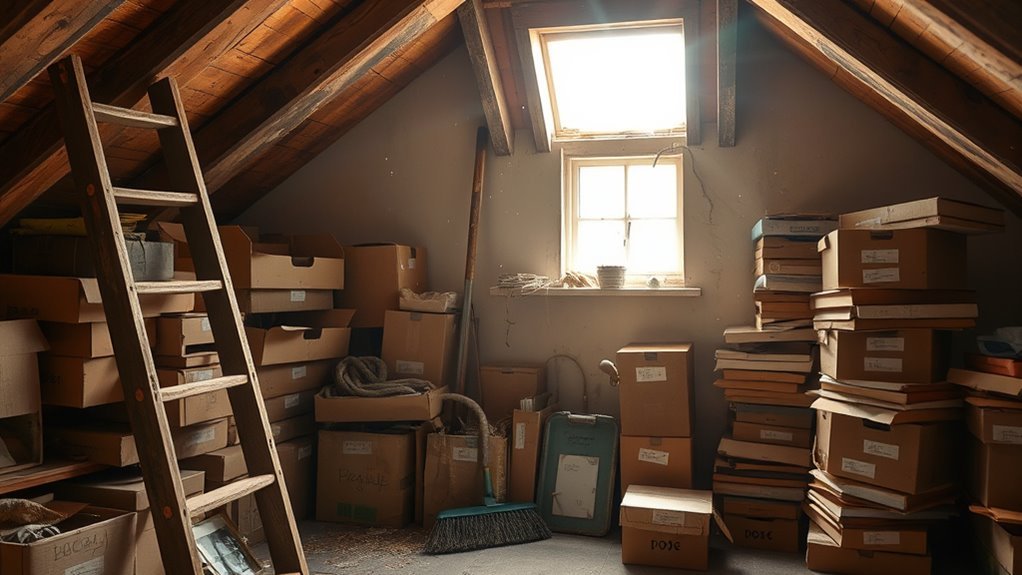
Top 10 Tips for Cleaning Attic
Start by evaluating your attic for safety hazards like exposed nails or pests, then gather supplies such as a broom, HEPA vacuum, and storage bins. Wear gloves, goggles, and a mask to protect yourself. Remove large debris and sort items to keep, donate, or toss. Check for signs of damage or pests, organize what remains, and improve ventilation and lighting. Finally, set a regular cleaning schedule to maintain the space well. Keep going to uncover more ways to optimize your attic cleaning.
Assess the Attic for Safety Hazards
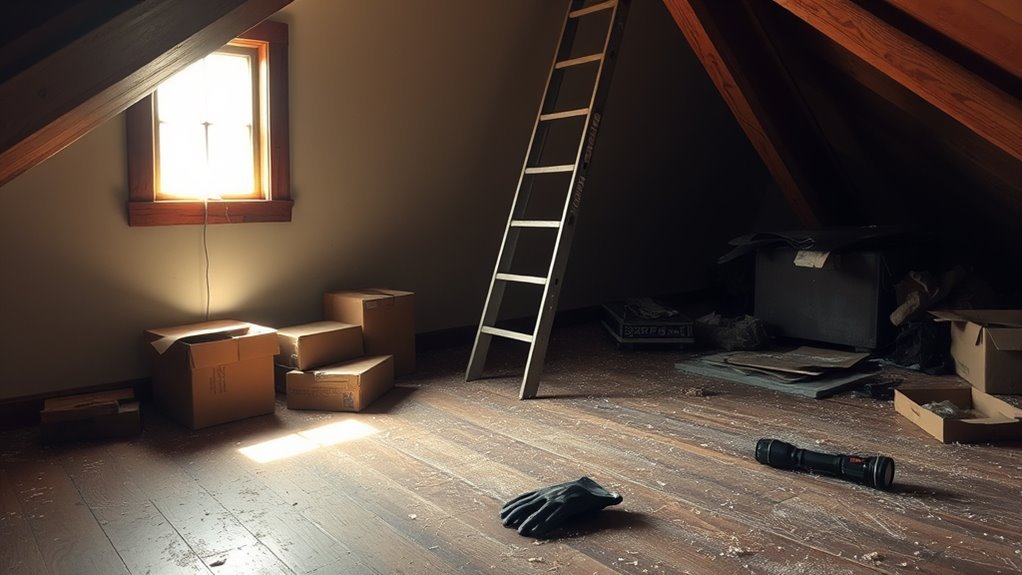
Before you begin cleaning, you’ll want to carefully assess the attic for any safety hazards. Attic safety is essential to guarantee you stay free from injury while reclaiming your space. Start with hazard identification—look for exposed nails, weak floorboards, or loose insulation that could cause harm. Check for signs of pests or mold, as these can affect your health and complicate your cleaning efforts. Also, be mindful of low-hanging beams or electrical wiring that might pose risks. By taking time for a thorough inspection, you’re setting yourself up for a smooth, safe cleaning process. Remember, your freedom to work efficiently depends on a safe environment, so don’t rush this important first step.
Gather Essential Cleaning Supplies
Before you start cleaning, make sure you have the right tools like a sturdy broom, vacuum, and dustpan. Don’t forget protective gear such as gloves, a mask, and safety goggles to keep yourself safe. Having these essentials ready will make the job smoother and safer.
Must-Have Cleaning Tools
Anyone tackling attic cleaning knows the importance of having the right tools on hand. To truly liberate your space, start with essential cleaning equipment: a sturdy broom, a reliable vacuum with a HEPA filter, microfiber cloths, and a dustpan. These basics help you swiftly remove dust and debris, setting the stage for freedom from clutter. Don’t forget storage bins and labels—they’re key for organizing tips that keep your attic neat long after cleaning. A step ladder will also give you easy access to hard-to-reach corners. With these tools ready, you’ll cut through the mess efficiently, leaving the attic open and inviting. Having the proper cleaning gear isn’t just practical—it’s your first step toward reclaiming your space.
Protective Gear Essentials
Three key pieces of protective gear will keep you safe while cleaning your attic: gloves, a dust mask, and goggles. Start by slipping on durable protective gloves to shield your hands from sharp objects, insulation fibers, and dirt. Next, put on a reliable dust mask to prevent inhaling dust, mold spores, or allergens that often lurk in attic spaces. Don’t forget safety goggles—these will protect your eyes from debris and irritants as you move around. Wearing the right gear lets you move freely and confidently, without worrying about cuts, respiratory issues, or eye injuries. Gear up smartly to keep your attic-cleaning experience safe and hassle-free, so you can enjoy the freedom of a clutter-free, fresh space above your home.
Wear Protective Gear Before Starting

Before you start cleaning your attic, make sure you put on essential protective gear like gloves, a mask, and goggles. This equipment helps shield you from dust, insulation fibers, and potential allergens. Taking these safety precautions will keep you safe and comfortable throughout the process.
Essential Protective Equipment
Although it might seem like a simple task, cleaning your attic can expose you to dust, mold, and other hazards, so you’ll want to wear the right protective gear before you begin. Essential protective equipment keeps you safe and lets you work freely without worry.
Here’s what to gear up with:
| Equipment | Purpose | Tip |
|---|---|---|
| Protective gloves | Shield hands from irritants | Choose durable, snug fit |
| Safety goggles | Protect eyes from dust | Use anti-fog lenses |
| Respirator mask | Filter harmful particles | Pick one rated for mold spores |
Wearing these guarantees you’re protected and ready to tackle your attic cleanup with confidence and freedom.
Safety Precautions Before Cleaning
Since attic spaces can harbor dust, mold, and other hazards, you should always wear protective gear before you start cleaning. Gloves, a dust mask, and safety goggles protect you from irritants often trapped in attic insulation. Wearing long sleeves and pants shields your skin from sharp debris or fiberglass particles that might be lurking. Beyond gear, electrical safety is essential—turn off power to the attic to avoid shocks when moving around exposed wiring or outlets. Check for loose wires or damaged insulation before stepping in. Taking these precautions allows you to clean freely and confidently, knowing you’re protected from common attic dangers. Prioritizing your safety guarantees your attic cleanup is effective without compromising your well-being or freedom to tackle the task at your own pace.
Remove Large Debris and Clutter
Start by clearing out any large debris and clutter from your attic to create a safe and open workspace. You’ll want to move through the space with purpose, organizing boxes in a way that makes sense to you. Don’t hesitate to discard old items that no longer serve a purpose or hold value. This step is all about freeing up space and eliminating obstacles that could slow you down or cause accidents. As you remove big items, keep pathways clear so you can move around easily without feeling trapped. Remember, the goal is to regain control of your attic, turning it from a chaotic storage area into a place where you can breathe and think freely. Removing clutter is your first step toward that freedom.
Sort Items Into Keep, Donate, and Dispose

Begin sorting through your attic items by creating three distinct piles: keep, donate, and dispose. Using clear sorting strategies, decide what truly adds value to your life and what’s just holding you back. Keep only what you need or cherish, allowing yourself freedom from clutter. For items in good condition but no longer needed, explore donation options—local charities, shelters, or thrift stores can benefit from your generosity and give your belongings a new purpose. Finally, responsibly dispose of broken or unusable items to free up space and clear your mind. This simple, focused approach not only streamlines your attic but also empowers you to reclaim control over your environment and enjoy a more liberated living space.
Vacuum Dust and Debris Thoroughly
Grab your vacuum and tackle every corner of your attic to remove dust and debris that have accumulated over time. Choosing the right vacuum type is key—opt for one with strong suction and a HEPA filter to capture fine dust particles and improve air quality. A handheld or cordless vacuum offers freedom to move around easily in tight spaces, while a canister vacuum with attachments can reach crevices and rafters. Focus on all surfaces: floors, beams, and insulation areas. Dust removal isn’t just about cleanliness; it helps maintain your attic’s condition and prevents allergens from circulating in your home. By thoroughly vacuuming, you’re reclaiming your space and creating a safer, fresher environment without hassle.
Check for Signs of Pests and Damage
As you clean your attic, keep an eye out for common pest indicators like droppings or nests. Also, watch for structural damage such as cracks, water stains, or chewed wires. Regular inspections can help you catch these issues early and prevent costly repairs.
Common Pest Indicators
Spotting signs of pests early can save you a lot of trouble during your attic cleaning. When you’re up there, keep your eyes peeled for common pest indicators that reveal unwanted guests. Look out for:
- Pest droppings scattered around corners or near stored items
- Chew marks on wood, insulation, or wiring, hinting at rodents or insects
- Nests made from shredded materials tucked away in hidden spots
- Strange odors or sounds, like scratching or scurrying, signaling active pests
Catching these signs lets you act fast to protect your attic’s freedom from infestation. Don’t ignore subtle clues—your vigilance keeps your space safe, clean, and pest-free, making your attic a place you can truly enjoy.
Structural Damage Signs
Several key signs can help you identify structural damage in your attic that might be linked to pests or other issues. During your attic inspection, look for chewed wood, cracked beams, or sagging areas in the flooring. These could indicate termite or rodent activity. Also, pay attention to water stains or mold growth, which might compromise the wood’s integrity. Droppings, nests, or unusual debris often hint at ongoing pest problems that need addressing. A thorough damage assessment helps you pinpoint weak spots that could worsen if ignored. Catching these signs early lets you act fast, protecting your home’s structure and maintaining your freedom from costly repairs. Keep your attic safe by staying vigilant and addressing damage as soon as you find it.
Preventative Inspection Tips
When you inspect your attic regularly, you can catch early signs of pests and damage before they become serious problems. Keeping your attic insulation in good shape is key—it not only saves energy but also deters unwanted critters. Here’s what you should look for to stay ahead:
- Check for droppings, nests, or gnaw marks indicating pests.
- Look for damaged or compressed attic insulation that could signal moisture or animal activity.
- Inspect wooden beams and supports for cracks, rot, or chew marks.
- Verify vents and screens are intact to support pest prevention.
Organize Stored Items Efficiently
Although organizing stored items in your attic might seem challenging, having a clear system can save you time and frustration later. Start by choosing smart storage solutions like stackable bins or shelving units that maximize your space. Be intentional about grouping similar items together—seasonal decorations, tools, or keepsakes—so you can find what you need without digging through piles. Efficient labeling is key; use clear, durable labels that tell you exactly what’s inside each container. This way, when you want to grab something, you won’t waste time guessing or unpacking everything. Keeping your attic orderly not only frees up space but also gives you peace of mind, so you can enjoy a clutter-free home and the freedom to focus on what truly matters.
Improve Attic Ventilation and Lighting
Once you’ve got your attic neatly organized, it’s important to turn your attention to improving ventilation and lighting. Proper airflow and brightness create a comfortable, healthy space where you’re free to move and store without hassle. Consider these tips:
- Install or upgrade ventilation systems to keep air fresh and prevent moisture buildup.
- Add vents or fans to enhance airflow, reducing heat and humidity.
- Maximize natural lighting by installing skylights or larger windows.
- Use energy-efficient LED lights to brighten dark corners without raising your energy bills.
Improving ventilation systems and boosting natural lighting not only protects your belongings but also makes your attic a more inviting, usable area. You’ll enjoy the freedom of a well-lit, well-ventilated space—perfect for whatever you choose to do up there.
Schedule Regular Maintenance and Cleaning
To keep your attic in top shape, you’ll need to schedule regular maintenance and cleaning. Creating an attic cleaning schedule helps you stay ahead of dust buildup, pest issues, and potential damage. Aim to check your attic at least twice a year—spring and fall are perfect times for seasonal maintenance tips. During these visits, clear debris, inspect insulation, and verify ventilation systems work properly. Keeping this routine not only preserves your attic’s condition but also frees you from unexpected problems that can limit your home’s comfort. By following a consistent attic cleaning schedule, you maintain control over your space, enjoy peace of mind, and extend your attic’s lifespan. Freedom starts with a well-kept home, and your attic deserves that attention.
Frequently Asked Questions
How Do I Insulate My Attic Properly?
To tackle attic insulation thoroughly, you’ll want to think about both thickness and thermal barriers. Start by selecting suitable insulation types—fiberglass, cellulose, or spray foam—and spread them evenly for effective energy efficiency. Don’t forget proper ventilation; it’s essential to prevent moisture buildup and maintain air freedom. Make certain vents are clear and balanced so your attic breathes well. With careful care, you’ll create a cozy, cost-cutting, climate-controlled space that feels like freedom.
What Is the Best Time of Year to Clean an Attic?
The best time for you to clean your attic is during spring cleaning or fall maintenance when the weather is mild and comfortable. Spring’s fresh air helps you air out dust and allergens, while fall lets you prep for winter by checking insulation and sealing leaks. Choosing these seasons gives you freedom from extreme temperatures and makes the task less of a hassle, so you can enjoy a clean, organized attic with ease.
Can Mold Grow in Attics Without Visible Leaks?
You might think attics are mold-free fortresses unless a leak floods the place, but mold can sneak in without a single drip in sight! Poor attic ventilation and high humidity can create the perfect hidden playground for mold to thrive. To keep your freedom from musty, moldy prisons, focus on mold prevention by ensuring proper airflow and controlling moisture. That way, your attic stays fresh and free, no invasive mold parties allowed!
How Do I Prevent Ice Dams on My Roof?
To prevent ice dams on your roof, focus on proper ice dam prevention by ensuring good roof maintenance. You’ll want to keep your attic well-insulated and ventilated so warm air doesn’t escape and melt snow unevenly. Clearing gutters and downspouts helps water flow freely, reducing buildup. By staying proactive with these steps, you’ll protect your home from damage and keep your freedom to enjoy winter without worry.
What Are Energy-Saving Tips for Attic Spaces?
You’ll want to focus on attic ventilation to keep your space cool in summer and reduce heat loss in winter. Proper airflow prevents moisture buildup and improves energy efficiency. Adding thermal barriers like insulation helps maintain consistent temperatures, so your heating and cooling systems don’t work overtime. By combining good ventilation with effective insulation, you’ll enjoy lower energy bills and more freedom to live comfortably without worrying about your attic draining your resources.