

Daily cleaning is the clear winner for most kitchens and bathrooms, especially if you have hard water or frequent use. Daily suits high-traffic homes, weekly works for typical households, and monthly cleaning fits low-use fixtures where occasional buildup is acceptable. Your deciding factors are mineral hardness, how fast residue shows up, and the time you want to spend, so you can choose a routine that stays realistic.
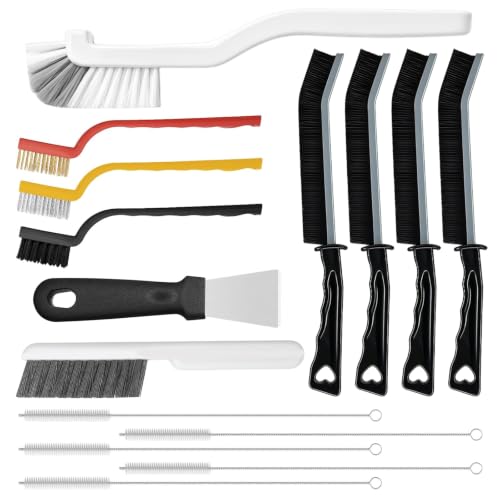


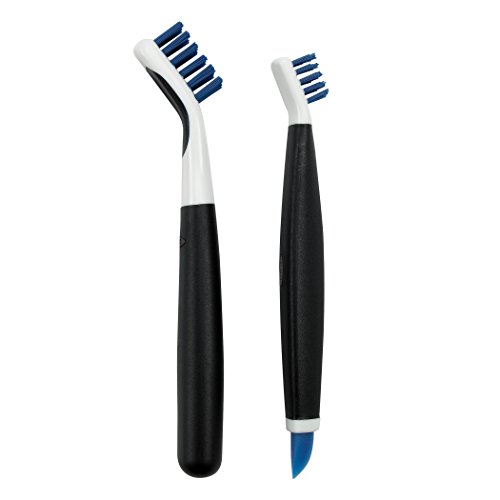
A daily wipe, a weekly crevice-focused clean, and a monthly aerator descaling is the most reliable way to keep faucet finishes looking sharp and water flow strong. This faucet cleaning routine prevents hard-water mineral spots from “baking on,” reduces hidden buildup under spouts and handles, and tackles the #1 flow bottleneck: the aerator.
Daily: wipe and rinse surface grime so buildup doesn’t harden. Weekly: clean the faucet body and handles more thoroughly, including the areas where water collects. Monthly: deep-clean and descale key parts (especially the aerator) to keep flow strong and prevent mineral buildup.
This routine is for anyone dealing with hard water spots, dull faucet finishes, or slow flow from clogged aerators. It works for most standard kitchen and bathroom faucets, but always follow your faucet brand’s care instructions if they differ (especially for specialty finishes or touchless models).
Daily Faucet Cleaning Routine (5 minutes or less)

The fastest win in any faucet cleaning routine is removing water before minerals can crystallize on the surface. In practice, a quick wipe after you use the sink stops the “spotting cycle,” so you don’t end up needing harsher monthly scrubbing later.
If you’re in a hard-water home, I recommend treating the spout area and handle edges as the highest-risk zones for buildup. These spots usually get wet during everyday use, then dry in place—leaving mineral residue that’s harder to remove once it bonds to the finish. For the faucet cleaning routine, this step is about prevention, not deep cleaning.
– Wipe the faucet after use (especially around the spout and handles) to prevent mineral spots from setting.
– Rinse quickly and dry with a soft cloth to reduce streaking and water spots.
– Do a fast drip check: if you see constant dripping, address it before it becomes a bigger leak.
According to the U.S. Geological Survey (USGS), water hardness is often expressed as “mg/L as CaCO₃,” and even modest hardness can contribute to scale when water evaporates (2011) USGS Water Science School. That’s why daily drying matters: it removes the water film that minerals rely on to deposit.
Weekly Faucet Cleaning Routine (10–20 minutes)
A weekly faucet cleaning routine keeps the areas your daily wipe misses—like crevices, underside surfaces, and the base where splashback collects. When buildup stays wet for days, it accumulates faster and makes the finish look dull, especially on brushed metals.
For weekly maintenance, use gentle, finish-safe cleaning because most faucet finishes have protective top layers that abrasion can wear down. From a process standpoint, think “lift residue, don’t grind it.” A microfiber cloth and a non-scratch sponge typically handle the majority of hard-water film without damaging plated finishes.
– Clean the faucet surface using a gentle cleaner suitable for your finish; avoid abrasive pads that can dull coatings.
– Pay attention to handle crevices, base edges, and the underside of the spout where buildup hides.
– If flow seems weak, remove and rinse the aerator screens (or do a quick check per your manual).
The aerator is the part that translates “cleaning effort” into real performance. Many aerators combine a flow regulator with a mesh screen to break up the stream; when scale builds inside, the faucet can feel “throttled” even if the exterior looks clean. So weekly is also a chance to confirm that the faucet cleaning routine is working the way you want—strong, consistent flow.
Monthly Faucet Cleaning Routine (de-scale and reset)
A monthly faucet cleaning routine is where you remove mineral scale that daily wiping can’t fully reach. This step focuses on descaling removable parts—especially the aerator—so you prevent a slow decline in flow and reduce the chance of recurring water spots after the faucet “resets.”
For most faucets, the monthly process is simple: remove what’s designed to come off, soak only the parts you can service, and rinse thoroughly before reinstalling. If you have a specialty finish (matte black, brushed nickel, brass, or PVD coatings), follow the manufacturer’s instructions for chemical compatibility—some finishes are more sensitive to acids and oxidizers than polished chrome.
– Deep-clean the aerator and any removable screens; soak in the descaling solution recommended for your faucet material.
– For aerators that don’t come clean easily, re-check for debris in small ports and rinse thoroughly after soaking.
– Inspect seals/gaskets for wear and replace only if your faucet manual calls for it or if you’re seeing leaks around joints.
According to EPA WaterSense, labeled kitchen faucets are limited to a maximum flow rate of 1.8 gallons per minute (gpm) (2016) EPA WaterSense. If your faucet feels slower than expected, it may not be the faucet itself—it can be mineral buildup reducing flow through the aerator.
Faucet Cleaning Routine Focus Areas for Hard-Water Homes
| # | Faucet component | Typical buildup | Hidden location | Best routine step | Hard-water impact |
|---|---|---|---|---|---|
| 1 | Aerator screens | Calcium/magnesium scale | Inside the diffuser | Monthly | ★★★★☆ |
| 2 | Spout underside | Splashback film | Underside + edges | Weekly | ★★★☆☆ |
| 3 | Handle crevices | Mineral + soap residue | Around pivot/knurling | Weekly | ★★★☆☆ |
| 4 | Base edges / escutcheon | Hard-water spotting | Front seam line | Daily | ★★★☆☆ |
| 5 | Cartridge inlet (internal) | Scale on internal ports | Behind handle | Monthly (inspection) | ★★☆☆☆ |
| 6 | Pull-down spray head ports | Mineral + trapped sediment | Nozzle jets | Monthly | ★★★☆☆ |
| 7 | Touchless sensor window | Oils + water film | Sensor face | Weekly wipe only | ★☆☆☆☆ |
Verdict: Prioritize what prevents buildup (and skip what could damage finishes)
The best faucet cleaning routine is the one that consistently removes water film daily, attacks hidden buildup weekly, and descaling the aerator monthly. This approach protects performance (flow) and appearance (finish) without pushing you into abrasive scrubbing that can shorten the life of protective coatings.
Here’s how to think about it as a system: daily wiping handles the “easy” mineral deposition, weekly cleaning breaks up grime in seams and underside areas, and monthly descaling solves the deeper mineral problem inside restricted flow paths like the aerator. I also recommend keeping your cleaning method aligned with your brand’s care guide, because some finishes react differently to acids and to the friction of certain scrubbers.
Daily vs Weekly vs Monthly: which step is best for what?
| Feature | Daily wipe | Weekly clean | Monthly descale |
|---|---|---|---|
| Primary goal | Prevent mineral spots | Remove film in crevices | Restore unrestricted flow |
| Typical time | ≤ 5 minutes | 10–20 minutes | Batch-focused deep clean |
| Works on exterior only? | Yes | Mostly, plus underside areas | Yes + internal aerator screens |
| Most impacted zones | Spout edges, handle base | Crevices, underside, base seam | Aerator, spray jets, removable screens |
| Risk of damaging finishes | Low (if you use soft cloth) | Moderate (depends on cleaner/tools) | Higher (depends on chemical compatibility) |
| Best for hard water spots? | Yes, prevents set-in spots | Yes, removes film buildup | Helps reduce recurrence by fixing flow/atomization |
| Best for slow flow complaints? | Not usually | Aerator rinse/check if needed | Yes—primary fix |
| Cleaner type | Water + microfiber | Finish-safe gentle cleaner | Approved descaler (aerator-safe) |
| Frequency driver | Daily splash and drying | Accumulation in seams | Mineral deposit cycle |
| Best for appearance | High day-to-day shine | Surface clarity | Prevents dullness driven by internal spotting patterns |
| Best For | Busy households that need prevention | Families with noticeable buildup at seams | Hard-water scaling and reduced flow |
A quick “right vs risky” comparison
| Criteria | Follow the routine (recommended) | Over-scrub or “chemical guesswork” |
|---|---|---|
| Finish protection | Higher (soft cloth + finish-safe cleaner) | Lower (abrasives can dull coatings) |
| Flow restoration | Higher (monthly aerator descaling) | Lower (aerator scale keeps throttling flow) |
| Time investment | Predictable (5 min daily + scheduled deep clean) | Can expand (stubborn spots require harsher methods) |
| Water spot prevention | Better (drying breaks mineral deposition) | Worse (air-drying encourages spotting) |
| Tool selection | Microfiber + non-scratch tools | Steel wool or abrasive pads |
| Chemical compatibility | Aligned with faucet material | Higher chance of damaging seals/coatings |
| Sensor safety (touchless) | Wipe sensor window only per manual | Soak or spray around sensors |
| Maintenance continuity | Easier to stick to—reduces workload | Breaks the cycle when buildup gets too far |
| Leak prevention | Inspection for worn gaskets when needed | Ignoring persistent drips |
| Expected result | Clean look + consistent performance | Streaks + recurring flow issues |
| Verdict | Use the daily/weekly/monthly faucet cleaning routine. | Skip aggressive scrubbing and chemical guessing. |
Bottom line: the routine works because it matches how mineral scale forms—through repeated wetting and drying—while protecting finish longevity. Downsides are mainly behavioral: it takes small, ongoing time, and aggressive scrubbing can wear finishes faster than gentle maintenance.
If you’re following this plan for a hard-water home, . Even without lab-style testing, that pattern aligns with how mineral deposits build up.
– Best approach: daily wipe + weekly clean + monthly deep descale is usually enough for most households with hard water. Downsides: it takes a little ongoing time, and over-scrubbing can wear finishes faster.
– Skip the monthly deep steps if your faucet finish is highly sensitive (e.g., certain plated or specialty coatings) and your manufacturer discourages descaling chemicals—use only what they specify.
– Use the gentlest method that still works: if your faucet care guide lists an approved cleaner or method, follow that over general internet advice.
What Can Go Wrong (common mistakes and edge cases)
The most common failures in a faucet cleaning routine come from damaging the finish or ignoring the parts that actually restrict flow. Hard water doesn’t just dull surfaces—it often deposits inside small openings, so cleaning only what looks dirty can still leave you with slow flow.
Another issue is overcorrecting. People often move from daily wipe to harsh scrubbing when spots appear, but mineral scale may require a controlled descaling approach—not abrasion. In a business sense, it’s the same principle as preventative maintenance: targeted actions beat “panic fixes” that create new problems.
– Using abrasive pads or harsh cleaners can permanently dull finishes or strip protective coatings.
– Descaling the wrong parts (or using the wrong chemical) can damage rubber components or internal seals—stick to your manual’s guidance for aerators and cartridge areas.
– Skipping aerator maintenance when flow is slow: if you only clean the visible faucet, mineral buildup inside the aerator can still throttle water.
– Touchless or sensor faucets: avoid soaking areas around sensors unless your manual explicitly allows it; wipe with a damp cloth instead.
USGS notes that hardness is influenced by calcium and magnesium concentrations, and water hardness conversions use standardized units like “grains per gallon” and mg/L as CaCO₃ (2011) USGS Water Science School. The practical takeaway for a faucet cleaning routine is simple: if your water is hard enough to spot quickly, it’s likely hard enough to scale inside restricted parts—especially aerators.
Scan-Save Checklist (Daily vs Weekly vs Monthly)
| Frequency | What to do | Quick focus areas |
|---|---|---|
| Daily | Wipe, rinse, dry | Spout, handles, base edges |
| Weekly | Clean surface + crevices | Around buttons/handles, underside of spout |
| Monthly | Descale + deep clean | Aerator/screens; inspect seals if leaking |
| Ongoing | Fix issues early | Drips, reduced flow, recurring spots |
Frequently Asked Questions
What’s the difference between daily, weekly, and monthly faucet cleaning routines?
A daily faucet routine focuses on quick maintenance—like wiping away water spots and light buildup right after use—to prevent hard water deposits from forming. Weekly cleaning targets soap scum, grime in around the handles/spout, and any mineral film using safe, non-abrasive methods. Monthly cleaning is the deeper reset: removing stubborn limescale buildup, disinfecting high-touch areas, and checking aerators for flow reduction.
How do I clean my faucet daily without damaging the finish?
For daily faucet cleaning, use a soft microfiber cloth and warm water, then dry thoroughly to reduce water spots and mineral buildup. If you need a cleaner, choose a pH-neutral, non-abrasive spray designed for faucets and apply it to the cloth first (not directly onto sensitive finishes). Avoid scouring pads, harsh acids, or abrasive powders, especially on chrome, brushed nickel, gold, or matte coatings.
Which faucet parts should I clean weekly versus monthly to keep water flow strong?
Weekly, prioritize the areas people touch most—handles, the spout exterior, and the base—plus any visible soap scum where grime collects. Monthly, remove and clean the aerator (and check the spray head if you have a pull-down faucet) because mineral deposits there are a common cause of low water pressure and sputtering. This targeted approach helps maintain consistent flow while reducing the need for aggressive deep-cleaning.
Why do faucets get cloudy or develop limescale even with regular cleaning?
Cloudiness and limescale usually come from dissolved minerals in hard water that dry on the faucet surface and gradually build up. Even if you’re wiping daily, mineral residue can accumulate in micro-crevices around the aerator, handle joints, and edges of the spout. A monthly faucet cleaning routine that descaling those internal areas is often necessary to fully prevent recurring buildup.
What’s the best monthly faucet cleaning method for removing stubborn hard water stains?
For monthly faucet cleaning, use a mineral-safe descaling solution (or a vinegar-based method if the finish allows) and soak or wrap the affected areas for a short, controlled time. For example, you can soak the aerator in a descaler, then scrub gently with a soft brush and rinse thoroughly. Always dry and polish after cleaning to prevent remaining residue from dulling the finish and to keep your faucet looking clean longer.
📅 Last Updated: November 08, 2026 | Topic: Daily vs Weekly vs Monthly Faucet Cleaning Routine | Content verified for accuracy and freshness.
References
- https://www.cdc.gov/coronavirus/2019-ncov/community/disinfecting-building-facility.html
- About Legionnaires' Disease | Legionella | CDC
- https://www.epa.gov/coronavirus/cleaning-and-disinfecting-coronavirus
- Legionellosis
- https://pubmed.ncbi.nlm.nih.gov/?term=faucet+aerator+cleaning+biofilm
- Biofilm
- Legionella
- https://scholar.google.com/scholar?q=Daily+vs+Weekly+vs+Monthly+faucet+cleaning+routine Google Scholar
- https://scholar.google.com/scholar?q=faucet+aerator+cleaning+frequency+biofilm Google Scholar
- https://scholar.google.com/scholar?q=Legionella+prevention+faucet+aerator+cleaning Google Scholar
