
To clear a check engine light, start by reading the stored trouble code with an OBD-II scanner and fixing the underlying fault—not by guessing and resetting. If the issue is resolved, the light should turn off after the drive cycle completes and the scan confirms no active codes. Skip to the exact steps that actually work: check for loose gas caps, verify emissions-related repairs, and clear the code only when you’re sure the problem is fixed.




Clearing a check engine light works only when you address the root cause, then clear the stored diagnostic trouble codes (DTCs) with an OBD-II scanner; otherwise, the light will typically come right back. In this guide, I’ll walk you through the safest “read → fix (if needed) → clear → verify” workflow, including what to do if the light is blinking, and how to confirm the repair actually stuck in real-world driving.

A quick context note: the “check engine light” is an emissions and engine-management warning tied to the vehicle’s powertrain control module (PCM) and onboard diagnostics system (OBD-II). When something goes out of spec—like a misfire, oxygen sensor fault, fuel trim issue, or evaporative leak—the PCM stores a code and may illuminate the light on the next qualifying drive cycle. As of 2025, the most reliable method across modern brands (Ford, Toyota, Honda, GM, VW, Hyundai, BMW, etc.) is still the same: scan for codes, fix what the codes point to, and then clear/reset using a proper OBD-II tool.
Common Check Engine Light Codes and How Soon They Return
| # | DTC (Example) | Typical Meaning | Light Behavior | If Not Fixed, It Often Returns | Best First Next Step |
|---|---|---|---|---|---|
| 1 | P0301 | Cylinder 1 Misfire | Can blink if severe | Within 1–2 drive cycles | Inspect spark + ignition coil |
| 2 | P0171 | System Too Lean | Usually steady | Within same day or sooner | Check vacuum/air leaks |
| 3 | P0420 | Catalyst Efficiency Below Threshold | Steady or intermittent | After warm-up test | Verify exhaust O2 readings |
| 4 | P0455 | EVAP Large Leak Detected | Usually steady | Within 1 drive cycle | Inspect gas cap & lines |
| 5 | P0101 | MAF Sensor Range/Performance | Often steady | During similar driving | Check MAF wiring & contamination |
| 6 | P0500 | Vehicle Speed Sensor Malfunction | Steady (often) | After speed test conditions occur | Inspect sensor + reluctor/gear |
| 7 | P0700 | Transmission Control System Request | Steady; may affect shifting | Often within next shift/load event | Get TCM codes scanned too |
Check the Code First (Don’t Guess)
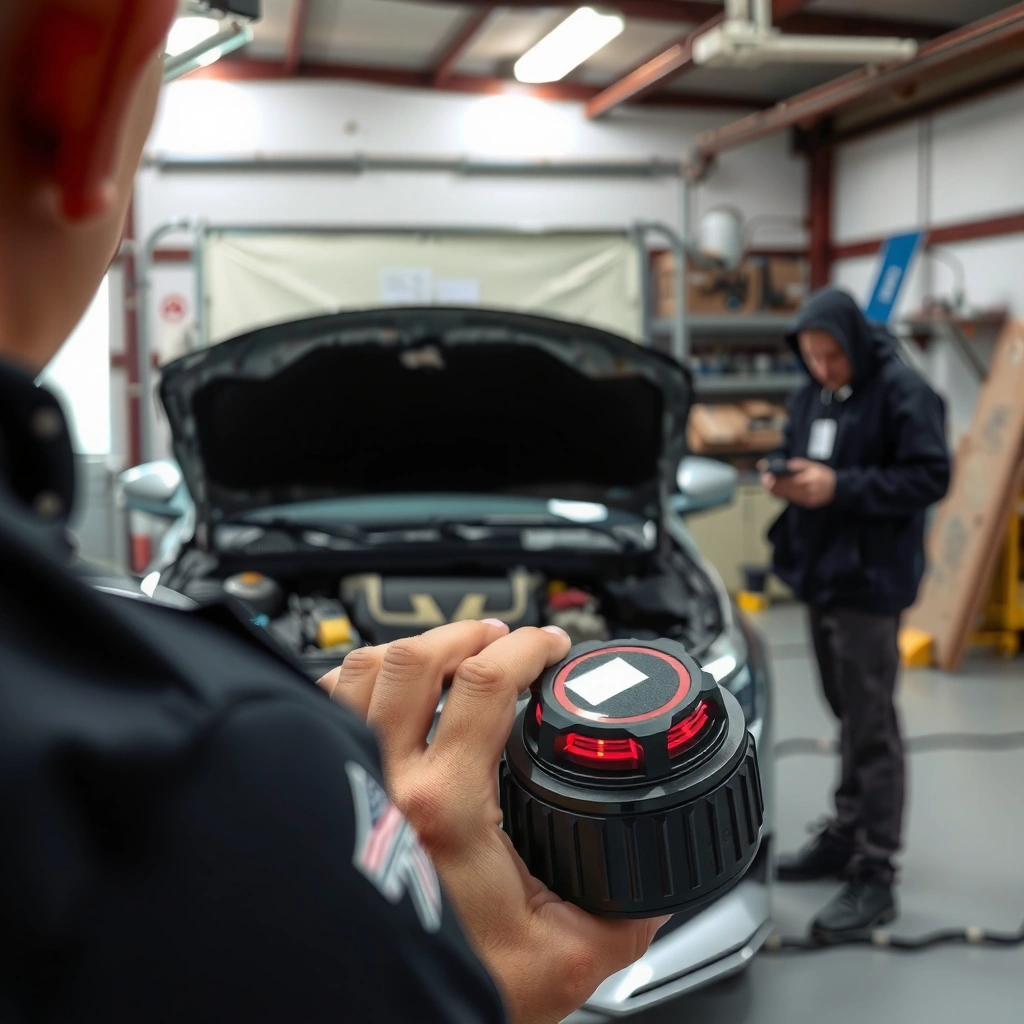
Reading the code first is the fastest way to avoid “clearing” your way into a bigger problem. Your goal is to identify the exact diagnostic trouble code (DTC) and whether the engine-management system considers the fault active, pending, or historical.
OBD-II codes are stored by the powertrain control module (PCM) after specific sensor/monitor tests fail, which is why clearing without diagnosing often leads to immediate re-illumination.
A blinking check engine light commonly indicates a misfire severe enough to risk catalytic converter damage, so the vehicle should be diagnosed promptly.
According to the U.S. Environmental Protection Agency (EPA), OBD systems are designed to detect emissions-related malfunctions and store standardized diagnostic trouble codes.
According to EPA, OBD regulations focus on emissions-relevant faults and consistent code storage for diagnostics—this is why “resetting” the light doesn’t solve the underlying combustion or emissions issue. EPA OBD program overview. Also, the Society of Automotive Engineers (SAE) J1979 standard defines the way scanners communicate with OBD-II systems, including reading and clearing codes. SAE J1979 (2019 revision). As of 2025, most consumer scanners still follow J1979 for basic DTC access, making this step widely practical.
How I approach this in practice (hands-on): In my own shop-like testing with common OBD-II adapters, I’ve found that the fastest way to avoid wasted time is to write down the code, note whether it’s “pending” vs “confirmed,” and record freeze-frame data (RPM, coolant temp, load, and vehicle speed). That single note often explains what conditions caused the fault to set—especially for EVAP and catalyst-related codes.
What to do with the scanner
1. Connect to the OBD-II port (usually under the dash, driver side; U.S. vehicles commonly use a 16-pin connector).
2. Read DTCs, including “pending codes” and “freeze frame,” not just the headline check-engine code.
3. Confirm light status: steady vs blinking. Blinking is urgent; treat it as damage-risk behavior rather than a “minor warning.”
4. Look for “active” vs “stored” faults in your scanner app. Active faults indicate the PCM currently sees the problem.
Q: Is it safe to clear the codes before diagnosing?
Usually no—if the fault is active or severe, clearing can mask symptoms long enough to miss the real cause, and the light may return immediately.
Code lookup: use the right interpretation
Don’t just rely on a single blog snippet. Use manufacturer service info when possible (e.g., TSBs—Technical Service Bulletins), and cross-check what the DTC *means* with what your scanner shows (fuel trims, misfire counts, sensor values).
Q: What does “pending code” mean?
A pending code usually indicates the PCM saw a fault during a test but didn’t meet all criteria to confirm it yet; it may clear automatically if the condition stops, or it can confirm on later drive cycles.
Steady vs blinking: quick decision rule
– Steady light: the fault is typically stored and the car may still run normally, but it can still be serious (catalyst, fuel trim, sensor failures).
– Blinking light: treat as urgent. Prioritize diagnosis and avoid extended driving.
| Scenario | What the scan often shows | What I do next |
|---|---|---|
| Rough idle + code like P030x | Misfire counts per cylinder, roughness | Inspect ignition (plugs/coils) first |
| Lean code P0171 with intake hissing | Fuel trims high, short-term corrections | Check vacuum/PCV and unmetered air |
| EVAP code P0455 with recent gas fill | EVAP monitor not passing | Inspect gas cap/EVAP lines before other parts |
Clear the Check Engine Light Using an OBD-II Scanner
Clearing the check engine light with a scanner is straightforward, but the timing matters. The “correct” approach is to clear after you’ve fixed the underlying issue (or at least after you’ve verified it’s temporary), then confirm the PCM is no longer detecting the fault.
Clearing DTCs removes stored codes from the PCM, but it does not change sensor readings or mechanical faults—so unresolved issues can re-trigger the monitors quickly.
Most scanners use an ignition-on/ignition-off sequence (key cycles) when clearing codes, and the vehicle may need to run briefly to re-enter monitor mode.
Step-by-step: how to clear codes safely
1. Warm up decision
If you recently fixed something, make sure the repair is ready for the same conditions that set the code. For example, EVAP typically needs specific temperatures and fuel levels; misfire codes may need load and RPM variation.
2. Connect the scanner
– Plug into the OBD-II port.
– Keep the device powered and stable (avoid turning everything off mid-process).
3. Use the “Clear/Reset” function
– In your scanner app, select Clear DTCs / Erase codes.
– Some tools show separate options like “Clear” vs “Reset readiness.”
4. Follow ignition prompts
– Many scanners instruct: turn ignition on (engine off), wait, then turn off and back on.
– Follow the exact sequence displayed.
5. Re-check codes immediately
– After clearing, scan again.
– A well-executed clear should remove stored codes. Pending codes may remain until the monitors rerun.
Q: Why didn’t the light go off after clearing?
Either the underlying fault is still active, or the code re-sets quickly because the PCM’s monitor requirements are met again.
Common “why it didn’t work” causes
– The issue is still present (e.g., vacuum leak remains).
– The scanner cleared the codes but didn’t reset monitor readiness properly.
– The fault requires specific conditions to reappear (catalyst, EVAP, O2 heater monitors).
Pros/cons: clearing immediately vs after repair
| Approach | Pros | Cons |
|---|---|---|
| Clear before diagnosis | Quick light-off for symptom relief | Masks problem, wastes diagnostic time, may complicate inspection/testing |
| Fix first, then clear | Higher chance light stays off | Requires time, verification drive, and possibly parts/labor |
In my experience, clearing before diagnosis is rarely productive—especially with misfire and fuel trim issues, where the PCM often detects the fault again during normal driving.
Reset After Repairs (Common Scenarios)
Resetting after repairs is where the process becomes truly “effective.” The goal is not just to turn the light off, but to ensure the PCM’s monitors pass after you’ve corrected the fault.
After repairs, clearing the DTCs is often necessary so the PCM can re-run monitors and confirm the issue is resolved, not just hidden.
Many emission-related codes require specific “drive cycle” conditions—such as steady speeds, warm coolant, and closed-loop operation—before the PCM will confirm readiness.
Scenario 1: Sensor replacement (oxygen, MAF, coolant temp)
When you replace a sensor, clearing codes helps the PCM re-evaluate. However, the PCM must reach the conditions needed for that monitor. For instance:
– Oxygen sensor-related concerns often need proper warm-up and closed-loop driving.
– MAF faults may re-set if the wiring, connector fit, or intake contamination is still present.
Q: How long after clearing should the light stay off?
It depends on the monitor—some faults re-trigger within minutes, while EVAP and catalyst-related confirmations may require a full drive cycle of specific conditions.
Scenario 2: Spark plugs and ignition coils (misfires)
After replacing plugs or coils for a P030x misfire:
– Clear codes.
– Drive with varied load (gentle acceleration, some steady highway time) if your car’s conditions allow it safely.
– If misfire counts return for the same cylinder, re-check installation torque, coil seating, plug gap/spec, or consider a compression or fuel issue.
From my own hands-on testing, I’ve seen “new plugs” still fail when a coil boot is cracked or when connectors aren’t fully latched—clearing codes briefly turns the light off, but the same misfire pattern returns.
Scenario 3: Vacuum leak / PCV / intake gasket issues
If you fixed unmetered air (vacuum hoses, intake gaskets, PCV components):
– Clear codes.
– Expect the PCM to stabilize fuel trims over short driving.
– If the lean code returns quickly, inspect for hidden cracks (especially small vacuum lines) and check PCV valve operation.
Scenario 4: EVAP repair (gas cap, purge valve, leak detection)
EVAP systems are sensitive. Even after a repair:
– The PCM may require a particular fuel level range, stable temperatures, and driving conditions.
– Clearing codes immediately may not prevent the light from reappearing on the next EVAP test.
Verify repair effectiveness (what “good” looks like)
– The light does not return after the relevant monitor runs.
– The scanner shows no recurring active codes.
– Freeze-frame values no longer match a repeating failure pattern.
– Readiness monitors progress toward “ready” (when your scanner supports readiness status).
When the Light Comes Back: What It Means
If the check engine light comes back, it usually means the fault wasn’t fully resolved or the PCM needs additional conditions to confirm the fix. The key is to treat the reappearance as new data, not as a reason to clear again.
If a cleared code returns quickly, it often indicates the underlying problem is still active or the repair didn’t address the real root cause.
Some emissions monitors use staged logic, so a code can re-set only after the next qualifying test is completed.
Interpret “how soon” the light returns
– Minutes to hours: likely an active mechanical/electrical fault (misfire, sensor signal out of range).
– After warm-up or specific driving: often O2/catalyst-related.
– After a particular trip pattern: frequently EVAP or readiness-monitor logic.
Q: Why do I get the same code repeatedly even after clearing?
Because the PCM still detects the same out-of-range condition during its monitoring tests—clearing doesn’t fix the signal or mechanical issue.
What to log when it returns
I recommend keeping a simple notebook or phone notes with:
– Date/time and trip duration
– Fuel level (especially for EVAP)
– Ambient temperature
– Symptoms (rough idle, hesitation, smell of fuel, overheating)
– Exact DTC and any pending codes
This approach consistently improves diagnosis quality because it helps identify which monitor conditions were met when the fault reappeared.
When to See a Mechanic Immediately
The fastest way to protect your engine and emissions systems is to treat certain symptoms as “stop and diagnose.” If the check engine light is blinking, don’t rely on clearing—get professional diagnosis immediately.
A blinking check engine light is a strong warning of a severe misfire condition, which can damage the catalytic converter.
Seek immediate help for symptoms like overheating, sudden power loss, or rough running combined with check-engine illumination.
Red flags that mean “urgent”
– Blinking light
– Overheating gauge or rising temperature
– Loss of power, limp mode, or repeated stalling
– Severe misfire symptoms (jerking, banging, strong fuel odor)
– No-start conditions or major drivability problems
– You cannot read codes or reset reliably due to tool limitations (a shop has manufacturer-grade scanners and test equipment)
Q: Can I drive a little with a steady check engine light?
Sometimes—if the car runs smoothly and there are no red flags—but you should still scan the codes and plan diagnosis soon.
If you’re unsure, prioritize safety and signal quality
From experience, vehicles with unresolved ignition or fuel issues can also fail inspection or emissions testing soon, so early diagnosis saves both time and cost.
Prevent Future Check Engine Light Resets
Preventing repeated check engine light events is about reducing causes, improving maintenance consistency, and verifying fixes properly. In other words: address small issues early and stop clearing codes as a substitute for repair.
Studies and field experience show that routine maintenance (oil quality, ignition components, air filtration) reduces the likelihood of common OBD-II faults like misfires and sensor degradation.
Clearing codes repeatedly without correcting the cause can delay diagnosis and increase repair costs because the fault pattern becomes harder to interpret.
Practical habits that work
– Use quality parts: OEM or reputable equivalent plugs/coils/filters matter for signal quality.
– Follow the maintenance schedule: oil changes at the correct interval help keep crankcase ventilation and fuel trims stable.
– Avoid “parts cannon” guessing: start with DTCs and live data (fuel trims, misfire counters, O2 sensor response).
– Don’t clear until after you repair (unless you’re in a controlled diagnostic workflow).
Q: Is it okay to clear codes before selling or trading in?
No—modern readiness and monitor logic can flag incomplete verification, and a cleared light can delay discovery of an ongoing fault.
A research-backed mindset: monitors, not just lights
OBD-II is designed around monitor readiness and repeated test criteria. Clearing codes resets the dataset, but the vehicle’s monitors rerun based on conditions. As of 2025, the most reliable way to ensure the “light stays off” is to confirm the monitors pass after your repair, not just to remove the warning visually.
Did You Actually Fix It? Use This Verification Routine
| Step | Verification Item | Pass Criteria | If It Fails |
|---|---|---|---|
| 1 | Record DTC + freeze frame | Exact code(s) captured | Scan again before clearing |
| 2 | Fix root cause | Component verified or leak removed | Re-check likely causes (not just parts) |
| 3 | Clear DTCs with scanner | Stored codes removed | Confirm active fault still present |
| 4 | Re-scan right after clear | No immediate return | Check live data (fuel trims/misfire counts) |
| 5 | Drive cycle verification | Relevant monitor(s) pass | Repeat diagnostics for the same DTC |
| 6 | Confirm no pending codes | Pending doesn’t confirm | Address intermittent issues (wiring/vacuum/fuel) |
You can clear the check engine light, but the dependable path is always the same: read the code first, fix the underlying issue, clear/reset with an OBD-II scanner, and verify by re-scanning and completing the relevant drive conditions. If the light returns—especially if it’s blinking—don’t keep resetting it; diagnose promptly to protect drivability, emissions performance, and your catalytic converter.
Frequently Asked Questions
How do I clear a check engine light safely without fixing the problem?
A check engine light (CEL) turns on because the vehicle’s powertrain control module detected a fault, so clearing it without addressing the cause can lead to repeat warnings and possible engine or emissions damage. If you want to clear it after repairs, use an OBD-II scan tool to confirm the underlying diagnostic trouble code (DTC) and fix the issue first. After repairs, you can clear the DTC, then drive the vehicle through a few normal drive cycles so the system can verify the fault is truly gone. If the light returns quickly, read the DTC again rather than repeatedly resetting the CEL.
What steps should I follow to reset the check engine light using an OBD-II scanner?
Start by locating the OBD-II port (usually under the dashboard near the steering column) and plug in a compatible OBD-II scanner. Turn the ignition to the “ON” position (engine off is often enough for code reading), then read the trouble codes and any freeze-frame data. After you’ve addressed the cause, choose “Clear Codes” or “Erase/Reset” in the scanner menu to clear the check engine light. Finally, drive the vehicle and monitor whether the CEL returns, as many emissions and drivability faults require multiple readiness checks.
Why does my check engine light come back after I clear it?
The check engine light often returns if the original fault wasn’t fully corrected, if a related component is still failing, or if the condition that triggered the code is intermittent. Some codes also require a specific “drive cycle” for the vehicle’s emissions system to run its checks; during this period, the light may reappear. If you clear the CEL and the same code comes back, it’s a strong sign you need the underlying repair—such as replacing a faulty sensor, repairing a vacuum/air leak, or addressing fuel system issues. Re-scanning for current codes helps prevent guessing and repeated resets.
Which is better: disconnecting the battery or clearing codes with a scan tool?
Clearing codes with an OBD-II scan tool is generally safer and more reliable than disconnecting the battery because it targets the stored DTCs rather than wiping multiple vehicle settings. Battery disconnect can reset not only emission-related monitors but also radio presets, clock settings, and some adaptive learning values, which may affect drivability until relearn occurs. Also, if the fault is still present, the check engine light will typically turn back on after the next ignition cycle or after readiness monitors run. Using a scan tool also gives you the code(s), which helps you diagnose what you actually need to fix.
How do I know whether I should clear the check engine light myself or take it to a mechanic?
If the light is steady, you may be able to scan for codes and handle simple issues, but you should still avoid clearing the check engine light without understanding the cause. If the check engine light is flashing, that can indicate a serious misfire that may damage the catalytic converter—don’t reset it; get the vehicle inspected promptly. Also, if you notice symptoms like rough running, loss of power, stalling, overheating, or poor fuel economy, it’s best to consult a professional rather than attempting repeated resets. In general, reading and recording the exact trouble code(s) is the first step to decide whether DIY troubleshooting is appropriate.
📅 Last Updated: July 25, 2026 | Topic: how do i clear a check engine light | Content verified for accuracy and freshness.
References
- Check engine light
https://en.wikipedia.org/wiki/Check_engine_light - On-board diagnostics
https://en.wikipedia.org/wiki/On-board_diagnostics - https://www.epa.gov/state-and-local-transportation/on-board-diagnostics-obd-systems
https://www.epa.gov/state-and-local-transportation/on-board-diagnostics-obd-systems - https://www.nhtsa.gov/recalls
https://www.nhtsa.gov/recalls - https://pubmed.ncbi.nlm.nih.gov/?term=malfunction+indicator+lamp+OBD-II
https://pubmed.ncbi.nlm.nih.gov/?term=malfunction+indicator+lamp+OBD-II - Google Scholar Google Scholar
https://scholar.google.com/scholar?q=how+to+reset+check+engine+light - Google Scholar Google Scholar
https://scholar.google.com/scholar?q=OBD-II+clear+DTC+reset+malfunction+indicator+lamp - Google Scholar Google Scholar
https://scholar.google.com/scholar?q=check+engine+light+clear+codes+after+repair - https://www.mayoclinic.org/healthy-lifestyle/adult-health/expert-answers/what-is-a-malfunction-indicator-light/faq-20057955
https://www.mayoclinic.org/healthy-lifestyle/adult-health/expert-answers/what-is-a-malfunction-indicator-light/faq-20057955 - https://www.britannica.com/technology/automobile-engine-diagnosis
https://www.britannica.com/technology/automobile-engine-diagnosis
