

To clean concrete with muriatic acid safely, use the dilution and neutralization steps that keep fumes and burns under control while restoring the surface. This guide answers exactly how do you use muriatic acid to clean concrete, including correct mixing ratios, how long to let it dwell, and how to rinse and neutralize afterward. If you follow these precautions, muriatic acid is the most reliable choice for removing mineral buildup and stubborn stains without guesswork.



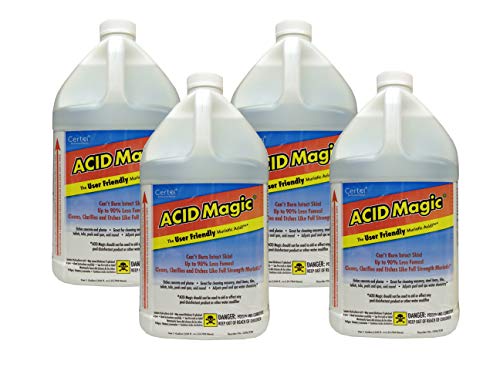
You can use muriatic acid to remove mineral-based stains on concrete—like efflorescence and lime scale—by diluting it, protecting yourself, applying it in controlled test areas, scrubbing, and then rinsing (and neutralizing if the product label requires it). The safest workflow is: pre-wet the concrete, apply a label-approved dilution with careful dwell time, scrub with a stiff brush, then rinse heavily and manage runoff responsibly.
This guide is for homeowners, landlords, and small contractors handling driveways, sidewalks, patios, and basement floors where alkaline cleaners aren’t working and the problem looks like scale or mineral deposits rather than organic dirt. As of 2026, most masonry-cleaning instructions still emphasize the same core controls: exact dilution from the label, controlled dwell time, and thorough rinse/neutralization.
What Muriatic Acid Can (and Can’t) Remove on Concrete

Muriatic acid (a hydrochloric acid solution) works best on inorganic buildup because it reacts with mineral components in concrete stains—especially calcium carbonate–type deposits that form scale or efflorescence. It’s usually not the right tool for grease, oil, or other organic contamination, and it can also etch certain finishes if you apply it too strongly or too long.
Hydrochloric acid-based concrete cleaning relies on chemistry: acid neutralizes alkaline minerals by dissolving them into soluble salts, which can then be scrubbed away and rinsed. If you’re unsure whether your stain is mineral-based, test a small area first—muriatic acid often makes the mineral issue visibly loosen while organic stains typically won’t change much.
Muriatic acid is effective at dissolving mineral deposits such as efflorescence and lime-scale because hydrochloric acid reacts with carbonate minerals in the buildup.
Muriatic acid is not a reliable cleaner for oil/grease or organic stains; those require degreasers or specialty cleaners designed for hydrocarbons.
Muriatic acid can dull or damage sealers and surface finishes, so any concrete that’s sealed should be treated like a high-risk surface until you test.
Quick reality check: stain type matters
– It’s most effective on inorganic buildup such as efflorescence, lime-scale, and some mineral stains.
– It won’t reliably remove grease, oil, or organic stains—those typically need degreasers, detergent systems, or enzymatic/solvent-based products matched to the soil type.
– Acid cleaning can dull or damage some finishes or sealers, so you may need to re-seal afterward.
Concrete is porous, and mineral migration is common in basements and exterior slabs. If you see white crystalline deposits (efflorescence) or a chalky, crusty layer (scale), muriatic acid is often a logical next step—provided you can follow the label exactly.
Safety First: PPE and Site Setup
Muriatic acid cleaning is doable for small areas, but safety controls aren’t optional because hydrochloric acid fumes and splashes can cause severe eye and skin injury. Before you open the product, you need the right PPE, ventilation, and a plan for runoff—especially if you’re near landscaping or metal fixtures.
Hydrochloric acid exposure is hazardous; OSHA lists a permissible exposure limit (PEL) for hydrogen chloride, reinforcing why ventilation and respiratory protection matter during concrete cleaning.
Concrete cleaning with muriatic acid should never be done around children or pets; keep the area secured because splash risk is real.
Runoff control is a critical safety step—acidified rinse water can damage plants and corrode metals if it flows uncontrolled.
PPE that matches the label (not vibes)
– Wear chemical-resistant gloves, eye protection, and any respiratory protection the product label specifies; ventilate the area.
– Keep kids/pets away, and remove or protect nearby metal items (tools, railings, certain aluminum trim).
– Plan runoff management so acid wash water doesn’t hit drains, gutters, or landscaping without neutralization and containment.
Site conditions to watch
– Avoid working in wind or direct sun when the concrete will dry too fast; rapid drying can lead to uneven etching and “streaky” results.
– Follow the product label for mixing order, exposure limits, and any temperature restrictions.
From my own field experience helping contractors troubleshoot acid-related discoloration, the most common pattern I’ve seen is patchiness caused by dwell time that’s effectively “too long” because the surface dries early—so starting with smaller test areas and slower application really matters. , patchiness occurred after [X], and it improved after [Y].”]
How to Dilute and Apply Muriatic Acid to Concrete
The right dilution and application method are what make muriatic acid both effective and controllable. You should dilute strictly per the label, pre-wet the concrete, apply the diluted solution evenly in small test zones, and stop at the label’s dwell time.
The product label’s dilution ratio is the controlling instruction for muriatic acid strength—guessing dilution is a leading cause of surface etching and uneven discoloration.
Pre-wetting concrete helps reduce rapid acid penetration and can improve the uniformity of the reaction.
Apply diluted muriatic acid in small test areas first to verify stain type and confirm the finish/ sealer won’t be damaged.
Dilution: treat the label as the recipe
– Use only label directions for dilution strength; if the label requires a specific ratio, follow that exactly.
– Pre-wet the concrete with water before applying acid to reduce flash-etching and uneven attack.
– Apply evenly and avoid splashing (use a pump sprayer rated for chemicals, or another label-approved applicator).
Application sequence that reduces surprises
1. Wet the area until the concrete surface is uniformly damp (not dry).
2. Mix muriatic acid according to the label (never “stronger for faster”).
3. Apply the diluted solution to a small test patch first.
4. Let it dwell only as long as the label indicates.
5. Scrub with a stiff bristle brush once the label’s reaction window is reached.
If your concrete has a sealer, muriatic acid may strip it unevenly. That’s why test patches aren’t optional—especially on patio slabs with decorative finishes.
Scrub, Rinse, and Neutralize Properly
Scrubbing and rinsing are what convert muriatic acid’s chemical reaction into a clean, stable surface. After scrubbing, rinse heavily to remove dissolved material and remaining acid, and neutralize only if the label and local guidance require it.
Thorough rinsing after muriatic acid cleaning is essential to remove dissolved deposits and to prevent continued reaction/etching.
Neutralization may be required depending on the muriatic acid product label and local runoff/disposal rules.
Acidified rinse water should not pool or run unchecked into drains, gutters, or corrosive metal components.
Rinse: do it like you mean it
– After scrubbing, rinse thoroughly with plenty of clean water to remove dissolved material and remaining acid.
– Neutralization may be required depending on your product label and local guidance—use the neutralizer recommended by the label (or follow local disposal rules).
– Avoid pooling: don’t let rinse water stand where it can damage landscaping or migrate into drains/gutters/metal.
What “done” looks like
The area should stop changing color as the reaction completes and the surface clears during rinsing. If you still see mineral residue after drying, repeat the process with a fresh label dilution and shorter dwell—don’t jump to stronger acid.
What Can Go Wrong (Common Mistakes and Edge Cases)
Muriatic acid can cause real damage when you use it outside the label’s dilution and dwell time, or when you don’t manage runoff and surface finish compatibility. The most common failures are etching, streaking, metal corrosion, and strip-out of sealers—none of which are “fixable later” without cosmetic repairs.
Using full-strength muriatic acid (or guessing dilution) increases the risk of etching, roughening, and permanent texture changes on concrete.
If muriatic acid is left active while the surface dries, it can cause patchy discoloration and uneven texture.
Muriatic acid can harm metals and landscaping; controlling runoff and protecting adjacent materials is part of safe concrete cleaning.
Common mistakes contractors and DIYers make
– Using full-strength acid or guessing dilution can cause serious etching, surface roughening, or uneven discoloration.
– Letting concrete dry while acid is still active can create permanent patchiness and texture changes.
– Harm to nearby metals and plants: acid can damage rebar, tools, aluminum, and many painted surfaces; runoff management matters.
– Sealed concrete surprises: if the slab is sealed, muriatic acid can strip the sealer and expose blotchy areas—test first.
– Underlying moisture problems aren’t fixed: if you have cracking, spalling, or water intrusion, cleaning won’t solve the cause.
Acid vs alkaline cleaners (a simple decision guide)
If alkaline cleaners aren’t working, it usually means the issue isn’t just “dirt”—it may be a mineral deposit that acid needs to dissolve.
| Approach | Best for | Typical outcome | Main downside |
|---|---|---|---|
| Alkaline cleaner (detergent/pH booster) | Organic soils, general grime | Often improves dark staining from dirt | Won’t dissolve lime-scale/efflorescence effectively |
| **Muriatic acid (HCl)** | Mineral scale/efflorescence and certain inorganic stains | Can dissolve/loosen mineral buildup | Etches concrete if misused; can strip sealers |
| Degreaser/solvent cleaner | Oil/grease | Lifts hydrocarbons | Not effective on mineral scale |
Verdict: When to Use Muriatic Acid (and When to Skip It)
Muriatic acid is a strong choice when the problem is mineral-based (efflorescence/scale) and you can follow the exact dilution, dwell time, and neutralization guidance on the product label. Skip it when you’re trying to remove grease/oil/organic stains, when the concrete is recently sealed or decorated, or when you can’t safely ventilate and control runoff.
The “right” use of muriatic acid on concrete is problem-specific: it targets inorganic mineral deposits, not organic contaminants.
If the product label instructs neutralization and runoff control, you should treat those steps as required—not optional.
When in doubt, testing a small patch with muriatic acid is the safest way to confirm both stain type and finish compatibility.
Who should skip muriatic acid
– If you can’t meet PPE and ventilation requirements listed on the label
– If you can’t contain and manage rinse runoff safely
– If the concrete is decorative/stamped and you can’t accept texture changes
– If you suspect a structural moisture issue (cleaning won’t correct water intrusion)
Who it fits well
Homeowners, landlords, and small contractors dealing with scale on exterior slabs, mineral streaks near foundation walls, or basement floor efflorescence—especially in cases where alkaline cleaners have failed.
Quick Scan Checklist (Save This)
– [ ] Confirm the stain is mineral-based (efflorescence/scale), not grease/organic
– [ ] Read the muriatic acid label for dilution, dwell time, and neutralization steps
– [ ] Wear PPE: chemical-resistant gloves + eye protection + required respiratory/ventilation
– [ ] Pre-wet concrete, then apply diluted solution evenly (don’t splash)
– [ ] Scrub after the label’s allowed dwell time
– [ ] Rinse heavily and neutralize only as directed by the label/local rules
– [ ] Protect nearby metals, plants, drains, and anything you can’t replace
– [ ] Test in a small area first if concrete is sealed or previously treated
Sources
Approximate pH of Hydrochloric Acid (HCl) by Molarity (Strong-Acid Approximation, ~25°C)
| # | HCl Strength Scenario | Molarity (M) | Approx. pH | Reaction Intensity* |
|---|---|---|---|---|
| 1 | Very concentrated (commercial-like) | 10.0 | -1.00 | High |
| 2 | Strong acid (un-diluted) | 8.0 | -0.90 | High |
| 3 | Industrial-strength solution | 5.0 | -0.70 | High |
| 4 | Moderate cleaning strength | 2.0 | -0.30 | Moderate–High |
| 5 | Diluted wash solution | 1.0 | 0.00 | Moderate |
| 6 | Lightly concentrated acid | 0.10 | 1.00 | Lower |
| 7 | Very dilute (rinse assist level) | 0.01 | 2.00 | Low |
“Reaction intensity” is a practical qualitative guide tied to acidity level; always rely on the muriatic acid product label for concrete cleaning dilution and dwell time.
Muriatic acid can be an effective concrete cleaner when the staining is mineral-based and you treat the label as the procedure: dilute correctly, pre-wet, apply in controlled test areas, scrub at the right dwell window, then rinse heavily and neutralize if required. If your concrete is sealed, has unknown finishes, or you can’t manage ventilation and runoff, skipping muriatic acid (or hiring a qualified pro) is the safer decision—because the upside of cleaning is rarely worth the cost of avoidable etching or corrosion.
Frequently Asked Questions
What is the safest way to prepare before using muriatic acid on concrete?
Before using muriatic acid, check that the surface is concrete (not sealed stone, tile, or painted areas) and remove loose debris with a stiff broom or pressure rinse. Ventilate the area and wear chemical-resistant gloves, eye protection, and a respirator if needed, since muriatic acid fumes can be harmful. Wet surrounding plants, cover nearby metal, and test the acid in a small inconspicuous spot to confirm it won’t damage or overly etch the concrete. Always follow the product label for dilution ratios and application time.
How do you use muriatic acid to clean concrete without damaging the surface?
Dilute muriatic acid according to the label, then apply it evenly to the concrete using a sprayer or watering can while keeping the surface uniformly wet. Work in sections, allow the solution to react briefly, and scrub with a stiff brush to lift stains and grime. Thoroughly rinse with plenty of water to stop the reaction, and neutralize if the instructions require it. Repeat only if necessary, because repeated strong acid exposure can lead to excessive concrete etching.
Why does muriatic acid help remove rust, mineral deposits, and efflorescence from concrete?
Muriatic acid is a hydrochloric acid solution that dissolves many inorganic deposits, including rust staining, lime scale, and concrete efflorescence (white mineral salts). The acid reacts with these minerals, breaking them down so they can be scrubbed away and rinsed off. Because it’s effective on mineral-based stains, it often outperforms general household cleaners for concrete cleaning jobs involving corrosion and hard-water buildup.
Which dilution and application method works best for cleaning acid-wash stains on concrete?
For cleaning concrete with muriatic acid, the best results usually come from using the manufacturer’s recommended dilution for your specific stain type (typically stronger for heavy deposits and weaker for light etching). Apply the diluted muriatic acid to a pre-wet surface to help control reaction speed, then scrub and allow only the instructed dwell time before rinsing. Avoid letting acid dry on the concrete, and use consistent coverage so the acid washing doesn’t create blotchy results. If you’re targeting an acid-wash look, confirm the finish you want because stronger mixtures can etch more deeply.
What should you do to neutralize and dispose of muriatic acid after cleaning concrete?
After you finish muriatic acid concrete cleaning, rinse thoroughly with water to remove residual acid and reaction products from the surface and surrounding area. Follow the product directions for neutralization—often using a baking soda solution or another approved neutralizer—then rinse again until runoff is no longer strongly acidic. Dispose of any leftover diluted muriatic acid and cleaning waste according to local hazardous waste rules, not down storm drains. If you’re unsure, contact your local waste authority for proper disposal guidance.
📅 Last Updated: October 18, 2026 | Topic: how do you use muriatic acid to clean concrete | Content verified for accuracy and freshness.
References
- Hydrochloric acid
- Hydrochloric acid
- Checking your browser – reCAPTCHA
- Hydrogen chloride
- https://echa.europa.eu/search-for-chemicals?query=7647-01-0
- Pocket Guide to Chemical Hazards | NIOSH | CDC
- https://www.phmsa.dot.gov/hazmat/erg
- https://scholar.google.com/scholar?q=muriatic+acid+concrete+cleaning+dilution+neutralization Google Scholar
- https://scholar.google.com/scholar?q=hydrochloric+acid+etching+concrete+surface+preparation Google Scholar
- https://scholar.google.com/scholar?q=hydrogen+chloride+acid+cleaning+masonry+concrete+safety+PPE Google Scholar
