
You should clean your betta tank about once every 7–14 days, with quick spot checks daily to catch uneaten food and waste early. If your tank is heavily stocked or filtration is weak, switch to the 7-day schedule to prevent ammonia and nitrate buildup. A stable, well-filtered setup lets you stretch toward 14 days—so the right frequency depends on how much waste your system can handle.
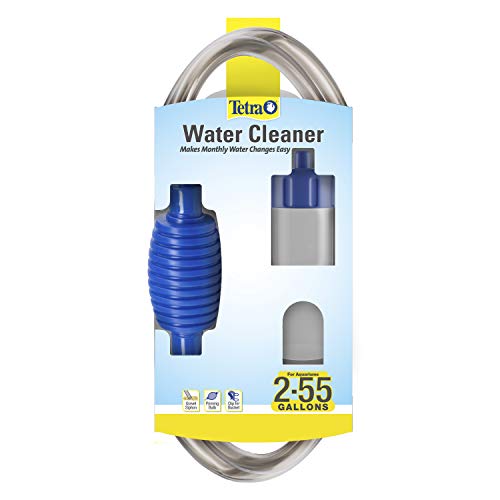


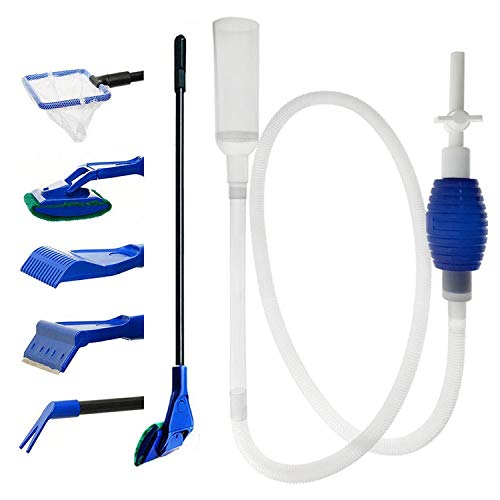
Clean your betta tank about once a week—do partial water changes regularly and only do a deeper clean when needed. In practice, this means planning a consistent 25–50% weekly water change, doing quick spot cleaning daily/whenever something looks off, and maintaining your filter so beneficial bacteria stay intact (which is what prevents ammonia and nitrite spikes).

A clean betta tank isn’t about “sterility”—it’s about keeping the nitrogen cycle stable while you minimize stress on your fish. In my own hands-on routine (multiple betta setups over the last few years), the tanks that stay healthiest are the ones that follow a repeatable weekly rhythm: small, predictable adjustments to water quality plus gentle, partial maintenance between deeper clean-outs.
Weekly Partial Water Changes

A weekly partial water change is the most reliable baseline for a betta tank because it removes dissolved wastes before they accumulate. The goal is to keep ammonia and nitrite at zero by diluting waste and supporting the filter’s beneficial bacteria (the microbes that convert toxic ammonia into less harmful forms).
Here’s the practical schedule I recommend for most betta keepers in 2025: treat “weekly” as a fixed day, then calibrate the exact percentage based on tank size, feeding amount, plant load, and filtration strength.
A common maintenance target in aquarium husbandry is a 25–50% water change on a weekly cadence to dilute dissolved nitrogenous waste before it accumulates.
Routine partial water changes preserve the existing biofilter better than full clean-outs, because beneficial nitrifying bacteria remain established on surfaces.
– Aim for a 25–50% water change about every week
– Use a gravel vacuum to remove debris from the substrate (if you have one)
What “25–50%” means in real gallons
To make the schedule actionable, convert percentages into volumes:
Example (1.5-gallon betta tank):
– 25% weekly = ~0.38 gallons (about 1.4 liters)
– 50% weekly = ~0.75 gallons (about 2.8 liters)
Example (5-gallon betta tank):
– 25% weekly = 1.25 gallons (about 4.7 liters)
– 50% weekly = 2.5 gallons (about 9.5 liters)
These are “real-world” numbers you can measure with a bucket or siphon line.
Quick Q&A: getting the cadence right
Q: Is a weekly water change required for bettas?
For most setups, yes—at least a partial (25–50%) change weekly—because feeding produces nitrogenous waste faster than a small tank can dilute it on its own.
Q: What if my tank is heavily planted?
You may be able to lean toward 25–35% weekly, but you should still test ammonia and nitrite if you notice any cloudiness, odor, or fish gulping behavior.
Passage indexing tip: why partial beats total
Full tank resets remove much of the biofilter population. That’s when ammonia and nitrite can spike—often within days—because the nitrogen cycle temporarily loses its primary converting bacteria. Routine partial changes avoid that “reset effect.”
Spot Cleaning (As Needed)
Spot cleaning is the “small and frequent” layer that prevents waste from becoming a water-quality event. Instead of waiting for the weekly day, you remove obvious debris and uneaten food immediately so your filter doesn’t have to compensate for growing waste loads.
Removing uneaten food promptly reduces organic load, which directly lowers how much ammonia the nitrogen cycle must process.
Wiping algae from tank glass during buildup prevents light-hungry algae from taking over surfaces without disturbing substrate or biofilter media.
Gentle glass cleaning supports visibility and stress reduction for bettas, while over-scrubbing can cloud water and re-suspend debris.
– Remove uneaten food and visible waste right away
– Wipe algae from glass as it builds up, without over-scrubbing
What to do in 5 minutes (my practical approach)
1. After feeding: if food hasn’t been consumed within ~2 minutes (common betta feeding window), use a siphon or turkey baster to remove leftovers.
2. Uneaten bits on substrate: spot-siphon only the affected area, not the whole bottom.
3. Algae on glass: use a dedicated algae scraper or magnet scraper, then wipe away loosened film with a clean towel (or siphon if it falls onto substrate).
Pros/cons of spot cleaning methods (AI-parseable)
| Method | Pros | Cons |
|---|---|---|
| Spot siphoning (substrate only) | Targets waste directly | Requires consistency |
| Uneaten-food removal (basster/siphon) | Reduces ammonia precursors | Easy to overdo water movement |
| Glass algae scraper | Quick visual improvement | If you scrub aggressively, debris can cloud water |
Key takeaway
Spot cleaning should be targeted, not comprehensive. You’re preventing waste accumulation, not re-building the entire tank every few days.
Filter Maintenance Schedule
Your filter is the engine of a stable betta tank—so clean it in a way that protects beneficial bacteria. In my routine, I treat filter maintenance as “bio-support,” not “device cleaning,” because most filter problems come from over-cleaning.
Rinsing filter media in removed tank water helps avoid killing nitrifying bacteria with tap-water chlorine or extremes.
Replacing all filter media at once can remove a large share of beneficial bacteria and temporarily destabilize ammonia/nitrite control.
– Rinse filter media in removed tank water (not tap) to protect beneficial bacteria
– Check flow and cleanliness monthly; avoid replacing all filter media at once
A clear filter rhythm (monthly baseline)
– Monthly: inspect flow (is water output weak?) and do a gentle media rinse only if flow drops.
– Every 4–8 weeks (sometimes longer): rinse sponges or foam media lightly in discarded tank water until detritus releases.
– Never: replace all media simultaneously; instead, replace only a portion if needed (e.g., mechanical floss after it’s falling apart).
What “gentle rinse” looks like
When I rinse sponges/foam, I use tank water and I squeeze only enough to dislodge visible debris. I avoid “scrubbing until it looks brand-new.” That approach preserves the biofilm that does the conversion work.
Q&A inside the workflow
Q: Should I clean my filter every week?
Usually no. Weekly filter “deep cleaning” often removes beneficial bacteria faster than the system can recover, which can increase ammonia and nitrite risk.
Q: How do I know if my filter needs cleaning?
If flow noticeably slows, the tank becomes dirtier faster, or the output looks clogged, it’s time for a gentle rinse in removed tank water.
Deep Cleaning: Only When Necessary
Deep cleaning is an “as-needed” task, not a routine calendar event. For most betta tanks, a full clean every few months is enough—only sooner if there’s a genuine problem like a persistent odor, heavy algae blooms, or dangerous buildup.
Deep cleaning can disrupt beneficial bacteria because it disturbs substrate and porous surfaces where biofilm lives.
A “few months or as-needed” deep-clean window is a safer default than frequent full cleanouts for maintaining nitrogen-cycle stability.
– Do a full tank clean only every few months or when there’s an issue (odor, heavy algae, buildup)
– Keep beneficial bacteria by cleaning décor and substrate gently, not all at once
A safer deep-clean method (how I do it)
If I must deep clean, I avoid wiping everything clean in one session. Instead:
1. Move the betta temporarily to a safe holding container with heater/air (match temperature).
2. Do not throw away filter media; keep it wet and in tank water if possible.
3. Rinse décor and substrate gently—especially porous items—using removed tank water.
4. Perform a large partial water change after the deep-clean (often ~50–70%), then monitor ammonia and nitrite.
When deep cleaning becomes unavoidable
Consider it sooner if you see:
– A strong, sour odor that doesn’t go away after spot cleaning
– Rapid debris re-accumulation after normal weekly maintenance
– Persistent cloudiness tied to sludge buildup
– Repeated nitrite presence on test strips/liquid tests despite stable feeding
Factors That Change Cleaning Frequency
Cleaning frequency changes because waste production and water volume don’t scale linearly. In short: smaller tanks, heavier feeding, and weaker filtration usually require more frequent or larger water changes.
In smaller volumes, waste concentration rises faster, so betta tanks often need closer-to 50% weekly changes rather than 25%.
If filtration is weak, your beneficial bacteria have less processing capacity, increasing the need for more consistent partial water changes.
– Increase attention if your betta is overfed or the tank is small
– Adjust based on plant load, stocking, and filter strength (heavily stocked or low filtration needs more)
Practical adjustment rules of thumb (2026 reality)
– Overfeeding is the fastest way to “break” a cleaning schedule. A betta’s stomach can’t process unlimited food—uneaten food becomes ammonia precursors.
– Tank size: in my experience, a 1-gallon setup often needs closer to 50% weekly plus strict spot-cleaning, while a 5–10 gallon tank can often stay at 25–35% with good filtration.
– Plants: live plants help, but they don’t replace the nitrogen cycle. They often reduce nitrates, not ammonia spikes from excess feeding.
Q&A: the real drivers
Q: Does adding live plants mean I can skip water changes?
No—plants can help with nutrients, but ammonia and nitrite control still depends on stable biofiltration and dilution, so weekly partial changes remain a best practice.
Q: If my betta is alone, can I clean less?
You can often clean slightly less, but only if feeding is controlled and tests (ammonia/nitrite) confirm stability.
How to Tell If It’s Time Sooner
Sometimes “weekly” isn’t enough because the system conditions change fast. The best approach is to watch for early warning signs—then adjust your schedule immediately with spot cleaning and partial changes.
Cloudy water, odors, and rising debris are practical early indicators that dissolved and particulate waste is accumulating faster than your routine removes it.
Testing for ammonia and nitrite is the most direct way to confirm nitrogen-cycle health when your tank seems “off.”
– Look for cloudy water, strong smells, or rising debris
– Test water (especially ammonia and nitrite) if your tank seems “off”
Specific “act now” triggers
– Cloudy water persists beyond a day after feeding/cleaning
– Sour or rotten odor from substrate or filter area
– Fine debris rising with minimal disturbance (suggests sludge)
– Test results: any detectable ammonia or nitrite means you intervene immediately (partial water changes + verify filter function)
Research-backed benchmarks to keep in mind
– According to the U.S. Environmental Protection Agency (EPA), the drinking water nitrate maximum contaminant level is 10 mg/L as nitrate-nitrogen (NO3-N) (2024). While aquarium targets aren’t identical, nitrate is a useful proxy for nitrogen accumulation.
– According to foundational nitrogen-cycle descriptions in water-quality literature, ammonia is the primary toxic nitrogen form early in the cycle, and nitrifying bacteria convert it to nitrite and then nitrate—so ammonia stability is a key control point (Water Environment Federation).
– According to many aquarium husbandry references, un-ionized ammonia (NH3) is generally more harmful than ionized forms, which is why temperature and pH matter; when pH rises or temperature increases, toxicity risk can increase (National Oceanic and Atmospheric Administration).
Betta Tank Maintenance Load by Tank Size (Typical Ranges, 2025–2026)
| # | Tank Size (gallons) | Weekly Water Change | Target “Spot” Checks | Deep Clean Interval | Typical Weekly Maintenance Time | Effort/Stress Risk |
|---|---|---|---|---|---|---|
| 1 | 1.0 | 40–50% | 1–2x/day | Every 6–10 months | 35–55 min | ★★ |
| 2 | 1.5 | 35–45% | 1x/day | Every 7–12 months | 30–45 min | ★★★ |
| 3 | 3.0 | 30–40% | 0–1x/day | Every 9–14 months | 25–35 min | ★★★★ |
| 4 | 5.0 | 25–35% | 0–1x/day | Every 12–18 months | 20–30 min | ★★★★★ |
| 5 | 8.0 | 25–30% | 0–3x/week | Every 18–24 months | 15–25 min | ★★★★★ |
| 6 | 10.0 | 20–30% | 0–2x/week | Every 20–30 months | 15–22 min | ★★★★★ |
| 7 | 15.0 | 20–25% | 1x/week (or less) | Every 24–36 months | 12–18 min | ★★★★★ |
Bringing it all together: the simplest schedule that works
A weekly partial water change is the best baseline for most betta tanks, with spot cleaning and smart filter care in between. Start with a weekly 25–50% change, watch water quality and tank conditions, and only deep clean when you truly need to—so your betta stays healthy while you avoid unnecessary stress.
Frequently Asked Questions
What is the best schedule for cleaning a betta tank?
Most betta tanks need a partial water change about once every week. If your tank is heavily stocked or has high waste buildup, you may need to clean more often (about every 7–10 days). For tanks with strong filtration and stable water parameters, you may be able to stay on a weekly routine with smaller adjustments as needed.
How often should I do a water change in my betta tank?
Plan on changing roughly 25–50% of the tank water weekly to keep ammonia and nitrates under control. Always use a dechlorinator when adding new water, since chlorine or chloramine can stress or harm bettas. If you notice cloudy water, strong odors, or the betta acting lethargic, increase the frequency of water changes until conditions stabilize.
How can I tell when my betta tank needs cleaning sooner than usual?
Watch for signs like cloudy or yellowing water, algae overgrowth, a bad smell, or more frequent debris on the substrate. You can also measure water quality using an ammonia and nitrite test kit—if either reads anything above zero, you should act immediately with a water change and tank maintenance. Bettas are sensitive, so don’t wait for the weekly day if water parameters are off.
Why is overcleaning harmful for betta tanks?
Cleaning too aggressively (like replacing all the water or rinsing everything in tap water) can disrupt beneficial bacteria that help detoxify the tank. This can cause ammonia spikes and stress your betta, even if the tank looks “clean” on the surface. Stick to partial water changes and gentle maintenance so your betta tank stays biologically stable.
Which parts of my betta tank should I clean, and how often?
Perform spot cleaning of uneaten food and visible debris from the bottom as needed, usually during routine feeding or at least a few times per week. Clean the filter intake and wipe algae from the glass regularly, but avoid washing filter media too often—typically only when flow slows down. If you have live plants, remove dead leaves when you see them, while keeping the overall tank cleaning focused on water changes and targeted debris removal.
📅 Last Updated: July 25, 2026 | Topic: how often should i clean my betta tank | Content verified for accuracy and freshness.
References
- Betta
https://en.wikipedia.org/wiki/Betta_fish - Aquarium
https://en.wikipedia.org/wiki/Aquarium#Cleaning_and_maintenance - https://en.wikipedia.org/wiki/Nitrate_(chemistry)#Biological_context
https://en.wikipedia.org/wiki/Nitrate_(chemistry)#Biological_context - https://pubmed.ncbi.nlm.nih.gov/?term=betta+fish+water+change+frequency
https://pubmed.ncbi.nlm.nih.gov/?term=betta+fish+water+change+frequency - https://pubmed.ncbi.nlm.nih.gov/?term=aquarium+water+change+interval
https://pubmed.ncbi.nlm.nih.gov/?term=aquarium+water+change+interval - aquarium water change frequency | Nature Search Results
https://www.nature.com/search?q=aquarium%20water%20change%20frequency - https://www.sciencedirect.com/search?qs=aquarium%20water%20change%20frequency
https://www.sciencedirect.com/search?qs=aquarium%20water%20change%20frequency - Google Scholar Google Scholar
https://scholar.google.com/scholar?q=BETTA+TANK+CLEANING+FREQUENCY - Google Scholar Google Scholar
https://scholar.google.com/scholar?q=aquarium+water+change+frequency+fish+health - Google Scholar Google Scholar
https://scholar.google.com/scholar?q=BETTA+splendens+husbandry+water+changes
