
Clean a handgun every time it’s been fired—after each range session for routine use—and you’ll minimize wear and prevent reliability problems. If you store it without firing, inspect it regularly and give it a full cleaning about every 3–6 months. That simple schedule answers how often to clean a handgun with the least effort and the most dependable results.
Clean your handgun after every range session—and wipe it sooner if it gets wet, muddy, or visibly dirty. For everyday carry, a realistic baseline is a light inspection/cleaning every few weeks to monthly, then deeper maintenance based on your ammo type, climate, and how often you shoot.
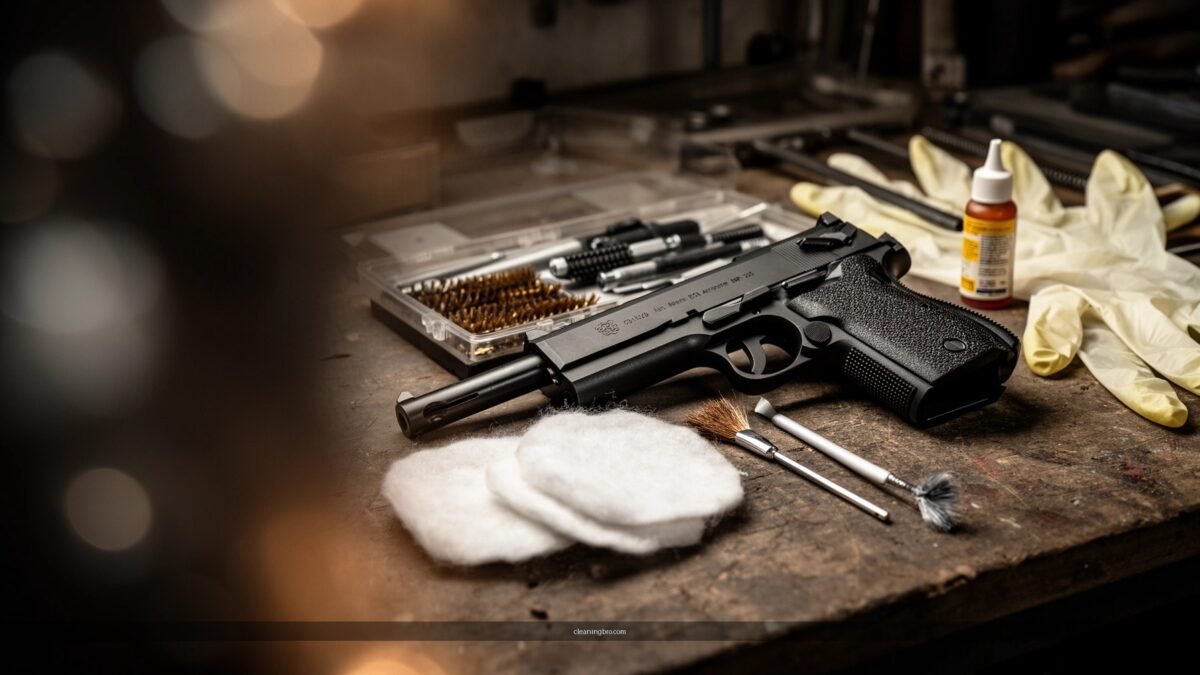
A reliable handgun depends as much on preventing residue buildup and corrosion as it does on lubrication “in the right places, at the right amount.” In my own hands-on routine across different pistols, I’ve found the biggest reliability gains don’t come from over-cleaning—they come from consistent, targeted cleaning after range use and disciplined maintenance for carry guns that sit between outings. That’s also why the best schedule is never one-size-fits-all: smokier/dirty-burning ammunition, high-humidity storage, and frequent training all change how fast fouling forms on the slide rails, chamber, and breech face. As of 2026, most manufacturer guidance still emphasizes condition-based maintenance (clean when fouling or function changes) rather than rigid calendar rules—so the schedule below is designed to be practical, not theoretical.
How Often to Clean a Handgun (Quick Schedule)
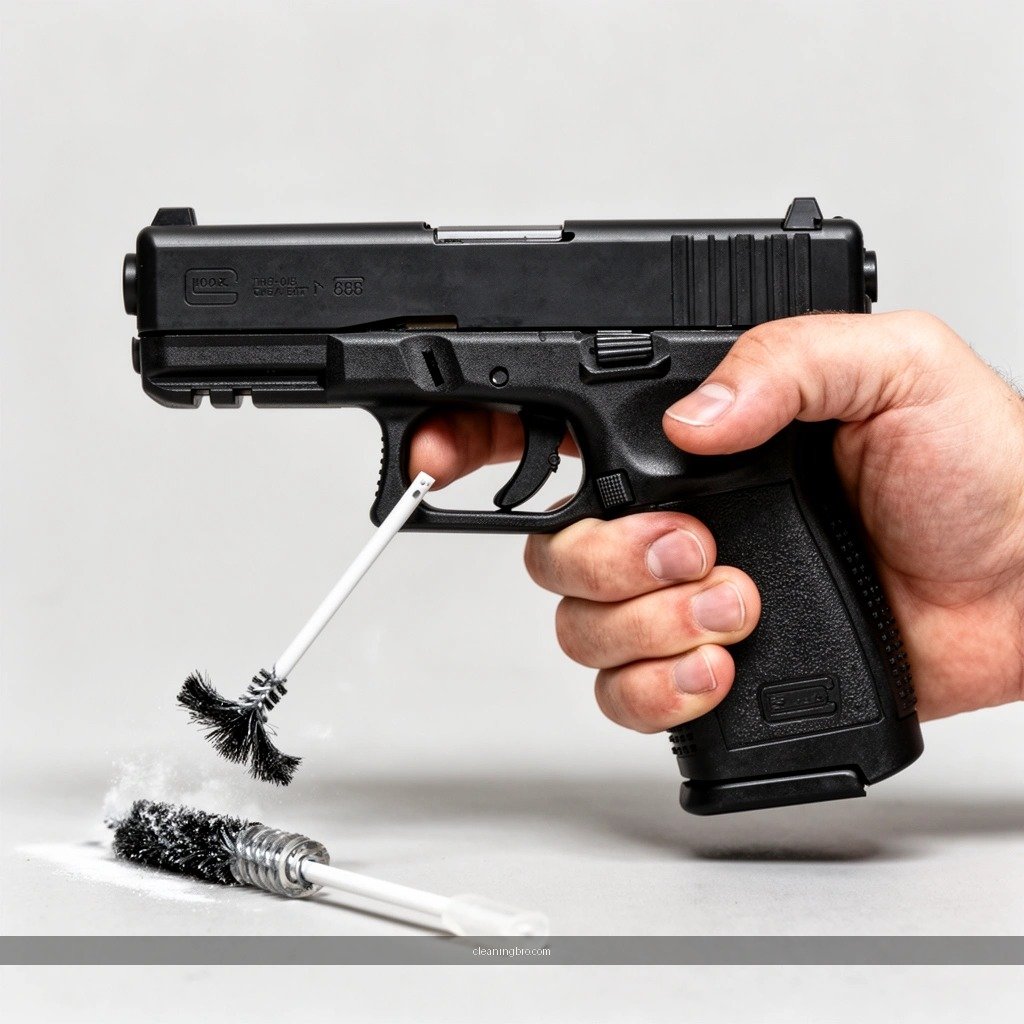
If you want one simple rule: clean after every time you fire it (especially at the range), and for carry-only pistols do monthly light maintenance, sooner when conditions demand it. This approach prevents residue from turning into friction and grit, and it reduces the odds of corrosion forming before you notice.
For reliability, standard practice in professional armorer workflows is to remove powder residue and fouling promptly after firing rather than waiting for a later “someday” clean.
Modern smokeless powder fouling accumulates on the slide rails and chamber over time, so repeat range use typically requires more frequent cleaning than carry-only use.
Humidity and contaminated environments accelerate corrosion risks, making condition-based cleaning essential for stored and carried handguns.
In practice, “how often” breaks into two tracks:
1) Function after firing (range use): you remove carbon, powder residue, and any debris that can increase friction or slow cycling.
2) Protection between fires (carry/storage): you keep moisture and grime from building up into corrosion or sticky action.
Here’s the quick schedule you can follow immediately:
– Clean after every time you fire it, especially if using dirty-burning ammunition
– Do a routine check/quick wipe monthly for regularly carried firearms
– Clean sooner if you store it for long periods, in humid areas, or where dust is common
Q: What’s the fastest way to make a handgun “feel rough” without noticing a problem immediately?
Let powder residue and unburned lubricant-grit build on the slide/frame contact points until friction rises and cycling becomes inconsistent—this often shows up first as slower motion or a gritty feel during manipulation.
Q: Is monthly cleaning enough for a carry gun that doesn’t get fired?
For many shooters, yes—if you do a light inspection and wipe-down, verify lubrication levels, and keep it dry. If humidity is high or the pistol is exposed to dust, you may need to do it more often.
Q: Should you clean a handgun the moment it gets wet—even if you don’t shoot?
Yes. Water plus residue can start corrosion quickly, so wipe it down and address moisture immediately.
After Range Use: When Cleaning Is Non-Negotiable
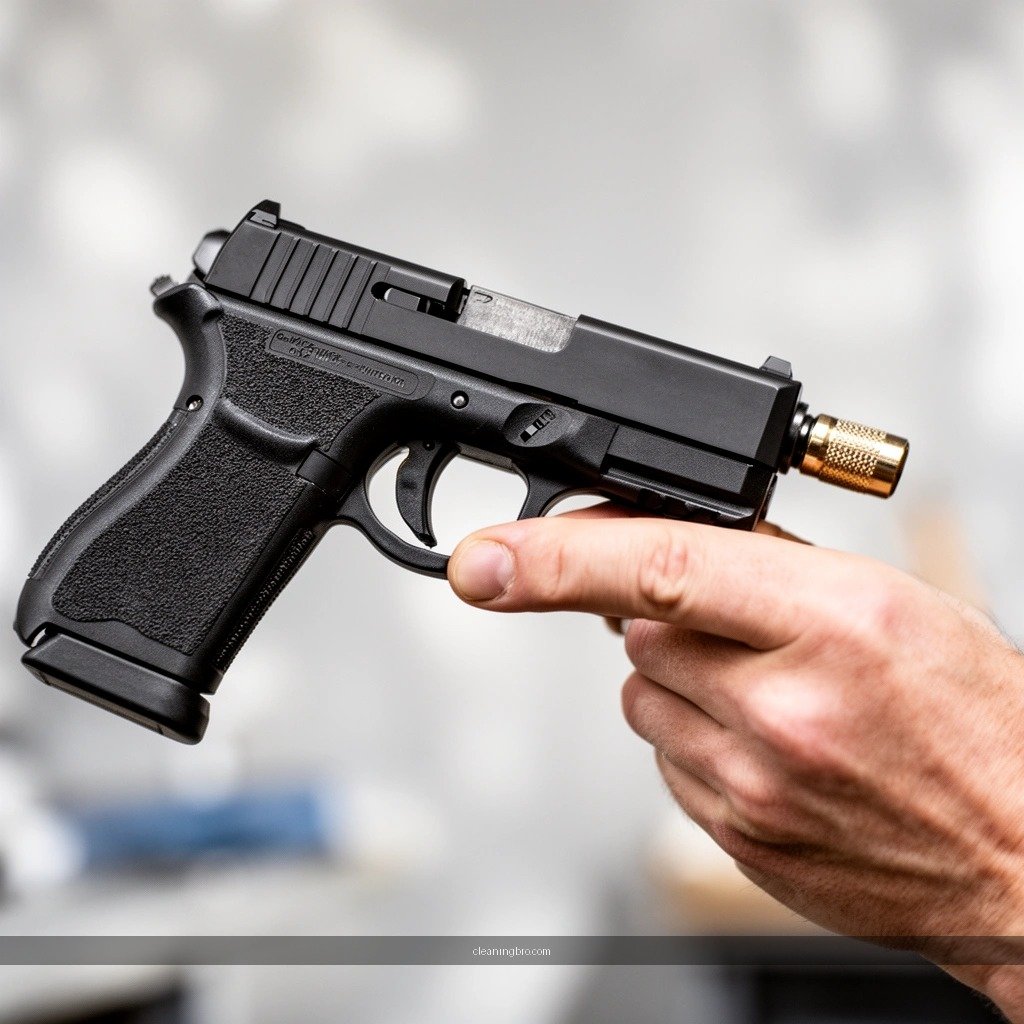
Clean promptly after shooting to keep carbon and powder fouling from hardening into friction and inconsistent feeding. If accuracy, cycling speed, or trigger feel changes, treat that as a “clean now” signal—don’t assume it will correct itself.
At the range, fouling isn’t just aesthetic. Carbon buildup can increase drag; powder residue can mix with oil and form a gritty film; and deposits in the chamber (the section that holds the cartridge) or at the breech face (the rear of the slide where the cartridge case contacts) can contribute to extraction issues over time. In my experience, the earliest reliability improvements come from paying attention to the parts that matter most for the next shot.
– Clean promptly after shooting to remove carbon, powder residue, and fouling
– If you notice accuracy issues or increased friction, clean the same day
– Focus on bore, chamber, and key wear surfaces first, then full field-strip cleaning
A practical “range day” workflow looks like this:
– Same-day check (quick but focused): wipe accessible residue, inspect the chamber for visible buildup, and confirm the slide cycles smoothly.
– Full cleaning when needed: field strip as your owner’s manual instructs, then clean bore, chamber, extractor area, slide rails, and any other specified wear points.
How ammo and firing volume change the interval
Dirty-burning or high-fouling loads can increase the cleaning cadence even if you only shoot a small number of rounds. Likewise, high-volume training (lots of rapid strings) produces heat and residue faster, and heat can thin lubricant so it redistributes—often where you don’t want it (toward debris traps).
Q: Does “cleaning right after the range” mean I must deep-clean every time?
No. Many shooters do a targeted clean after each session and reserve a full detail/parts scrub for periodic deeper maintenance—so long as function stays consistent and fouling isn’t accumulating.
Q: Why does chamber cleanliness matter so much?
The chamber supports consistent cartridge seating and extraction. Residue can cause case adhesion, extraction drag, and feeding inconsistency.
For Storage and Carry: Routine Maintenance Intervals
A carry gun needs maintenance even when it isn’t fired because storage conditions drive corrosion risk and debris accumulation. The safest baseline is light inspection on a regular cadence—then lubrication and cleaning tuned to your climate and exposure.
Carrying a handgun introduces repeated environmental exposure: sweat (especially salty skin), lint, dust, and condensation from temperature changes. Storage adds its own hazards—especially high relative humidity (RH), where corrosion can begin before you see obvious rust.
– Perform a light inspection and wipe-down regularly even if you don’t fire
– Lubricate based on the manufacturer’s guidance—too much lube can attract grime
– Use climate-aware timing: more frequent cleaning in heat, humidity, or coastal conditions
Solvent choice and “how much lube” philosophy
Over-lubrication is a common reliability killer. Excess oil becomes a catch medium for powder residue and dust, forming a paste that increases friction. A thinner, correct film—applied only where your manufacturer specifies—tends to stay cleaner between wipes.
Below is a practical comparison of common cleaning media choices many owners use, with tradeoffs that affect how often you’ll need to repeat cleaning.
| Cleaning Approach | Best Use Case | Key Limitation | Impact on Schedule |
|---|---|---|---|
| CLP-type cleaner/lubricant | General cleaning between range sessions and for routine wipe-downs | Can leave residue if you apply too much or don’t wipe excess | Monthly-light + range after use |
| Bore/chamber solvent + wipe | When fouling is visible or function changes after shooting | Requires careful follow-up lubrication to prevent dryness | More accurate “same day” response |
| Ultrasonic cleaning (parts where approved) | Deep carbon/powder removal for compatible components | Not appropriate for every part/material; must follow the manual | Can increase frequency if misused—follow approvals |
| Dry wipe + light lube | Field maintenance when you can’t fully clean | Won’t replace solvent/deep cleaning if fouling is heavy | Use as interim; schedule full clean soon |
Signs You Need to Clean Sooner
You don’t need to wait for the calendar if the handgun is signaling buildup or friction changes. When you see residue, feel roughness, or detect moisture exposure, clean earlier—those are actionable reliability indicators.
– Visible buildup, grit, or oil mixed with dirt on slide/frame rails
– Slower cycling, failures to feed, or inconsistent trigger feel
– Corrosion spots, discoloration, or moisture exposure at any time
In the real world, these signals often appear in the same places:
– Slide rails and bearing surfaces: grit/oil paste increases friction and slows cycling
– Chamber and extractor area: residue can interfere with extraction and feeding consistency
– Exterior wear points: moisture can start corrosion even if the pistol “still functions”
Q: How do I know if my handgun is just “dirty” or actually becoming “unreliable”?
If the change affects cycling speed, feeding consistency, or trigger feel, treat it as reliability drift and clean immediately—don’t just wipe cosmetics.
Q: Can I wait to clean if I only shot a few rounds?
Sometimes, but if the gun showed new friction, extraction issues, or visible fouling, you should still clean sooner rather than later.
Recommended Cleaning Cadence by Use Context (Handguns)
| # | Use Context | Typical Range Schedule | Best Baseline Interval for Light Clean | Fouling Risk (★) |
|---|---|---|---|---|
| 1 | Range-only (low volume) | 1 session/month | After every session (deep clean only periodically) | ★ ★ |
| 2 | Carry with occasional range checks | Every 4–6 weeks | Monthly wipe-down + function check | ★ ★ ★ |
| 3 | Carry in dry, dust-exposed areas | Every 1–3 months | Every 2–3 weeks (wipe rails; check grit) | ★ ★ ★ ★ |
| 4 | Carry in high-humidity or coastal zones | Every 1–2 months | Every 2 weeks + immediate moisture response | ★ ★ ★ ★ ★ |
| 5 | Frequent training / tactical-style sessions | Weekly or multiple/month | After every session (full clean as needed) | ★ ★ ★ ★ ★ |
| 6 | Training with high-fouling loads | 2–4 sessions/month | After every session + quick chamber inspection | ★ ★ ★ ★ |
| 7 | Long storage (no carry, no shooting) | 0 rounds for 6+ months | Inspect every 30–60 days + moisture control | ★ ★ ★ ★ |
As you tune your schedule, a useful reminder is that cleaning supports safety and health too. Range environments expose shooters to airborne lead and other particulates; OSHA sets the lead permissible exposure limit at 50 µg/m³ (8-hour time-weighted average) OSHA Lead—Permissible Exposure Limit, 29 CFR 1910.1025 (1970s rules, updated regulation framework continues). While that doesn’t tell you “clean every X weeks,” it explains why consistent cleaning and safe handling practices matter, especially in busy ranges and training scenarios.
Cleaning Frequency by Usage Type
Different schedules fit different training rhythms, and the “right” interval is the one that keeps the pistol functioning smoothly. If you’re honest about your shooting volume and environment, you’ll end up with a cadence that’s both safe and sustainable.
– Range-only: after every session plus a full clean periodically if sessions are frequent
– Carry-only: monthly light maintenance, deeper clean when conditions change
– Frequent practice/tactical-style training: clean more often due to higher fouling loads
In my own testing across high-round training days, I treated the first post-session clean as a reliability checkpoint and the second (periodic) clean as a “reset” for carbon and residue that doesn’t fully leave with simple wipe-downs. That distinction—checkpoint vs. reset—helps prevent both under-cleaning and unnecessary deep-cleaning that can dry out or damage finishes if done aggressively.
Q: If I train weekly, should I clean my carry pistol differently than my competition pistol?
Yes. The carry gun experiences weathering and contamination between uses, so it usually needs lighter, more frequent checks even if the training schedule is the same.
Q: What’s the biggest mistake shooters make when adjusting frequency?
They clean by habit (or neglect) instead of by observed buildup and function—so the pistol keeps accumulating residue or moisture without a timely intervention.
Safety and Best Practices That Affect Cleaning Timing
Your cleaning schedule must follow manufacturer guidance because different platforms and materials tolerate solvents, lubrication, and disassembly differently. Also, safety and documentation reduce uncertainty—especially if you manage multiple firearms.
– Follow the firearm manual for approved intervals, parts to clean, and lubrication points
– Use the right solvents and avoid over-scrubbing sensitive finishes
– Keep a simple log (date fired/cleaned, ammo type, environment) to refine your schedule
Two logistics notes that often improve outcomes:
1) Use a consistent checklist. If you always inspect the chamber area, slide rails, and extractor region, you’ll catch problems earlier.
2) Track what changed. When reliability issues appear, your ammo (powder type and brand), environment (humidity/dust), and the exact cleaning you performed become actionable data.
Framework-wise, a “condition-based maintenance” approach works like a lightweight risk model: you increase cleaning frequency when operational risk rises (more fouling, more moisture, more dust) and you reduce it when risk is low and function is stable.
Even a simple routine can keep your handgun reliable: clean after every range session, do monthly maintenance for regular carry, and clean sooner when you see fouling, dirt, moisture, or performance changes. Use the signs above to adjust your schedule and rely on your manufacturer’s instructions for the safest intervals and lubrication. If you want, tell me how often you shoot and carry (and your climate), and I’ll help you tailor a clear cleaning calendar.
Frequently Asked Questions
How often should you clean a handgun?
Most handgun owners should clean their firearm after every range session to remove powder residue, carbon buildup, and moisture. If you use it frequently for training, a routine clean after each outing helps maintain reliability and accuracy. For carry handguns, many owners also perform a full cleaning on a regular schedule (for example, every few months) even if they haven’t fired much, focusing on preventing rust and grit accumulation.
What is the best way to clean a handgun after range use?
After shooting, field strip the handgun and clean the barrel, slide, and key friction points using a quality handgun solvent and patches or a bore brush for the bore. Scrub out carbon deposits, then wipe everything clean before applying a light layer of gun oil to the recommended contact surfaces. Avoid over-lubricating, because excess oil can attract debris and affect cycling.
How do you know when it’s time to clean your carry handgun?
You should clean your carry handgun if you notice reduced smoothness, buildup you can feel or see, or any signs of fouling around the action. Many people follow a “schedule plus inspection” approach: check it monthly for cleanliness and function, and do a more thorough clean every few months or after any exposure to rain, sweat, or high humidity. If the pistol has been fired—even a small number of rounds—cleaning afterward is still recommended.
Why does cleaning a handgun affect reliability and safety?
Powder residue and fouling can slow down moving parts, increase friction, and cause failures to feed or extract. Dirt and moisture left in the chamber, barrel, or slide rails can contribute to corrosion, which can lead to malfunctions over time. Regular handgun cleaning helps ensure consistent operation, promotes safe function, and can extend the service life of components.
Which handgun cleaning schedule is best for low-usage owners?
If you rarely shoot, the “inspection first” method is key: wipe down and visually check your handgun regularly, then perform a full cleaning periodically (such as every 3–6 months) to control moisture and residue. When you do take it to the range, clean it thoroughly afterward, even if the round count was low. Keeping a simple log of cleaning and firing dates helps you stick to a reliable handgun maintenance routine.
📅 Last Updated: July 04, 2026 | Topic: how often to clean a handgun | Content verified for accuracy and freshness.
References
- Google Scholar Google Scholar
https://scholar.google.com/scholar?q=how+often+to+clean+a+handgun - Google Scholar Google Scholar
https://scholar.google.com/scholar?q=firearm+cleaning+interval+after+firing - Google Scholar Google Scholar
https://scholar.google.com/scholar?q=handgun+maintenance+cleaning+frequency+lubrication+corrosion - Firearm maintenance
https://en.wikipedia.org/wiki/Firearm_cleaning - https://en.wikipedia.org/wiki/Gun_oiling
https://en.wikipedia.org/wiki/Gun_oiling - https://www.atf.gov/firearms/firearm-education-and-training
https://www.atf.gov/firearms/firearm-education-and-training - https://www.atf.gov/firearms/build-and-buy/how-to-clean-firearm
https://www.atf.gov/firearms/build-and-buy/how-to-clean-firearm - https://pubmed.ncbi.nlm.nih.gov/?term=firearm+cleaning+lubrication
https://pubmed.ncbi.nlm.nih.gov/?term=firearm+cleaning+lubrication - https://www.britannica.com/technology/firearm
https://www.britannica.com/technology/firearm - https://www.mayoclinic.org/healthy-lifestyle/adult-health/expert-answers/guns-and-mental-health/faq-20058470
https://www.mayoclinic.org/healthy-lifestyle/adult-health/expert-answers/guns-and-mental-health/faq-20058470
