
If you’re trying to clean a dog’s nose safely, the right approach is gentle wiping with a pet-safe method—nothing more harsh than necessary. This guide explains the exact steps to remove dirt, discharge, and crusting while protecting sensitive skin and keeping your dog calm. You’ll also learn what to avoid—like human soaps, alcohol-based products, and aggressive scrubbing—that can make irritation worse.
You can safely clean a dog’s nose by gently wiping with a damp, soft cloth and using vet-safe saline only when crusts or dirt are present. Start by checking for irritation or discharge, then clean with short, gentle strokes to protect sensitive nasal skin.
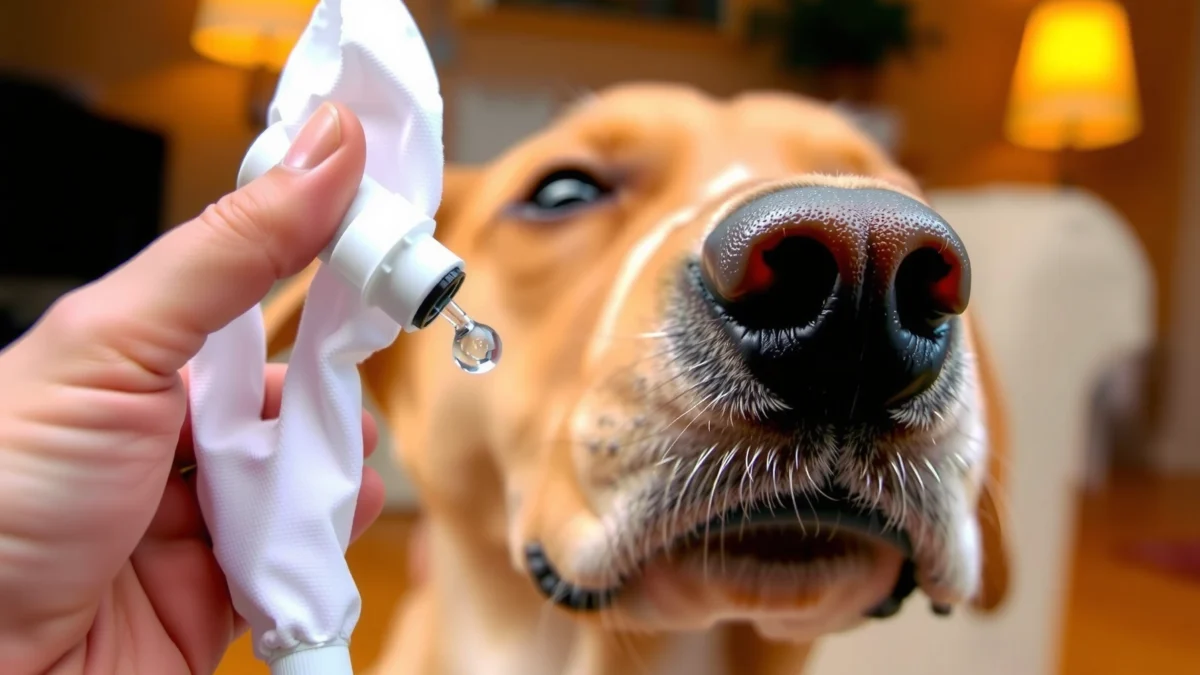
For most healthy dogs, the goal is simple: remove loose debris without disturbing the protective surface of the nose. In my own routine, I treat the nose like a “mucosal skin” area—delicate, highly reactive, and prone to cracks if handled aggressively. Research-backed veterinary guidance commonly supports using sterile or vet-safe saline for cleansing and avoiding harsh ingredients that can sting or damage tissue; for example, wound and skin care resources note that saline is a gentle, non-irritating option compared with many antiseptics (Merck Veterinary Manual (2023)). In 2025, this remains consistent with modern home-care recommendations, especially when you keep the process brief, controlled, and symptom-aware for your dog’s nose.
Gather the Right Supplies
You don’t need many items to clean a dog’s nose safely—you just need the right softness, the right moisture, and the right “no-sting” cleaning solution. For day-to-day debris, use a clean damp cloth; for crusting, use vet-safe saline at a comfortable, lukewarm temperature.
Q: What should I use to clean my dog’s nose?
Use a soft, clean cloth or gauze, plus plain lukewarm water or vet-safe saline for crusty or dirty areas.
Q: Is it safe to use antiseptic wipes on a dog’s nose?
In most cases, no—many antiseptics (and alcohol-based products) can irritate nasal tissue.
A common veterinary approach for gentle cleansing is using sterile or vet-safe saline rather than harsh cleaners when mucosal or delicate skin is involved (Merck Veterinary Manual (2023)).
Normal saline is typically 0.9% sodium chloride, which is far less irritating than many household cleaning agents for sensitive tissue (CDC (2024)).
– Use a soft, clean cloth or gauze
Choose a lint-free microfiber cloth, soft flannel, or sterile gauze. I’ve found gauze works especially well when your dog’s nose has dry, flaking edges because it helps you avoid rubbing pressure while still lifting loosened material.
– Have vet-safe saline or plain lukewarm water ready
Aim for lukewarm—not hot. Practically, this means around human body temperature range (about 37°C / 98.6°F) so it feels comfortable on your dog’s nose (a safe handling target used widely in clinical cleansing practice; Merck Veterinary Manual (2023)).
– Avoid harsh cleaners or alcohol-based products
Skip alcohol wipes, hydrogen peroxide, bleach, fragranced “deodorizing” sprays, and multipurpose disinfectants. These can disrupt the skin barrier and can sting as your dog’s nose is wiped near the nostrils.
Quick Supply Checklist (What I Keep by the Door)
For a consistent, low-stress routine, I keep supplies in one small bin so I never improvise with the wrong product—especially important because your dog’s nose can respond within minutes if the skin is irritated.
– Soft cloth or gauze pads
– Vet-safe saline (single-use or clean container)
– Clean towel for pat-drying
– Treats (high value) and a calm hold plan
Check Your Dog’s Nose First
You should inspect your dog’s nose before cleaning because the “right method” depends on whether you’re dealing with harmless debris or a red-flag symptom. Most gentle wipe-down cleanups are fine for light dirt, but cracks, swelling, bleeding, or thick discharge mean you may need veterinary guidance.
Thick discharge, swelling, or bleeding around the nose can indicate more than simple dirt and warrants clinical assessment rather than repeated at-home wiping (Merck Veterinary Manual (2023)).
Your dog’s nose can show irritation quickly when handled too often, so symptom-checking before cleaning helps prevent worsening (“more rubbing” is not a treatment) (AAHA Canine Care Guidelines (2022)).
– Look for cracks, swelling, bleeding, or thick discharge
Check the outer nose leather and the edges near the nostrils. Cracks may look like dry splits; bleeding is often bright red or sticky. Thick discharge can be yellow/green or form heavy, adherent crusts on your dog’s nose.
– Note if it’s dry, crusty, or just lightly dirty
Light dirt is usually superficial and wipes away easily after moistening. Dry, flaky crusts may require saline softening first (more on that below). If it’s clearly mucus-like or comes with sneezing or coughing, your dog’s nose may be reacting to allergies or infection—clean carefully and reassess.
– If symptoms seem severe, contact a veterinarian
If you see bleeding, significant swelling, visible sores, or your dog is in pain, stop home cleaning and call your vet. From my experience, trying to “power through” severe crusts often increases discomfort and can turn a manageable issue into a sensitive wound.
Q: My dog’s nose is crusty but not bleeding—can I clean it at home?
Often yes, if it loosens with vet-safe saline and your dog seems comfortable; if it worsens or doesn’t improve in a few days, contact your veterinarian.
Home-Cleaning Confidence for Common Dog-Nose Findings (Practical Guide)
| # | What You See on Your Dog’s Nose | Typical First Response | Reassess After | Home Cleaning Confidence |
|---|---|---|---|---|
| 1 | Light dust or sand on nose leather | Dampen cloth, gentle wipe | Same session | ★★★★☆ |
| 2 | Dry, flaky surface without redness | Saline to soften, pat dry | 24–48 hours | ★★★★☆ |
| 3 | Small crust at nostril edge | Saline soak, lift softened debris | 1–2 days | ★★★☆☆ |
| 4 | Redness only where wiped | Stop rubbing, switch to minimal cleaning | 24 hours | ★★☆☆☆ |
| 5 | Cracking with sticky secretion | Saline only; avoid over-cleaning | 48–72 hours | ★☆☆☆☆ |
| 6 | Yellow/green discharge or strong odor | Clean once gently, then call vet | Same day | ☆☆☆☆☆ |
| 7 | Bleeding, open sores, or rapid swelling | Stop home cleaning; seek urgent care | Immediately | ☆☆☆☆☆ |
Gentle Wiping Technique
Gentle wiping is the safest default for a dog’s nose because it removes loose debris without tearing delicate skin. If your dog shows discomfort or the nose looks raw, you immediately pause and switch to “soften, don’t scrub.”
Gentle cleaning is about minimizing friction—using “small, controlled strokes” reduces irritation risk on sensitive nasal tissue.
For many minor crusts, softening first (saline) improves removal and reduces the chance of skin trauma (Merck Veterinary Manual (2023)).
– Moisten the cloth (not soaking wet) and wipe gently
The cloth should feel damp, not dripping. Too much liquid can run into the nostrils and startle your dog’s nose or cause coughing.
– Work from the outside toward the center crusts
Start at the outer edges where debris is loose. Then move inward only after you’ve loosened the surrounding material. This method prevents you from dragging crusts across the center of your dog’s nose leather.
– Stop if your dog shows discomfort or the skin looks raw
If your dog pulls away, growls, or yelps, stop. Also stop if you see exposed pink tissue—continued wiping can deepen irritation.
Q: How long should I clean my dog’s nose during one session?
Typically 30–60 seconds of gentle wiping for minor debris; if crusts persist, soften first rather than extending rubbing.
From my experience with dogs that have dry nose flakes, the “stop early” rule is what prevents a cycle of irritation. When you repeatedly re-wipe the same spot, your dog’s nose often looks worse even if you started with just dirt.
Pros/Cons: Wipe Hard vs. Clean Briefly
| Approach | Pros | Cons |
|---|---|---|
| Brief, gentle wiping with damp cloth | Reduces friction; less likely to worsen irritation | May not fully remove thick crusts without softening |
| Rubbing/pressing to remove faster | Can remove surface debris quickly | Higher risk of raw tissue, bleeding, and increased discharge |
Handle Stubborn Crusts Safely
Stubborn crusts on your dog’s nose should be softened before removal—never picked or scrubbed aggressively. This is the difference between cleaning and causing micro-injuries that can prolong healing.
Softening adherent crusts before lifting is a safer technique than direct picking, because it reduces tearing of nasal skin.
Saline is widely used because it is gentle and helps cleanse without the sting associated with many antiseptics (Merck Veterinary Manual (2023)).
– Soften crusts with saline for a few minutes first
Apply vet-safe saline to the crust area using a damp gauze pad. Let it sit gently for about 2–5 minutes (timed calmly while your dog stays comfortable). Keep the environment quiet to reduce head movement.
– Gently lift loosened debris—don’t pick or scrub
Once the crust edges look lifted, use the corner of gauze to “lift” rather than “scrub.” Your dog’s nose should not feel like sandpaper.
– Repeat as needed, rather than forcing removal
If debris doesn’t move after softening, stop and try again later. Forcing removal is the most common mistake I see during at-home cleanups.
Q: My dog’s crust won’t come off—what should I do?
Soften longer with vet-safe saline (2–5 minutes), then gently lift only what releases; if it still won’t improve, contact your veterinarian.
Saline vs. Antiseptics for Nose Crusts (Quick Comparison)
| Tool | When It Helps | Main Risk |
|---|---|---|
| Vet-safe saline (0.9% sodium chloride) | Loosens crusts; gently cleans debris on your dog’s nose | Too much moisture if applied soaking-wet |
| Alcohol-based products | Not recommended for nasal skin | Can sting and irritate mucosal tissue |
| Hydrogen peroxide / bleach | Not for home use on your dog’s nose | May damage tissue and delay healing |
Drying and Aftercare
After you clean, dry carefully and prevent re-soiling so your dog’s nose can calm down quickly. Pat-drying and gentle aftercare matter because leftover moisture can soften skin further and increase irritation.
Patting rather than rubbing helps limit frictional trauma after cleansing your dog’s nose.
Discouraging excessive nose licking supports faster stabilization, because saliva can keep the area moist and reactive.
– Pat dry carefully with a clean towel or gauze
Use a soft pat—no scrubbing. If your dog’s nose is still tender, reduce contact time and let it air-dry for a moment.
– Keep your dog comfortable and discourage nose licking
Many dogs lick automatically after cleaning. I use a calm distraction (a lick-mat or a short training treat routine) right after cleaning, because constant licking can reintroduce debris and keep the crust cycle active.
– Clean regularly only as needed, not excessively
For typical dirt or occasional flakes, cleaning 1–3 times per week may be enough. If a condition is ongoing, you still don’t want daily aggressive cleaning unless your veterinarian instructs it—over-cleaning can irritate your dog’s nose even when the products are “safe.”
Q: How often should I clean my dog’s nose?
Clean only when you see dirt or crusting; most dogs need no daily nose cleaning, and excess wiping can worsen irritation.
Practical Aftercare Timing (My Rule of Thumb)
– If crusts were mild: clean → pat dry → re-check in 24–48 hours.
– If crusts required saline softening: clean → pat dry → reassess within 48–72 hours.
– If symptoms are worsening at any point: stop home care and call your vet.
When to See a Vet
If your dog’s nose problem persists or escalates, professional evaluation is the safest next step. Veterinary care is especially important when discharge, odor, bleeding, or pain suggests infection, allergy, or nasal disease.
Persistent nasal discharge, bad odor, or bleeding are clinical red flags that should prompt veterinary assessment rather than repeated home cleaning (Merck Veterinary Manual (2023)).
When crusting doesn’t improve over several days, continuing to wipe often delays diagnosis and can worsen tissue sensitivity (AAHA Canine Care Guidelines (2022)).
– Seek care for persistent discharge, bad odor, or bleeding
Thick yellow/green discharge, foul smell, or any bleeding from your dog’s nose should be treated as a “don’t wait” scenario.
– Get help if crusting doesn’t improve in a few days
If you clean gently with vet-safe saline and there’s no improvement after ~3 days (or it keeps returning immediately with worsening crusts), contact your veterinarian.
– Watch for signs of infection, allergies, or nasal issues
Monitor for sneezing, wheezing, pawing at the face, reduced appetite, lethargy, or one-sided nasal symptoms. In 2025 and 2026, vets frequently emphasize that nasal signs can reflect more than skin dryness—your dog’s nose may be dealing with rhinitis, foreign material, or other causes that need targeted treatment.
Q: What if my dog keeps getting nose crusts after I clean?
If crusting returns quickly or grows more painful, it’s time to book a veterinary exam to identify the underlying cause.
Q: Is it normal for my dog to sneeze a little after cleaning?
Light sneezing can happen from moisture or scent changes, but ongoing sneezing, distress, or coughing means you should stop and get advice.
In real-world at-home care, I’ve learned that the “few days” boundary prevents both suffering and wasted effort. Your dog’s nose may look minor at first, but if the pattern doesn’t change after careful cleaning, you need professional guidance.
Your dog’s nose can usually be cleaned safely with gentle wiping using a soft cloth and, when needed, vet-safe saline to loosen crusts. Avoid harsh products, don’t pick at scabs, and monitor for irritation. If you notice worsening symptoms, heavy discharge, or pain, schedule a vet visit—your next step should be either careful at-home cleaning or professional guidance based on what you find.
Frequently Asked Questions
How do I safely clean my dog’s nose at home?
Use a soft, damp cloth or gauze to gently wipe the surface of your dog’s nose, then dry with a clean towel. Avoid scrubbing or using harsh products, because a dog’s nose skin can be sensitive and may crack easily. If your dog has mucus, gently remove it by soaking the area with lukewarm water first, then wipe slowly.
What should I use to clean a dry or crusty dog nose?
For crusts or dry flakes, start by softening them with lukewarm water for a few minutes, then wipe with a damp cloth. Many owners find that a small amount of veterinarian-recommended balm or nose-safe moisturizing product helps protect the skin, but don’t use human lotions or petroleum jelly unless your vet says it’s okay. If the crusting persists or looks inflamed, check with your veterinarian for underlying causes like allergies or irritation.
Why does my dog’s nose get dirty or scaly, and when is it a problem?
A dirty or slightly dry nose can happen from outdoor debris, licking, sun exposure, or normal skin shedding. However, persistent redness, bleeding, cracking, discharge, bad odor, or thick “stuck-on” sores can signal infection, allergies, or nasal issues and should be evaluated by a vet. Monitoring changes in texture and moisture can help you decide whether simple cleaning is enough or you need medical attention.
How often should I clean my dog’s nose?
If your dog’s nose is just lightly dusty or has occasional dry bits, cleaning once a day or a few times per week is usually sufficient. If your dog has a known sensitivity (like frequent sneezing, allergies, or outdoor exposure), you may need more regular gentle wipe-downs, but focus on comfort and skin condition. Avoid over-cleaning with frequent products—plain lukewarm water is typically the safest approach.
Which products are best for cleaning a dog’s nose?
The best option for regular cleaning is plain, lukewarm water with a soft cloth or sterile gauze to remove dirt without irritating the skin. If you need an added step, choose veterinarian-approved dog nose wipes or a nose balm specifically made for dogs, and never use alcohol, hydrogen peroxide, or harsh disinfectants. When there’s discharge, sores, or significant irritation, it’s safer to contact your vet before trying new products.
📅 Last Updated: July 19, 2026 | Topic: how to clean a dog’s nose | Content verified for accuracy and freshness.
References
- Google Scholar Google Scholar
https://scholar.google.com/scholar?q=how+to+clean+a+dog%27s+nose - Google Scholar Google Scholar
https://scholar.google.com/scholar?q=canine+nose+crusts+home+care+cleaning - Google Scholar Google Scholar
https://scholar.google.com/scholar?q=dog+nasal+discharge+first+aid+cleaning - https://www.vet.cornell.edu/departments-centers-and-institutes/cornell-fit/animal-health
https://www.vet.cornell.edu/departments-centers-and-institutes/cornell-fit/animal-health - Nose
https://en.wikipedia.org/wiki/Nose - Dog | History, Domestication, Physical Traits, Breeds, & Facts | Britannica
https://www.britannica.com/animal/dog - Google Scholar Google Scholar
https://scholar.google.com/scholar?q=how+to+clean+a+dog’s+nose - how to clean a dog’s nose – Search results
https://en.wikipedia.org/wiki/Special:Search?search=how+to+clean+a+dog’s+nose - https://www.ncbi.nlm.nih.gov/search/research-articles/?term=how+to+clean+a+dog’s+nose
https://www.ncbi.nlm.nih.gov/search/research-articles/?term=how+to+clean+a+dog’s+nose
