
To clean a safety razor effectively, start by disassembling it and rinsing all parts under warm water. This simple method not only removes hair and shaving cream but also helps prevent corrosion. In this article, you’ll learn the best practices for keeping your safety razor in top condition, ensuring a smooth and hygienic shaving experience. Maintaining your safety razor can dramatically enhance its performance, prolong its lifespan, and improve your overall shaving experience.
Disassembling the Safety Razor
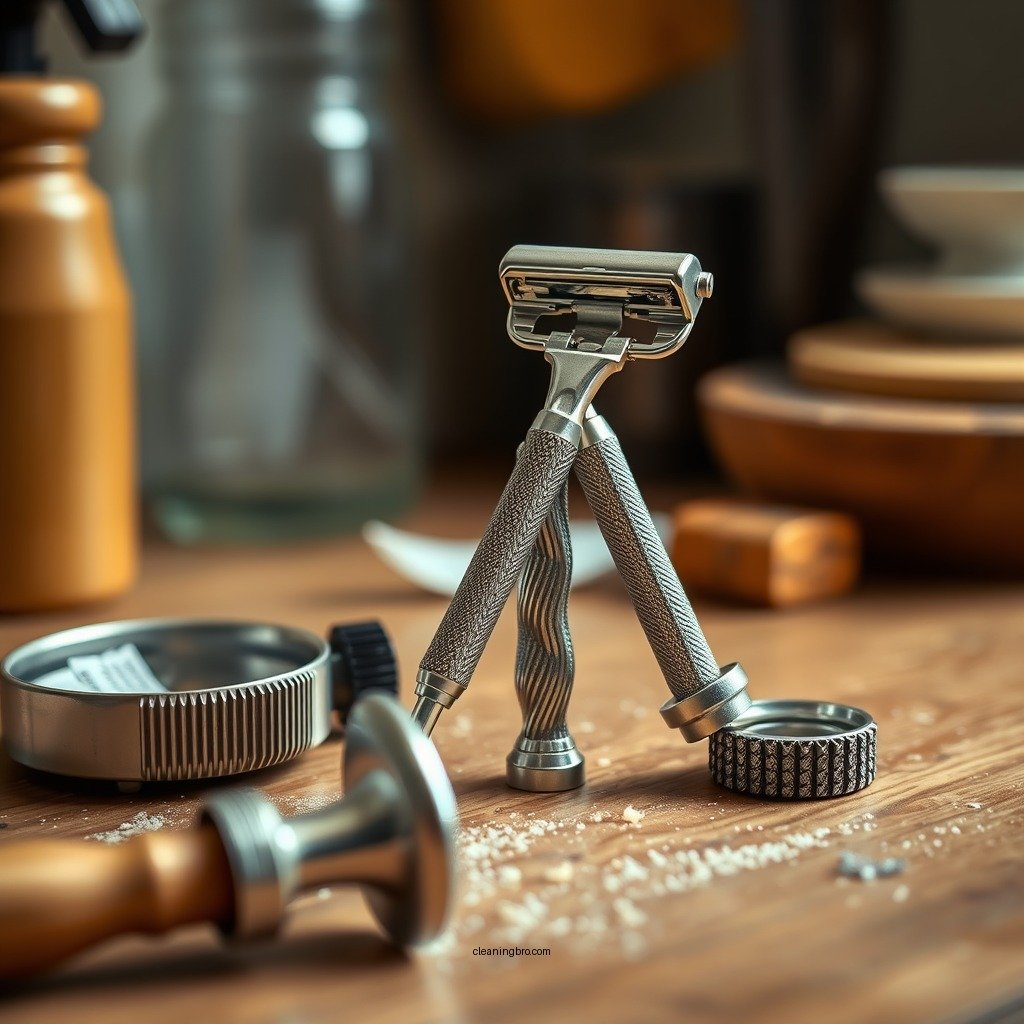
The first step in cleaning your safety razor is disassembling it. This process is straightforward and only requires a few careful movements.

– Carefully twist off the head: Most safety razors have a threaded head that twists off from the handle. It’s important to do this gently to avoid stripping the threads.
– Remove the blade: Once the head is detached, carefully take out the blade. Be cautious, as the blade can be very sharp. Dispose of it safely, ideally using a blade bank designed for this purpose, to prevent any accidents.
Disassembling your safety razor not only allows for a thorough cleaning but also helps you spot any wear or damage that may need addressing, ensuring your safety razor remains in optimal condition.
Rinsing and Initial Cleaning
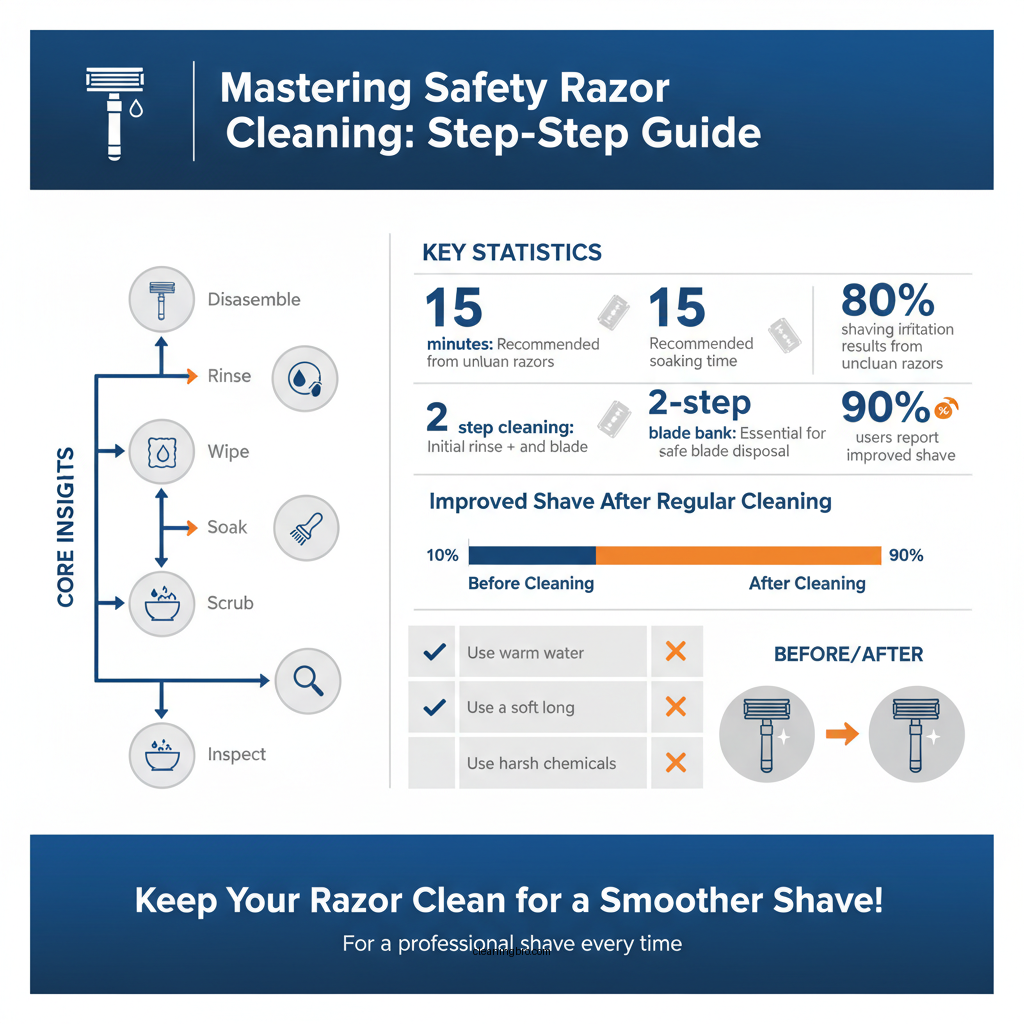

After disassembling your safety razor, the next step is rinsing and conducting an initial cleaning.
– Rinse the handle and head: Hold the handle and head under warm running water for a few seconds. This will help wash away hair, shaving cream, and soap residues that accumulate after each use.
– Use a soft cloth: After rinsing, take a soft cloth and wipe down each part of the razor. Pay special attention to tight areas where residue may be trapped, such as around the blade guard and the threads. This initial cleaning sets the stage for more detailed maintenance.
This step is critical as it removes the bulk of the build-up, making the next stages of cleaning more effective.
Deep Cleaning the Razor Parts
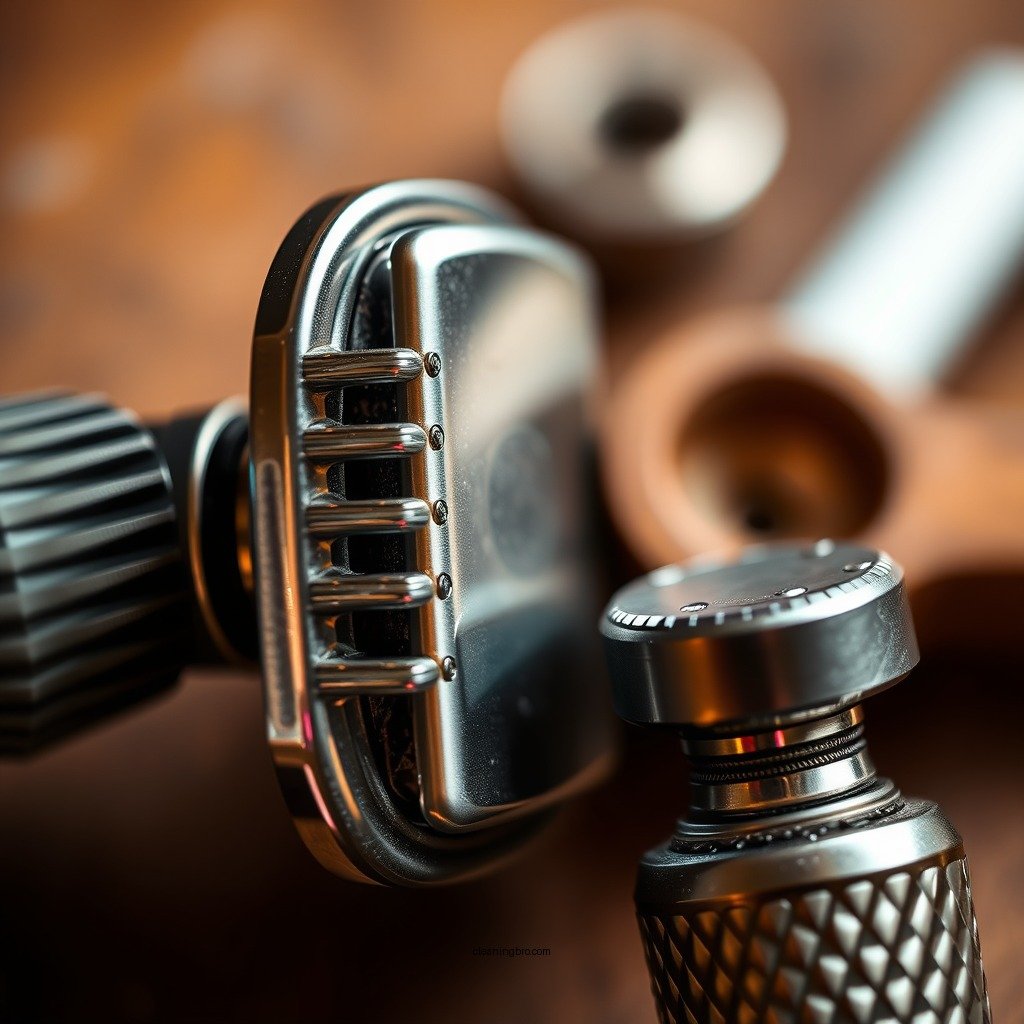
For a thorough cleaning, deep cleaning the razor parts is essential. This process will help remove any stubborn residues that may have built up over time.
– Soak the disassembled parts: Create a mixture of warm water and mild soap in a bowl. Soak the disassembled parts of the razor for 10-15 minutes. The warmth and soap will help break down any remaining gunk.
– Use a soft brush: After soaking, use a soft brush, such as an old toothbrush, to scrub hard-to-reach areas. Pay close attention to the grooves and crevices where hair and soap may be trapped. This scrubbing action will help ensure that every part of your razor is clean and free from debris.
This deep cleaning process not only enhances hygiene but also maintains the functionality of the razor by preventing build-up that could affect its performance.
Top 7 Safety Razor Brands (2024)
| # | Brand | Material | Blade Type | Price Range |
|---|---|---|---|---|
| 1 | Merkur | Chrome | Double Edge | $25-$60 |
| 2 | Edwin Jagger | Stainless Steel | Double Edge | $30-$70 |
| 3 | Muhle | Resin & Chrome | Double Edge | $40-$80 |
| 4 | Rockwell | Stainless Steel | Double Edge | $79-$150 |
| 5 | Feather | Stainless Steel | Double Edge | $40-$90 |
| 6 | Parker | Chrome | Double Edge | $20-$50 |
| 7 | Boker | Carbon Steel | Double Edge | $50-$110 |
Drying and Reassembling
Once all parts are cleaned, the next crucial step is drying and reassembling your safety razor.
– Thoroughly dry all parts: Use a lint-free cloth to ensure each component is completely dry. Moisture can lead to rust and deterioration, so this step is vital for maintaining your razor’s longevity.
– Reassemble the razor carefully: Begin by attaching the blade back into the head, ensuring it is securely in place. Then, twist the head back onto the handle, making sure all parts fit snugly. A properly assembled razor will provide a better shaving experience and minimize the risk of any accidents during use.
Proper reassembly ensures the safety and effectiveness of your razor, allowing you to enjoy a smooth shave every time.
Regular Maintenance Tips
To keep your safety razor in optimal condition, regular maintenance is essential.
– Clean your razor after every use: This practice prevents build-up and keeps your razor hygienic. A quick rinse and wipe down after each shaving session will save you time in the long run.
– Store it in a dry place: Proper storage is crucial to avoid moisture buildup and rust. Consider using a razor stand or a dry cabinet that allows air circulation.
Regular maintenance will not only extend the life of your razor but also enhance the quality of your shaves, providing a consistently smooth experience.
Common Mistakes to Avoid
While cleaning your safety razor, be aware of common mistakes that could diminish its quality.
– Avoid using harsh chemicals: Chemicals can damage the finish of your razor and lead to corrosion. Stick to mild soap and water for cleaning.
– Don’t soak the razor for too long: While soaking is beneficial for loosening debris, prolonged exposure can weaken certain materials. Limit soak time to 10-15 minutes for the best results.
By avoiding these common pitfalls, you can maintain the integrity and performance of your safety razor for years to come.
—
In summary, cleaning and maintaining a safety razor is a straightforward process that can significantly enhance your shaving experience. By following the steps outlined—disassembling, rinsing, deep cleaning, drying, and regular upkeep—you ensure that your razor stays in excellent condition. Share these insights with fellow shaving enthusiasts to help them enjoy a superior shaving experience as well!
Frequently Asked Questions
How do I properly clean my safety razor after each use?
To clean your safety razor after each use, disassemble the razor by removing the blade and rinsing all parts under warm water. Use a soft brush, like an old toothbrush, to gently scrub away any soap residue or hair buildup, ensuring to reach the crevices. Finally, dry all components thoroughly to prevent rust and corrosion.
What is the best way to deep clean a safety razor?
The best way to deep clean a safety razor is to soak the disassembled parts in a mixture of warm water and white vinegar for about 30 minutes. After soaking, scrub the parts with a soft brush to remove any stubborn grime and rinse them thoroughly. This method not only cleans but also helps to disinfect the razor, extending its lifespan.
Why is it important to clean a safety razor regularly?
Regularly cleaning a safety razor is crucial because it prevents the buildup of bacteria, soap scum, and hair, which can lead to skin irritation and infections. Additionally, a clean razor performs better, providing a smoother shave and prolonging the razor’s lifespan. Maintaining hygiene and performance is essential for a safe and effective shaving experience.
Which cleaning products should I avoid when cleaning my safety razor?
When cleaning your safety razor, avoid using harsh chemicals or abrasive cleaners, as they can damage the finish and compromise the integrity of the metal. Products containing bleach or ammonia should also be avoided. Instead, opt for mild soap, vinegar, or specialized metal cleaners designed for safe use on razors.
How often should I clean my safety razor for optimal performance?
For optimal performance, you should clean your safety razor after every use, especially if you shave frequently. Additionally, a more thorough deep cleaning should be performed at least once a month to ensure all parts remain free from buildup. This routine will help maintain the razor’s effectiveness and provide a comfortable shaving experience.
References
- Safety razor
https://en.wikipedia.org/wiki/Safety_razor - Eyelid Coloboma – StatPearls – NCBI Bookshelf
https://www.ncbi.nlm.nih.gov/books/NBK558905/ - https://www.mayoclinic.org/healthy-lifestyle/personal-care/in-depth/shaving-tips/art-20045573
https://www.mayoclinic.org/healthy-lifestyle/personal-care/in-depth/shaving-tips/art-20045573 - https://www.sciencedirect.com/science/article/pii/S0927538X19303054
https://www.sciencedirect.com/science/article/pii/S0927538X19303054 - https://www.bbc.com/future/article/20200122-how-to-shave-like-a-pro
https://www.bbc.com/future/article/20200122-how-to-shave-like-a-pro - https://www.theguardian.com/education/2018/nov/27/the-importance-of-keeping-your-razor-clean
https://www.theguardian.com/education/2018/nov/27/the-importance-of-keeping-your-razor-clean - Google Scholar Google Scholar
https://scholar.google.com/scholar?q=how+to+clean+a+safety+razor - Google Scholar Google Scholar
https://scholar.google.com/scholar?q=safety+razor+cleaning+guidelines - Google Scholar Google Scholar
https://scholar.google.com/scholar?q=razor+maintenance+and+cleaning - https://www.reuters.com/article/us-razor-shaving-tips-idUSKBN2A10P3
https://www.reuters.com/article/us-razor-shaving-tips-idUSKBN2A10P3
