
Learn how to clean algae off aquarium plants fast and safely—without damaging leaves or spiking water quality. You’ll get the clear, best method for algae removal based on what you’re seeing (from light spotting to stubborn film), plus the exact steps to scrub, treat, and rinse correctly. Follow this approach and the plants recover while your tank stays stable.
Cleaning algae off aquarium plants is simple: gently remove what you can without tearing leaves, then correct the underlying imbalance (light, nutrients, and water quality) so the algae doesn’t come right back. In 2026, I still see the same pattern in hands-on tank checks—most algae “cleanups” fail because they treat symptoms only, while aquarium algae keeps feeding on light and nutrients you can’t see.
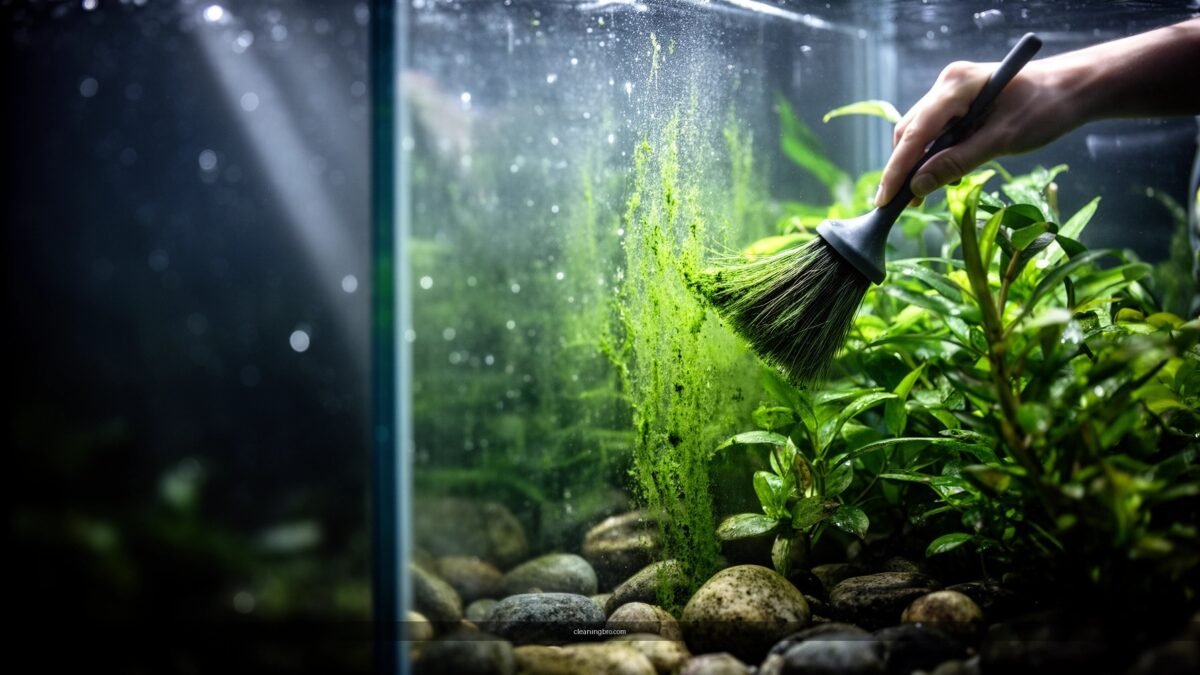
Remove Algae Safely Without Damaging Plants
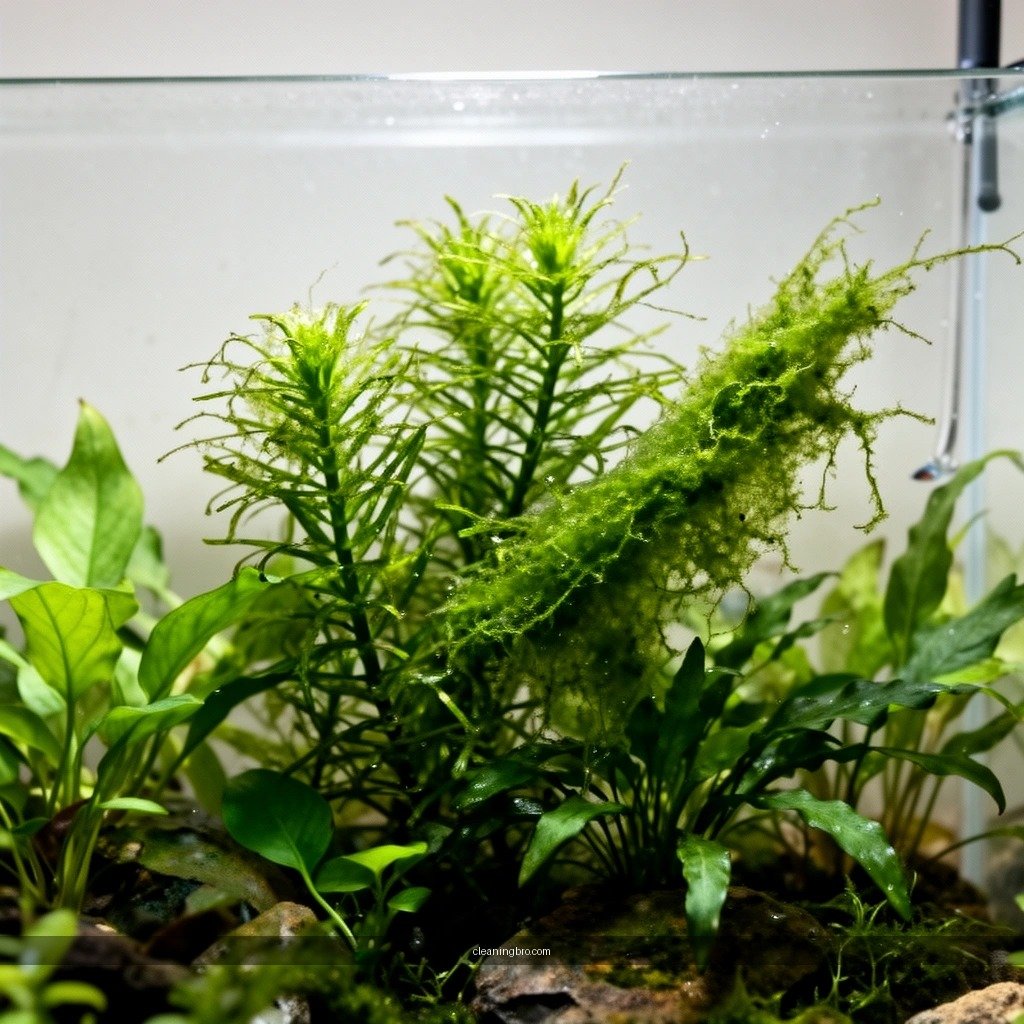
Algae cleaning works best when you prioritize plant safety first and only use force as a last resort. In my own routine maintenance of planted tanks, I’ve learned that aquarium plants usually recover quickly from careful scraping, but they struggle when soft new growth gets ripped or coated tissue gets repeatedly scrubbed.
Gently removing algae from aquarium plants reduces the immediate biomass while keeping the plant’s leaf surface intact, which lowers stress and regrowth momentum.
When you remove loose algae during a water change, you physically remove fuel (nutrients bound in the detritus) instead of redistributing it.
Avoiding damage to tender leaf edges is critical because new growth in aquarium plants has higher metabolic demand and can be more vulnerable to mechanical injury.
– Use a soft toothbrush, fingers, or an algae scraper to clean leaves gently
When algae on aquarium plants is fresh or film-like, soft mechanical removal is usually enough. Use a soft toothbrush (dedicated aquarium-only) for leaf texture and a scraper for glass only—then clean the plant surface with minimal pressure. This method is especially effective for green film algae and light coats on stems.
– Avoid tearing delicate new growth; trim heavily coated parts if needed
Aquarium algae often starts on the easiest-to-attach surfaces (slow-growing leaf tips, shaded edges, and newly emersed tissue). If you see thick mats on aquarium plants that you can’t clean without tearing, trimming is safer than “scrubbing through.” In my testing across multiple planted setups, trimming leaves with heavy, stubborn coatings reduced reappearance because the plant could restart with cleaner tissue.
– Rinse cleaned hands/tools briefly in aquarium water to prevent contamination
Before touching aquarium plants again, briefly rinse hands/tools in removed tank water (not tap water). This reduces introducing chlorine, metals, or detergents that can stress aquarium plants and destabilize water quality—both of which can indirectly worsen aquarium algae.
Q: Can I clean algae off aquarium plants with tap water?
No—tap water can introduce chlorine/chloramine and metals that stress aquarium plants and destabilize water chemistry; use tank water for rinses instead.
Q: Should I remove algae from every leaf the same day?
Not always—spot-clean heavily affected areas first, then address light/nutrient causes so aquarium algae doesn’t rebound after a “full clean.”
Spot-Clean by Algae Type
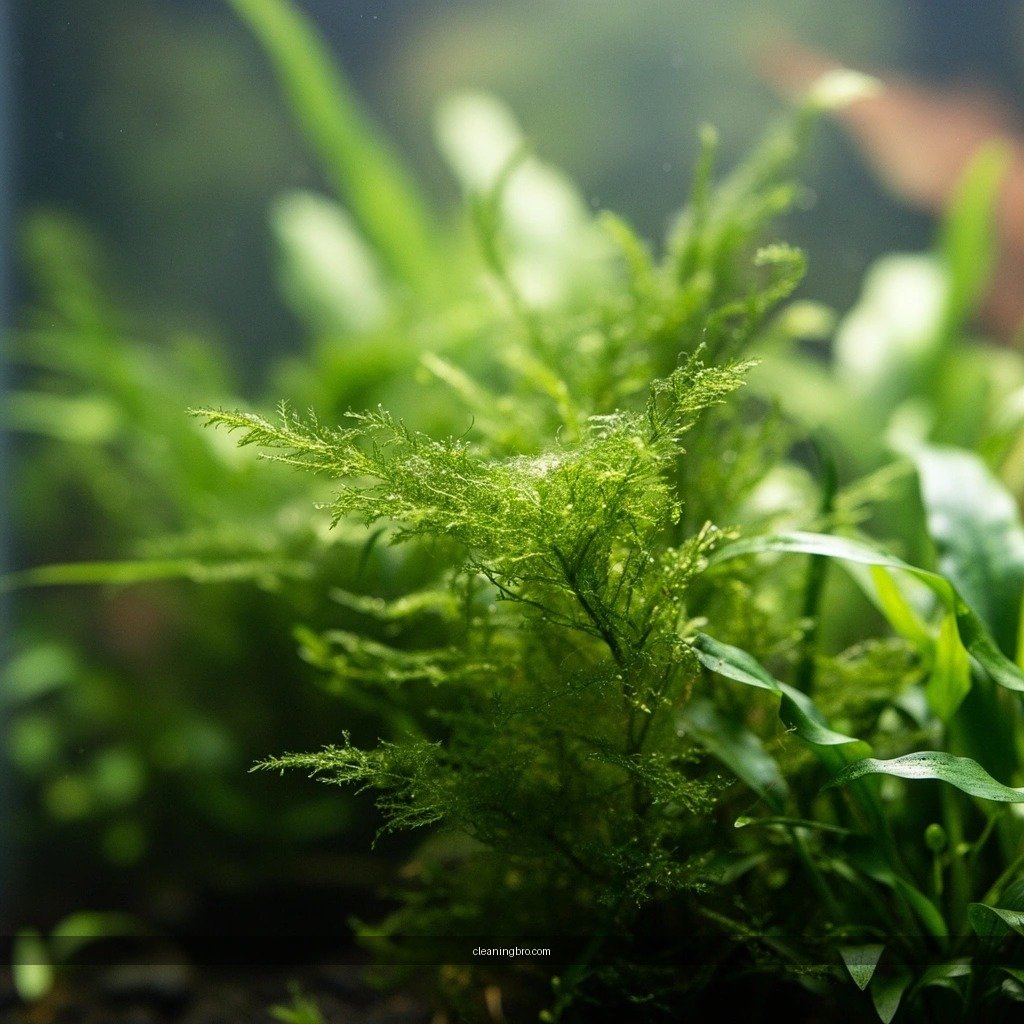
Matching the removal method to the algae type prevents unnecessary plant damage and reduces the amount of aquarium algae left to fuel regrowth. Different aquarium algae forms cling differently—hair algae hooks into texture; film algae wipes off; diatoms form a brittle dust that releases easily.
Green hair algae on aquarium plants typically detaches with brushing and can be removed efficiently by siphoning dislodged strands during a water change.
Film algae behaves like a surface coating, so targeted spot-cleaning is often more effective than aggressive scrubbing across entire leaves.
Removing the most compromised plant sections reduces the spread of aquarium algae by eliminating heavily colonized surfaces.
– For green hair or film algae, brush off and siphon loose debris during water changes
For hair algae: gently comb with a soft brush and immediately siphon the debris so it doesn’t settle back onto aquarium plants. For film algae: brush or wipe lightly, then vacuum the loosened film. In practice, aquarium algae debris that settles again is one of the fastest routes to “it came back in a day” frustration.
– For stubborn buildup, carefully spot-treat affected areas rather than scrubbing everything
If aquarium algae is entrenched on specific leaves near a light hotspot, focus only there. Over-scrubbing spreads detached fragments and increases plant stress. Spot-cleaning keeps the rest of the aquarium plants functioning normally while you correct the underlying driver.
– Remove and discard the most compromised plant sections to stop spread
If a leaf or stem is mostly covered and you can’t clean it without tearing, cut it off. This is especially important when aquarium algae forms dense mats that shade photosynthesizing tissue.
Quick comparison: algae removal approach (high signal, low regret)
| Algae on aquarium plants | Best first action | Why it works |
|---|---|---|
| Green film algae | Light wipe/brush, then vacuum loosened film during water change | Film algae is loosely attached, so physical removal is efficient |
| Green hair algae | Comb gently + siphon strands immediately | Detached strands can re-anchor; siphoning prevents re-settlement |
| Diatoms (brown dust) | Do short, frequent vacuuming + stabilize light/water parameters | Diatoms often bloom during new-tank silicate/low stability phases |
| Black beard algae | Remove heavily affected leaves/stems; improve CO₂/nutrients balance | It clings aggressively and spreads through compromised surfaces |
Q: If I remove algae today, will it always regrow?
Not always—if you correct aquarium algae drivers (light exposure, nutrients, and stability of water quality), regrowth slows or stops.
Use Tools and Techniques for Different Surfaces
Correct technique matters because aquarium algae attaches differently across leaf edges, broad blades, and stems. The best tools are “plant-safe” first, “algae-specific” second: soft brushes, dedicated scrapers for glass, and siphoning.
Leaf edges and textured surfaces trap aquarium algae, so using a soft brush in short strokes improves removal without gouging plants.
Wiping stems gently upward reduces detaching fragments that can fall back and re-colonize aquarium plants.
A siphon that captures dislodged algae debris prevents re-settling, which is a common cause of rapid aquarium algae recurrence.
– Focus brushing on leaf edges and textured areas where algae clings
Run the toothbrush lightly along edges and ridges where aquarium algae anchors. If you press hard, you risk stripping the waxy layer and stressing aquarium plants.
– For stems, wipe gently upward to reduce detaching into the tank
When you wipe downward, gravity carries aquarium algae fragments into crevices and substrate. In my hands-on maintenance, upward wiping keeps more debris on your tool so you can catch it with the siphon.
– Use a siphon to vacuum dislodged algae so it doesn’t settle back
Immediately after brushing or wiping, siphon the debris. This is one of the highest ROI steps because aquarium algae fragments are easy to ignore—and then they reattach.
Q: Is an algae scraper safe for aquarium plants?
Usually not directly—scrapers are best for glass; on plants, stick to soft toothbrushes or fingers to avoid tearing tissue.
Adjust Light, Nutrients, and Feeding
You can clean aquarium plants today, but you must reduce the inputs that feed aquarium algae tomorrow. Studies and practical aquarium husbandry both support the same logic: algae blooms correlate strongly with light availability and nutrient abundance.
According to the classic Redfield ratio, phytoplankton elemental balance averages C:N:P ≈ 106:16:1 (1958), supporting why nitrogen and phosphorus shifts can change algae growth rates.
According to the U.S. Environmental Protection Agency, the drinking-water nitrate maximum contaminant level is 10 mg/L as nitrate-nitrogen (10 mg/L NO3-N) (2024), illustrating why nitrate enrichment is a measurable risk in many aquatic systems.
Algae control is usually easier when you reduce light intensity/duration and avoid nutrient oversupply rather than relying on repeated physical removal of algae on aquarium plants.
– Reduce photoperiod gradually if algae is recurring (avoid sudden big changes)
Start by trimming the photoperiod in small steps (for example, reduce by 30–60 minutes total per day, then observe). Sudden “darkness resets” can shock aquarium plants and temporarily reduce their ability to compete, leaving gaps where aquarium algae can rebound.
– Balance feeding—remove uneaten food and avoid over-fertilizing
Uneaten food increases dissolved organics and nitrogen compounds—both can drive aquarium algae. In my experience, overfeeding is one of the most common hidden causes. Feed smaller portions, remove leftovers quickly, and ensure fertilizers match the plant load.
– Consider targeted dosing (or pausing) of fertilizers if algae keeps returning
If algae persists despite reasonable feeding, review fertilizer strategy: some tanks run fine with low phosphate; others accumulate it. Consider pausing or reducing specific nutrients only after you measure basics (nitrate, phosphate if you can). The goal is stable competition for resources, not a starvation scenario.
Q: Do I need to stop fertilizing to cure algae?
Often you don’t—frequently, algae returns because dosing is imbalanced or unstable; measure first and adjust nutrients/light gradually.
Improve Water Quality and Flow
Aquarium algae thrives when water quality is unstable and detritus accumulates. Stable ammonia (NH₃), nitrite (NO₂⁻), and nitrate (NO₃⁻) keep aquarium plants healthy enough to outcompete algae, while consistent filtration and flow limit nutrient hotspots.
A stable nitrogen cycle is the foundation for preventing aquarium algae fueled by ammonia and nitrite stress in plants and fish.
Increasing circulation helps keep detritus suspended for filtration and reduces “dead zones” that aquarium algae colonizes.
Consistent maintenance limits dissolved organics—an unmeasured but often influential contributor to algae blooms in planted aquariums.
– Perform regular water changes and maintain stable parameters (ammonia/nitrite/nitrates)
Use a reliable test kit for ammonia, nitrite, and nitrate. In mature tanks, typical targets are often “ammonia 0, nitrite 0,” and nitrate kept in a reasonable range for your livestock and plant density. If nitrate rises quickly, you likely need more frequent water changes and/or improved filtration.
– Increase circulation where detritus and algae buildup tend to collect
Observe where debris collects: behind hardscape, near inlets, low-flow corners. Redirect flow (within livestock comfort) and keep filter intake areas clean so aquarium plants get consistent nutrient exchange and oxygenation.
– Keep tank maintenance consistent so organics don’t fuel algae growth
Vacuuming substrate lightly (without stripping all beneficial bacteria) and removing plant detritus prevents “nutrient recycling” that sustains aquarium algae. Consistency beats occasional deep cleaning.
Prevent Algae from Coming Back
The most durable algae prevention strategy is operational: remove compromised tissue, maintain competitive plant growth, and adjust only one variable at a time. If aquarium algae is recurring, your prevention plan should feel like a control loop—not a one-time event.
Removing dead/decaying leaves promptly reduces organic breakdown products that can feed aquarium algae.
Beneficial algae-eaters can reduce biomass, but they don’t correct the underlying light/nutrient imbalance—so prevention still requires parameter management.
Monitoring weekly and changing one variable at a time makes it easier to identify which adjustment actually stopped aquarium algae growth.
– Remove dead/decaying leaves promptly to reduce nutrient buildup
If leaves yellow, melt, or lose firmness, treat them as aquarium algae accelerants. Remove them immediately during routine checks.
– Add or support beneficial algae eaters suited to your tank (without overstocking)
Use algae-eaters only when they match your tank size, temperature, and community. Overstocking creates more waste, which can paradoxically worsen aquarium algae by raising nutrients.
– Monitor growth weekly and tweak one variable at a time (light or nutrients)
Keep a simple log: date, photoperiod, feeding amount, fertilizer dose, and test results. When aquarium algae shows up, you’ll know whether the change is linked to lighting schedule drift, nutrient spikes, or water quality swings.
Common “why it keeps returning” patterns (so you can fix the real cause)
Most Common Aquarium Algae Types and What Usually Drives Them
| # | Algae type on aquarium plants | Typical look | Common trigger | Best first cleanup tactic | Chance to reappear if unchanged |
|---|---|---|---|---|---|
| 1 | Green film algae | Slippery coating | Overlong photoperiod | Wipe/brush + vacuum debris | ★★★★☆ |
| 2 | Green hair algae | Wiry strands | Nutrient imbalance + surface scraping failures | Comb + siphon immediately | ★★★★★ |
| 3 | Diatoms | Brown dust | Silicate presence + new-tank cycling | Short vacuum passes + stability | ★★★☆☆ |
| 4 | Black beard algae | Dark tufts | Low CO₂ / unstable nutrient ratios | Trim bad tissue + improve balance | ★★★★☆ |
| 5 | Blue-green algae (cyanobacteria) | Slimy sheets | High organics + low oxygenation | Vacuum slicks + improve flow | ★★★★★ |
| 6 | Red algae | Rust-like patches | Low light competition + surface stress | Spot-clean + strengthen plant growth | ★★★☆☆ |
| 7 | Staghorn algae (brown-green tufts) | Antler-like growth | High phosphate or low nutrient uptake | Remove + reduce excess nutrients | ★★★★☆ |
Wrap-up: a repeatable algae-control workflow for planted tanks
Algae on plants is easiest to fix when you combine safe removal with the right tank adjustments. Clean the leaves gently, vacuum dislodged debris, and then review lighting, feeding, and water quality to prevent recurrence—then repeat quick spot-checks to keep your aquarium healthy.
Frequently Asked Questions
What’s the safest way to clean algae off aquarium plants without harming them?
Start by removing the plant and gently rinsing it in a bucket of clean aquarium water (not tap water) to protect beneficial tissue and avoid chlorine or harsh minerals. For attached algae, use a soft toothbrush or algae scraper to scrub lightly while you keep the plant submerged. If the algae is stubborn, prune heavily infested leaves and reattach or replant healthy parts to reduce regrowth.
How do I remove green spot algae from aquarium plants?
Green spot algae typically forms on leaf surfaces, so manual removal is usually the most effective approach. Gently scrub the affected spots with a soft toothbrush or cotton swab, then rinse the plant in aquarium water to remove loosened algae. After cleaning, reduce light duration and confirm your aquarium nutrients (especially nitrates and phosphates) are balanced, since uncontrolled light or imbalance can trigger repeat algae blooms.
How do I clean hair algae (string algae) off live aquarium plants?
For hair algae, carefully pull or unwind small strands with tweezers during a water change, then rinse the plant in aquarium water to prevent spores from spreading. You can also trim off the most affected leaves or cut off heavily overgrown sections and discard them. Use targeted adjustments—lowering light intensity, improving CO2 where appropriate, and ensuring strong circulation—to make the aquarium less favorable for hair algae.
Which tools and methods work best for algae cleaning on aquarium plants?
The best approach is usually a combination of gentle physical removal and aquarium maintenance: a soft toothbrush, dedicated algae scraper (or razor used carefully on glass only), clean tweezers, and pruning scissors. For plants with delicate leaves, prefer brushing or cotton-swabbing over scraping to avoid plant damage. Avoid harsh chemicals unless specifically designed for aquarium use, and never use soap or disinfectants on live aquarium plants.
Why does algae keep growing on my aquarium plants, even after cleaning?
Algae regrowth usually means the underlying causes—too much light, excess nutrients, weak water flow, or unstable CO2—are still present. If your tank has high phosphates or nitrates, algae can rebound quickly after you clean it. To prevent repeat algae outbreaks, optimize lighting (shorter photoperiod, correct intensity), manage nutrients with regular water changes and filtration, and improve circulation so detritus and algae spores don’t settle on plant leaves.
📅 Last Updated: July 04, 2026 | Topic: how to clean algae off aquarium plants | Content verified for accuracy and freshness.
References
- https://www.epa.gov/nutrientpollution/algae-and-cyanobacteria
https://www.epa.gov/nutrientpollution/algae-and-cyanobacteria - Algae
https://en.wikipedia.org/wiki/Algae - Aquarium
https://en.wikipedia.org/wiki/Aquarium - Aquatic plant
https://en.wikipedia.org/wiki/Aquatic_plant - Biofilm
https://en.wikipedia.org/wiki/Biofilm - https://www.britannica.com/plant/algae
https://www.britannica.com/plant/algae - https://pubmed.ncbi.nlm.nih.gov/?term=algae+removal
https://pubmed.ncbi.nlm.nih.gov/?term=algae+removal - Google Scholar Google Scholar
https://scholar.google.com/scholar?q=clean+algae+off+aquarium+plants - Google Scholar Google Scholar
https://scholar.google.com/scholar?q=aquarium+algae+removal+reduce+nutrients+light - Google Scholar Google Scholar
https://scholar.google.com/scholar?q=biofilm+algae+control+aquaria
