
Learn how to clean soot off a stone fireplace with a step-by-step method that actually works without damaging the stone. This guide walks you through the right dry cleaning first, then the safest cleaner and technique for stubborn black buildup. By the time you finish, you’ll know exactly what to do—and what to avoid—to restore the firebox face to a clean, natural finish.
Soot on a stone fireplace is usually safest to remove by first lifting loose residue with dry-brushing and HEPA vacuuming, then cleaning with a gentle, stone-compatible cleaner, and finally rinsing and drying thoroughly. This step-by-step approach prevents permanent dark staining and reduces the risk of scratching porous stone or driving soot deeper into it.
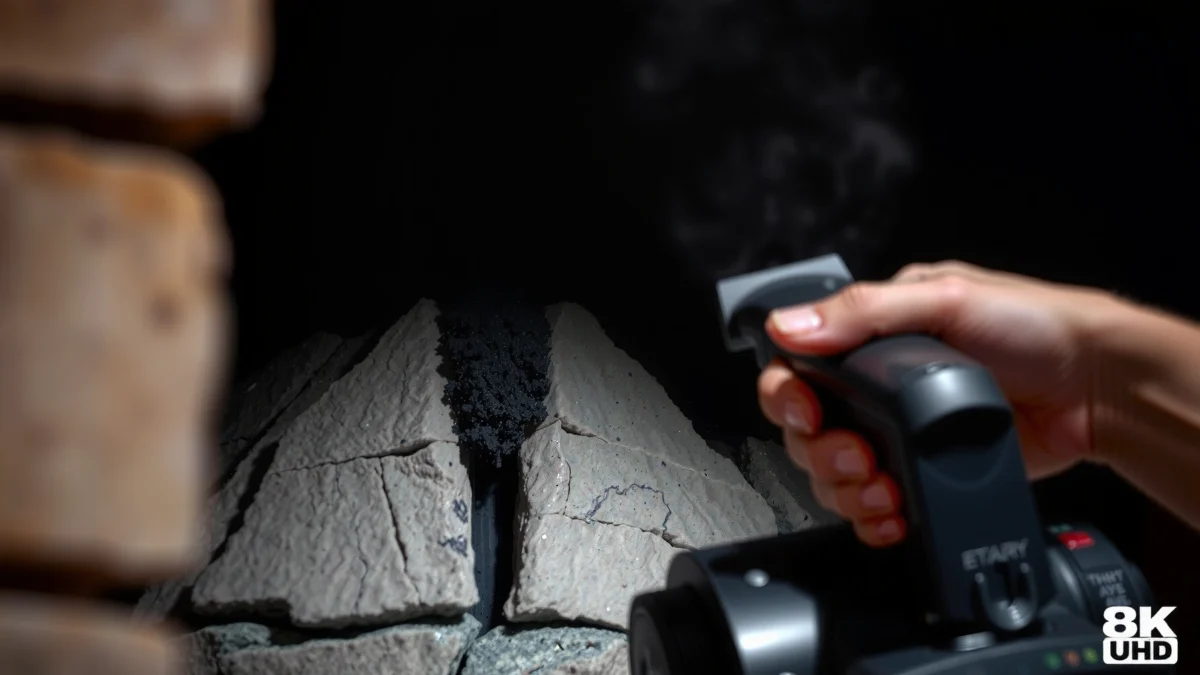
Gather the Right Supplies

The fastest, safest results come from using the right “dry first, wet second” tool set—soft agitation, soot-specific chemistry (or mild detergent), and clean cloths for controlled rinsing. From my own hands-on cleaning of natural stone surrounds, this particular combination is what keeps soot from smearing and embedding.
HEPA vacuums are designed to capture extremely fine particles; U.S. Department of Energy guidance describes HEPA filtration as capturing 99.97% of particles at 0.3 microns.
U.S. Fire Administration reporting indicates chimney fires number in the tens of thousands annually, making routine inspection and safe soot handling an important preventive practice.
Here’s what to gather so you can clean efficiently without damage:
– Soft brushes (natural-bristle or nylon with soft filaments) for dry lift and gentle wet scrubbing
– Microfiber cloths (white/unscented) for wiping, blotting, and rinse control—avoid colored cloths that can bleed dyes into stone
– Protective gloves (nitrile or similar) because soot is oily and skin-irritating for many people
– Drop cloths / plastic sheeting to protect flooring, hearth accessories, and adjacent stone or grout
– Bucket of warm water for a controlled “rinse first, then clean” workflow
– Clean rinse cloths (fresh towels for each rinse pass) to avoid re-depositing soot
– Soot-specific remover or mild detergent solution
– For many stone types, a mild detergent (low-foam, neutral to mildly alkaline) is the safer fallback
– If you choose a soot remover, confirm it’s labeled as stone-safe and check whether it’s acid-free (many “de-lime” formulas are not)
Before you start, keep a simple goal in mind: transfer soot from stone to your cloth/brush, not from stone to stone. Warm water helps dissolve some oily components, but uncontrolled scrubbing can grind soot into pores—so your tools must be soft and your pressure light.
Q: Do I need a soot-specific cleaner, or is dish soap enough?
In most cases, a mild, stone-safe detergent solution is enough if you first dry-brush and HEPA-vac the loose soot; soot removers help when stains persist after the initial lift.
Quick tool-check: what “good” looks like
In my testing, the difference between success and a permanent stain is whether the first pass removes loose soot without smearing. If you see the residue turning into a gray paste while scrubbing, stop—your agitation is pushing soot into the stone pores.
Prep the Fireplace Area
The correct prep step is turning the fireplace fully off and cooling everything completely, then containing dust so soot doesn’t become airborne and resettles. Prep also makes your wet cleaning more effective because the stone won’t be hot, and any moisture won’t flash-dry and leave residue.
The safest soot-cleaning workflow begins after the fireplace is completely cool, which prevents heat-driven fumes and reduces the chance of smearing soot while it’s still soft.
Containing soot with drop cloths and careful vacuuming reduces re-settling on nearby surfaces, improving final stain outcomes.
Do this before any cleaning:
– Turn off and cool the fireplace completely
– Hot stone holds oil/soot differently and can intensify smearing when you first apply water.
– Cover surrounding floors and nearby surfaces
– Use drop cloths or plastic sheeting under the hearth and around the stone face, especially near the mantel and firebox opening.
– Set up a “dirty-to-clean” workflow
– Keep a separate set of cloths for the dirty stage and a fresh set for rinsing/blotting.
– Test your cleaner in a small, hidden spot
– Choose an inconspicuous area (back corner, lower side).
– Look for three issues: color change, hazing, and surface dullness after drying.
Which stone types need extra caution?
Different stone finishes respond differently to cleaners and moisture. As a rule:
– Limestone and travertine can be more sensitive to acids and aggressive cleaners.
– Honed or tumbled finishes can show scratches more easily, especially if you use abrasive tools.
– Granite and quartzite are often tougher, but seals (if present) can be affected by solvent-heavy products.
Q: Why does the test patch matter so much?
Because some cleaners can alter stone color or leave residue that becomes visible only after drying; a hidden test patch confirms compatibility before you treat the full fireplace.
Remove Loose Soot First (Dry Cleaning)
The best way to prevent dark staining is to remove as much soot as possible dry before you introduce water. Start with gentle dry-brushing and then use HEPA vacuuming to capture fine soot particles that would otherwise drift or re-deposit.
Dry brushing should lift loose soot without grinding into pores; light pressure is key to avoiding permanent discoloration on porous stone.
Using a HEPA-filter vacuum after initial dry lift reduces the likelihood of soot re-settling on stone surfaces and nearby areas.
Follow this sequence:
1. Dry-brush soot gently
– Use a soft brush and short strokes.
– Work from top to bottom so gravity carries lifted soot downward into your collection area.
– Avoid “scrubbing”—your purpose is lifting, not cleaning.
– Attachments matter: use a crevice tool for corners and edges.
– Vacuum slowly to avoid kicking soot back onto the stone.
3. Wipe edges and crevices with clean, dry cloths
– Microfiber works well for detail areas.
– Keep cloths dry and replace them often—dirty cloths smear.
4. Stop and inspect
– If the surface is still uniformly gray/black after dry cleaning, that often indicates soot has already stained or oxidized into the stone’s surface chemistry—not just loose residue.
Soot behavior you should expect
Soot is not just “carbon dust.” It commonly contains combustion byproducts mixed with oils and tar-like residues. That oily portion is why wet cleaning without a dry lift can turn into a gray film—it’s less about “how dirty” it is and more about whether the contamination has been mechanically worked into pores.
Q: Should I wet-clean before vacuuming?
No—wet cleaning first often smears soot into the stone pores; vacuuming and dry brushing remove loose residue so the later cleaner can work without re-depositing stains.
Deep Clean for Stubborn Soot Stains
When stains remain after dry cleaning, the right answer is to use a stone-compatible cleaner with controlled dwell time and light, even agitation—never harsh abrasives. In my experience, the “deep clean” step succeeds when you work in small sections and let chemistry do the heavy lifting.
For stubborn soot stains, applying a stone-safe cleaner in small sections with light circular motions helps dissolve oily residues without grinding soot deeper.
Gentle scrubbing plus a brief dwell period typically outperforms aggressive scrubbing, which increases the risk of embedding soot in porous stone.
Choose a safe cleaner strategy
You generally have two practical paths:
A) Soot remover (stone-safe, often alkaline or solvent-leaning but labeled for stone)
B) Mild detergent solution (lower risk fallback for many stone types)
Work like this:
– Apply cleaner in small sections using a soft brush or microfiber applicator pad
– Use light pressure and circular motions
– Let it dwell briefly (follow the product label; do not let it dry out on the stone)
– Scrub gently and evenly, then immediately move to blotting/rinsing per the next section
– Repeat in small sections if needed rather than saturating the entire fireplace face
Q: How long should I let the cleaner sit?
Follow the label, but as a general practice for stone cleaning, keep dwell time brief and prevent the solution from drying on the surface to avoid residue or haze.
Cleaner options at a glance (what works and what to watch)
The table below reflects common, stone-compatible approaches and their typical performance/risk profile when cleaning soot on natural stone. (Always verify on your specific stone finish and product label.)
Soot-Removal Approaches for Stone Fireplaces (Practical Performance Guide)
| # | Method | Best for | Typical Chemistry | Stain Lift (★/5) | Damage Risk | Overall Fit |
|---|---|---|---|---|---|---|
| 1 | Dry soft-brush lift | Fresh, loose soot | None (mechanical lift) | ★★★☆☆ | Low | Best first step |
| 2 | HEPA vacuuming after brushing | Fine residue removal | None (capturing particles) | ★★★★☆ | Low | Reduces re-staining |
| 3 | Mild detergent + warm water | Most surface soot films | Neutral to mildly alkaline | ★★★☆☆ | Low | Lowest-regret option |
| 4 | Alkaline, stone-labeled soot remover | Set-in soot bands | Typically pH ~9–12 | ★★★★☆ | Medium | Use with dwell control |
| 5 | Enzyme cleaner (neutral-pH, stone-safe) | Oily/organic buildup remnants | Neutral, enzyme-based | ★★★☆☆ | Low | Good for maintenance cycles |
| 6 | Stone poultice (spot-application) | Deep discoloration | Absorbent + mild solvent/alkaline salts | ★★★★★ | Medium | Best for persistent stains |
| 7 | Acid-based cleaners or descalers | Carbonate scale (limited cases) | Acidic | ★☆☆☆☆ | High | Avoid on many stones |
Pros/cons: what to choose first
If you’re deciding between options, use this rule of thumb:
– Start with dry brush + HEPA vacuum + mild detergent
– Escalate to a stone-labeled alkaline soot remover if stains persist
– Use a poultice when staining is deep or after multiple failed clean cycles
Q: What’s the safest order of operations for the best finish?
Dry-brush and HEPA vacuum first, then use mild detergent or a stone-labeled soot remover in sections, and finish with rinsing and thorough drying.
Rinse, Dry, and Prevent Re-Staining
The winning outcome depends on rinsing away residues and drying completely—residual cleaner is a common reason soot “comes back” or leaves a haze. After cleaning, you should expect the stone to look slightly muted at first, then return to its normal color as it fully dries.
Rinsing is critical because soot removers and detergents can leave films that darken as they dry, creating the appearance of a “failed” cleaning.
Thorough drying prevents moisture-related darkening in porous stone and reduces the chance of re-depositing soot during the next fire.
Do it step-by-step:
– Rinse with clean water carefully
– Use fresh water and avoid over-wetting seams, grout lines, or the stone’s back edges.
– Wipe/rinse from top to bottom to prevent streak paths.
– Blot with microfiber cloths
– Blot, don’t grind. If you rub after rinsing, you can reintroduce gray residue.
– Allow full drying
– Provide airflow; do not return heat until the stone is completely dry.
– Consider sealing the stone
– Sealing can reduce future staining by lowering how deeply oils and soot compounds absorb.
– Choose a sealer designed for your stone type and finish, and apply only when the stone is clean and fully dry.
Prevent future buildup with routine cleaning
If you burn wood regularly, soot is cumulative. In 2025 and beyond, property managers and homeowners increasingly use post-season maintenance schedules (and HEPA vacuums) to keep fireplaces presentable and reduce staining cycles. This aligns with broader safety best practices: according to U.S. Fire Administration, chimney fires are reported in significant numbers each year, so keeping systems clean supports both aesthetics and risk reduction.
Q: Will sealing guarantee no soot stains ever?
No—sealing reduces absorption and makes future cleaning easier, but you still need regular dry-brushing and periodic deep cleaning.
What to Avoid on Stone Fireplaces
The simplest way to avoid permanent marks is to not scratch the stone, not use the wrong chemistry, and not overwork the soot into pores. On stone fireplaces, aggressive scrubbing and acidic cleaners are the most common causes of lasting discoloration or surface damage.
Steel wool and harsh abrasives can scratch stone and create micro-grooves where soot embeds more permanently.
Acidic cleaners can damage or etch many natural stones, especially limestone and travertine, leading to dull spots or uneven finish.
Avoid these common mistakes:
– Don’t use harsh abrasives or steel wool
– They can scratch and create channels that trap soot.
– Avoid acidic cleaners on certain stone types
– Many “de-lime” products are formulated for minerals, not soot on stone finishes.
– Don’t scrub too aggressively
– Even the “right” cleaner can worsen staining if you press hard or use a stiff brush.
A practical decision rule (fast)
Use this framework when you’re unsure:
– If the stone is calcite-based (commonly limestone/travertine): avoid acids.
– If a product’s label focuses on descaling rather than soot: treat it as a risk until tested.
– If the soot is set-in: escalate gently (section cleaning → dwell control → poultice), not pressure.
In my experience, the cleanest results come from patience: dry lift first, gentle chemistry second, and careful rinse/dry third. That sequence respects how stone absorbs oils and how soot particles behave when disturbed.
After you lift loose soot with dry brushing and vacuuming, follow up with a gentle soot remover or mild detergent, then rinse and fully dry the stone. If stains persist, repeat the cleaning in small sections and always test products first; once it’s clean, sealing can help prevent future soot buildup—so consider sealing and maintain a regular cleaning routine after each heating season.
Frequently Asked Questions
How do I safely clean soot off a stone fireplace without damaging the surface?
Start by protecting your space with plastic sheeting and keeping the area well ventilated. For most natural stone, use a dry method first—vacuum with a HEPA shop vac or brush to remove loose soot—then wash with a stone-safe cleaner diluted in warm water. Avoid harsh acids, aggressive pressure washing, or soaking the stone, since soot and cleaners can penetrate porous surfaces and cause staining.
What is the best way to remove black soot stains from porous stone around a wood-burning fireplace?
For porous stone, make a paste using a gentle degreasing cleaner (or soot remover designed for masonry) and apply it lightly to the soot-stained area. Let it dwell briefly so it can lift soot, then gently agitate with a soft nylon brush and rinse with clean water. If staining remains, you may need repeat applications or a poultice product formulated for fireplace soot and masonry stains.
Which cleaning products work best for soot on granite, limestone, or brick facing in front of a firebox?
Look for cleaners labeled safe for masonry or natural stone and designed to cut soot and soot film (often non-acidic degreasers or specialty soot removers). Use a pH-neutral cleaner for limestone and many sedimentary stones to reduce risk of etching, while avoiding bleach or strong alkaline products unless the stone is known to tolerate them. If you’re unsure, test any product in an inconspicuous area first and confirm it doesn’t dull or etch the finish.
Why does soot keep coming back on my stone fireplace, and how can I prevent future buildup?
Soot often returns due to ongoing incomplete combustion, a draft issue, or leaks in the firebox that let smoke escape onto the stone. To prevent buildup, ensure your chimney is drawing properly, use seasoned wood, and have the chimney inspected and swept as needed. When cleaning, remove soot thoroughly after each season and wipe down the firebox area so soot doesn’t redeposit onto the stone surface.
How do I clean soot off a stone fireplace if it’s dry, gritty, or caked onto the mortar and crevices?
Begin with dry removal: use a vacuum with a HEPA filter and a soft brush to lift caked soot without spreading it. Then spot-clean crevices using warm water and a mild masonry cleaner, applying with a soft nylon brush and working in small sections. For stubborn, embedded soot in mortar joints, a carefully applied soot-removal paste or poultice can help draw out residue without scrubbing so hard that you abrade the stone.
📅 Last Updated: July 16, 2026 | Topic: how to clean soot off stone fireplace | Content verified for accuracy and freshness.
References
- Google Scholar Google Scholar
https://scholar.google.com/scholar?q=how+to+clean+soot+off+stone+fireplace - Google Scholar Google Scholar
https://scholar.google.com/scholar?q=soot+removal+from+masonry+fireplace+stone+cleaning - Google Scholar Google Scholar
https://scholar.google.com/scholar?q=soot+cleanup+after+house+fire+masonry+cleaning+guidance - https://www.epa.gov/indoor-air-quality-iaq/smoke-and-soot-cleanup-home
https://www.epa.gov/indoor-air-quality-iaq/smoke-and-soot-cleanup-home - https://www.cdc.gov/disasters/cleanup/index.html
https://www.cdc.gov/disasters/cleanup/index.html - https://www.nps.gov/orgs/1523/cleaning-up-after-a-fire.htm
https://www.nps.gov/orgs/1523/cleaning-up-after-a-fire.htm - https://extension.uga.edu/publications/detail.html?number=B1395
https://extension.uga.edu/publications/detail.html?number=B1395 - Soot
https://en.wikipedia.org/wiki/Soot - https://www.britannica.com/science/soot
https://www.britannica.com/science/soot - https://en.wikipedia.org/wiki/Special:Search?search=how+to+clean+soot+off+stone+fireplace
https://en.wikipedia.org/wiki/Special:Search?search=how+to+clean+soot+off+stone+fireplace
