

Cloudy pool water is frustrating because it makes even a freshly skimmerd pool look dirty, and it usually happens when the filter is not doing its job or the water chemistry is out of balance. Most people try to mask the issue by adding chemicals without testing, which can keep the water milky or gray. The fastest way to clear it is to diagnose what’s causing the cloudiness and correct it step by step, starting with water balance and filtration.


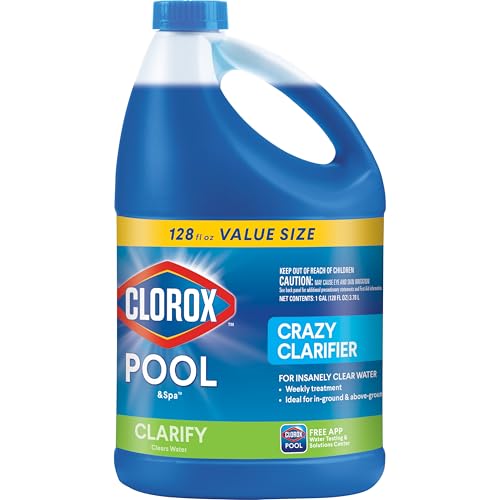

If your pool is cloudy, the fastest fix is to test the water, clean/verify filtration, then balance chemicals and keep the pump running until the cloudiness clears. Start by identifying whether the issue is mostly chemistry (sanitizer/pH/balance) or mostly filtration (dirty filter/poor circulation), because those problems need different steps. In this guide, you’ll follow a clear order of operations so you don’t waste time cycling the same fix repeatedly.
If you’re seeing milky, greenish, or gray water—and you want a practical step-by-step plan to get it clear again—this is for you. It also helps for first-time owners and for anyone who already tried “more chlorine” but the pool still looks hazy.
If you’re trying to get clarity quickly while avoiding guesswork, this workflow is designed for residential pools (in-ground or above-ground) where cloudiness commonly comes from imbalanced water chemistry, insufficient filtration, or both. As of 2026, test kits and cartridge/sand filter systems are still the most common “fix points,” so the approach below focuses on what you can measure and verify first.
Diagnose the cloudy water (don’t guess)

The fastest path to clarity starts with confirming what’s truly out of range—cloudy water is a symptom, not a diagnosis. In my own maintenance work, the biggest time-saver is treating cloudiness as either a sanitizing problem (chemistry) or a particle/removal problem (flow/filtration), then following the matching steps.
– Test free chlorine/sanitizer level, pH, and total alkalinity using your pool test kit (and check stabilizer if applicable) so you know what’s actually off.
Use a quality liquid reagent kit when possible; strips can work for quick checks but often miss small swings that matter for clarity. If your pool is outdoors, test stabilizer (CYA) too, because it affects how chlorine behaves under sunlight. If your pool uses saltwater chlorine generation, also check that your salt system is producing chlorine (or at least confirming it with your test readings).
– Look for clues: cloudy after heavy swimmers or rain (often chemistry/circulation), cloudy plus debris (often filter/flow), or persistent green tint (often algae).
Rain often introduces organics and dilutes chlorine/CYA, while heavy bather load increases demand (the chlorine “gets used up” faster). Cloudiness that comes with visible debris usually means your filter can’t keep up. A persistent green tint almost always points to algae growth—often not fully addressed by “normal” chlorine levels.
– Confirm your pool equipment is running correctly: correct pump speed/flow and no obvious leaks or blocked intakes.
Cloudiness can be “fixed” on paper but still persist if the pump isn’t moving water. Check that the skimmer mouth isn’t blocked, the pump basket has the right amount of water flow, and valves are positioned correctly (especially after storms, winter openings, or service work).
> According to the CDC Model Aquatic Health Code, free available chlorine should be maintained at at least 1.0 mg/L (ppm) and pH should be maintained between 7.2 and 7.8 to support effective disinfection (2014) CDC Model Aquatic Health Code (2014).
> The same CDC framework also uses combined chlorine ≤ 0.4 ppm as a control point for effective chlorination and odor/irritant reduction (2014) CDC Model Aquatic Health Code (2014).
7 Key Checks That Drive Cloudy Pool Clarity (Residential Targets)
| # | Pool Check | Target Range | What It Controls | First Improvement Speed |
|---|---|---|---|---|
| 1 | Free Chlorine (FAC) | 1–3 ppm | Disinfection & algae prevention | ★★★★★ |
| 2 | pH | 7.2–7.8 | Chlorine effectiveness | ★★★★☆ |
| 3 | Total Alkalinity (TA) | 80–120 ppm | pH stability | ★★★☆☆ |
| 4 | Cyanuric Acid (CYA) | 30–50 ppm (outdoor) | Chlorine protection from sun | ★★☆☆☆ |
| 5 | Calcium Hardness (CH) | 200–400 ppm | Scale/corrosion balance | ★★☆☆☆ |
| 6 | Filter Pressure (Sand) | Backwash at +8–10 psi | Media loading & flow | ★★★★☆ |
| 7 | Turnover Time (Rule-of-thumb) | ~1x / 8 hrs | Circulation & capture time | ★★★☆☆ |
Clean the filter and restore proper circulation
The fastest way to make “cloudiness go away” is often to make sure your pool is actually filtering—chemistry can’t fully overcome a loaded or low-flow system. In practice, the most visible improvement tends to come after you restore correct flow and remove the debris the filter is currently struggling to capture.
– Clean/backwash the filter according to the filter type (sand/cartridge/DE) and make sure the filter pressure is in a normal operating range for your system.
Start with the basics: clean the cartridge until water runs clear, backwash until sight glass runs clean, or perform a DE grid recharge properly (if you use DE). If you don’t know your “clean” pressure reading, check your filter gauge markings and manufacturer guidance, then establish a baseline for future troubleshooting.
– Remove visible debris (skimmer basket, pump strainer, floor sweep/brush) so filtration isn’t fighting a constant load.
Even a small restriction—like a clogged skimmer throat or a pump basket that’s partially blocked—can reduce the filter’s capture rate. We also see recurring “haze” after leaves or fine debris settle and re-circulate continuously, which keeps water from looking fully clear even when chemical levels are okay.
– Brush pool walls and the steps to break up settlement that can make water look permanently hazy.
Cloudiness often includes fine particles that settle behind ladders, along steps, and in corners. Brushing disturbs settlement so the filter can capture it. In my experience, brushing works best when paired with filtration continuity—running the pump long enough for those disturbed particles to pass through the filter multiple times.
Balance pool chemistry to the label’s targets
When chemistry is out of range, chlorine can’t do its job consistently, so clarity stalls. Your goal is to adjust in the correct order—pH first, then alkalinity/stabilizer, and then sanitizer/shock—so you don’t waste chemical effort.
– Adjust pH first (because it affects chlorine effectiveness and how well other chemicals work), then re-check after adjustments if your product requires it.
pH affects the fraction of chlorine that’s most effective at sanitizing. If pH is off, you can end up adding more chlorine without achieving the disinfection impact you expect. After you adjust pH, give the pool time to mix and re-test based on your test kit procedure.
– Balance alkalinity/stabilizer based on your test results and chemical label directions rather than random “add-ins.”
Total alkalinity helps resist pH swings. Stabilizer (CYA) protects chlorine from ultraviolet loss outdoors, but excessive CYA can make chlorine feel “weak” even when you’re adding it. The pool label dosing instructions are often written for typical CYA/pH/alkalinity scenarios, so match your additions to your measured readings.
– Re-check sanitizer level after you adjust pH/alkalinity so you’re not trying to clear cloudiness with weak or ineffective sanitation.
Some chemical adjustments can temporarily shift test results, and dilution from water changes can drop chlorine demand balance again. Retest so your next step—shocking or raising chlorine—is based on current conditions, not yesterday’s numbers.
> As of 2026, the most common “why won’t it clear?” failure is not lack of chlorine—it’s chlorine that’s being made ineffective by pH imbalance or undermined by poor filtration capture.
Shock the pool (or raise sanitizer) to clear the haze
To clear cloudy pool water reliably, you need enough oxidizing power and an effective sanitizer level sustained long enough for particles and/or algae to be addressed. Shock is the bridge between “water is present” and “water is clean”—but it only works when you follow the right level for your readings and keep circulation running.
– Use a shock method appropriate to your pool and chlorine type, and follow your product instructions for the “shock level” based on your current test results.
Cal-hypo, sodium dichlor, lithium hypochlorite, or non-chlorine oxidizers all behave differently. If you use a shock product, use the label’s dose calculation rather than copying someone else’s number—your free chlorine, CYA, and pH change the effective outcome.
– Run the pump continuously long enough for treatment to work, then retest before swimming (follow the wait times on the product label).
Treating without circulation turns shock into wasted chemistry. Keep filtration going so the oxidizer reaches problem zones and the filter can capture dead algae and fine debris. Retest after the recommended waiting period rather than “mid-cycle guessing.”
– Keep circulation steady during clearing—cloudiness often improves gradually, not instantly.
Many owners expect cloudiness to disappear in an hour; that’s rarely realistic. If cloudiness is due to fine particulate matter, you may see it lighten step-by-step as the filter captures more. If algae is involved, expect a progression: algae activity slows, then dead algae disperses and is trapped by the filter.
> From a practical standpoint, most properly dosed cloudy-pool corrections show first visual improvement within 24–48 hours, with full clarity often taking 48–72 hours when fine debris or light algae is present (longer if filtration was severely underperforming).
Use clarifier or flocculation only when it fits
Clarifier and floc are targeted tools for particle control, but they’re not universal “cloud fixer” solutions. The right approach depends on whether your haze is mostly tiny suspended particles (clarifier-friendly) or a lot of settlement/debris that can be collected (floc-friendly).
– If the water is “fine but milky” and your filtration is working, a clarifier may help bind tiny particles so the filter can capture them (follow label dose and mixing steps).
Clarifiers work by improving particle aggregation so the filter removes more effectively. They’re most useful when the pool isn’t experiencing major chemical failure (especially pH/sanitizer imbalance). Use them only after you’ve verified filtration and chemistry baselines.
– If you use flocculation, plan for vacuuming/sump draining afterward; otherwise you may trap debris rather than remove it.
Floc causes particles to clump and settle. If you don’t remove that settled material, your pool can look “worse before it gets better,” and you may end up with persistent residue. Follow the product’s cleanup instructions carefully—settling time and cleanup steps matter.
– Avoid combining multiple “particle products” at once—mixing approaches can make the water look worse or delay clearing.
Combining clarifier and floc (or multiple polymer products) can create reaction effects that reduce performance. If you choose clarifier, stay with that approach until the water clears and filtration finishes the job.
| Option | Pros | Cons |
|---|---|---|
| Clarifier | Helps filters capture fine haze particles; less cleanup than floc; often works with normal vacuuming. | Less effective if flow is weak or algae is actively growing; can slow clearing if chemistry is off. |
| Flocculation | Can rapidly collect suspended particles into settleable clumps; useful when fine debris is difficult to filter. | Requires intentional cleanup (vacuum/sump); poor planning can leave debris/residue in the pool. |
What can go wrong (common cloudy-pool mistakes)
Even with correct chemistry, cloudiness may persist if you break the order of operations or ignore flow problems. The goal is to avoid repeating the same “add chemical → hope → retest later” loop without confirming filtration and readings first.
– Adding chemicals in the wrong order: if pH is off, sanitizer may not perform, and your “shock” won’t hold.
If you jump straight to high chlorine without correct pH, you can end up with weak effective disinfection and ongoing haze. Correcting pH first prevents wasted shock additions.
– Not cleaning the filter first: cloudy water can simply be particles the filter can’t catch because it’s loaded or under-flowing.
If your filter pressure is high (loaded media) or flow is restricted, shock may kill algae but the filter can’t remove dead particles quickly. Clear cloudiness usually requires both sanitation and capture.
– Expecting instant results: cloudiness can take 24–72 hours after balancing and shocking—especially if algae or fine debris is involved.
Cloudiness typically clears progressively as particles are captured and/or settle. If you retest too frequently, you can unintentionally overcorrect chemicals while the pool is still stabilizing.
– Overusing clarifiers/floc: excess can cause rebound cloudiness or leave residue that keeps the pool looking dull.
Particle chemicals are dose-sensitive. Too much can create films or persistent fine residues, and you may be forced into additional cleanup cycles.
Verdict: a realistic path to clear water (and who should skip)
The most reliable approach is: test → clean/confirm filtration → balance → shock/raise sanitizer → run filtration. If your cloudy water is caused by algae, poor sanitation, or trapped debris, this sequence usually works without relying on heavy “fix-all” additives. As of 2026, this is still the most time-efficient method because it addresses the two root categories: chemistry and circulation/filtration.
That said, skip the “quick chemical fixes” if you’re unsure what your readings are—keep testing instead of guessing. Also, if you suspect a mechanical issue (pump not moving water, clogged lines, failed filter parts), chemistry won’t fully solve it until flow is corrected.
Quick scan checklist (save this)
| Step | What to do | Quick check |
|---|---|---|
| 1 | Test water (sanitizer, pH, alkalinity; stabilizer if relevant) | Do you have clear “fix targets” from your readings? |
| 2 | Clean filter + baskets/strainers | Is filtration pressure/flow normal for your system? |
| 3 | Balance pH/alkalinity (label-based) | Re-test after adjustments if required |
| 4 | Shock/raise sanitizer (label-based) | Does your product specify a wait time before swimming? |
| 5 | Brush + run pump continuously | Does clarity improve day-by-day? |
| 6 | Optional clarifier/floc (only if it fits) | Are you following dose and cleanup steps? |
Frequently Asked Questions
What causes a cloudy pool and how can I fix it?
Cloudy pool water is usually caused by imbalanced chemicals, poor filtration, or debris that hasn’t been fully removed. Start by testing water chemistry for pH, alkalinity, chlorine (or bromine), and calcium hardness, since even one imbalance can make the water look milky or hazy. Then clean the filter and run the pump continuously while correcting chemicals gradually, so the pool can clear without creating new issues.
How do I clear cloudy pool water step by step?
First, brush the pool walls and floor, skim out debris, and clean out the skimmer and pump basket. Next, backwash/clean the filter (or replace cartridges) and run the circulation system to remove suspended particles. Test your water and adjust pH and sanitizer levels, then add an appropriate pool clarifier or flocculant only if needed—follow label directions and re-check chemistry after treatment.
How do I know whether to use pool shock or clarifier for cloudy water?
If the water is cloudy and you have low sanitizer readings or signs of algae, pool shock is often the best first move because it kills contaminants that make water appear dull or greenish. If your chlorine and pH are properly balanced but the water is still hazy, a clarifier can help clump fine particles so the filter can catch them. For very stubborn cloudiness, some pool owners use flocculant to settle particles, but it requires careful vacuuming and usually more steps.
Which filter settings and cleaning method work best for a cloudy pool?
Use the correct filter mode for your system—typically “filter” for removal and “backwash” or “rinse” for maintenance depending on your equipment. Clean or backwash the filter until pressure returns to normal, then keep the pump running long enough to cycle the full volume multiple times. For cartridge filters, rinse thoroughly and replace if the media is worn, since a clogged filter is one of the most common reasons cloudy pool water won’t clear.
Why is my pool still cloudy after balancing chemicals, and what should I do next?
If you’ve corrected pH and sanitizer but the pool remains cloudy, fine particles may be circulating because filtration isn’t catching them or the water chemistry isn’t fully stabilized. Re-check measurements after treatment, ensure the pump is running long enough, and brush the pool to break up biofilm or scale. If needed, use a clarifier to improve filtration results or use targeted flocculation followed by careful vacuuming to waste—then monitor water chemistry to prevent a repeat.
📅 Last Updated: November 19, 2026 | Topic: how to clear a cloudy pool | Content verified for accuracy and freshness.
References
- Swimming pool
- Turbidity
- Filtration
- Healthy Swimming | CDC
- https://www.cdc.gov/mahc/index.html
- https://www.who.int/publications/i/item/9789241547306
- https://www.epa.gov/recreation/recreational-water-quality
- https://scholar.google.com/scholar?q=cloudy+pool+water+turbidity+filtration+backwashing+disinfection Google Scholar
- https://scholar.google.com/scholar?q=pool+water+clarity+requirements+turbidity+factors+and+maintenance Google Scholar
- https://scholar.google.com/scholar?q=swimming+pool+water+quality+management+pH+alkalinity+chlorine+cloudiness Google Scholar
