
Clearing a warrant can be a straightforward process if you know the right steps to take. The first step is to consult with a legal professional who can guide you through the process based on your specific situation. In this article, you’ll learn about the various options available to you, from voluntary surrender to filing motions, ensuring you handle the situation effectively and legally.
Understand the Type of Warrant

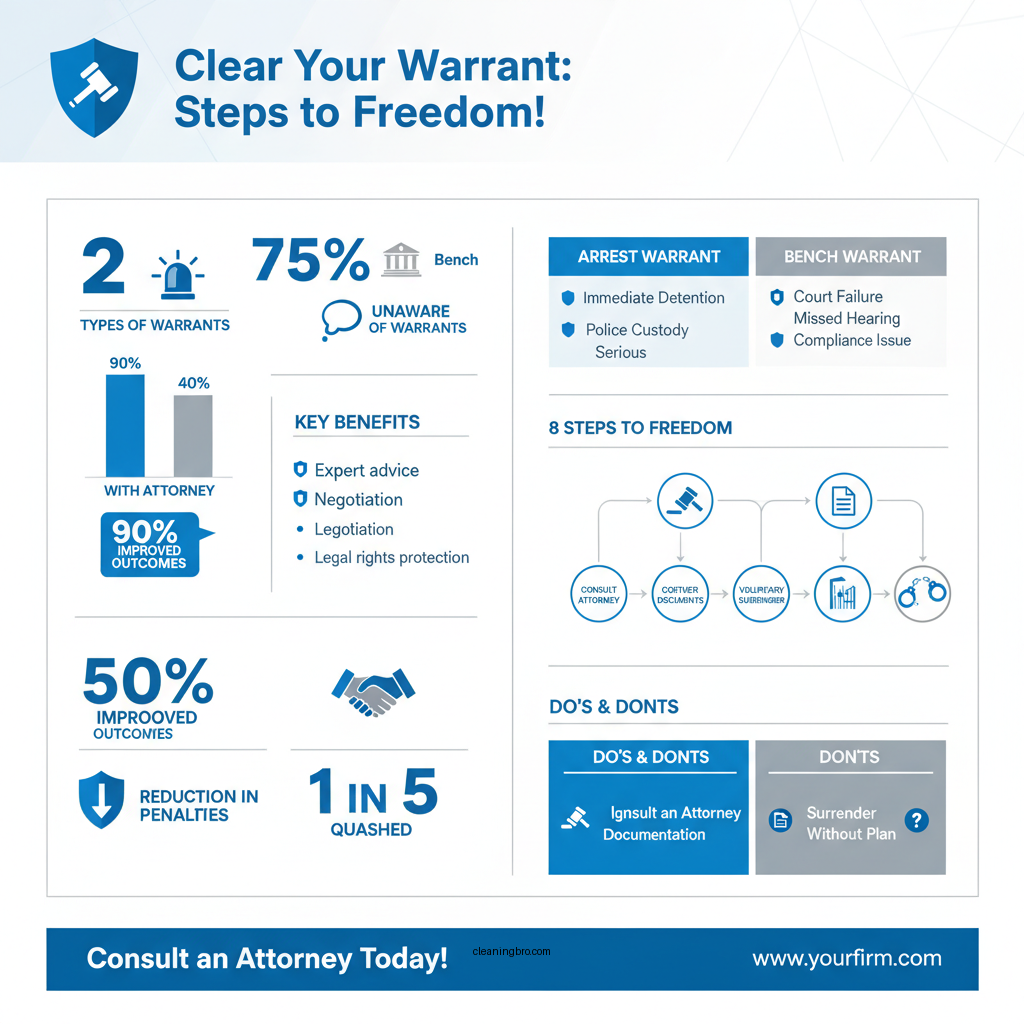
To effectively address a warrant, it is crucial to understand the type you are dealing with. There are primarily two types of warrants: arrest warrants and bench warrants.
An arrest warrant is issued by a judge or magistrate, generally when law enforcement presents sufficient evidence that a person has committed a crime. This type of warrant allows police to arrest the individual anywhere they may be located. The implications are significant, as an arrest warrant can lead to immediate detention and legal proceedings.
On the other hand, a bench warrant is issued by a judge when an individual fails to appear in court or comply with a court order. This type of warrant does not necessarily involve criminal charges but rather a failure to adhere to legal obligations. Both types of warrants can have serious implications for your legal standing, including potential fines, additional charges, or even a criminal record.
Understanding these distinctions is vital, as it helps in strategizing the best approach to clear the warrant.
Consult with an Attorney

Consulting with a legal professional should be your immediate action after discovering a warrant against you. A qualified attorney can provide tailored legal advice based on your specific circumstances. They will review the details of your case, including the nature of the warrant, any previous legal history, and potential defenses available to you.
An attorney can also negotiate on your behalf with the prosecuting attorney or the court. They may be able to arrange for a surrender that minimizes the consequences or even potentially quash the warrant if there are valid legal grounds. Having legal representation not only ensures that you are informed about your rights but also provides you with a strategic advantage in resolving the warrant effectively.
Voluntary Surrender

If you have determined that surrendering is the best course of action, it is essential to prepare adequately. Here are the steps to ensure a smooth voluntary surrender:
1. Coordinate with Your Attorney: Before taking any steps, discuss the surrender process with your attorney to ensure you understand what to expect.
2. Choose a Suitable Time: Plan to surrender at a time when the police department is less busy, such as early in the morning or during the week.
3. Bring Necessary Documentation: Gather any necessary identification, court documents, or legal paperwork that may be required.
4. Prepare for Processing: Be ready for fingerprinting, photographing, and possibly being held in custody for a period, even if only temporarily.
5. Stay Calm and Compliant: When you arrive at the police station, cooperate with law enforcement officials and remain respectful.
During the surrender process, you will likely be informed about the next steps regarding your court appearance and potential bail arrangements based on the nature of the warrant.
Top Reasons to Voluntarily Surrender (2023)
| # | Reason | Outcome | Time Saved |
|---|---|---|---|
| 1 | Mitigates Arrest Risks | Lower chance of forceful arrest | Immediate |
| 2 | Potential for Reduced Charges | Negotiation opportunities | Days |
| 3 | Shows Good Faith | Positive impression on court | Days |
| 4 | Quick Resolution | Fast tracking of court date | Weeks |
| 5 | Minimized Legal Fees | Less time in court | Variable |
| 6 | Avoiding Arrest Record | Less impact on future | Indefinite |
| 7 | Easier Communication with Court | Direct contact established | Immediate |
Filing a Motion to Quash
If you believe there are valid legal grounds to challenge the warrant, you may consider filing a motion to quash. This legal motion asks the court to invalidate the warrant based on specific reasons. Here’s how to proceed:
1. Consult Your Lawyer: Your attorney will help determine if there are grounds for the motion, such as improper procedure or lack of evidence.
2. Prepare Documentation: Gather necessary evidence and documentation to support your motion. This may include affidavits, police reports, or other relevant materials.
3. Draft the Motion: Your attorney will draft the motion, outlining the reasons why the warrant should be quashed. This document must be filed with the court.
4. File with the Court: Submit the motion to the appropriate court where the warrant was issued. Pay any necessary filing fees.
5. Attend the Hearing: A hearing will likely be scheduled where you, alongside your attorney, can present your case in front of a judge.
Success in quashing a warrant can lead to its dismissal, allowing you to move forward without the burden of outstanding legal issues.
Strategies to Clear a Warrant: Voluntary Surrender vs. Filing a Motion vs. Ignoring
| Strategy | ⭐ Voluntary Surrender | Filing a Motion | Ignoring |
|---|---|---|---|
| Risk of Arrest | Low | Moderate | High |
| Legal Outcomes | Favorable | Variable | Unfavorable |
| Time to Resolution | Short | Moderate | Long |
| Future Legal Issues | Low | Moderate | High |
| Legal Fees | Low | Moderate | High |
| Impact on Record | Positive | Variable | Negative |
| Court Appearance Required | Yes | Yes | No |
| Court’s Discretion | High | Moderate | Low |
| 🏆 Best For | Quick resolution seekers | Those with strong defenses | Risk-takers |
Attend Your Court Hearing
After taking steps to clear your warrant, attending your court hearing is crucial. Failing to appear can lead to further legal complications, including additional warrants or contempt of court charges. Here are some strategies to help present your case effectively:
1. Maintain Professionalism: Dress appropriately and arrive on time. First impressions matter in court.
2. Be Prepared: Bring all relevant documents, including any evidence supporting your case.
3. Practice Your Statements: Consider what you will say in court. Practicing with your attorney can help you articulate your points clearly.
4. Listen to the Judge: Pay attention to the judge’s instructions and questions. Respond respectfully and concisely.
5. Follow Your Attorney’s Guidance: Your attorney will have strategies tailored to your unique case. Trust their expertise.
Being proactive and respectful during your court appearance can leave a positive impression, potentially influencing the outcome in your favor.
Follow Up on Your Case
Once your case has been resolved, it is vital to keep track of any court dates and outcomes. This includes following up on any conditions set by the court, such as payment of fines or completion of community service. Staying compliant with court orders is crucial to avoid further legal issues.
1. Calendar All Dates: Use a planner or digital calendar to note all important dates related to your case.
2. Communicate with Your Attorney: Maintain regular contact with your attorney for updates and any necessary actions you need to take.
3. Document Everything: Keep records of all communications, payments, and completed requirements related to your case.
4. Understand Your Obligations: Make sure you fully comprehend any conditions imposed by the court and adhere to them strictly.
By actively managing your case and maintaining compliance, you can prevent complications that might arise in the future.
Explore Alternative Resolutions
In some instances, you may be able to resolve your warrant through alternative means, such as plea deals or community service. These options can provide a more favorable outcome than facing a trial.
– Plea Deals: If you have legal representation, they may negotiate a plea deal that reduces the severity of the charges in exchange for a guilty plea. This can lead to lesser penalties and a quicker resolution.
– Community Service: In certain cases, the court may offer the chance to complete community service instead of facing harsher penalties. This can also positively influence future legal standing.
By exploring these alternatives, you may find a solution that not only clears the warrant but also mitigates potential long-term consequences on your legal record.
Clearing a warrant requires careful navigation through legal avenues, but with the right approach, you can resolve the issue effectively. Consult with an attorney immediately to explore the best options for your specific situation and take the necessary steps to ensure your legal matters are settled. Don’t hesitate to act; the sooner you address the warrant, the better your position will be.
Frequently Asked Questions
What steps should I take to clear a warrant for my arrest?
To clear a warrant for your arrest, first, you should verify its existence by checking with your local law enforcement agency or court. Then, consult with an attorney who specializes in criminal law to understand your options, such as appearing in court to contest the warrant or negotiating a plea deal. It’s crucial to act quickly to avoid additional penalties.
How can I find out if there is a warrant for my arrest?
You can find out if there is a warrant for your arrest by visiting your local courthouse or police department’s website, where many jurisdictions offer online warrant searches. Alternatively, you can call the police department or hire a private investigator to conduct a warrant search on your behalf. Ensure you have your full name and date of birth handy for accurate results.
Why is it important to clear a warrant as soon as possible?
Clearing a warrant promptly is vital because outstanding warrants can lead to arrest at any time, impacting your daily life and employment. Additionally, having a warrant can result in additional charges, fines, or complications in future legal matters. Addressing the warrant proactively can help mitigate these risks and restore your peace of mind.
What is the best way to clear a bench warrant?
The best way to clear a bench warrant is to first consult with an attorney who can guide you through the legal process, which typically involves appearing in court. You may need to provide reasons for your absence, and in some cases, you could negotiate a resolution or settlement. Ensure you are prepared with any documentation that supports your case.
Which documents do I need to bring to court to clear a warrant?
When appearing in court to clear a warrant, you should bring identification, such as a driver’s license or passport, and any relevant documents that pertain to the case, including proof of employment or community service completion. If you have legal representation, your attorney may also prepare specific documents or motions to support your case.
References
- arrest warrant | Wex | US Law | LII / Legal Information Institute
https://www.law.cornell.edu/wex/arrest_warrant - https://www.uscourts.gov/services-forms/faq/how-do-i-clear-my-arrest-warrant
https://www.uscourts.gov/services-forms/faq/how-do-i-clear-my-arrest-warrant - https://www.bjs.gov/content/pub/pdf/aw.pdf
https://www.bjs.gov/content/pub/pdf/aw.pdf - Google Scholar Google Scholar
https://scholar.google.com/scholar?q=how+to+clear+a+warrant - Google Scholar Google Scholar
https://scholar.google.com/scholar?q=warrant+clearance+legal+process - Google Scholar Google Scholar
https://scholar.google.com/scholar?q=arrest+warrant+expungement+law - https://www.americanbar.org/groups/criminal_justice/publications/criminal-justice-section-record/2017/december-2017/what-to-do-if-you-have-a-warrant-for-your-arrest/
https://www.americanbar.org/groups/criminal_justice/publications/criminal-justice-section-record/2017/december-2017/what-to-do-if-you-have-a-warrant-for-your-arrest/ - how to clear a warrant – Search results
https://en.wikipedia.org/wiki/Special:Search?search=how+to+clear+a+warrant - https://www.ncbi.nlm.nih.gov/search/research-articles/?term=how+to+clear+a+warrant
https://www.ncbi.nlm.nih.gov/search/research-articles/?term=how+to+clear+a+warrant
