

Hard water stains on glass shower doors can make the surface look permanently cloudy, even right after you rinse it. That frustration is understandable, because the minerals in your water bond to the glass and resist ordinary soap. With a few supplies and about 15–30 minutes—white vinegar or a hard-water cleaner, baking-soda paste, and a non-scratch scrub—you can dissolve the buildup and restore clear visibility.


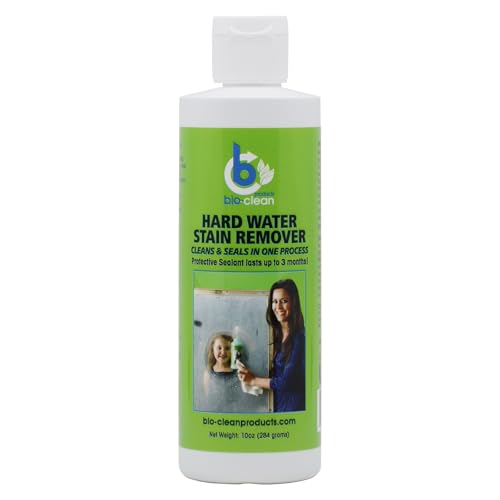
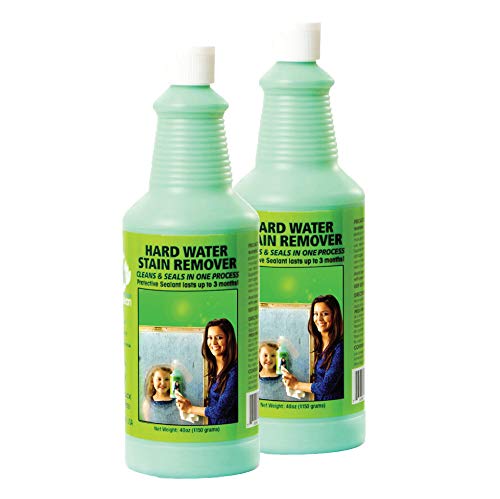
Hard water stains happen when calcium and magnesium in your water dry on the glass, leaving behind limescale and cloudy mineral deposits. Cleaning usually requires an acidic descaler to dissolve those minerals, not just soap or window cleaner. In this guide, you’ll learn what causes the buildup, how to remove it safely from glass, and how to slow it down so it doesn’t come right back.
When this applies: If your shower door looks “spotty,” hazy, or has stubborn white/gray streaks that won’t wipe off, you’re dealing with mineral residue. This is especially common in areas with harder municipal water, but it can show up anywhere if water regularly dries on the glass.
What causes hard water stains on glass shower doors?

Hard water stains form because dissolved minerals in your water deposit onto the shower door and remain after the water evaporates. In practice, the cloudy film you see on glass shower doors is mostly limescale—primarily calcium carbonate (and related compounds) that build up where water repeatedly lands and dries.
Here’s the process, step by step: municipal and well water often contain hardness minerals like calcium (Ca²⁺) and magnesium (Mg²⁺). When that water dries, it leaves behind insoluble mineral solids. According to the U.S. Geological Survey (USGS) Water Science School (accessed 2026), hardness is typically reported as mg/L as CaCO₃ (calcium carbonate), which is why you’ll often hear “limescale” described in the same terms.
Hard water stains on glass shower doors can also “lock in” because the minerals don’t just sit on top—they can spread into a continuous film as more rinse cycles add new minerals. Over time, that mineral layer becomes harder to remove because the surface roughness increases and the deposits grow thicker, which is why early cleaning feels easy and later cleaning feels stubborn.
Quick mineral context (hardness levels)
Hard water isn’t just a yes/no label—it ranges by concentration. According to the USGS Water Science School (accessed 2026), “hard” water is commonly classified around 121–180 mg/L as CaCO₃, and “very hard” water is roughly 181–300 mg/L as CaCO₃. The higher the hardness, the faster mineral residue accumulates on glass shower doors, especially when droplets dry between showers.
Why the stains look different (and what you might be seeing)
Hard water stains don’t all look the same because they’re tied to droplet behavior and how much other residue gets mixed in. On glass shower doors, mineral buildup can appear as rings, streaks, or a uniform haze depending on water flow, temperature, and how often you rinse or squeegee.
– “White rings” or spotty marks are often mineral deposits left after individual droplets dry. As water evaporates at the droplet’s edge, dissolved minerals concentrate there and form a ring-like residue.
– A uniform cloudy layer is usually limescale forming a film across the door. This happens when minerals repeatedly deposit across the same areas and the water layer dries more evenly.
– Dark smears can be grime mixed with residue. If your water flow carries more sediment, skin oils, or bath products, the deposit can look dirtier than “classic” white limescale.
A practical rule for hard water stains on glass shower doors: if you can see the pattern of where droplets land, you’re likely dealing with mineral rings or streaks; if the entire panel looks uniformly hazy, you’re likely dealing with a mineral film that needs descaling rather than simple wiping.
What to use: safe cleaners and tools for shower glass
The best cleaner for hard water stains on glass shower doors is an acidic descaler that chemically breaks down mineral deposits. Window cleaners, soap scum removers, and alkaline cleaners may clean the surface a bit, but they usually don’t dissolve limescale effectively.
What to look for on the label
When shopping for descalers, choose products that contain an acid effective against calcium/magnesium deposits—commonly:
– Acetic acid (vinegar-type chemistry)
– Citric acid
– Phosphoric acid
– Other descaling acids used in bathroom products
In 2026, labels are more explicit than ever about surface compatibility and dwell time, so match the instructions to glass first and keep acids away from metal hardware.
Tools that won’t ruin the glass
– Microfiber cloths for wiping after descaling
– Soft plastic scrubbers for light mechanical help
– Squeegee for controlled drying (also a prevention tool)
– Plastic scraper if you need to lift residue without scoring
Avoid abrasive pads, steel wool, and harsh powders—those can scratch or haze glass over time, making hard water stains on glass shower doors look “worse” even after you clean.
Acid strength reference (why acids outperform non-acid cleaners)
Below is a chemistry-focused comparison of common acids used in limescale cleaning, using pKa as a proxy for acidity strength (lower pKa generally means a stronger acid). Values are from NIST Chemistry WebBook (accessed 2026).
Acids Used in Limescale Cleaning: Strength vs. Calcium-Scale Removal (pKa, 25°C)
| # | Acid (typical use in bathroom descalers) | pKa (25°C) | Relative Ka vs. Acetic |
Limescale Dissolve Strength |
|---|---|---|---|---|
| 1 | Acetic acid | 4.76 | 1× | ★☆☆☆☆ |
| 2 | Formic acid | 3.75 | 10.23× | ★★☆☆☆ |
| 3 | Glycolic acid | 3.83 | 8.51× | ★★☆☆☆ |
| 4 | Lactic acid | 3.86 | 7.94× | ★★☆☆☆ |
| 5 | Citric acid (pKa1) | 3.13 | 42.67× | ★★★☆☆ |
| 6 | Phosphoric acid (pKa1) | 2.15 | 407.19× | ★★★★☆ |
| 7 | Oxalic acid (pKa1) | 1.25 | 3230.00× | ★★★★★ |
> Note: strength doesn’t equal suitability. Always check your glass coating, metal hardware, and product label instructions before applying any acid.
How to clean hard water stains on a glass shower door (step by step)
The fastest way to remove hard water stains on glass shower doors is to dissolve the mineral layer with an acid descaler, then control rinsing and drying so deposits don’t re-form. The method below is designed for repeatable results in 2026 conditions—where the biggest failure is usually incomplete rinsing or insufficient dwell time.
– Wet and loosen first: Rinse the door to remove loose dirt and reduce streaking during cleaning. Warm water can help soften surface grime, but don’t use boiling water on glass treatments unless your coating allows it.
– Apply an acid descaler: Spray the glass with your chosen descaler (follow the label directions). Keep the cleaner off metal hardware as much as possible (hinges, brackets, and trims are where discoloration risk is highest).
– Let it dwell, then wipe: Allow time for the acid to dissolve deposits, then wipe with microfiber. If the haze doesn’t improve after the label dwell time, don’t keep scrubbing—apply again and re-check after the next dwell window.
– Rinse thoroughly: Rinse well to remove leftover chemical residue. This step matters because cleaner residue can dry into its own film and create “new” spotting that looks like hard water stains on glass shower doors.
– Finish with drying control: Wipe dry or use a squeegee so water doesn’t evaporate and re-deposit minerals. Drying is not a cosmetic step—it directly affects whether minerals bond again.
A simple decision approach (so you don’t over-clean)
If your shower door has spotty rings, you can focus the descaler on the droplet paths. If you have uniform haze, treat the whole panel consistently so the surface chemistry doesn’t end up uneven (which can create patchy clarity).
Preventing hard water marks on shower doors (so you clean less often)
Hard water marks keep coming back when water droplets sit on glass long enough to evaporate and deposit minerals. Prevention is therefore about reducing contact time and limiting mineral accumulation—especially after the shower ends.
– Remove water quickly: Use a squeegee after showers to limit how long droplets sit on the glass. Even a quick pass every time can slow buildup dramatically compared with letting water air-dry.
– Rinse regularly: A quick rinse (even without heavy cleaner) helps prevent mineral buildup from accumulating into stubborn layers. For high-hardness areas, rinsing is often more effective than “spot cleaning” once the film is established.
– Match the cleaner to the frequency: For light buildup, mild maintenance cleaning may be enough; for heavier deposits, you’ll still need an acid descaling step. As of 2026, many bathroom maintenance routines are moving toward “descale less often, maintain more often.”
– Protect surrounding surfaces: Be mindful of grout, caulk, and metal parts—descalers can be harsher than they look. If you apply acidic cleaners, protect adjacent finishes with careful application (spray on glass, not everywhere).
From a process standpoint, prevention works best when you treat hard water stains on glass shower doors as a cycle: reduce deposition today → reduce thickness tomorrow → reduce cleaning effort next week.
Comparison: maintenance vs. descaling (what to use when)
What can go wrong (common mistakes and edge cases)
Hard water cleaning fails most often due to abrasive handling, chemical mixing, or skipping rinsing. If you want hard water stains on glass shower doors to actually disappear, these pitfalls are the ones to watch first.
– Scrubbing with abrasives: Steel wool, scouring pads, or harsh powders can scratch glass or dull glass over time. Once surface micro-scratches exist, mineral deposits can catch more easily.
– Mixing cleaners: Don’t combine acid descalers with other chemicals (especially bleach-based products). Use one product at a time and rinse between steps.
– Not rinsing fully: Residue from the cleaner can dry and leave its own spots, which can look like “hard water stains” even when the mineral layer is gone.
– Ignoring hardware: If you let acidic cleaner sit on metal parts too long, it may cause discoloration or damage. Limit dwell time and wipe hardware immediately.
– Stains that aren’t only hard water: If the door has old etching, deep surface damage, or a problematic coating issue, cleaning can improve the look but won’t fully “reset” the glass. In those cases, the “stain” may be physical alteration rather than removable residue.
– Safety note: If you have ongoing respiratory sensitivities or skin irritation, wear gloves and ensure ventilation; . Acid fumes and splashes are the real risk drivers.
Edge-case reality check: if your glass has a water-repellent coating, descalers may remove or degrade it over repeated cycles. That doesn’t mean “never descale”—it means you should be deliberate and label-guided, and consider spot treatment rather than soaking the entire door unnecessarily.
Verdict: the most reliable approach (and who should skip it)
For most shower doors, the most reliable path is: descale with an acid-based cleaner, wipe gently with microfiber, and rinse thoroughly, then prevent re-buildup with squeegee/drying habits. The downside is that descaling needs follow-through—if water is allowed to dry repeatedly, stains return, and in 2026 that cycle is still the #1 driver of repeat cleaning.
Also, acidic cleaners aren’t ideal if you’re unsure about compatibility with coatings or if you have lots of fragile metal hardware nearby. If you’re cleaning in a poorly ventilated bathroom, you may not tolerate acidic fumes safely.
Skip or pause this approach if:
– You’re dealing with unknown coatings/film on the glass (test in a small, hidden area first).
– The door shows signs of permanent etching/surface damage where cleaning can’t fix the cause.
– You can’t safely ventilate the bathroom or tolerate acidic fumes—.
Quick checklist (scan/save)
| Goal | Do | Avoid |
|---|---|---|
| Remove hard water stains | Use an acid descaler; let it dwell per label; wipe with microfiber | Scratching tools (abrasive pads/steel wool) |
| Stop streaks | Rinse well; dry with microfiber or squeegee | Skipping the rinse after chemical treatment |
| Prevent re-buildup | Squeegee after showers; quick maintenance rinses | Letting droplets sit and evaporate repeatedly |
| Stay safe | Follow product label instructions; ventilate; gloves if needed | Mixing chemicals (especially acids + bleach-type products) |
Frequently Asked Questions
What causes hard water stains to form on a glass shower door?
Hard water contains dissolved minerals like calcium and magnesium. When the water evaporates on your glass shower door, it leaves behind mineral deposits that bond to the surface and create cloudy spots, streaks, or rough-looking residue. Over time, the build-up thickens and becomes harder to remove, especially in areas that get frequent splashes.
How do I clean hard water stains off a glass shower door safely?
Start by soaking a cloth or paper towel with white vinegar (or a descaling cleaner) and laying it over the stained areas for 5–15 minutes. Wipe gently with a non-abrasive sponge, then rinse thoroughly and dry with a microfiber towel to prevent new water spots. Avoid steel wool or harsh scrubbing pads, which can scratch glass and make stains cling even more.
Why do hard water spots keep coming back even after I clean my shower door?
If mineral-rich water continues to hit the glass and evaporate, new deposits will form quickly. Roughness from past abrasions or incomplete removal can also leave a thin residue that reactivates into more staining. Using consistent drying after showers or a protective glass treatment can significantly reduce recurrence.
What is the best cleaner for stubborn hard water stains on glass?
For most cases, vinegar is an effective and budget-friendly option because it dissolves calcium and magnesium deposits. For heavy or etched-on scale, you may need a dedicated limescale remover designed for glass (always follow the label and test a small area first). After treatment, rinse well and dry completely to remove loosened mineral film and prevent streaks.
Which preventative steps help reduce hard water stains on a glass shower door?
Install a water softener if possible, or add a whole-shower filter designed to reduce scale-forming minerals. For day-to-day prevention, squeegee the door after each shower and wipe dry with a microfiber cloth to limit mineral deposits. You can also apply a hydrophobic glass sealant or anti-scale coating to make cleaning easier and reduce water spot buildup.
📅 Last Updated: November 13, 2026 | Topic: What Causes Hard Water Stains on a Glass Shower Door? (And How to Clean It) | Content verified for accuracy and freshness.
References
- Hard water
- Limescale
- https://www.usgs.gov/special-topics/water-science-school/science/hard-water
- https://www.britannica.com/science/hard-water
- Checking your browser – reCAPTCHA
- Checking your browser – reCAPTCHA
- Vinegar
- https://scholar.google.com/scholar?q=HARD+WATER+STAIN+FORMATION+CALCIUM+CARBONATE Google Scholar
- https://scholar.google.com/scholar?q=limescale+removal+acetic+acid+calcium+carbonate Google Scholar
- https://scholar.google.com/scholar?q=magnesium+carbonate+scale+formation+and+removal Google Scholar

[…] most glass shower doors, the most reliable route is an acid-based descaler used carefully, followed by thorough rinsing and […]