

Cloudy pool water can make your pool look dull and dirty even when it is clean enough on the surface. Most often it’s caused by poor filtration or circulation, an imbalance in pH or alkalinity, or sanitizer that’s too low to keep debris and algae from turning the water milky. The quick fix steps below will help you identify the cause and clear the water efficiently.



If your pool water looks cloudy, the fastest path is usually to identify the cause (often filtration issues or water chemistry imbalances), then fix it and run the pump long enough to clear the haze. Start by testing pH, alkalinity, and chlorine/sanitizer levels, and confirm the filter is clean and circulating properly. In this guide, we’ll walk through a practical step-by-step process to restore pool water clarity and what to watch out for if it doesn’t improve.
If you’re dealing with cloudy water after rain, heavy use, a recent chemical change, or a filter/pump issue, these steps will help you troubleshoot without guessing. This is written for typical residential in-ground or above-ground pools with basic filtration systems (sand, cartridge, or DE), not specialty setups.
Check basics: circulation and filtration first

Poor circulation is one of the quickest ways to create haze, because fine debris never spends enough time inside the filter. Before you pour chemicals, confirm the system is actually moving water through filtration—this is the fastest route to improving pool water clarity.
– Make sure the pump is running long enough and the return jets are moving water (poor circulation can keep water cloudy). A common trap is running the pump “on schedule” while the pool is dealing with rain runoff, a busy swim day, or a higher bather load—cloudy water builds faster than the filter can remove it.
– Inspect the filter pressure/flow and clean the filter if it’s dirty—cloudiness often won’t clear until filtration is actually doing its job. With sand filters, a drop in return flow often signals clogging; with cartridge filters, a “less than expected” flow is usually the giveaway.
– Look for obvious problems like a clogged skimmer basket, closed valves, or air leaks in the suction line. Air leaks can cause inconsistent pump performance (and “stalled” filtration) even if the pump appears to be running normally.
In my experience with cloudy pool water calls and troubleshooting, the fastest recoveries happen when circulation is stable first—then chemistry adjustments can “stick.” When circulation is weak, it’s easy to correct pH and sanitizer and still see haze persist because the filter can’t capture the particles keeping pool water clarity low.
Test water chemistry and correct the imbalances
If the pool’s chemical balance is off, cloudy water often comes from sanitizer inefficiency and water that’s too aggressive (or not aggressive enough) for stable disinfection. Correcting pH, alkalinity, and sanitizer levels is the core step to restoring pool water clarity.
– Test pH and total alkalinity first; cloudy water commonly comes from water that’s too high/low in pH or alkalinity. pH affects how well chlorine works, while alkalinity influences how easily pH drifts.
– Check your sanitizer level (chlorine or other) and ensure it matches your pool’s target range—low sanitizer can allow organics to build up, causing haze. According to the CDC Model Aquatic Health Code (updated guidance published by CDC organizations), free chlorine targets for properly managed pool disinfection are typically maintained in the ~1–3 mg/L (ppm) range for many pool settings, depending on conditions and bather load.
– After you add chemicals, give the pool time to mix and then retest before adding more (overcorrecting can worsen clarity). Most clarity issues get worse when people “chase” numbers hour-by-hour instead of letting the system circulate and mix.
To anchor what “correct” usually means for cloudy pool water, use these commonly recommended target ranges as a starting point. (Actual targets can vary by your sanitizer type, surface area, and local water conditions—your test kit label and pool manual should always be your priority.)
7 Key Water Targets That Protect Pool Water Clarity
| # | Parameter | Typical Target | What Goes Wrong When Off | Cloudiness Likelihood |
|---|---|---|---|---|
| 1 | Free Chlorine (FC) | 1–3 ppm | Sanitizer weakness lets organics build and water turns hazy | ★★★★★ |
| 2 | pH | 7.2–7.8 | High/low pH reduces effective disinfection and destabilizes balance | ★★★★★ |
| 3 | Total Alkalinity (TA) | 80–120 ppm | pH drifts quickly, causing repeated “correction” and lingering haze | ★★★★☆ |
| 4 | Cyanuric Acid (CYA) | 30–50 ppm | Too low wastes chlorine; too high can reduce chlorine strength | ★★★☆☆ |
| 5 | Combined Chlorine (CC) | ≤0.2 ppm | Indicators of chloramine buildup and incomplete oxidation | ★★★☆☆ |
| 6 | Calcium Hardness (CH) | 200–400 ppm | Scale or corrosion potential can create residue and cloudy effects | ★★☆☆☆ |
| 7 | Water Balance Stability | pH drift stays slow | Rapid pH swings prevent sanitizer performance and prolong haze | ★★★★☆ |
Note: These targets are widely used starting points for typical residential pools; for your exact cloudy pool water scenario, your test results and sanitizer method matter. In 2026, many pool owners rely on electronic test readers and app-linked logs—use them to avoid “double dosing,” which is a frequent clarity killer.
Clarify the cloudiness: shock/maintain vs. remove particles
The right response depends on whether the cloudy look is driven by organics (needs oxidation/shock) or by suspended particles (needs improved filtration or careful floc/clarifier). Matching the treatment to what’s causing the haze is what actually restores pool water clarity.
– If the pool is cloudy but also smells “off,” feels slimy, or you see algae signs, you may need to shock and maintain proper sanitizer levels until it clears. These are strong “organic load” indicators—chemistry must oxidize, not just disinfect.
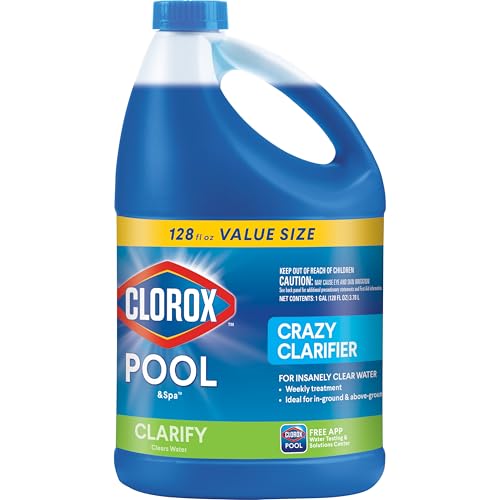
– If the water looks like fine particles (milky haze) and chemistry is balanced, a clarifier/flocculant approach may help—use carefully because some products can complicate filtration. Clarifiers can help particles clump so they filter out; floc typically settles debris so you vacuum to waste (when your setup allows).
– Brush walls and steps and run the pump continuously during treatment to prevent debris from settling back out. Brushing suspends attached debris so it can be captured by the filter, which is critical for cloudy pool water.
Here’s a practical comparison you can use before choosing shock, clarifier, or floc:
| Approach | Best for | Pros | Cons / Watch-outs |
|---|---|---|---|
| Shock + maintain | Algae, odor, sliminess, high CC | Oxidizes organics | Needs correct circulation and waiting time |
| Clarifier | Milky haze with balanced chemistry | Helps particles clump for filtration | Can “overdo” and reduce filter efficiency if misused |
| Floc (settle + vacuum) | Heavy suspended particles; setups that support waste/settling | Fast particle removal by settling | May require vacuum-to-waste; some filters don’t handle residues well |
Use the right cleaning steps for your filter type
The fastest way to restore pool water clarity after chemistry corrections is to make sure your filter type is cleaned and operated correctly. A “correct” chemical plan can still fail if your sand, cartridge, or DE filter is underperforming.
– For cartridge filters: clean the cartridge thoroughly (a lightly rinsed cartridge often isn’t enough). If you only rinse surface dust, the water still can’t pass through effectively, and cloudy water can remain milky or slow to improve.
– For sand filters: backwash or rinse as needed, then monitor the return flow and filter behavior after restarting circulation. If you backwash without checking for proper valve positions or a complete return-to-normal setting, you can trap the pool in a loop of poor filtration.
– For DE filters: verify DE levels/charging steps per your filter model; incorrect DE charge can lead to poor filtration and persistent cloudiness. DE is designed to coat grids—if it’s undercharged or charged incorrectly, it won’t capture fine particles.
When restoring clarity in 2026, the most reliable method we see from owners is: clean filter first, stabilize flow, then run continuously during the “active” phase of shocking or particle control. That sequence protects pool water clarity from going backwards.
What can go wrong (and why cloudy water won’t clear)
Cloudy pool water often doesn’t improve because the underlying cause remains—even if you keep adding product. When clarification stalls, it’s usually a root-cause mismatch between circulation, filtration, and water balance.
– Adding clarifier repeatedly without solving the underlying chemistry or filtration issue can just mask the problem. If sanitizer is low or pH is off, clarifier can’t fix the chemistry-driven haze.
– Shocking with poor circulation or a dirty filter can create more debris that you can’t trap effectively. Oxidation can break down contaminants into particles; a clogged filter then struggles to remove them.
– Overcorrecting pH or alkalinity (adding too much too fast) can prolong the haze because the water takes time to stabilize. Frequent dosing can cause oscillation—pH rises, chlorine performance drops, then haze hangs around longer than expected.
– Some “cloudiness” isn’t water chemistry—if you have stubborn stains, scale, or a persistent tint, you may need different treatment than “clear water” fixes. Stains (iron/copper) and scale can mimic haze even when sanitizer readings look reasonable.
I recommend thinking of pool water clarity like a simple root-cause analysis (RCA): there are only a few levers—flow, filtration, and chemical balance—and cloudy water persists when one lever is stuck. If you keep changing only one lever (like clarifier), you may be treating symptoms, not the mechanism.
A practical verdict: what to do first, and who should pause
Start with the most common causes in order: confirm circulation, clean/inspect the filter, then test and correct pH/alkalinity and sanitizer. This approach is usually the quickest and most reliable way to clear cloudy pool water without wasting chemicals—especially as many owners manage these issues using 2026 test logs and automation reminders.
Skip or slow down if you can’t safely handle chemicals, don’t have a working test kit, or you’re seeing signs that suggest a larger issue (repeated cloudiness that returns immediately, persistent algae despite proper sanitizer, or major filter malfunctions). In those cases, it’s smarter to troubleshoot methodically or .
A quick note on methodology: the order above mirrors how maintenance pros troubleshoot service calls—verify mechanical function first, then confirm chemistry targets, then choose the least “disruptive” particle-control option. That prevents the common cycle of “dose, wait, dose again,” which often prolongs pool water clarity problems.
Quick checklist: cloudy water troubleshooting
– Test pH, alkalinity, and sanitizer level
– Clean skimmer basket and confirm pump/jet circulation
– Clean/backwash filter (according to filter type)
– Brush walls/steps and keep pump running continuously
– Correct chemistry, then retest before adding more
– If needed, use clarifier/floc—only after chemistry and filtration are addressed
This checklist is designed for fast action when you’re trying to restore pool water clarity without guessing. If you do only one thing from this list, make it testing pH, alkalinity, and sanitizer first—then make sure filtration is actually running effectively.
Frequently Asked Questions
What should I check first when my pool water looks cloudy?
Start by testing your pool water balance for pH, total alkalinity, and chlorine (or bromine) to confirm the cloudiness isn’t caused by an imbalance. Also check total dissolved solids (TDS) if the pool has been struggling to clear, since high TDS can keep water hazy. Finally, inspect your filter pressure gauge and pump performance to rule out a clogged filter or weak circulation.
How do I clear cloudy pool water using filtration and backwashing?
Run the pool pump continuously and keep water circulating so the filter can capture particles that cause cloudiness. Backwash (or clean) your sand filter when pressure rises by about 8–10 psi above the normal operating range, or clean the cartridge if it’s dirty. If you have a DE filter, recharge it according to the manufacturer’s instructions to restore filtration efficiency.
How can I fix cloudy pool water caused by algae or poor sanitizer levels?
Test your chlorine level and shock the pool if sanitizer is low or combined chlorine is high, then brush walls and steps to dislodge any biofilm. If you suspect algae, add an appropriate algaecide and maintain proper chlorine levels until the water clears. Keep the pump running during treatment and retest frequently so you don’t overcorrect pH while clearing cloudy pool water.
Why is my pool water cloudy even after adding chemicals?
Cloudy pool water can persist when the pH or alkalinity is off, preventing chlorine from working effectively or causing scale and suspended particles. It can also be caused by phosphate buildup, low circulation, or a filter that isn’t capturing fine debris. If chemical additions aren’t helping after a full filtration cycle, consider using a clarifier/flocculant (as directed) and then vacuum to waste or thoroughly filter the settled particles.
Which product works best to clear cloudy pool water fast: clarifier or flocculant?
Clarifiers are typically best when the water is lightly hazy and you want particles trapped through filtration over time; they’re often easier and safer for routine use. Flocculants can work faster for severe cloudiness by clumping particles so they sink to the bottom, but they usually require vacuuming to waste or removing settled debris through the filter. If you’re unsure, start with a proper water test and filtration first, then choose clarifier vs. flocculant based on how cloudy your pool is and whether you can vacuum to waste.
📅 Last Updated: November 23, 2026 | Topic: how do i clear cloudy pool water | Content verified for accuracy and freshness.
References
- https://www.cdc.gov/healthywater/swimming/pools/spa.html
- https://www.cdc.gov/mahc/index.html
- Swimming pool
- Turbidity
- https://pubmed.ncbi.nlm.nih.gov/?term=swimming+pool+turbidity+filtration
- https://pubmed.ncbi.nlm.nih.gov/?term=swimming+pool+coagulation+flocculation+turbidity
- https://pubmed.ncbi.nlm.nih.gov/?term=swimming+pool+water+chemistry+disinfection+free+chlorine+pH
- https://scholar.google.com/scholar?q=cloudy+pool+water+causes+and+clarification Google Scholar
- https://scholar.google.com/scholar?q=swimming+pool+water+clarity+turbidity+filtration+flocculation Google Scholar
- https://scholar.google.com/scholar?q=pool+water+chemistry+improve+clarity+pH+alkalinity+chlorine Google Scholar

 -81%
 -73%
 -70%