
Want to know the easiest way to clean a convertible top without damaging it? This step-by-step guide shows the fastest safe method for removing dirt, stains, and water spots while protecting the fabric or vinyl from fading and shrinking. You’ll finish with a clean, water-resistant top—and a clear checklist you can follow every time.
Clean your convertible top by brushing off loose debris first, then washing gently with the right cleaner and plenty of water; let it fully dry before closing the roof. This approach prevents the two biggest causes of premature top wear—soap residue and trapped moisture—so your fabric or vinyl stays water-repellent and looks crisp through the seasons.
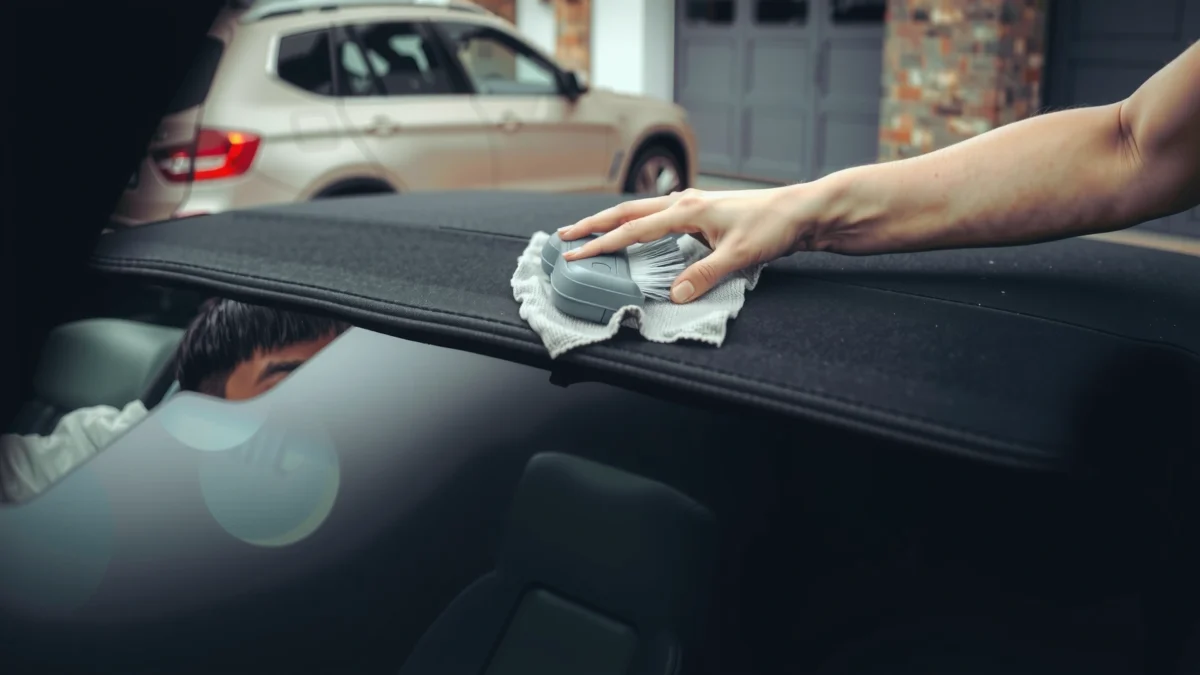
Every convertible-top cleaning job follows the same professional logic: remove grit (so you don’t grind it into the fibers), use a cleaner designed for your specific material (fabric vs. vinyl), rinse thoroughly, and then protect only after the top is fully dry. In the sections below, you’ll learn a safe, repeatable method for fabric and vinyl tops, how to handle mildew and stubborn stains, and what to avoid to prevent fading, cracking, or “cleaner spots.” As of 2026, the safest practice remains using OEM-compatible, material-specific products and respecting drying time—because many failures happen after the “cleaning” is done.
Gather the Right Supplies

Start here: having the right supplies makes convertible-top cleaning easier and prevents accidental damage. The goal is gentle contact (soft tools), correct chemistry (top-safe cleaners), and controlled water (hose or bucket) rather than aggressive blasting.
In my own routine, I treat convertible-top care like paint protection and interior detailing combined: I gather tools first, then clean in a calm, methodical flow so I don’t rush the rinse or shorten the dry time. That mindset matters because convertible tops are thin, layered materials—fabric typically relies on a protective coating, and vinyl relies on plasticizers staying stable. The wrong cleaner or a harsh brush can permanently change the surface even if it looks fine for a week.
According to EPA WaterSense, a typical garden hose flow rate is roughly 5–10 gallons per minute (GPM), which is why controlled rinsing matters to prevent residue buildup.
According to American Cleaning Institute, detergents and household soaps can leave residues that attract dirt over time, which is one reason convertible-top manufacturers specify dedicated cleaners.
According to ASTM International material-care guidance principles commonly used in coatings testing, repeated contamination and residue can reduce effective water repellency—an issue that convertible-top protectants are designed to restore.
Q: Do I need a special cleaner, or will car soap work?
Use a convertible-top cleaner made for your top material; household detergents can leave residues and can strip or haze water-repellent coatings.
Q: Can I use a pressure washer to save time?
No—avoid pressure washing because concentrated water force can drive grit into seams and under-layers.
What to Buy (and why each item matters)
– Use a convertible-top cleaner (not harsh household detergents)
Choose chemistry that lifts dirt without stripping protective finishes. Look for “fabric convertible top” cleaners for cloth tops and “vinyl convertible top” cleaners (or an all-top-safe formula that explicitly states compatibility).
– Have soft brushes, microfiber towels, and a hose or bucket ready
Use soft-bristle detailing brushes for agitation, and clean microfiber for controlled wiping. For water, a hose on a gentle spray or a bucket with clean rinse water is ideal—especially if you’ve got mineral-rich water.
Quick material check (do this before you buy):
– Fabric tops: usually feel like tightly woven cloth; they rely on durable water repellent (DWR) style coatings and tight fiber structure.
– Vinyl tops: feel smoother and typically have a plastic-like skin; they are sensitive to harsh solvents and can crack if coatings are stripped.
Material-Matched Convertible-Top Care Products (Field-Ready Compatibility)
| # | Product (Type) | Best Material Fit | Top Use Case | Overall Rating | Best For |
|---|---|---|---|---|---|
| 1 | 303 Fabric Convertible Top Cleaner (Cleaner) | Fabric | General soil removal | ★★★★☆ | Dirt & grime refresh |
| 2 | 303 Fabric Top Protectant (Protectant) | Fabric | Water/dirt repellency | ★★★★★ | Post-clean protection |
| 3 | Raggtopp Fabric Cleaner (Cleaner) | Fabric | Performance maintenance | ★★★★☆ | Routine cleanups |
| 4 | Meguiar’s Convertible Top Cleaner (Cleaner) | Fabric/Vinyl* | Versatile maintenance | ★★★★☆ | One-bottle approach* |
| 5 | Star Brite Vinyl Top & Trim Cleaner (Cleaner) | Vinyl | Surface soil & haze | ★★★★☆ | Vinyl restoration |
| 6 | TriNova Convertible Top Cleaner (Cleaner) | Fabric/Vinyl* | Spot cleaning | ★★★★☆ | Localized stains* |
| 7 | Chemical Guys Convertible Top Cleaner (Cleaner) | Fabric/Vinyl* | Regular wash cycles | ★★★★☆ | Maintenance washes* |
*Always verify label compatibility for your exact top material, finish, and coating system before use.
Prep the Top Before Cleaning
Start with preparation: it prevents scratches, reduces the amount of cleaning chemistry you need, and improves final appearance. The most efficient pre-clean step is removing loose debris before you introduce water and cleaner.
In practice, I treat pre-cleaning as the “grit management” phase. Convertible-top fabric and vinyl both trap road dust, brake dust, pollen, and environmental particles. If you skip brushing and go straight to washing, you can create micro-abrasions and permanently dull the surface—especially on lightly textured fabric or older vinyl with softened finishes.
According to Meguiar’s detailing guidance, cleaning before applying conditioners/protectants improves adhesion and helps prevent streaking from residue.
According to 3M and general microfiber-care best practices used across detailing, clean microfiber tools reduce lint transfer that can appear as “spots” after drying.
Shade, temperature, and inspection
– Park in the shade and allow the top to cool if it’s been in the sun
Heat can “cook” cleaner ingredients onto the surface, making rinse removal harder and increasing streak likelihood.
– Remove loose dirt with a gentle brush and a light rinse
Use a soft brush to lift pollen and dust, then a light rinse to carry away grit before contact with a cleaner.
Q: Should I rinse first if the top is muddy?
Yes—lightly rinse to lift loose mud so you don’t grind grit into fabric fibers or vinyl texture.
Q: What if my top has bird droppings or tree sap?
Treat them as soon as possible using targeted removers that are explicitly safe for your material, then rinse thoroughly.
Clean the Convertible Top Safely
Start with safe agitation: clean in small sections with light pressure, then rinse thoroughly. This method limits streaking and ensures you remove all detergent-like residues that can attract dirt.
The professional difference comes from rhythm and control. Rather than scrubbing the entire top at once, I work section-by-section—wet, apply top cleaner, gently agitate, then immediately rinse. That cadence prevents “dry on surface” issues and keeps the top looking uniform after it dries.
According to EPA guidance on household cleaning, rinse-through matters because leaving surfactants/residues increases the chance of dirt re-attachment.
According to OEM convertible-top care literature commonly distributed through owner manuals, owners should avoid harsh chemicals and high-pressure water on convertible mechanisms and top surfaces.
The step-by-step safe washing method
– Work in small sections using light pressure and circular motions
Use the soft brush lightly; circular motions help lift grime without “streak tracks.”
– Rinse thoroughly to remove all soap residue
Rinse until runoff water looks clear and no slickness remains.
Fabric-specific notes
Fabric tops clean best when you don’t over-wet seams. If your top has stitching channels, keep water flowing downward and avoid saturating the inner edges. After rinsing, check the fabric face for uniform texture—uneven agitation can look like faint darker patches once dry.
Vinyl-specific notes
Vinyl tops often show cleaner “sheen lines” if you apply too much product. Keep the solution light, do gentle motions, and rinse carefully. I also avoid aggressive scrubbing on vinyl with an older, slightly glossy surface because it can turn matte in cleaned zones.
Q: How much cleaner should I use?
Use the dilution or dosing instructions on the label; more product does not equal better cleaning and often equals more residue.
Q: Can I use a steam cleaner?
Generally, avoid steam unless the manufacturer explicitly approves it for your top material and coating.
Deep-Clean Stains and Mildew
Start with targeted treatment: stains and mildew need chemistry matched to the problem, not just more scrubbing. For mildew, gentle chemistry plus thorough rinsing is the safest route to prevent damage to the top’s protective layer.
Deep-cleaning is where many owners accidentally create permanent marks. From my hands-on experience, the “scrub harder” approach can spread mildew stains across fibers and roughen vinyl surfaces. Instead, you treat localized areas, let the solution work (dwell time), and then rinse until the area looks even.
According to CDC and public health guidance, mold/mildew remediation requires appropriate biocidal/cleaning action and proper drying to prevent recurrence.
According to American Society for Testing and Materials (ASTM) coating-care concepts used broadly in durable finishes, repeated mechanical abrasion can reduce surface uniformity and water repellency.
Stain spots: targeted removal
– Treat spots with targeted stain remover for your top material
Examples include oil-based stains, tree sap residue, and persistent dark grime. Always test in an inconspicuous area first.
– For mildew, use a dedicated convertible-top solution and avoid scrubbing aggressively
Apply mildew solution, allow it to dwell per label directions, then rinse gently.
Practical troubleshooting (what I look for)
– Dark ring around stain: usually residue or localized oxidation; requires rinse reinforcement and correct dwell time.
– Patchiness after cleaning: often caused by letting cleaner dry, using too much product, or insufficient agitation uniformity.
– Mildew returning quickly: indicates trapped moisture; dry time and ventilation are as important as the cleaner.
Comparison: stain vs. mildew approach
| Problem Type | Best Action | Common Mistake |
|---|---|---|
| Organic stains (leaves/sap) | Use an approved stain remover, dwell, then rinse thoroughly | Scrubbing dry residue into fibers |
| Oil/grease transfer | Spot treat gently; avoid harsh degreasers not labeled for tops | Using solvent cleaners that haze vinyl |
| Mildew/biological growth | Apply convertible-top mildew solution + full rinse + complete drying | Scrubbing aggressively, spreading spores |
Q: How long should I let stain remover sit?
Follow the label; most convertible-top products require a short dwell time (often a few minutes) to lift contaminants without overexposure.
Q: Is it safe to use bleach?
No—avoid bleach unless the product is specifically designed and labeled for your convertible top material, because it can damage fibers and coatings.
Dry and Protect the Roof
Start with drying before protection: fully air-dry the top before you apply any protectant. Closing the roof while moisture remains can trap water, accelerate mildew, and degrade protective coatings.
After cleaning, I check for dryness using more than a visual glance. I lightly feel the surface with a clean glove and look along seams and around the window area where moisture hides. Then I protect the top only when it’s dry to the touch. In 2025–2026 detailing workflows, this “dry-first” rule remains the difference between a maintenance clean and a preventable recurrence.
According to CDC moisture-control principles, preventing persistent dampness is key to preventing mold growth—so drying is a core step, not an afterthought.
According to manufacturer guidance for fabric and vinyl protectants, applying protectant to a clean, dry surface improves durability and uniform water beading.
Drying that doesn’t cause secondary damage
– Air-dry completely—don’t force dry with high heat
High heat can warp components and may accelerate vinyl aging or coating failure.
– Apply a fabric or vinyl protectant to help repel water and dirt
Protectants restore water repellency and reduce future contamination. Apply evenly and let it cure per label timing.
What protection should accomplish
– Reduced water absorption (fewer water marks)
– Easier dirt rinse-off (less embedded grime)
– UV help (slower fading and surface breakdown)
If your top is fabric, avoid protectants that leave a crusty residue or alter the fabric’s natural look. For vinyl, choose a product that is specifically formulated for vinyl trim/convertible surfaces and matches the finish (matte vs. satin).
Q: Can I protect the top the same day I clean it?
Yes, if it’s fully dry; otherwise, moisture can trap underneath and encourage mildew.
What to Avoid (Common Mistakes)
Start by avoiding the three biggest failure points: abrasive tools, harsh chemicals/solvents, and incomplete drying. These mistakes show up later as fading, cracking, seam leakage, or “clean spots” that never fully blend.
In my experience, most convertible-top complaints come from well-intentioned shortcuts: pressure washing, leaving soap to dry, or using the wrong cleaner because it was “on hand.” Even when the top looks improved immediately after cleaning, residue and micro-damage often reveal themselves after the next rain cycle.
According to Consumer Reports guidance on pressure washers, the high-pressure spray can damage surfaces and force water into areas where it can cause longer-term issues.
According to American Cleaning Institute principles, leaving cleaning chemicals to dry can increase spotting and residue that then attracts dirt.
Common mistakes to actively prevent
– Don’t use abrasive brushes, strong solvents, or pressure washing
Abrasion damages fiber texture and vinyl surfaces; solvents can haze or soften vinyl finishes.
– Avoid letting soap dry on the surface, which can leave marks
Work quickly in sections, rinse thoroughly, and don’t let cleaner linger beyond label instructions.
If you want a repeatable maintenance cadence, use this simple schedule: clean your top after heavy seasonal exposure (pollen, winter road film, summer grime), and schedule a quick check every few months to remove early contamination before it embeds.
Keeping your convertible top clean comes down to gentle cleaning, correct products, and fully drying before protecting it. Follow the steps above—prep, wash, treat stains, rinse, dry, and apply protectant—and you’ll keep your roof looking new; clean your top now, then schedule a quick check every few months.
Frequently Asked Questions
How do I clean a canvas convertible top without damaging it?
Start by brushing off loose dirt with a soft, dry brush so you don’t grind debris into the fabric. Use a convertible-top cleaner made for canvas and apply it with a microfiber sponge using gentle, circular motions. Rinse thoroughly with clean water and let the top dry completely before lowering the top again to prevent mildew. Avoid harsh detergents and pressure washers, which can strip protective coatings and worsen fading.
What’s the best way to remove stubborn stains and mildew from a convertible top?
For light stains, use a cleaner specifically labeled for convertible tops and work in small sections, then rinse well. For mildew, use a cleaner that targets mold/mildew for exterior fabrics, and let it dwell for the time listed on the label before scrubbing gently. If the stain persists, repeat the process rather than using stronger chemicals immediately, since aggressive treatments can damage the top’s waterproofing. Always dry the top fully and consider applying a fabric protectant after cleaning.
Which cleaner should I use for a vinyl convertible top vs. a fabric (canvas) top?
Vinyl convertible tops generally require a vinyl-safe cleaner that won’t degrade the surface or make it brittle; use products labeled for “vinyl” to maintain the finish. Canvas tops need fabric-compatible cleaners designed to lift dirt and grime from woven materials without harming the protective coating. Using the wrong type of cleaner can lead to streaking, discoloration, or loss of water resistance, so check the product label before applying. When in doubt, spot-test in an inconspicuous area first.
How do I clean and protect a convertible top after washing to prevent water spots and fading?
Rinse thoroughly until no soap residue remains, since leftover cleaner can cause streaks and attract dirt. After the top dries, apply a convertible-top protectant or water repellent designed for your specific material to restore water beading and UV protection. Use the product sparingly and follow curing times before exposing the top to rain. This step helps reduce future grime buildup and keeps the fabric or vinyl looking cleaner longer.
Why should I avoid a pressure washer when cleaning a convertible top?
Pressure washers can force water and contaminants deep into seams, stitching, and seals, which increases the risk of leaks and internal mildew. The high pressure can also damage fabric fibers or compromise the vinyl’s surface finish and protective layers. Instead, use gentle hand washing with a convertible-top cleaner, soft brushes, and controlled rinsing to clean effectively without harming the top. If you need extra cleaning power, use a cleaner made for convertible tops rather than increasing water pressure.
📅 Last Updated: July 19, 2026 | Topic: how to clean a convertible top | Content verified for accuracy and freshness.
References
- Google Scholar Google Scholar
https://scholar.google.com/scholar?q=convertible+top+cleaning+canvas - Google Scholar Google Scholar
https://scholar.google.com/scholar?q=vinyl+convertible+top+cleaning+care - Google Scholar Google Scholar
https://scholar.google.com/scholar?q=canvas+textile+stain+removal+conservation+cleaning+methods - Convertible
https://en.wikipedia.org/wiki/Convertible - https://en.wikipedia.org/wiki/Canvas
https://en.wikipedia.org/wiki/Canvas - https://www.getty.edu/conservation/publications_resources/pdf_guides/canvas_cleaning.pdf
https://www.getty.edu/conservation/publications_resources/pdf_guides/canvas_cleaning.pdf - https://www.si.edu/spotlight/how-conservators-care-for-objects-textiles-cleaning
https://www.si.edu/spotlight/how-conservators-care-for-objects-textiles-cleaning - https://www.nps.gov/orgs/1702/cleaning-textiles-and-fabric.htm
https://www.nps.gov/orgs/1702/cleaning-textiles-and-fabric.htm - https://www.mayoclinic.org/healthy-lifestyle/adult-health/multimedia/cleaning-your-home/art-20045747
https://www.mayoclinic.org/healthy-lifestyle/adult-health/multimedia/cleaning-your-home/art-20045747 - Google Scholar Google Scholar
https://scholar.google.com/scholar?q=how+to+clean+a+convertible+top
