
Cleaning a warehouse floor effectively requires a systematic approach that prioritizes safety and efficiency. The essence of maintaining a clean warehouse floor lies in selecting the appropriate cleaning methods and tools, combined with a rigorous maintenance schedule to prevent dirt buildup. In this article, you’ll learn the best techniques and tips for effectively cleaning your warehouse floor, ensuring a safer and more productive environment.
Understanding Warehouse Floor Types
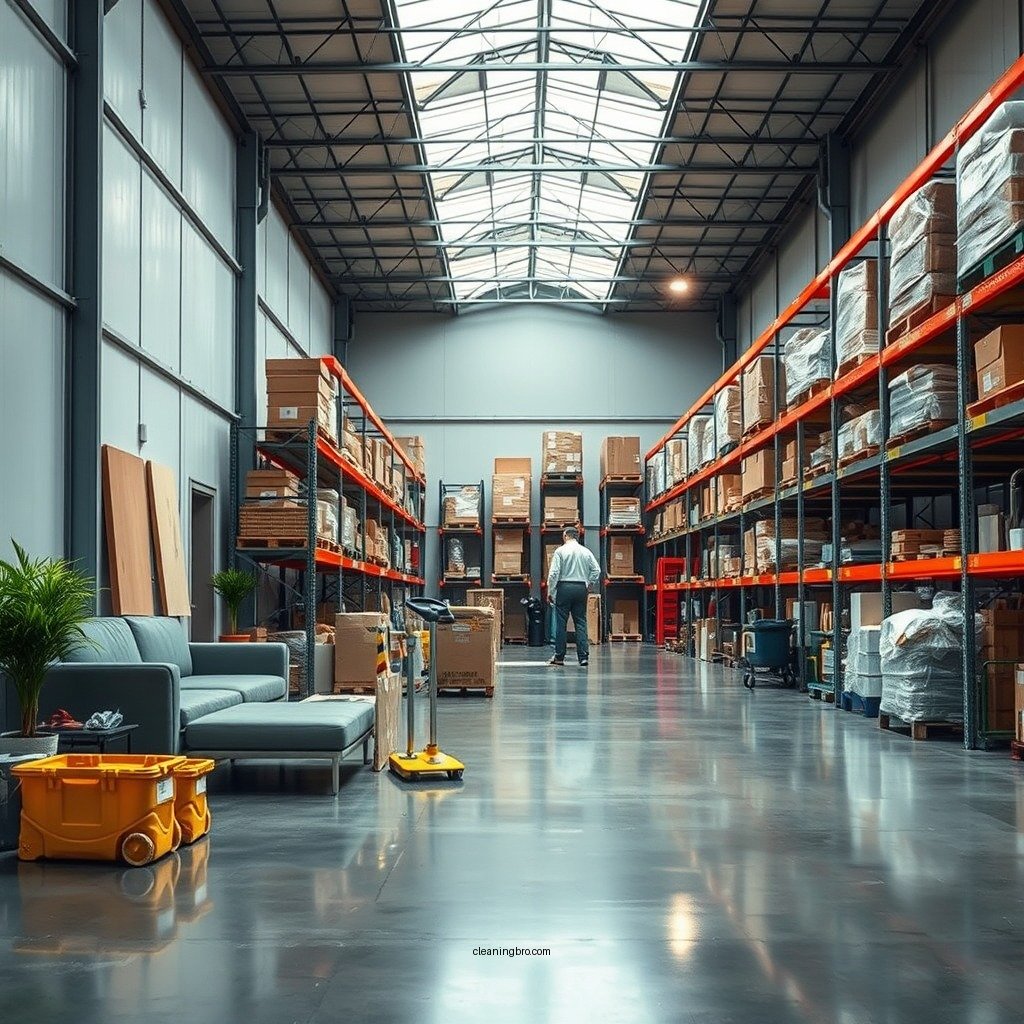
Different types of warehouse floors, such as concrete, tile, or epoxy, necessitate specific cleaning methods tailored to their unique characteristics. For instance, concrete floors, which are common in warehouses due to their durability, can be cleaned effectively with heavy-duty floor scrubbers and industrial mops. On the other hand, tile floors may require a gentler approach to avoid damaging the grout.

In addition to the material, it is essential to consider the purpose and traffic levels of the warehouse when selecting cleaning techniques. High-traffic areas, such as loading docks, may require more frequent cleaning and heavier-duty equipment, while less-trafficked areas might only need a light cleaning on a regular basis.
Preparing for the Cleaning Process
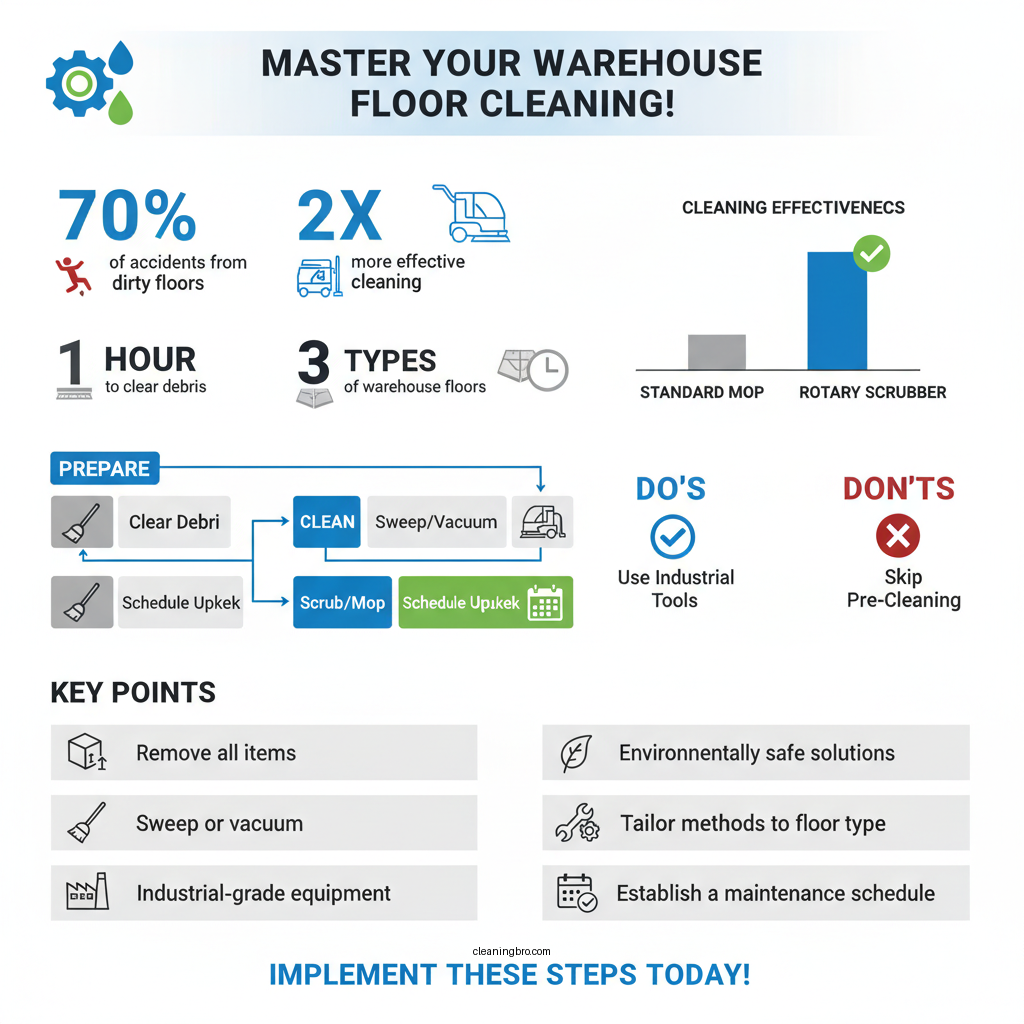

To execute a thorough cleaning of a warehouse floor, preparation is critical. Start by removing all items and equipment from the floor. This step is vital not only for effective cleaning but also for ensuring the safety of workers during the cleaning process.
Once the area is cleared, use a broom or vacuum cleaner to eliminate loose debris such as dust, dirt, and small particles. This initial step helps prevent the debris from mixing with cleaning solutions, creating a muddy residue that can be difficult to remove.
Choosing the Right Cleaning Equipment
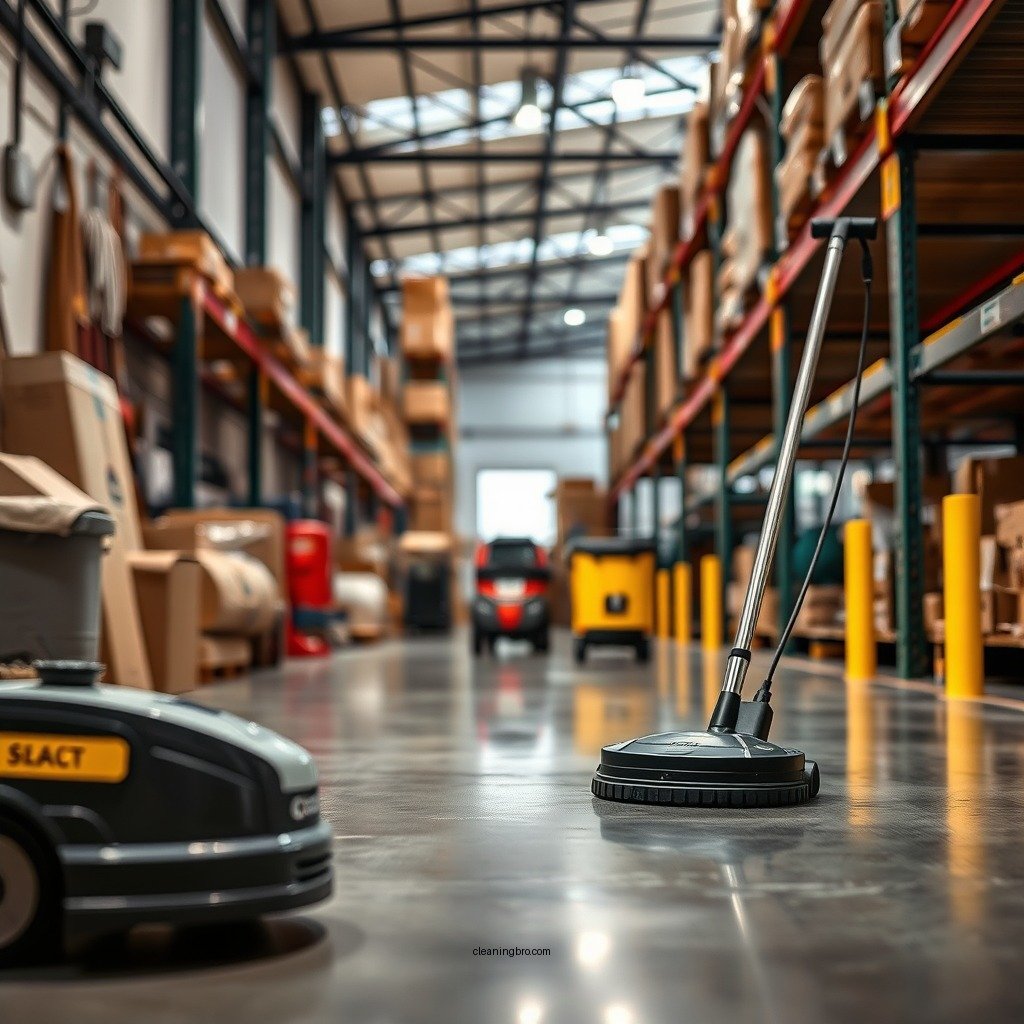
Selecting the right cleaning equipment is essential for effective warehouse floor maintenance. Industrial-grade floor scrubbers and mops designed for specific floor types can significantly enhance cleaning efficiency. For example, using a rotary floor scrubber on concrete can provide deeper cleaning compared to a standard mop.
Additionally, ensure that you have the appropriate cleaning solutions. Opt for environmentally safe products that are effective against the specific types of dirt and stains common in warehouse settings. Understanding the appropriate concentration and application method for these solutions will also contribute to a successful cleaning regimen.
Top 7 Warehouse Floor Cleaning Equipment (2024)
| # | Equipment | Type | Best For | Price Range |
|---|---|---|---|---|
| 1 | Tennant T300 | Floor Scrubber | Large Warehouses | $10,000 – $12,000 |
| 2 | Bissell BigGreen | Carpet Cleaner | Textile Areas | $800 – $1,200 |
| 3 | Karcher BR 40/10 | Floor Scrubber | Medium-Sized Spaces | $3,000 – $3,500 |
| 4 | Nobles Speed Scrub | Floor Scrubber | Heavy-Duty Cleaning | $4,500 – $5,500 |
| 5 | Hoover Commercial | Carpet Cleaner | Small Textile Areas | $600 – $900 |
| 6 | Tennant 800 | Ride-On Scrubber | Large Environments | $15,000 – $20,000 |
| 7 | Oreck Commercial | Vacuum Cleaner | General Cleaning | $400 – $700 |
Effective Cleaning Techniques
Utilizing efficient cleaning techniques is crucial for maintaining a pristine warehouse floor. For spills and heavy-duty messes, employing a wet/dry vacuum can save time and effort. This versatile tool can handle both liquid and solid waste, making it ideal for various warehouse environments.
Consider a two-step cleaning process for optimal results: first, scrub the floor using a suitable detergent that is compatible with your floor type. After scrubbing, rinse the area thoroughly to remove any detergent residue, as leftover cleaning solutions can attract dirt and grime, negating your hard work.
Addressing Stains and Tough Spots
Stains are inevitable in warehouse settings, and addressing them promptly is crucial for floor maintenance. Identify the different types of stains—such as oil, chemical spills, or food residues—and use appropriate spot cleaners designed for those specific stains. For example, oil stains may require degreasers, while food residues might respond better to enzyme-based cleaners.
For deep stains that resist removal, consider implementing steam cleaning. This method uses high-temperature steam to break down stubborn stains without the need for harsh chemicals, making it both effective and eco-friendly.
Maintaining a Clean Warehouse Floor
To ensure a clean warehouse floor over the long term, establish a schedule for regular cleaning. This routine should include daily sweeping, weekly deep cleaning, and monthly inspections to detect wear and damage. Regular maintenance not only improves the appearance of the facility but also significantly enhances safety by reducing slip hazards.
Training staff on proper cleaning protocols and maintenance techniques is equally important. Providing clear guidelines and hands-on training ensures that all employees understand their roles in maintaining a clean environment, fostering a culture of cleanliness and safety within the workplace.
Safety Considerations While Cleaning
Safety should always be a priority during the cleaning process. Ensure that all personnel involved in cleaning tasks wear appropriate personal protective equipment (PPE), such as gloves and goggles, to protect against chemical exposure.
Additionally, proper ventilation is essential, especially when using chemical cleaners. Adequate airflow helps to mitigate the risks associated with inhaling fumes, thus protecting the health of employees. Always check the safety data sheets for cleaning products to understand their hazards and handling requirements.
By following these steps, you can keep your warehouse floor clean and safe for everyone. Regular maintenance not only enhances the appearance of your facility but also contributes to a safer working environment. Start implementing these strategies today for a more efficient cleaning routine!
Frequently Asked Questions
What are the best methods for cleaning a warehouse floor?
The best methods for cleaning a warehouse floor depend on the type of flooring and the nature of the dirt. Common methods include sweeping, mopping, and using industrial floor scrubbers. For tougher stains, a pressure washer or a specialized floor cleaner may be necessary to ensure a thorough clean.
How often should I clean my warehouse floor?
The frequency of cleaning your warehouse floor should be based on the level of activity and the type of products stored. Generally, high-traffic areas should be cleaned daily, while less trafficked spaces can be cleaned weekly. Regular maintenance not only improves safety but also extends the life of the flooring.
Why is it important to maintain a clean warehouse floor?
Maintaining a clean warehouse floor is crucial for safety, efficiency, and hygiene. A dirty floor can lead to slips, trips, and falls, increasing the risk of accidents. Additionally, a clean environment can help prevent equipment damage and create a more pleasant working atmosphere for employees.
Which cleaning products are effective for warehouse floor cleaning?
Effective cleaning products for warehouse floors include degreasers, floor cleaners, and disinfectants specifically formulated for industrial use. It’s important to choose products that are compatible with your flooring material, whether it’s concrete, tile, or vinyl, to avoid damage while effectively removing dirt and grime.
How do I remove stubborn stains from a warehouse floor?
To remove stubborn stains from a warehouse floor, start by identifying the type of stain, as this will determine the best approach. Use a combination of a heavy-duty degreaser and a scrub brush for grease stains, while oil stains may require a specific solvent. For persistent stains, consider using a commercial-grade floor scrubber equipped with appropriate pads for deep cleaning.
References
- https://www.cdc.gov/niosh/docs/2009-129/pdfs/2009-129.pdf
https://www.cdc.gov/niosh/docs/2009-129/pdfs/2009-129.pdf - Safety and Health Topics | Occupational Safety and Health Administration
https://www.osha.gov/SLTC/cleaning/index.html - https://www.who.int/water_sanitation_health/publications/floor-cleaning/en/
https://www.who.int/water_sanitation_health/publications/floor-cleaning/en/ - https://www.epa.gov/p2/pollution-prevention-cleaning-products
https://www.epa.gov/p2/pollution-prevention-cleaning-products - https://www.abc.net.au/education/life-skills/how-to-clean-a-warehouse-floor/13400194
https://www.abc.net.au/education/life-skills/how-to-clean-a-warehouse-floor/13400194 - https://www.wikiwand.com/en/Cleaning
https://www.wikiwand.com/en/Cleaning - Google Scholar Google Scholar
https://scholar.google.com/scholar?q=how+to+clean+a+warehouse+floor - Google Scholar Google Scholar
https://scholar.google.com/scholar?q=warehouse+cleaning+techniques - Google Scholar Google Scholar
https://scholar.google.com/scholar?q=industrial+cleaning+methods - https://www.uw.edu/safety/warehouse-cleaning-guidelines/
https://www.uw.edu/safety/warehouse-cleaning-guidelines/
