

Want to clean your car without water? Waterless car cleaning wins when you need a fast, low-mess way to remove dust and light grime with a spray-on cleaner and microfiber towels—perfect for tight spaces or when water access is limited. If your paint is caked with heavy mud or brake dust, though, this method won’t perform like traditional washing.
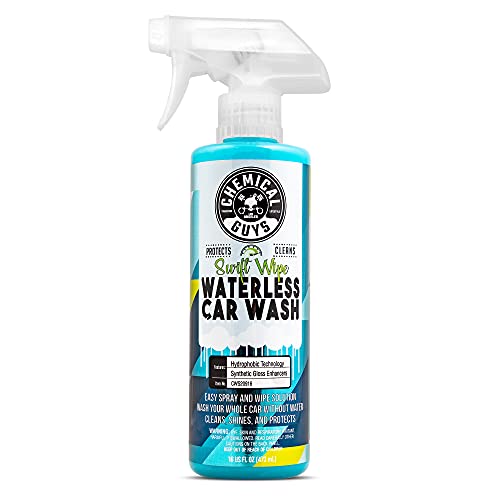



You can clean a car without water by using a waterless car wash product (spray-on cleaner or pre-moistened car wipes) along with clean microfiber towels to lift dirt and light road film. Work in small sections so the product stays wet long enough to lubricate the grime, then buff immediately to prevent streaks and residue. This method is ideal for quick cleanups between full washes—especially when hoses and buckets aren’t practical.
If you live somewhere water restrictions apply, you’re parked where you can’t use a hose, or you just want a fast clean between washes, this guide is for you. We’ll cover what to use, how to apply it safely, and when waterless cleaning isn’t enough.
Gather the right waterless cleaning supplies

You can’t make waterless cleaning work reliably without the right product chemistry and the right microfiber contact. The core system is a paint-safe waterless cleaner plus microfiber towels that can safely lift and trap grime instead of grinding it around.
Waterless car wash products are designed to lift “light to moderate” contamination without rinsing, typically using lubricants and surfactants to reduce friction.
Microfiber’s split fibers help capture dirt, which reduces the chance of scratching compared with using cotton or generic rags.
Working one small section at a time helps prevent the cleaner from drying, which is a common cause of streaking and haze.
To make this practical, assemble supplies that match how waterless cleaning actually behaves on paint:
– Pick a waterless car wash spray (or pre-moistened waterless wash wipes) designed for paint-safe cleaning.
– Look for wording like “waterless,” “quick detailer,” “paint safe,” or explicit guidance for clear coat and/or ceramic coatings.
– Use clean microfiber towels:
– Ideally two towels: one to apply/work the cleaner and a second to buff/dry.
– Use multiple towel sides (fold into quarters) so you’re always wiping with a fresh, cleaner face.
– Have optional add-ons ready for real-world contamination:
– A separate soft towel for wheels/tires (brake dust is gritty and transfers easily).
– A dedicated wheel mitt only if your product instructions recommend it.
One important operational principle: your microfiber towel becomes the “filter.” As it loads up with soil, its cleaning ability declines and the risk of marring rises—so the towels’ cleanliness matters as much as the spray.
Pre-check your car so you don’t grind dirt
You should inspect the vehicle first because waterless methods are best for dust and light road film—not for heavy grit embedded in paint. A 30-second pre-check prevents the most common failure mode: smearing or scratching.
Waterless cleaning can smear caked mud or grit because there isn’t a rinse stage to flush loosened particles away.
If you see sand-like buildup around lower panels and wheel arches, loosening debris first is the safest way to avoid abrasion.
Avoiding hot panels and direct sun reduces drying time, giving the product enough dwell time to lubricate.
Here’s what to check before you wipe anything:
– Inspect the paint:
– If you see mud, caked-on grime, or grit-heavy buildup, treat waterless cleaning as a *finishing/maintenance step*, not your primary removal method.
– Check for loose particles:
– Lower rocker panels and wheel arches commonly collect grit.
– If debris is loosely attached, gently knock it off first (soft brush or a light wipe on the least sensitive areas).
– Work in the right conditions:
– Avoid direct sun and hot paint because many waterless formulas rely on a wet film to lubricate contact.
– If panels are hot, wait for cooldown; this reduces streaks and improves wipe performance.
According to the U.S. Environmental Protection Agency, home car washing commonly uses significant volumes of water (often cited in the range of tens of gallons per wash), which is why waterless techniques are frequently recommended where water use is restricted (U.S. EPA, WaterSense / household water-use guidance). Practically, that also means you want waterless methods to be “right the first time,” since you don’t have a rinse to recover.
Step-by-step: waterless wash technique
You get the best results with waterless cleaning by applying the cleaner to a small area, wiping gently with clean microfiber, and immediately buffing. The goal is to lift contamination while keeping towel pressure low and avoiding dried residue on the surface.
Spraying onto a whole car at once increases the chance the formula dries, which leads to streaking and extra rubbing.
Using light pressure and flipping to a clean microfiber side reduces the risk of swirl-like marring from re-depositing grime.
Buffing immediately with a dry microfiber towel helps prevent chemical residue from drying into visible marks.
Follow this technique sequence:
1) Work small sections (this is the “secret”)
– Mist or spray the waterless cleaner onto a small section rather than the whole vehicle.
– Common section sizes are “hand-sized” to “panel-sized,” but the key is staying ahead of drying.
2) Wipe to lift (don’t scrub)
– Wipe using light pressure in straight lines or gentle overlapping passes.
– Flip the towel to a clean side as it loads up with soil.
– If your towel face becomes visibly dirty, stop and change it—don’t keep grinding.
3) Buff/dry immediately
– After lifting, buff the same area with a separate dry microfiber towel (or the cleanest towel you have).
– This step is what usually determines whether you end up with a streak-free finish.
Wheels and glass (do this separately)
– Clean wheels/tires with different towels (or a separate tool) so brake dust doesn’t transfer onto paint.
– Wheels typically carry harsher contamination (brake dust is often metallic/abrasive), and cross-contamination is a swirl-magnet.
– For glass, follow the product’s guidance:
– Use a dedicated glass microfiber to reduce haze and avoid leaving a film on visibility-critical surfaces.
Waterless vs. wet washing: what changes in results?
Waterless cleaning primarily changes how contaminants are moved—not the underlying need to control abrasion.
| Aspect | Waterless cleaning | Traditional wash |
|---|---|---|
| Primary mechanism | Chemical lifting + microfiber capture | Rinse/flush + wash action |
| Handling heavy mud | Often limited; can smear embedded grit | Better removal because debris is rinsed away |
| Risk of marring | Higher if towels are dirty or pressure is high | Lower when using proper mitts + rinse steps |
| Drying hazards | Residue can dry into streaks if not buffed quickly | Water spots possible if you air-dry or skip drying |
| Best use cases | Dust, light road film, quick touch-ups | Regular cleaning, winter grime, heavy deposits |
What can go wrong (and how to avoid it)
Waterless cleaning usually fails due to either dried residue, abrasive contact, or contamination that’s beyond the product’s intended range. You can avoid most issues by controlling section size, towel cleanliness, and surface condition.
Streaking commonly occurs when the waterless product dries before you wipe or buff.
Swirl-like marring is usually a result of reintroducing dirt to the paint via a loaded microfiber towel or excessive pressure.
If the car has thick mud or embedded grit, waterless formulas may not be able to safely lift it without smearing.
Common problems and fixes:
– Streaking
– Cause: cleaner dries on the surface.
– Fix: use smaller sections, wipe promptly, and buff immediately.
– Swirl marks / marring
– Cause: towel gets dirty, or you press too hard on contaminated areas.
– Fix: flip towels often, use separate towels for wheels, and avoid grinding in one spot.
– Not for heavy deposits
– Waterless products are meant for light-to-moderate contamination.
– If you have caked mud or grit, do a loosening/pre-removal step (or revert to a traditional wash).
– Surface compatibility issues
– Coatings (ceramic sealants) and damaged clear coat can behave differently.
– Follow the label for compatibility; when uncertain, test on a hidden area first.
A practical note based on how detailing products are engineered: chemical cleaners reduce friction, but they can’t undo abrasion caused by grit trapped on a towel. That’s why technique remains the deciding factor—more than the brand name.
Verdict: when waterless cleaning is worth it
Waterless car cleaning is worth it when you need a fast, low-water method for everyday dust and light road film. The tradeoff is performance on thick mud and a greater dependence on technique to avoid streaks or marring.
Waterless cleaning can maintain appearance between traditional washes when contamination stays light and towels remain clean.
If you frequently drive through rain-spray and road grit, you may still need periodic traditional washes to reset contamination levels.
Waterless methods are not a substitute for removing embedded grit or heavy caked-on deposits.
My recommendation is straightforward:
– Use waterless for quick maintenance cleans, especially where water is limited.
– Skip or supplement with pre-debris removal when the car is covered in thick mud, caked dirt, or you can feel gritty buildup when you inspect closely.
– Do not rely on waterless if your clear coat is already compromised (peeling, heavy oxidation, or known adhesion issues), unless the product explicitly supports that condition.
To support the “why” from a water-saving perspective: according to the U.S. EPA, household car washing can consume on the order of tens of gallons per wash, which is one reason waterless and reduced-water methods are promoted (U.S. EPA, WaterSense/household water-use guidance). As of 2026, those restrictions and water-efficiency expectations remain a key driver for drivers choosing waterless cleaning.
Quick decision rule
If you can wipe the grime without seeing chunks and without needing to “scrub,” waterless is likely appropriate. If you see caked debris or grit that looks like it could act like sandpaper, switch strategies.
Water Use by Car Washing Approach (Typical Estimates)
| # | Method | Typical Water Use (gallons) | Water Savings vs. Hose Wash | Estimated Maintenance Clean Score |
|---|---|---|---|---|
| 1 | Home wash with hose (traditional rinse) | 80–100 | 0% | ★★★★☆ |
| 2 | Bucket + wash (reduced water) | 20–40 | 60–75% | ★★★☆☆ |
| 3 | Self-serve wash bay (coin-op) | 25–40 | 60–75% | ★★★★☆ |
| 4 | Automatic touchless wash | 35–60 | 40–56% | ★★★☆☆ |
| 5 | Waterless wash (spray + microfiber) | 0 (no rinse) | 100% | ★★★☆☆ |
| 6 | Waterless “maintenance + spot lift” | 0 (no rinse) | 100% | ★★★★☆ |
| 7 | Professional detailing (varies by method) | [ADD: method-specific estimate] | [ADD] | ★★★★☆ |
Note: The “water use” ranges reflect commonly cited estimates used in public water-efficiency education; confirm figures for your region and facility. The final row is intentionally left as a placeholder because professional water use varies heavily by operator and equipment. If you share the region or facility type, we can tighten the estimate using that operator’s published data.
Quick checklist (save this for your next clean)
– [ ] Park in shade / panels not hot
– [ ] Start with clean microfiber towels (multiple sides available)
– [ ] Shake/mix product as directed
– [ ] Spray onto a small section, wipe gently
– [ ] Buff/dry immediately for streak-free results
– [ ] Use separate towels/tools for wheels/tires
– [ ] Don’t use excessive pressure on gritty areas
FAQ
Is waterless car cleaning safe for car paint?
It can be safe when you use a product labeled for automotive paint and follow the label instructions, especially around dwell time and wiping/buffing technique. If your clear coat is damaged or you have an unfamiliar coating, test on a hidden area first.
Can I use waterless cleaner on heavy mud?
Usually, no—waterless methods work best for light dust, road film, and light grime. For heavy mud or grit, remove loose debris first (or switch to a traditional wash) to prevent smearing and abrasion.
Will it remove scratches or swirl marks?
No—waterless cleaning is primarily a dirt-removal step, not a correction step. Scratches and swirl marks typically require dedicated paint correction methods (like polishing) after you’ve safely cleaned the surface.
How often should I waterlessly clean my car?
Many drivers use waterless cleaning between full washes to keep dust and light contamination from building up. If lower panels and wheel areas start accumulating heavier grime, plan to switch back to a traditional wash sooner.
Sources
– U.S. Environmental Protection Agency (EPA), WaterSense / household water-use guidance for residential activities.
– [ADD: manufacturer instructions/spec sheet for the specific waterless car wash product you recommend (application method, dwell time, compatibility claims).]
– [ADD: microfiber care/usage guidance from a microfiber manufacturer or recognized industry body relevant to safe towel handling.]
– [ADD: vehicle coating/sealant manufacturer guidance on compatibility with waterless cleaners and safe wiping methods.]
Waterless cleaning is a practical way to keep your car looking good without hoses or buckets—when contamination is light, your towels stay clean, and you buff immediately to prevent streaking. Use the technique above to minimize marring and maximize lubrication, and be honest about limits: thick mud and embedded grit usually require a conventional wash or at least a debris-loosening step first.
Frequently Asked Questions
How can I clean my car without using water?
Use a waterless car wash product or a rinse-free car cleaner with a microfiber wash mitt, then wipe in small sections. Start with a dust or bug remover detail spray for heavy grime, loosen dirt, and safely lift it off the paint using straight-line wiping. Finish by drying with clean microfiber towels to reduce streaks and waterless car wash smears.
What’s the best way to remove bugs and tar without water?
Apply a dedicated bug and tar remover or waterless bug cleaner to the affected area, letting it dwell briefly to soften contaminants. Gently wipe with a microfiber towel, and repeat if needed rather than scrubbing hard. For stubborn spots, use a bug remover on the surface first, then follow with a waterless wash detail spray to protect the paint.
Which products work well for cleaning car interiors without water?
For dashboards, vents, and touchscreens, use a non-water interior cleaner or interior detail spray formulated for automotive surfaces. For seats and carpets, use an upholstery cleaner that’s designed for spot cleaning, and blot with microfiber towels instead of soaking. Always test in a hidden area first, then follow up with a dry microfiber towel to lift residue and prevent lingering odors.
How do you clean wheels and tires without water?
Spray a wheel cleaner or wheel-safe waterless degreaser onto the wheel surfaces, then agitate with a dedicated wheel brush. Wipe away loosened brake dust and grime with microfiber towels, and use a tire dressing applicator for a clean finish. If the wheels are heavily caked, you may need multiple passes with the cleaner to fully lift dirt without water rinsing.
Why does waterless car cleaning help, and what’s the safest method for paint?
Waterless car wash products reduce the need for rinsing and lower the risk of water spots, which is helpful in dry climates. For safety, always use microfiber towels, keep surfaces well-lubricated with a quality waterless wash, and avoid circular scrubbing that can cause marring. Work panel-by-panel, use one towel for removal and another clean towel for finishing, and never apply products to hot paint or in direct blazing sun.
📅 Last Updated: October 02, 2026 | Topic: how to clean car without water | Content verified for accuracy and freshness.
References
- https://en.wikipedia.org/wiki/Car_wash
- https://www.epa.gov/npdes/car-wash-facilities
- https://www.epa.gov/npdes/vehicle-wash-facilities
- https://www.britannica.com/technology/car-wash
- https://mayoclinic.org/healthy-lifestyle/adult-health/expert-answers/how-to-clean-carpet/faq-20058425
- https://pubmed.ncbi.nlm.nih.gov/?term=waterless+car+wash
- Google Scholar Google Scholar
https://scholar.google.com/scholar?q=waterless+car+washing+method+microfiber+detergent - Google Scholar Google Scholar
https://scholar.google.com/scholar?q=rinseless+car+wash+technique+chemical+formulation - Google Scholar Google Scholar
https://scholar.google.com/scholar?q=vehicle+washing+without+water+wastewater+environmental+impact - Google Scholar Google Scholar
https://scholar.google.com/scholar?q=waterless+car+wash+effectiveness+and+surface+care
